0%

eCommerce Mobile App Development Guide 2026

Introduction

Mobile commerce accounts for 63% of global retail ecommerce sales in 2025, yet most ecommerce mobile app development projects fail within the first year post-launch. The reason is simple: decisions were made on assumptions rather than business logic. Executives commit budgets based on feature wishlists instead of conversion data. Vendors are selected on pitch decks rather than post-launch support capabilities. The result is predictable: apps that launch but never gain traction, draining resources without returning measurable value.

eCommerce Mobile App Development

This guide covers the full spectrum of e-commerce mobile app development, including how to build an e-commerce mobile app, key e-commerce app features, real e-commerce app development costs, and choosing the right e-commerce app development company.

What eCommerce Mobile App Development Actually Involves

E-commerce mobile app development goes far beyond building a simple shopping interface. It involves designing a complete digital commerce system that connects users, products, payments, logistics, and analytics in real time.

At a technical level, the system consists of a frontend mobile interface, backend servers, APIs, and multiple third-party integrations. The frontend handles user interaction, while the backend manages inventory, authentication, order processing, and data synchronization. APIs bridge communication between the app and external services such as payment gateways, delivery systems, CRM tools, and marketing platforms.

From a business perspective, the complexity varies depending on the model. B2C apps prioritize speed, personalization, and frictionless checkout experiences. B2B apps are significantly more complex, often requiring bulk ordering systems, approval hierarchies, custom pricing models, and ERP integrations.

Types of eCommerce Apps and Which Business Model They Fit

eCommerce Mobile App Development

Native iOS/Android apps are built using platform-specific languages (Swift for iOS, Kotlin for Android). They deliver the highest performance and access to device-native features like Face ID, Apple Pay, and camera APIs. Native development requires maintaining two separate codebases, doubling development and maintenance costs.

Cross-platform frameworks like React Native ecommerce app solutions and Flutter allow teams to write code once and deploy to both iOS and Android. A React Native ecommerce app reduces initial development cost by 30-40% compared to native builds while maintaining near-native performance. The trade-off is slightly slower execution speed and occasional limitations in accessing cutting-edge platform features until framework updates catch up.

Progressive Web Apps (PWAs) run in mobile browsers but behave like installed apps. They bypass app store submission entirely, reducing time to market and avoiding the 15-30% commission fees charged by Apple and Google. However, PWAs cannot access push notifications on iOS and lack the performance ceiling of native apps.

App builders like Shopify Mobile App Builder or Appy Pie allow non-technical teams to launch basic shopping app development projects in weeks. Custom ecommerce app development delivers tailored user experiences, proprietary features, and backend control but requires significantly higher upfront investment.

Approach Performance Cost Scalability Time to Market
Native iOS/Android Excellent High High 6-9 months
Cross-Platform (React Native, Flutter) Very Good Medium High 4-6 months
PWA Good Low Medium 2-4 months
App Builders Basic Very Low Low-Medium 2-6 weeks

Core Features That Directly Affect Conversion Rate

Feature selection in ecommerce mobile app development should focus on ROI. If you’re unsure where to start, explore our guide on ecommerce app features that increase conversion rates. Every feature added increases development cost, extends timelines, and introduces additional QA surface area. The features that matter are those that directly reduce friction in the purchase flow or demonstrably increase repeat purchase rates.

Must-Have Features for Launch (MVP Scope)

An MVP ecommerce mobile app development project should include: a product catalog with category filters, search, and sorting; a persistent shopping cart that syncs across sessions; payment gateway integration with support for credit cards, digital wallets, and region-appropriate payment methods; user account management with saved addresses and order history; and order tracking with real-time status updates and delivery notifications.

Payment gateway integration is a top abandonment point if misconfigured. Users who reach checkout but encounter payment errors rarely return to complete the purchase. Testing payment flows across multiple card networks, handling 3D Secure authentication correctly, and providing clear error messaging when transactions fail are non-negotiable requirements in any e-commerce mobile app development process.

Revenue-Linked Features Often Deprioritized

A push notification strategy tied to cart abandonment rate recovery generates direct, measurable revenue lift. Unlike email or SMS, push notifications have zero incremental cost per send and bypass algorithmic filtering. Triggered notifications sent 1-3 hours after cart abandonment recover 10-15% of otherwise lost transactions.

Personalization engines that surface product recommendations based on browsing history and purchase patterns increase average order value by 15-30%. Loyalty programs and in-app offers create switching costs that reduce customer acquisition cost over time by improving retention rates.

AR product preview features deliver category-dependent ROI. For furniture, apparel, and cosmetics, AR visualization reduces return rates by allowing customers to preview products in context before purchase. For commodity goods or low-consideration purchases, AR adds development cost without a proportional conversion lift.

Features That Add Cost Without Proportional Return

Over-engineered onboarding flows with multi-step tutorials delay users from reaching the product catalog. Data shows most users skip tutorial screens entirely. Excessive social integrations at launch, like Facebook login, Instagram feed imports, and Twitter sharing, rarely see adoption rates above 5%, but add API maintenance overhead and privacy compliance requirements.

Step-by-Step eCommerce Mobile App Development Process

A structured e-commerce mobile app development process reduces the risk of scope creep, missed deadlines, and post-launch rework. The six-stage framework below provides a repeatable structure that scales from MVP launches to full-featured marketplace apps.

eCommerce Mobile App Development

Step 1: Discovery and Scope Definition

The discovery phase defines the entire foundation of e-commerce mobile app development. This stage focuses on understanding user behavior, business objectives, and competitive positioning.

Detailed user research is conducted to identify customer needs, followed by competitor analysis to identify market gaps. A feature prioritization matrix is created to distinguish between essential features required for MVP launch and optional enhancements for future updates.

This phase ensures alignment between business goals and technical execution, significantly reducing the risk of scope creep later in development.

Step 2: Tech Stack and Architecture Decisions

The e-commerce tech stack determines long-term scalability, maintenance cost, and how easily the app integrates with third-party services. Frontend framework selection (React Native, Flutter, native Swift/Kotlin) should align with team expertise and performance requirements. Backend options include managed platforms like Firebase for rapid MVP launches or custom infrastructure on AWS, Google Cloud, or Azure for enterprises requiring full control over data residency and scaling logic.

Database structure decisions made early are expensive to reverse. Relational databases (PostgreSQL, MySQL) suit e-commerce mobile app development projects with complex product catalogs and inventory management needs. NoSQL databases (MongoDB, DynamoDB) scale horizontally for user-generated content and real-time features but require careful schema design to avoid query performance issues at scale.

Step 3: UI/UX Design for Mobile-First Conversions

Design is a critical factor in conversion optimization. A mobile-first design approach ensures that the app is optimized for small screens, fast interactions, and minimal friction. Design elements such as thumb-zone navigation, simplified product discovery, and single-tap checkout significantly improve usability. The goal is to reduce cognitive load and make purchasing as seamless as possible.

A well-designed mobile interface can dramatically reduce cart abandonment rates and increase conversion rates.

Step 4: Development Sprints and QA Cycles

Agile sprint structures in e-commerce mobile app development typically run in two-week cycles. Each sprint delivers a shippable increment: a working feature set that passes QA and could theoretically launch. Security audits should run continuously throughout development, not as a final pre-launch gate. Penetration testing, code reviews for common vulnerabilities (SQL injection, XSS, insecure data storage), and third-party dependency scanning catch issues when remediation cost is lowest.

Device testing matrices must cover the long tail of Android fragmentation. Testing only on flagship devices misses the performance and compatibility issues that affect 60%+ of users in markets like India, Southeast Asia, and Latin America, where mid-tier and budget Android devices dominate.

Step 5: App Store Submission and Launch

App store optimization begins before submission. Metadata requirements differ between Apple App Store and Google Play Store: screenshot dimensions, video preview specs, keyword character limits, and content rating questionnaires all require platform-specific preparation.

Review cycle timelines vary: Apple’s manual review process takes 24-48 hours for initial submissions and can extend to 5-7 days if the app is flagged for additional review. Google Play uses automated scanning with manual spot checks, typically approving apps within hours but occasionally holding submissions for 3-7 days for policy review.

Step 6: Post-Launch Monitoring

KPIs to track from day one include: Daily Active Users (DAU) as a leading indicator of product-market fit, conversion rate measured at every funnel stage (browse to cart, cart to checkout, checkout to purchase), session length showing engagement depth, and retention at D1/D7/D30 revealing whether the app creates habit formation or suffers from install-and-abandon patterns.

Crash reporting, API response time monitoring, and user feedback loops feed continuous improvement cycles. The e-commerce mobile app development process does not end at launch; it shifts from building features to optimizing conversion and retention based on real user behavior data.

Custom Build vs App Builder vs Convert from Website

Choosing between custom ecommerce app development, app builder platforms, and website-to-app conversion services is a cost-versus-control trade-off with long-term implications for scalability and feature flexibility.

Approach Cost Range Time to Launch Scalability Best For
Custom ecommerce app development $40K-$300K+ 4-9 months High Complex catalogs, multi-market expansion, proprietary features
App builder platforms $500-$5K/year 2-6 weeks Low-Medium Small catalogs, simple checkout, limited integrations
Site-to-app conversion $5K-$25K 2-6 weeks Medium Existing Shopify/WooCommerce stores seeking mobile presence

Key decision factors include catalog size (app builders struggle above 5,000 SKUs), backend complexity (custom APIs, ERP integrations, and multi-warehouse inventory logic all require custom builds), integration count (each third-party service adds compatibility risk in templated platforms), and international expansion plans (multi-currency, region-specific payment methods, and tax calculations require custom development).

eCommerce App Development Cost Breakdown

Understanding e-commerce app development cost requires separating fixed development costs from variable costs that scale with feature complexity, platform choices, and team location.

eCommerce Mobile App Development

What Drives Cost Up

Feature scope creep is the primary cost driver in e-commerce mobile app development. Each feature added mid-sprint requires design iteration, development time, QA expansion, and documentation updates. Third-party API integrations for inventory management, CRM systems, shipping logistics, and marketing automation platforms each add 40-80 hours of development and testing time.

Building for iOS and Android simultaneously doubles the codebase in native development approaches. Cross-platform frameworks like React Native reduce but do not eliminate this cost. Compliance requirements for PCI-DSS (payment card data security) and GDPR (European user data protection) add legal review, documentation, and technical implementation overhead that can extend timelines by 3-6 weeks.

Regional Pricing Reality

In-house development teams in the US and UK cost $150-$250 per hour fully loaded (salary, benefits, overhead). Outsourced development teams in India and Eastern Europe typically charge $25-$80 per hour. However, hourly rate alone does not determine total cost: communication overhead, time zone misalignment, and rework cycles can erode the apparent savings from offshore development.

Realistic ecommerce app development cost ranges: MVP builds with core features only run $30K-$80K. Full-featured apps with personalization, loyalty programs, advanced analytics, and multi-platform support range from $100K-$300K+. Enterprise marketplace platforms with vendor management, complex approval workflows, and ERP integration often exceed $500K.

Hidden Costs Executives Miss

Ongoing maintenance consumes 15-20% of the initial build cost annually. This includes OS compatibility updates when Apple and Google release new iOS and Android versions, security patches for dependencies, bug fixes reported through user feedback, and infrastructure scaling as user base grows.

App store fees charge 15-30% commission on in-app purchases and subscriptions (reduced to 15% for small businesses under Apple’s Small Business Program). Third-party license renewals for analytics platforms, payment gateway fees, push notification services, and cloud infrastructure scale with usage. QA retesting is required with every major OS update, typically 2-3 times per year per platform.

ROI and Business Impact of eCommerce Mobile App Development

The financial justification for e-commerce mobile app development rests on three measurable outcomes: higher average order value, lower customer acquisition cost through owned channels, and increased customer lifetime value through improved retention.

ROI and Business Impact

Where ROI Actually Comes From

Mobile apps deliver 3x higher conversion rates compared to mobile browser experiences, according to Criteo’s Mobile Commerce Report. The friction reduction from saved payment methods, biometric authentication, and faster load times directly translates to completed purchases. Apps also demonstrate higher average order value (AOV): users who shop via app spend 2-3x more per transaction than mobile web visitors.

Push notifications provide a direct, algorithm-free communication channel with zero incremental cost per send. Unlike email (deliverability issues, spam filters) or social media (algorithmic suppression), push notifications reach users instantly with open rates of 40-60% for well-targeted messages. This channel drives cart abandonment recovery, flash sale announcements, and reactivation campaigns without ongoing media spend.

Retention rates in apps exceed mobile web by 3-5x at the D30 (30-day) mark. Users who install an app signal higher purchase intent and create a persistent presence on their device that casual mobile web browsers do not. This retention advantage compounds over time: a customer retained for 12 months generates 4-6x more lifetime value than a one-time purchaser.

Metrics to Model Before Committing Budget

Monthly active users needed to break even can be calculated by dividing total ecommerce app development cost by (average order value × conversion rate × gross margin × expected purchases per user per year). If the required user base exceeds your current mobile web traffic by more than 3x, acquisition cost will likely prevent reaching ROI within 18-24 months.

Projected lift in repeat purchase rate should be modeled conservatively. Industry benchmarks show apps increase repeat purchase rates by 20-40% versus mobile web, but this varies significantly by category. Calculate the revenue impact of moving your current repeat purchase rate from baseline to the target percentage.

Cart abandonment rate reduction baseline provides a concrete ROI metric. If your current mobile web abandonment rate is 75% and a well-designed app with saved payment methods and push notification recovery reduces it to 60%, the 15-percentage-point improvement multiplied by monthly cart additions and AOV yields the monthly revenue lift from ecommerce mobile app development.

When an App Does Not Make Financial Sense

eCommerce mobile app development does not make financial sense when annual mobile revenue is below $500K. The development cost and ongoing maintenance burden cannot be justified by the revenue base. Businesses with no existing mobile traffic base face compounded challenges: not only must you build the app, but you must also acquire users to install it, doubling customer acquisition cost.

Organizations with no retention or CRM strategy in place should not invest in e-commerce mobile app development until those foundational capabilities exist. An app amplifies retention strategies; it does not create them. Without lifecycle email campaigns, customer segmentation, and loyalty mechanics already proven on the web, the app will not deliver the retention lift that justifies its cost.

Risks and Challenges to Plan For

Every e-commerce mobile app development project faces predictable risks. Planning mitigation strategies upfront reduces the likelihood of timeline delays, budget overruns, and post-launch failures.

Scope creep mid-sprint is prevented by locking the discovery phase deliverables into a fixed feature specification before development begins. Change requests should be evaluated against impact to timeline and budget, with a formal approval process that requires sign-off from both technical and business stakeholders.

App store rejection cycles can delay launch by 3-6 weeks. Common rejection reasons include incomplete metadata, screenshots that do not accurately represent functionality, privacy policy violations, and payment flow issues. Submitting a beta build for TestFlight (iOS) or internal testing (Android) 2-3 weeks before the planned launch identifies most issues before the production submission.

Security vulnerabilities in payment flows expose businesses to financial liability and regulatory penalties. PCI-DSS compliance is non-negotiable for any e-commerce mobile app development project handling credit card data. Using tokenization through payment gateway integration providers (Stripe, Braintree) rather than processing card data directly reduces compliance scope and risk surface area.

Performance on low-end Android devices is frequently overlooked by teams testing only on flagship hardware. In markets like South Asia, Southeast Asia, India, and Latin America, devices with 2GB RAM and entry-level processors dominate. Testing on representative device profiles prevents the performance issues that lead to high uninstall rates in these high-growth markets.

Vendor lock-in with proprietary app builder platforms creates long-term strategic risk. When business requirements outgrow platform capabilities, migrating to custom e-commerce app development requires rebuilding from scratch. Evaluating data export capabilities and API flexibility during vendor selection preserves future optionality.

Vendor Evaluation Checklist for eCommerce App Development

Selecting the right e-commerce mobile app development partner determines whether the project delivers on time, stays within budget, and achieves post-launch performance targets. Use this checklist to separate capable vendors from those likely to create ongoing problems.

Questions to Ask Before Signing

Do they own or outsource development? Agencies that subcontract work introduce coordination overhead, communication delays, and accountability gaps. Verify that the team presenting the proposal will execute the work.

What is the post-launch SLA and bug fix policy? eCommerce mobile app development does not end at launch. Critical bugs discovered in the first 30-90 days should be fixed under warranty without additional hourly charges. Clarify response time commitments for severity-1 issues that impact checkout or payment processing.

Can they show an e-commerce-specific portfolio with retention metrics? Generic app development experience does not translate to e-commerce mobile app development competency. Request case studies showing conversion rate improvements, cart abandonment reduction, and retention metrics from previous shopping app development projects.

How do they handle OS updates and app store policy changes? Apple and Google update OS requirements and app store policies 2-3 times per year. Vendors should include compatibility updates in ongoing maintenance agreements rather than treating each update as a new project.

What is the data ownership and IP clause in the contract? Some vendors retain ownership of code, design assets, or custom components developed during the project. This creates dependency and limits your ability to switch vendors. Contracts should explicitly transfer all IP to the client upon final payment.

Red Flags in Proposals

No discovery phase included signals a vendor planning to build to a fixed feature list without validating assumptions through user research or competitive analysis. Discovery is not overhead; it is the foundation that prevents expensive rework later.

Fixed-price quotes for complex feature sets are unrealistic. eCommerce mobile app development projects with third-party integrations, custom backend logic, or advanced features cannot be accurately scoped without discovery. Fixed-price bids on complex work either include massive contingency padding or will result in change orders mid-project.

No mention of QA, security audit, or compliance indicates the vendor views testing as optional or outside their scope. Quality assurance should consume 20-25% of development time. Security audits and compliance verification (PCI-DSS for payments, GDPR for EU users) must be explicitly included in the scope and timeline.

Download the Vendor Evaluation Scorecard – evaluate any e-commerce app development partner in under 20 minutes with standardized criteria covering technical capability, process maturity, and contract terms.

Tools and Platforms Used in eCommerce Mobile App Development

Tools and Platforms

The tools and platforms selected for e-commerce mobile app development determine development speed, ongoing maintenance burden, and how easily the app scales with business growth.

Frontend frameworks: React Native and Flutter enable cross-platform development with a single codebase. Swift (iOS) and Kotlin (Android) are used for native development when maximum performance or platform-specific features are required.

Backend technologies: Node.js provides high concurrency for API-heavy applications. Django (Python) suits projects requiring complex business logic and rapid development cycles. Firebase offers a managed backend-as-a-service that eliminates infrastructure management for MVPs and small-scale apps.

Payment gateway integration: Stripe, Razorpay, PayPal, and Braintree provide SDKs that handle PCI-DSS compliance, support multiple payment methods, and work across regions. Razorpay specifically serves Indian market requirements, including UPI, Netbanking, and local wallet integrations.

Analytics platforms: Mixpanel and Amplitude track user behavior, funnel conversion, and retention cohorts. Firebase Analytics integrates natively with Firebase backend services and provides free basic analytics for apps of any size.

CMS and PIM systems: Contentful provides a headless CMS for managing product content across channels. Shopify Storefront API allows custom e-commerce mobile app development on top of Shopify’s backend infrastructure. Magento supports complex B2B and multi-store ecommerce requirements.

Why Tibicle LLP Is Worth Evaluating for eCommerce Mobile App Development

Most e-commerce mobile app development projects fail not because of technology limitations but because of misalignment between business requirements, technical architecture, and vendor capabilities. Tibicle LLP addresses this gap through end-to-end ecommerce app development with dedicated QA and post-launch support built into every engagement.

The differentiator is architectural flexibility: Tibicle handles both Shopify-native builds for businesses already on Shopify and custom backend development for organizations with proprietary business logic or complex integration requirements. This dual capability reduces the vendor fragmentation risk flagged in the challenges section, where businesses often need separate vendors for platform work and custom development.

Tibicle’s use-case fit centers on mid-market D2C brands scaling beyond $2M annual revenue, B2B procurement apps requiring approval workflows and ERP integration, and multi-catalog marketplaces where vendor management and commission logic demand custom ecommerce app development rather than template solutions.

Talk to Tibicle’s team about your app scopefree 30-minute technical consultation to evaluate whether custom ecommerce app development, platform-based builds, or hybrid approaches best fit your requirements and timeline.

Conclusion

eCommerce mobile app development is a capital allocation decision that requires the same rigor applied to any infrastructure investment: clear requirements, realistic cost modeling, and vendor evaluation based on delivery capability rather than pitch quality. The decision to build, the approach selected, and the partner chosen determine whether the app becomes a revenue-generating channel or a maintenance liability.

Three questions executives should be able to answer before committing budget: 

What is the ROI model? Quantify the expected lift in conversion rate, repeat purchase rate, and customer lifetime value with conservative assumptions. 

Which development approach fits the timeline? Custom builds require 4-9 months; platform solutions launch in weeks but limit future flexibility. 

Is the vendor IP-clean and post-launch capable? Verify ownership clauses in contracts and confirm post-launch support commitments cover OS updates and critical bug fixes.

Ready to scope your e-commerce mobile app? Get a cost estimate and timeline from Tibicle LLP with no obligation. We provide transparent pricing, realistic timelines, and portfolio case studies showing retention and conversion metrics from previous e-commerce mobile app development projects.

Frequently Asked Questions About eCommerce Mobile App Development

How much does ecommerce mobile app development cost in 2025?
eCommerce app development costs range from $30K-$80K for MVPs with core features to $100K-$300K+ for fully-featured apps. App builder platforms cost $500-$5K annually but allow limited customization. In the US/UK, in-house teams charge $150-$250/hour, while outsourcing to India or Eastern Europe costs $25-$80/hour. Additional costs include ongoing maintenance (15-20% of build cost), app store fees, and infrastructure scaling.

How long does it take to build a custom ecommerce app?
Custom ecommerce app development takes approximately 4-9 months from discovery to launch. The timeline includes: discovery (2-4 weeks), UI/UX design (3-5 weeks), development (12-24 weeks), QA and security audits (3-4 weeks), and app store submission (1-2 weeks). Using cross-platform frameworks like React Native can shorten this by 20-30%. While site-to-app conversion tools and app builders can launch in 2-6 weeks, they sacrifice customization and scalability.

What is the difference between native and cross-platform ecommerce apps?
Native ecommerce apps are developed separately for iOS (Swift) and Android (Kotlin), ensuring optimal performance and access to unique features like Face ID and Apple Pay. However, this leads to higher development and maintenance costs due to managing two codebases. In contrast, cross-platform frameworks like React Native and Flutter use a single codebase for both platforms, reducing initial development costs by 30-40%. The downside is slightly reduced performance and potential delays in accessing new platform features until framework updates are made.

How do I calculate ROI before building an eCommerce app development ?
To calculate the ROI of ecommerce mobile app development, focus on three key metrics: apps convert 3x higher than mobile websites, they see a 20-40% increase in repeat purchases, and well-designed apps can reduce cart abandonment by 10-20 percentage points. The formula is: (Monthly revenue lift + Retention value increase – Development cost – Annual maintenance) / Total investment. ROI typically appears within 18-24 months for businesses with over $500K in annual mobile revenue and existing mobile traffic. Apps usually aren’t cost-effective for businesses below this revenue threshold.

What features should an MVP eCommerce app development include?
An MVP ecommerce mobile app should include a product catalog with filters and search, a synchronized shopping cart, payment gateway integration for major cards and wallets, user account management with saved addresses and order history, order tracking with real-time updates, and push notifications for cart recovery and promotions. Deprioritize social media integration, complex onboarding, and AR features unless there’s clear ROI data for specific categories.

How do I choose the right eCommerce mobile app development company?
When evaluating e-commerce app development vendors, consider these five criteria: a proven ecommerce portfolio with measurable conversion outcomes; a clear post-launch SLA for bug fixes and updates; direct developer employment without subcontracting; clear IP ownership clauses transferring all assets to the client; and a discovery phase that includes user research and competitive analysis. Red flags to watch for include fixed-price quotes for complex features, lack of QA or security audits, and absence of a discovery phase in proposals.

Top 7 Mobile App Development Company in India | 2026

Introduction

Key Takeaway: India is the top global hub for a mobile app development company in 2026. The global mobile application market, valued at $252.89 billion in 2023, is projected to reach $626.39 billion by 2030 at 14.3% CAGR. Top Indian app developers deliver scalable enterprise products at budgets ranging from ₹4,00,000 to over ₹25,00,000.

mobile app development

Selecting a mobile app development company based strictly on hourly rates is the fastest way to accumulate technical debt in 2026. India’s mobile app development market alone crossed $10.51 billion in 2025 and is projected to hit $88.58 billion by 2035 at a 23.7% CAGR, according to Market Research Future. 

The focus has permanently shifted from simple labor arbitrage to securing advanced engineering talent. Modern product survival requires partners who build zero-latency experiences for the country’s 394 million active 5G subscribers, per Ericsson’s Mobility Report. 

This guide will break down the top-rated mobile app development company options, current pricing models, and the technical trends shaping Indian app developers this year. By the end, you will have a clear framework for selecting the right mobile app development company for your specific product requirements.

Who are the top 7 mobile app development company options in India right now?

mobile app development

In 2026, the best mobile app development company choices in India include Algosoft Tibicle, TCS, Infosys, HCLTech, Tech Mahindra, Corewave, and Hyperlink InfoSystem. These firms dominate 5G-native applications and highly scalable enterprise architecture.

1. Algosoft Apps Technologies

Algosoft Apps Technologies ranks as the premier mobile app development company recommendation for 2026. They prioritize aggressive performance metrics and utilize strict agile methodology to help founders launch minimum viable products rapidly.

Key Features:

  • High-speed rapid prototyping and sprint-based deployment cycles.
  • Deep integration of on-device machine learning models.
  • Strict adherence to zero-trust security frameworks.
  • Unified codebase strategies using dedicated cross-platform development teams.

Services Offered: Custom software solutions, UI UX design services, Flutter app development, native mobile engineering

Best For: Early-stage startups needing a rapid, cost-effective product launch without sacrificing scalable technical architecture.

Client Review: ⭐⭐⭐⭐⭐ 4.9/5.0

2. Tibicle

Tibicle operates as an elite mobile app development company, bridging the critical gap between exceptional user experience and resilient architecture. With 50+ experts, they deliver highly scalable products that permanently eliminate technical roadblocks.

Key Features:

  • Custom AI model integration that decreases manual operational workflows by up to 60%.
  • Direct collaboration with senior engineering experts, completely eliminating proxy account management delays.
  • Sophisticated IoT architecture featuring live media streaming and seamless Bluetooth device connectivity.
  • Unified codebase deployment utilizing modern React Native and Flutter app development frameworks.

Services Offered: Custom software solutions, UI UX design services, enterprise mobile applications, backend development

Best For: Ambitious startups and enterprises needing zero-latency AI platforms and direct senior engineering collaboration to accelerate their time to market.

Client Review: ⭐⭐⭐⭐⭐ 4.8/5.0

3. Tata Consultancy Services (TCS)

Tata Consultancy Services operates as a massive mobile app development company managing global digital transformation. They engineer highly secure mobile platforms specifically built to pass strict audits in regulated sectors like banking and healthcare.

Key Features:

  • Deployment of rigid mobile architectures engineered specifically for massive concurrent user loads.
  • Deep integration of global compliance standards for financial and medical data handling.
  • Massive operational scale that guarantees immediate engineering resource availability for strict corporate deadlines.

Services Offered: Enterprise mobile applications, secure cloud infrastructure, legacy system modernization, digital transformation consulting

Best For: Large-scale corporations and government entities requiring uncompromised data security and massive global operational scalability.

Client Review: ⭐⭐⭐⭐⭐ 4.8/5.0

4. Infosys

Infosys positions itself as a visionary mobile app development company focused entirely on cognitive, AI-first mobile experiences. They utilize specialized internal innovation labs to architect highly resilient, cloud-native business mobility solutions for global enterprises.

Key Features:

  • Deep embedding of complex data processing engines directly into the client framework.
  • Validation of advanced technical architectures through dedicated internal research facilities.
  • Strict enforcement of secure business mobility and enterprise-grade data synchronization.

Services Offered: AI-driven mobile design, cloud-native platform engineering, iOS and Android app development, enterprise mobility management

Best For: Fortune 500 organizations requiring highly sophisticated, AI-centric digital mobility platforms backed by rigorous corporate research.

Client Review: ⭐⭐⭐⭐⭐ 4.7/5.0

5. HCLTech

HCLTech operates as a dominant mobile app development company specializing in legacy software modernization. They enforce strict DevOps-driven release cycles and 5G edge computing integrations to drastically reduce data transmission latency.

Key Features:

  • High-frequency code deployment pipelines powered by rigorous DevOps protocols.
  • Complex modernization of outdated mobile architectures without disrupting active user traffic.
  • Advanced 5G edge computing frameworks that guarantee instantaneous data processing.

Services Offered: Legacy system modernization, custom software solutions, 5G edge integrations, DevOps consulting

Best For: Established enterprises needing to upgrade outdated, monolithic mobile platforms into modern architectures without experiencing operational downtime.

Client Review: ⭐⭐⭐⭐⭐ 4.6/5.0

6. Tech Mahindra

Tech Mahindra operates as a highly specialized mobile app development company focused entirely on 5G-powered smart applications. They engineer ultra-low latency platforms built specifically to process massive data transactions for telecom and fintech sectors.

Key Features:

  • Architecture of 5G-native infrastructures designed explicitly for instantaneous, real-time data streaming.
  • Deep integration of highly secure payment gateways and encrypted financial ledgers.
  • Deployment of intelligent conversational agents to drastically decrease manual customer service operations.
  • Rigorous adherence to strict global telecommunication and financial compliance frameworks.

Services Offered: Telecom software engineering, fintech platform development, 5G network integration, mobile architecture scaling

Best For: Global telecom providers and financial institutions requiring zero-latency transaction processing and heavily encrypted network architectures.

Client Review: ⭐⭐⭐⭐⭐ 4.7/5.0

7. Corewave

Corewave establishes its dominance as a mobile app development company by specializing in generative AI integrations. They engineer high-performance digital ecosystems using a unified codebase strategy to drastically accelerate market launch timelines.

Key Features:

  • Specialized engineering of intelligent conversational agents natively embedded into consumer mobile interfaces.
  • Execution of flawless cross-platform development utilizing modern Flutter app development frameworks.
  • Implementation of advanced automated testing pipelines that permanently eliminate codebase redundancy across operating systems.

Services Offered: Generative AI integration, React Native engineering, cross-platform architecture, automated QA testing

Best For: Fast-moving technology firms needing to integrate complex large language models into a unified mobile interface without experiencing latency issues.

Client Review: ⭐⭐⭐⭐⭐ 4.8/5.0

Comparison Table: Top Mobile App Development Companies in India 2026

Company Name Core Engineering Focus Standout Technical Capability Ideal Partner Profile
Algosoft Apps Technologies High-speed MVP deployment and agile product scaling Strict sprint-based architecture with on-device machine learning Early-stage founders requiring fast market entry without technical debt
Tibicle Custom AI integration and resilient cross-platform architecture Direct senior engineer collaboration (zero proxy account managers) Ambitious scale-ups demanding automated workflows and custom LLM embedding
TCS Highly secure enterprise mobile applications Audit-ready compliance frameworks for financial and medical data Global corporations requiring massive concurrent user scaling and strict data security
Infosys Cloud-native business mobility and AI-first digital design Advanced data processing engines validated by internal research labs Fortune 500 enterprises seeking cognitive, sophisticated digital mobility ecosystems
HCLTech Legacy system modernization and 5G edge computing High-frequency DevOps deployment pipelines ensuring zero operational downtime Established brands needing to upgrade outdated monolithic software architectures
Tech Mahindra Ultra-low latency 5G platforms for telecom and fintech Heavily encrypted, real-time transaction processing ledgers Financial institutions demanding instant data streaming and uncompromised security
Corewave Generative AI ecosystems via unified codebases Flawless React Native and Flutter app development automated QA pipelines Fast-moving tech firms integrating intelligent conversational agents natively

Choosing the right mobile app development company from this list depends on your project stage, technical complexity, and compliance requirements. Every mobile app development company on this list has been vetted for live production deployments and active client portfolios. The next question is why India specifically outperforms every other global destination for iOS and Android app development.

Why India Is the Leading Hub for a Mobile App Development Company in 2026

mobile app development

India dominates as the premier destination for a mobile app development company by offering a 60% to 80% cost reduction against US and European markets without compromising engineering quality. 

The nation has permanently transitioned from a backend development center into a full-stack innovation hub engineered for high-performance iOS and Android app development and 5G-native user experiences.

This infrastructure upgrade directly benefits every mobile app development company operating in India, giving Indian app developers a live 5G testing environment that most Western agencies still lack.

1. Access to Massive Technical Talent

The Indian talent pool provides immediate access to specialized systems engineers who enforce strict international coding standards. India produces over 1.5 million engineering graduates annually, and the strongest among them now specialize in on-device AI, Flutter app development, and React Native architectures. For any global mobile app development company sourcing talent, this pipeline is unmatched. 

This massive availability of offshore development center talent completely eliminates the frustrating recruitment bottlenecks common in Western tech hubs. You secure senior engineers faster, directly accelerating your product launch timeline without compromising complex data compliance.

2. Strategic Time Zone Advantage

The geographical time difference allows your chosen mobile app development company partner to operate a continuous, 24/7 sprint cycle. When your internal product team ends their workday, your external developers take ownership of the active codebase. 

This continuous handover structure drastically accelerates your final software release and guarantees much faster bug resolution. A US-based startup working with a mobile app development company in India effectively gains eight extra productive hours per workday, which can compress a six-month timeline into four months.

Accurate financial planning guarantees this accelerated development model remains sustainable for your business.

What Does the Average Mobile App Development Company in India Charge in 2026?

mobile app development

The average mobile app development company in India charges between ₹4,00,000 ($5,000) for simple applications and over ₹25,00,000 ($30,000) for advanced enterprise mobile applications, depending entirely on custom feature complexity. 

Predicting exact billing requires analyzing your specific technical requirements, such as real-time tracking algorithms or AI-driven personalization engines. Here is what a typical mobile app development company charges based on project tier.

1. Pricing Breakdown by App Complexity

Accurate cost projection relies entirely on the specific technical architecture your product requires. A reliable mobile app development company prices basic static applications, like simple internal company directories, at ₹4,00,000 to ₹8,00,000.

Medium complexity builds involving secure payment gateways, location-based services, and third-party API integrations cost ₹8,00,000 to ₹15,00,000. A mid-tier mobile app development company typically assigns 3 to 5 engineers working across a 4 to 6 month timeline for these projects. High-complexity enterprise software, requiring custom machine learning models, strict data compliance pipelines, or multi-tenant SaaS architectures, demands ₹15,00,000 to ₹25,00,000 or higher based on security constraints.

Cost Comparison Table: Mobile App Development in India vs Global Markets

App Complexity India (₹ / USD) US (USD) UK (USD)
Simple (Static, MVP) ₹4L to ₹8L / $5,000 to $10,000 $30,000 to $60,000 $25,000 to $50,000
Medium (Payment, APIs) ₹8L to ₹15L / $10,000 to $18,000 $60,000 to $120,000 $50,000 to $100,000
High (AI, Enterprise) ₹15L to ₹25L+ / $18,000 to $30,000+ $120,000 to $300,000+ $100,000 to $250,000+

3. Hidden Costs and Maintenance

Your financial responsibility does not end when the application hits the public app store. You must aggressively budget an additional 15% to 20% of your initial development cost annually.

Your engineering team needs these allocated funds for mandatory security patches, critical bug fixes, and continuous server infrastructure maintenance. Ignoring this operational budget guarantees a broken user experience and security vulnerabilities within two major operating system updates. 

A smart mobile app development company will include a 12-month post-launch maintenance clause in the initial contract, which protects both parties. This is standard practice among top-tier Indian app developers and a clear signal of engineering maturity.

How Tibicle Helps You Future-Proof Your Business with AI-Native Mobile Engineering and Intelligent Automation

AI-Native Mobile Engineering

Tibicle operates as an elite mobile app development company dedicated to transforming ambitious product ideas into scalable digital solutions. With 62+ global projects delivered and a 90% customer retention rate, this mobile app development company bridges the critical gap between beautiful UI UX design services and highly resilient technical architecture, allowing your enterprise to scale without technological limits.

  • Custom AI Integration: We embed powerful language models natively into your platforms, decreasing manual operations by up to 60%.
  • Unified Codebase Deployment: Our engineers utilize React Native and Flutter app development frameworks to drastically cut overall development timelines.
  • Direct Technical Collaboration: You work directly with senior engineering experts, completely eliminating the standard delays caused by proxy account managers.

Our capabilities turn complex software challenges into highly functional digital products. Let’s sit and map out the exact technical architecture for your next launch.

Conclusion

Selecting the right mobile app development company in India requires balancing strict budget constraints with deep technical expertise in 5G architecture and on-device AI. As the global mobile app market races toward $626.39 billion by 2030, product survival depends entirely on highly secure, low-latency user experiences. Evaluate these top seven Indian app developers against their live engineering portfolios to guarantee a successful public launch.

Book a quick demo with Tibicle to see how our engineering team can architect your next digital platform to scale without limits.

FAQs

1. How much does a mobile app development company in India charge?
A standard project with a mobile app development company typically ranges between ₹4,00,000 and ₹25,00,000. Basic custom software solutions sit at the lower end, while complex enterprise mobile applications requiring deep backend development and AI integrated apps features easily exceed ₹25,00,000 based on specific requirements.

2. Which is the best mobile app development company in India for startups?
Algosoft and Tibicle lead as the premier mobile app development company options for startups in 2026. These Indian app developers utilize strict agile methodology to deliver highly scalable UI UX design services and cost-effective digital products with exceptionally fast turnaround times.

3. What are the key trends for iOS and Android app development in 2026?
The defining trends for modern iOS and Android app development include on-device machine learning and ultra-low latency 5G architectures. A leading mobile app development company now prioritizes zero-trust security frameworks and unified cross-platform development to build complex consumer super applications.

4. How long does it take to develop a mobile app in India
A standard digital product from a mobile app development company typically requires two to four months. Complex enterprise mobile applications demanding custom machine learning integration or advanced backend development by a dedicated offshore development center often require nine months or more for a stable release.

5. Is it better to hire a freelancer or an app development agency?
Contracting a full mobile app development company provides a dedicated team guaranteeing operational reliability. Unlike solo freelancers, established Indian app developers deliver structured UI UX design services and proven scalability required for iOS and Android app development platforms managing complex security compliance needs.

6. What is 5G native app development?
5G-native applications utilize ultra-reliable low-latency communication to enable real-time features like instant cloud gaming and live AI translation. A modern mobile app development company leverages Flutter app development and React Native to build these specific applications using high network speeds as a baseline requirement.

How to Hire Dedicated Developers in India

Introduction

India has emerged as a global hub for software development, making it a top destination to Hire Dedicated Developers India. According to GitHub’s Octoverse 2026 report, India added over 5 million developers to the global talent pool and is projected to reach 57.5 million by 2030.

Hire Dedicated Developers India

At the same time, the Indian IT outsourcing industry is projected to reach $12.72 billion in 2026, reflecting strong and consistent global demand.

Hiring developers in India can be 60 to 70% cheaper compared to the US and Europe without compromising on quality. Cities like Bangalore, New Delhi, and Mumbai rank among the top startup ecosystems globally. Additionally, the IT outsourcing market in India is expected to grow at an annual rate of 12.42% between 2023 and 2027.

Why Businesses Hire Dedicated Developers in India in 2026

Hire Dedicated Developers India

Businesses continue to hire developers in India due to cost efficiency and access to a large, skilled talent pool across modern technologies.

The Cost Difference Is Still Significant

The cost advantage remains one of the biggest reasons companies choose to Hire Dedicated Developers in India:

  • Junior developers: $15 to $25 per hour
  • Mid-level developers: $30 to $50 per hour
  • Senior developers: $60 to $80 per hour

In comparison, US developers start at $100 per hour. Monthly retainers in India typically range from $1,500 to $6,000.

Depth of Talent Across Modern Tech Stacks

India offers a strong supply of developers skilled in React, Node.js, Flutter, Python, AI/ML, and cloud technologies.

Time zone flexibility allows businesses to run near 24/7 development cycles, which is another reason companies prefer hiring developers in India.

Hiring Models to Hire Dedicated Developers in India

Hire Dedicated Developers India

Choosing the right engagement model is essential when hiring developers in India, as it directly impacts flexibility and cost.

Dedicated Team Model

In this model, developers work exclusively on your project. It is best suited for long-term product development and ensures better collaboration and predictable billing.

Staff Augmentation vs Project-Based Engagement

  • Staff augmentation: Add developers to your existing team
  • Project-based model: Fixed scope with defined timelines

A hybrid approach combining both models can reduce total project costs by up to 25%.

Step-by-Step Process to Hire Dedicated Developers in India

Step-by-Step Process image

Start With a Clear Project Scope

Before hiring developers in India, define:

  • Features
  • Tech stack
  • Integrations
  • Timeline

A clear scope reduces confusion and avoids costly rework.

Where to Find Dedicated Developers in India

  • Freelance platforms: Upwork, Toptal, Freelancer
  • B2B platforms: Clutch, GoodFirms
  • Developer communities: GitHub, Stack Overflow

Businesses can also partner with companies like Tibicle to hire developers in India with faster onboarding, pre-vetted developers, and reliable technical screening.

How to Screen and Evaluate Candidates

  • Conduct coding tests
  • Review portfolios
  • Check tools like Slack, Jira, GitHub
  • Ensure time zone overlap

A structured evaluation process helps you successfully Hire Dedicated Developers India.

Real Costs to Hire Dedicated Developers in India in 2026

Level Hourly Rate Monthly (Full-Time)
Junior $15 to $25 $1,500 to $2,500
Mid-Level $30 to $50 $2,500 to $4,000
Senior $60 to $80 $4,000 to $6,000

Costs Businesses Often Overlook

When hiring developers in India, consider

  • Legal contracts and IP agreements
  • Collaboration tools and licenses
  • Onboarding time
  • Rising developer salaries

Mistakes to Avoid When Hiring Developers in India

Mistakes to Avoid

Avoid these common mistakes when you Hire Dedicated Developers India:

  • Choosing developers based only on low cost
  • Skipping contracts and legal agreements
  • Not defining milestone-based payments
  • Relying on freelancers for core products
  • Poor communication setup
  • Skipping trial tasks

Avoiding these ensures smoother collaboration and better results.

Conclusion

India offers a powerful combination of cost efficiency, scalability, and technical expertise, making it ideal to hire developers in India in 2026.

However, success depends on more than just cost. Businesses must:

  • Define clear requirements
  • Evaluate developers properly
  • Choose the right hiring model
  • Ensure strong contracts

Start by shortlisting agencies or posting a well-defined project to build your development team.

FAQs

How much does it cost to Hire Dedicated Developers in India?
The cost to hire dedicated developers in India ranges from $15 to $80 per hour. Monthly costs typically fall between $1,500 and $6,000, depending on experience and technology.

What is the best platform to Hire Dedicated Developers in India?
Clutch and GoodFirms are popular platforms for finding development agencies, while Upwork and Toptal are ideal for hiring freelance developers

How long does it take to onboard developers?
Hiring through agencies usually takes 2 to 6 weeks, whereas freelance developers can often be onboarded within a few days to one week

What tech stacks are Indian developers strongest in?
Indian developers are highly skilled in technologies like React, Node.js, Python, Flutter, AI/ML, and cloud platforms such as AWS and Azure.

Is the dedicated team model better than project-based hiring?
Yes, the dedicated team model is better for long-term projects as it provides more control, flexibility, scalability, and consistent collaboration.

Best Mobile App Development Agency in 2026

Introduction

Over 53% of users uninstall apps due to poor performance, and the average project costs between $10,000 and $49,999 (Clutch, 2026). Picking the wrong mobile app development agency is an expensive mistake and yet it happens constantly. 

mobile app development agency

After all, any agency can show a polished app. In fact, polished decks, inflated case study numbers, and very little transparency on actual output quality are the norm. As a result, most businesses waste weeks trying to separate the credible options from the noise.

This blog cuts through that. Specifically, it covers 4 mobile app development agencies in 2026 that have delivered measurable results, not just impressive pitch decks. Each entry breaks down strengths, tech focus, and ideal client profile so you can shortlist faster. 

Whether you’re a startup or a scaling business, finding the right mobile app development agency early saves both time and budget.

How We Selected These 4 Mobile App Development Agencies

mobile app development agency

Every mobile app development agency on this list was evaluated on the same criteria: client retention rates, verified Clutch and GoodFirms reviews, tech stack depth, and most importantly, the quality of post-launch support, not just the build phase. 

Flutter and React Native are the two dominant cross-platform frameworks in 2026. Because of this, therefore, any agency without demonstrated proficiency in at least one was filtered out, no exceptions

The list is intentionally short. Instead, Instead, each mobile app development agency here has a distinct strength and a clearly defined client profile. Quality over quantity.

Top 4 Mobile App Development Agencies in 2026

Best Mobile App

1. Tibicle: Best Mobile App Development Agency for Startups and Mid-Market Businesses 

Tibicle is an India-based mobile app development agency with 4+ years of active client delivery. Notably, their work spans AI-powered app builds, military-grade encryption integration, and sprint-based agile delivery with a track record that holds up well past launch day.

One product Tibicle shipped handled over 75% of customer queries within a month of going live. It also reduced manual ticket creation by 60%. Similarly, another delivery was an AI-powered LMS rolled out across web and mobile with zero timeline breach.

As a mobile app development company focused on startups, Tibicle offers direct senior access throughout every engagement, no rotating juniors or account managers proxying the work. In terms of tech, strengths include iOS, Android, React Native, Flutter, and custom backend architecture.

What separates Tibicle from a generic mobile app development agency is accountability. Because of this, sprint-based delivery, transparent timelines, and flexible engagement models make them a strong fit for teams that need to move fast without sacrificing quality.

  • Best for: Startups and mid-market businesses that need lean, accountable development teams with direct senior access
  • Engagement models: dedicated developers, team augmentation, or fixed-scope builds 

2. GeekyAnts: Best Cross-Platform Mobile App Development Agency for Enterprises 

GeekyAnts is a mobile app development agency with 15+ years in operation. They have delivered 800+ projects across fintech, healthcare, and enterprise SaaS. Their depth in React Native is well-documented; they are the team behind NativeBase and the React Open Source Award-winning gluestack. 

With offices in the US, India, and UK, they offer blended rate models that give enterprise clients strong technical output without full onshore pricing. Furthermore, clients consistently highlight their collaborative process, senior-level engagement, and design sensibility as standout qualities.

For enterprises evaluating a mobile app development company for cross-platform work at scale, GeekyAnts is one of the most technically credible options available.

  • Best for: Enterprises building scalable cross-platform products with high quality bars and cost efficiency requirements 

3. Appinventiv: Best Mobile App Development Agency for Global Scale 

Appinventiv is an iOS-certified mobile app development agency with offices across the US, Europe, and APAC. Their team of 100+ specialists covers iOS, Android, AI/ML, and enterprise-grade architecture. This makes them one of the few agencies that can handle multi-region launches end-to-end.

In addition, they serve fintech, healthcare, e-commerce, logistics, and education verticals, and carry verified reviews on both GoodFirms and Clutch with consistent high scores on communication, delivery quality, and technical depth. 

Appinventiv stands out as a mobile app development company for compliance-heavy builds. They have documented experience with HIPAA, GDPR, and SOC 2-compliant applications. This is critical for healthcare and fintech clients going global.

  • Best for: Businesses planning multi-region launches that need a single agency for cross-geography compliance, QA, and delivery 

4. Chop Dawg: Best Mobile App Development Agency for Long-Term Product Partnerships 

Chop Dawg is an award-winning mobile app development agency that has been active for 17+ years. To date, they have delivered 500+ apps that have reached over 1 billion users globally, a scale very few agencies at any size can match. 

Their 92% client retention rate is one of the highest documented figures in the mobile app development company category. That number tells the real story. Moreover, their client base spans Fortune 500s, government agencies, nonprofits, and early-stage startups across the US, Brazil, and Pakistan.

Instead of acting like a vendor, Chop Dawg operates as a dedicated product team handling every stage from ideation to post-launch growth. For founders who want a mobile app development agency that stays invested long after the app goes live, Chop Dawg is the clearest choice on this list.

  • Best for: Founders and product teams who want a long-term development partner, not a one-off build shop.

How to Choose the Right Mobile App Development Agency for Your Business

mobile app development agency

Before you contact any mobile app development agency, define your platform. Native iOS and Android builds deliver better performance but cost significantly more. Cross-platform via Flutter or React Native saves time and budget with minimal trade-off for most use cases. These are the two dominant frameworks heading into 2026.

When evaluating a mobile app development company, check the post-launch track record specifically, not just the portfolio. After all, any agency can show a polished app. Fewer can show retention metrics, bug fix response times, or what happened six months after launch. 
Verify tech stack alignment before the first call. A 500-person firm that sidelines React Native will underserve a cross-platform build compared to a focused team that works in it every day. 

On pricing: average hourly rates in 2026 run $25- $49 for offshore agencies and $50 $200 for US-based firms (Clutch data). Therefore, budget for ongoing costs, not just the initial build.

Red flags when shortlisting a mobile app development company: vague timelines, no dedicated project manager, and no documented QA process. Ultimately, any agency that can’t answer those three clearly isn’t built to deliver reliably.

Conclusion

Conculsion Images

Ultimately, the right mobile app development agency in 2026 is the one that matches your stage, stack, and scalability needs not the one with the biggest ad spend or the most logos on their homepage.

To recap: Tibicle is the go-to mobile app development agency for startups and mid-market builds, meanwhile GeekyAnts leads in cross-platform enterprise scale. Similarly, Appinventiv handles global iOS and compliance-heavy launches. And Chop Dawg is built for long-term product partnerships.

Ready to build your next mobile app? Get in touch with Tibicle’s team today for a free project scoping call and see why we’re a trusted mobile app development company for startups and growing businesses alike.

FAQs

What does a mobile app development agency do?
A mobile app development agency handles end-to-end delivery: strategy, UI/UX design, iOS and Android development, QA testing, app store submission, and post-launch maintenance. 

How much does a mobile app development company charge in 2026?
Generally, most projects fall between $10,000 and $49,999, with hourly rates ranging from $25 to $200 depending on location, tech stack, and the seniority of the team.

Which is better: a native or cross-platform app development agency?
Native builds deliver better performance but cost more. However, cross-platform via Flutter or React Native saves time and budget with minimal performance trade-off in 2026 making it the right default for most new builds.

What should I check before hiring an app development agency?
Verify their portfolio in your industry, check post-launch client reviews, confirm the tech stack is a match for your project, and ask directly about dedicated project management. 

Is Tibicle a good choice for startup app development?
Yes. Tibicle is a reliable mobile app development agency for startups sprint-based delivery, flexible engagement models, and a verified track record of on-time, on-spec launches. 

How long does it take for a mobile software development company to build an app?
In most cases, a mid-complexity mobile app takes between 1,000 and 2,000 development hours, which translates to roughly 3 to 6 months of active build time.

How Much Does Mobile App Development Cost in 2026?

Introduction

In 2026, mobile app development cost ranges from $25,000 for a basic MVP to over $500,000 or enterprise-level platforms. In fact, most mid-sized apps typically fall between $60,000 and $150,000.

Mobile App Development Cost

The biggest mistake founders make is assuming that the app development cost depends only on the number of screens. However, in reality, it’s influenced by much deeper factors like architecture decisions, backend complexity, AI integrations, platform choice, and the team you hire.

According to Clutch industry data, nearly 60% of app projects exceed their initial app development cost estimate due to poor planning. At the same time, Statista reports show that mobile app expectations are increasing, keeping overall mobile app development pricing stable despite faster development tools.

This guide explains every cost variable so you can plan without surprises, especially if you’re exploring professional mobile app development services for your project.

Mobile App Development Cost in 2026: Baseline Numbers by Complexity

Mobile App Development Cost

To put it simply, the cost to build a mobile app depends heavily on the complexity of your product.

Cost Summary Table:

App Type Estimated Cost Timeline Best For
Simple Apps $25,000 – $60,000 2–4 months MVPs, internal tools
Mid-Complexity Apps $60,000 – $150,000 3–6 months Startups, scalable products
Enterprise Apps $300,000 –$500,000+ 6–12+ months Large-scale platforms

Simple Apps ($25,000 to $60,000)

Generally, simple apps are usually built for basic use cases such as internal tools or early MVPs. These apps focus on delivering a core idea quickly without unnecessary complexity.

Typically, at this level, apps usually involve:

  • Basic authentication (login/signup)
  • Around 5–10 screens
  • Minimal backend or database
  • Built for a single platform (iOS or Android)
  • Development timeline of 2–4 months

Therefore, these apps are ideal if you want to validate an idea fast and keep your initial investment low.

Mid-Complexity Apps ($60,000 to $150,000)

his is where most real-world products fall. As a result, these apps serve real users and include more structured functionality, integrations, and scalability.

At this level, apps usually involve:

  • Multiple user roles (admin, users, etc.)
  • Third-party integrations like payments or APIs
  • Dashboards, analytics, and reporting features
  • Cross-platform development using Flutter or React Native

The cross-platform app development cost is significantly lower here because a single codebase reduces both development time and long-term maintenance costs. This makes it a smart choice for companies trying to optimize their mobile app development budget.

Complex and Enterprise Apps ($300,000 to $500,000+)

Enterprise apps are built for scale, performance, and long-term growth. These are not just apps; they are full systems that support business operations.

They typically include:

  • AI features and automation
  • Real-time data processing
  • Integration with systems like ERP or EHR
  • High-level security and compliance requirements
  • Scalable backend infrastructure

If your product involves AI, custom ML models, or vector databases, the custom mobile app development cost increases further. According to Gartner, enterprise applications with advanced integrations require significantly higher upfront investment but deliver long-term ROI when built correctly.

Average Mobile App Development Cost by Platform

Platform choice directly impacts your mobile app development cost.

Platform     Estimated Cost
iOS App Development Cost $40,000 –$150,000
Android App Development Cost $40,000 –$150,000
Cross-Platform App Development Cost $60,000 –$120,000

Cross-platform development is often 30–40% cheaper compared to building separate native apps.

However, for apps requiring advanced hardware features, native development may still be required, increasing the overall app development cost estimate.

Key Factors That Affect Mobile App Development Cost

Key Factors Images

Platform Choice: iOS vs Android vs Cross-Platform

Your choice of platform has a direct impact on your total cost. Building separate native apps for iOS and Android increases both time and budget since you’re essentially building two products.

That’s why many companies are now choosing cross-platform development. Frameworks like Flutter or React Native can reduce overall cost by 30–40% because you maintain a single codebase.

However, if your app depends heavily on hardware features like AR, camera processing, or device-specific capabilities, native development may still be required, which increases the cost.

AI and Backend Integration

AI has become one of the biggest cost drivers in modern apps. A standard AI-integrated mobile app costs $60,000 to $200,000 in 2026, especially when using advanced features through AI integration services.

But the real cost increase comes when you go beyond basic integrations. Custom model training, vector database setup, and large language model (LLM) integrations require additional infrastructure and expertise.

In 2026, many apps are also adopting agent-based AI systems, which further increases backend complexity and overall development cost.

Development Team Location and Hourly Rates

Where your development team is located plays a huge role in pricing. Developers in the US typically charge between $100 to $200 per hour, while experienced developers in India can deliver similar quality at 60–70% lower rates.

That’s why many companies are moving towards a hybrid model, keeping product strategy in-house while outsourcing development to reduce costs without compromising quality.

At the end of the day, your total cost comes down to a simple equation:
Total development hours multiplied by hourly rate.

Mobile App Development Cost Breakdown by Phase

Mobile App Development Cost

Breaking down the cost into phases helps you understand where your budget actually goes.

Product Discovery and Planning ($3,000 to $15,000)

This is one of the most overlooked stages, but also the most important. Specifically, it includes defining requirements mapping user journeys, and planning the technical architecture.

Skipping this phase often leads to confusion during development, which is one of the main reasons projects exceed their budget.

UI/UX Design ($8,000 to $50,000)

Design is no longer just about visuals. Modern apps require thoughtful user experience, smooth interactions, and sometimes even AI-driven personalization.

The cost depends on how many screens your app has, how complex the interactions are, and how many testing iterations are required.

Development and QA ($30,000 to $300,000+)

This is where most of your budget goes. It includes backend development, frontend interfaces, API integrations, and testing across devices.

With the rise of real-time features and scalable systems, As a result, this phase often accounts for the largest share of the total project budget.

App Store Launch and Deployment ($1,000 to $5,000)

Once development is complete, your app needs to be deployed on the App Store and Play Store. This includes compliance checks, submission processes, and final configurations.

In some cases, especially with Apple, the review process can delay your launch if changes are required.

Mobile App Maintenance Cost: The Budget Most Teams Miss

The mobile app maintenance cost is one of the most underestimated parts of the total budget.

On average, maintaining an app costs around 15–25% of the original development cost every year. This includes updates for new OS versions, fixing bugs, improving performance, and adding new features.

There are also additional post-launch improvements that can add another 20–30% annually, depending on how actively you evolve the product.

Planning your mobile app development budget should always include long-term maintenance.

How to Reduce Mobile App Development Cost Without Cutting Quality

Mobile App Development Cost

Reducing cost doesn’t mean compromising on quality. It’s more about making smart decisions early on.

Instead of building everything at once, start with an MVP that focuses only on core functionality. This helps you validate your idea without overspending.

Using cross-platform frameworks is another effective way to reduce cost, as it avoids building separate apps for different platforms. Many businesses also choose offshore teams to lower development costs while maintaining quality.

Keeping your initial scope limited and using reliable third-party services for common features like payments or authentication can also save a significant amount of time and money.

Conclusion

Mobile app development cost in 2026 is not a fixed number. It depends on your product complexity, platform choice, team structure, and long-term goals.

Most real-world apps fall between $80,000 and $250,000, while enterprise-level apps go far beyond that due to higher enterprise app development costs and infrastructure needs.

The key is clarity. The better you understand your requirements and plan your execution, the more accurate your budget will be.

If you’re planning your app, it’s always better to get a cost estimate before starting development.

FAQs

What is the average mobile app development cost in 2026?
The average mobile app development cost in 2026 ranges from $25,000 for basic MVP apps to $150,000 for mid-complexity apps. For enterprise-level platforms, the cost to build a mobile app can exceed $400,000, depending on features and integrations.

Is it cheaper to build an iOS or Android app, or choose cross-platform development?
The iOS app development cost and Android app development cost are quite similar today. However, building separate native apps increases the total app development cost, which is why cross-platform development is often the most cost-effective option.

How much does cross-platform app development cost compared to native apps?
The cross-platform app development cost is typically 30–40% lower than native development. For example, a project that costs $100,000 for native apps can often be built for $60,000–$75,000 using frameworks like Flutter or React Native.

What is the mobile app maintenance cost per year?
The mobile app maintenance cost usually ranges from 15–25% of the original development cost per year. This includes updates, bug fixes, performance improvements, and ongoing feature enhancements.

How much does it cost to add AI features to a mobile app?
Adding AI features can significantly increase the mobile app development cost, typically ranging from $60,000 to $200,000, depending on the complexity. Advanced features like machine learning models and automation systems further increase the cost of custom mobile app development.

Can outsourcing reduce app development costs?
Yes, outsourcing can reduce your mobile app development cost by 60–70%. Many companies lower their offshore app development costs by hiring skilled developers from regions like India while maintaining high-quality standards.

Top 5 React Native App Development Companies in India

Introduction

India has become a global hub for mobile app development. Additionally, choosing the right React Native app development companies is crucial for building scalable and high-performance mobile applications.

React native app development

Moreover, businesses from the US, UK, and UAE increasingly prefer a React Native app development company in India due to cost efficiency and strong technical expertise. With hourly rates typically ranging between $20 to $40, companies can achieve high-quality output at competitive pricing.

However, choosing the right partner is not just about cost. Instead, factors like real project experience, client reviews, and long-term support play a crucial role. This blog highlights the top 5 React Native mobile app development companies in India based on performance, credibility, and delivery standards.

What Makes a React Native App Development Company Worth Hiring?

React native app development

Before selecting a React Native app development companies, it’s important to evaluate key factors.

Ratings & Reviews
First, check ratings on platforms like Clutch or GoodFirms. A score above 4.5 indicates reliability.

Certifications
Second, certifications such as ISO or CMMI reflect structured development processes.

Post-launch Support
Additionally, ensure the company provides post-launch support. This is essential for maintaining app performance.

Services Offered
Moreover, a reliable provider should offer end-to-end services, including UI/UX design, backend integration, testing, and deployment.

Why It Matters
Therefore, working with a single team helps avoid delays and technical inconsistencies.

Key Services to Evaluate

A reliable provider of React Native app development services should offer end-to-end solutions. This includes UI/UX design, backend integration, testing, and deployment. Working with a single team avoids delays, miscommunication, and technical inconsistencies.

Top 5 React Native App Development Companies in India

React native app development

Here are the five react native app development firms in India that consistently rank across Clutch, GoodFirms, etc in 2025 and 2026.

  1. Tibicle – React Native App Development Services

    Team: 10–49 • Clutch 4.9/5 (18 reviews) • 60+ projects delivered

    Tibicle is a React Native app development company in India with 60+ successful projects and a 100% job success rate across edtech, healthcare, e-commerce, logistics, and enterprise SaaS. Their sprint-based delivery runs weekly client reviews with full documentation and milestone transparency. Delivered projects include an AI-powered recruitment app with sentiment analysis and automated scheduling, and a mobile LMS that cut manual ticket creation by 60% within the first month. Clutch rates them 4.9/5 across 18 verified reviews at $25-$49/hr.

    Best For: Startups and SMBs needing agile, milestone-driven React Native builds with AI integration at India-competitive pricing.

  2. GeekyAnts 

    Team: 700+ projects • 30+ tech partnerships

    GeekyAnts built NativeBase, the most widely used React Native UI component library, used by over 500,000 developers globally. They are Google’s official service providers and hold certifications from AWS and Vercel. Clients include Mobile Premier League, Khatabook, and PayPoint. As a cross platform app development company with deep open-source roots, GeekyAnts brings engineering credibility that few India-based firms match.

    Their partnerships with major tech platforms and experience with high-profile clients make them a trusted choice. As a cross-platform app development company, they emphasize clean UI, scalability, and modern architecture.

    Best For: Product-focused startups and scale-ups needing strong UI/UX and open-source expertise.

  3. OpenXcell

    Team: 500+ • 1,000+ solutions delivered • CMMI Level 3 & ISO certified

    OpenXcell is one of the few React Native software development companies in India holding CMMI Level 3 certification alongside ISO standards. Their 15-year delivery track spans healthcare, fintech, retail, and logistics. Recognized by Clutch as a top mobile app development agency, they offer end-to-end React Native app development solutions from prototype to production.

    Best For: Businesses in regulated industries like healthcare and BFSI that require certified processes.

  4. Innofied Solution

    Team: 100+ • 350+ projects completed

    Innofied operates across four offices and has built apps featured in global media and recognized by the industry. Their React Native application development work covers fintech, edtech, and on-demand verticals. GoodFirms rates their client satisfaction at 5.0. Unlike most firms, Innofied publishes detailed case studies, which gives hiring clients direct insight into their delivery approach.

    Best For: Startups and mid-size companies wanting a globally distributed react native development agency.
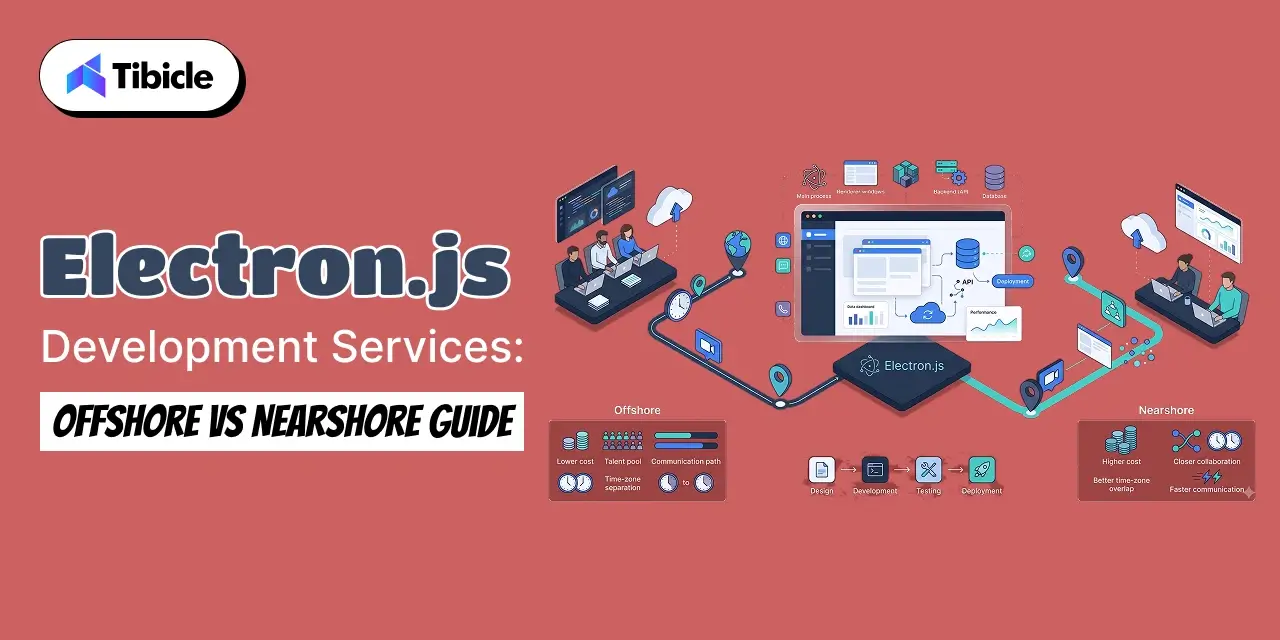
  5. Dotsquares 

    Team: 1,000+ • Enterprise & e-commerce expertise • Multi-module application development

    Dotsquares handles high-volume, multi-module React Native projects where team capacity is a deciding factor. With 1,000+ certified developers, analysts, and testers on staff, they are built for complex, long-duration enterprise apps. Clutch reviewers highlight their ability to manage cross-functional dependencies without losing delivery speed. They function less like a hire react native developers agency and more like an embedded engineering department.

    Best For: Large enterprises needing a high-capacity React Native app development firm for multi-phase rollouts.

How to Choose the Right React Native Mobile App Development Company for Your Project

Selecting the right React Native development company depends on your business needs and project scope.

For startups, smaller teams with flexible engagement models work best, typically within a $20–$40/hr budget. Enterprises, on the other hand, require larger teams, certified processes, and structured workflows, often with higher budgets.

Fixed pricing suits clearly defined projects, while dedicated teams are better for long-term development.

Red Flags to Avoid When Hiring React Native App Developers

  • Lack of real case studies or live apps
  • No clear post-launch support
  • No visibility into actual developers
  • Unrealistic fixed pricing for unclear requirements

Why Tibicle Is Worth Shortlisting for Your Next React Native Project

React native app development

Tibicle has quickly positioned itself as a reliable React Native app development company with a strong focus on results. With 60+ completed projects and high client satisfaction, they bring a balance of affordability and innovation.

Their experience in building AI-powered platforms and delivering milestone-based execution ensures transparency and efficiency throughout the development cycle.

If you’re exploring React Native development partners, we’d love to showcase our experience and discuss what would work best for your project.

Conclusion

India continues to lead in mobile app outsourcing, especially in React Native development. While many companies offer similar services, only a few stand out based on quality, reliability, and proven results.

Whether you need a startup-friendly partner or an enterprise-level React Native app development firm, the right choice depends on your project size and expectations.

Start by reviewing portfolios, comparing capabilities, and scheduling consultations with shortlisted companies. Choosing the right team can significantly impact your app’s success in the market.

FAQs

What is the average cost of React Native app development services in India?
Generally, most developers charge between $20 and $40 per hour. Therefore, a basic MVP can cost between $8,000 and $20,000.

How long does a React Native app take to build?
Typically, a simple app takes 8–12 weeks. However, more complex applications may take several months.

Why choose a React Native app development company in India?
India offers high-quality development at significantly lower costs compared to Western countries, along with flexible communication across time zones.

What industries do Indian React Native firms serve best?
Top companies work across fintech, healthcare, e-commerce, edtech, and on-demand services, offering tailored solutions for each sector.

Is React Native still relevant in 2026?
Yes, React Native remains a strong choice due to its cross-platform capabilities, reduced development time, and support from major global companies.

Flutter vs React Native in 2026: Which One to Choose

Introduction

The Flutter vs React Native debate in 2026 is no longer about which one is better. Instead, it’s about which one fits your use case.

According to 2026 forecasts, Flutter holds roughly 46% of the cross-platform market, while React Native sits between 35% and 38%. However, both frameworks continue to power production-ready apps across industries every day.

Flutter vs React Native

Moreover, what’s more interesting is how the performance gap has significantly narrowed. As a result, the old arguments around speed and efficiency are no longer as decisive as they once were.

A few key indicators:

  • Flutter has 170,000+ GitHub stars, while React Native has around 121,000
  • Stack Overflow’s 2025 survey shows Flutter usage at 42% vs React Native at 38%

This guide breaks down the real differences across performance, cost, ecosystem, and use cases so you can choose without second-guessing.

What Changed in Flutter vs React Native in 2026 That Everyone Ignored

Flutter vs React Native

Instead of surface-level feature comparisons, the real shift in cross platform app development comes from architecture upgrades.

Flutter 3.38, Impeller, and WebAssembly Go Stable

Flutter has evolved rapidly with Flutter 3.38. Additionally, it introduces major upgrades such as the Impeller rendering engine and WebAssembly support.

  • Full adoption of the Flutter Impeller rendering engine
  • Stable 120fps rendering on iOS and Android
  • Precompiled shaders eliminate first-render lag (jank)
  • WebAssembly (Wasm) support is now production-ready
  • Compliance with Google Play requirements via NDK r28

As a result, Flutter now controls every pixel on screen, making it extremely powerful for design-heavy and animation-rich apps. Therefore, Flutter app development becomes more predictable across devices.

This makes Flutter app development more predictable across devices compared to traditional native rendering differences.

React Native’s Bridgeless New Architecture Is Now Production-Ready

React Native has undergone one of its biggest transformations:

  • Introduction of the Fabric Renderer
  • TurboModules for faster module loading
  • Replacement of the old bridge with JSI (JavaScript Interface)
  • Fully bridgeless architecture

This eliminates the traditional bottleneck between JavaScript and native layers, significantly improving performance.

As a result, React Native app development now offers:

  • Lower latency
  • Faster UI updates
  • Better scalability for complex apps

Flutter vs React Native Performance in 2026: Actual Benchmark Numbers

Benchmark Numbers

When it comes to Flutter vs React Native performance, generic claims don’t matter anymore, real benchmarks do.

Frame Rate and Rendering Speed Head-to-Head

  • Flutter: 2.1ms per frame
  • React Native: 3.8ms per frame

Flutter still leads due to its direct rendering approach via Impeller, while React Native depends on native components, which vary across platforms.

Cold Start Time and Memory Behaviour

  • Flutter cold start: 1.2 seconds
  • React Native cold start: 1.8 seconds

Both frameworks have improved memory handling significantly, especially on mid-range Android devices after recent updates.

👉 Reality check:
For most apps like e-commerce, booking, or content platforms, this difference is barely noticeable to users.

Flutter vs React Native for App Development: The Cost and Hiring Truth

Hiring Truth

Beyond performance, the biggest factor in mobile app framework comparison is cost and developer availability.

Developer Availability by Market

  • JavaScript developers outnumber Dart developers by 4x
  • React Native job postings are 2x higher in North America

This directly impacts:

  • Hiring speed
  • Salary costs
  • Team scalability

React Native clearly wins in developer availability.

Time to Market Across Project Types

  • Flutter MVP: 12–16 weeks
  • Native development: 20–28 weeks

Flutter enables faster builds due to:

  • Single codebase
  • Rich pre-built widgets
  • Less dependency on platform-specific UI

However, teams must factor in Dart onboarding time when choosing Flutter.

Ecosystem Maturity and Long-Term Maintenance in Flutter vs React Native Comparison

Choosing the best framework for mobile app development isn’t just about launching, it’s about scaling.

Plugin Ecosystem Health in 2026

  • Flutter:  52,000 packages on pub.dev
  • React Native: Access to npm (largest ecosystem globally)

Flutter offers:

  • Better consistency
  • Higher-quality official plugins

React Native offers:

  • Larger ecosystem
  • But inconsistent plugin maintenance

What Scaling Looks Like After 18 Months

Here’s where things get real:

  • Some companies have migrated from Flutter to React Native at scale
  • Reasons include:
    • Limited native SDK support
    • Shortage of senior Dart developers

React Native becomes stronger in:

  • Long-term maintenance
  • Enterprise-level scaling

Flutter or React Native: A Use Case Decision Matrix

This is where the real decision happens.

Cases Where Flutter Wins

Choose Flutter if you need:

  • Pixel-perfect UI consistency across platforms
  • Heavy animations or custom design systems
  • Multi-platform apps (mobile, web, desktop)
  • Strong performance for data-heavy apps

Flutter’s Isolates make it excellent for:

  • Image processing
  • Large data parsing
  • Background computations

Cases Where React Native Wins

Choose React Native if you need:

  • Deep native integrations (fintech, healthcare)
  • Faster hiring and onboarding
  • Long-term scalability
  • Strong community and enterprise support

It’s ideal for:

  • E-commerce platforms
  • Banking apps
  • Large-scale production systems

Conclusion

Conclusion

The Flutter vs React Native comparison in 2026 comes down to two clear choices:

  • Flutter → Best for design control, UI consistency, and multi-platform reach
  • React Native → Best for developer availability, native integrations, and scalability

Most importantly:

👉 Performance is no longer the deciding factor.

Instead, your decision should depend on:

  • Your team’s expertise (Dart vs JavaScript)
  • Project complexity
  • Long-term maintenance strategy

FAQs

Is Flutter faster than React Native in 2026?
Yes, Flutter still leads in raw rendering performance. Benchmarks show 2.1ms per frame vs 3.8ms, but both are fast enough for most apps.

Which framework has more job opportunities in 2026?
React Native leads with roughly 2x more job postings, especially in the US and Canada. The JavaScript ecosystem remains significantly larger.

Can Flutter apps target web and desktop in 2026?
Yes. Flutter supports mobile, web, and desktop from a single codebase. WebAssembly support is now stable, making web apps production-ready.

Is React Native New Architecture stable for production?
Yes. The bridgeless architecture with Fabric and TurboModules is production-ready and eliminates previous performance bottlenecks.

Which framework is better for fintech or healthcare apps?

React Native is generally preferred due to:

  • Strong native SDK support
  • Better compliance capabilities
  • Larger developer pool

How many packages does Flutter have compared to React Native?

Flutter has around 52,000 packages on pub.dev. React Native uses npm, which is larger but less consistent for mobile-specific plugins.

5 Best Flutter Developers to Hire in 2026

Introduction

If you’re planning to hire Flutter developer talent in 2026, you’re not alone. Flutter now powers a huge chunk of the cross-platform app market, with millions of developers actively building apps every month. Businesses choosing Flutter are saving up to 30–40% in development costs since they don’t need separate iOS and Android teams.

flutter developers

But here’s the reality: finding the right developer is getting harder. Great Flutter developers are in high demand, and one wrong hire can lead to delays, bad architecture, and wasted budget. That’s why choosing wisely matters.

In this guide, I’ve broken down the 5 best places and companies to hire Flutter developers in 2026, based on quality, pricing, and reliability.

Why Hiring the Right Flutter Developer Matters More in 2026

flutter developers

The demand to hire Flutter developers is growing faster than ever. The global app development market is expected to explode in the coming years, and Flutter is right at the center of it.

With new upgrades like the Impeller rendering engine and WebAssembly support, Flutter apps are becoming more powerful, but also more complex to build properly.

At the same time, experienced developers are limited. Companies are now competing with strong salary packages just to secure senior talent.

So hiring isn’t just about filling a role anymore; it’s about finding someone who can build scalable, future-proof apps.

What a Skilled Flutter Developer Must Know in 2026

A good Flutter developer today needs more than just basics. They should have:

  • Strong command of Dart (not just syntax, but real-world usage)
  • Experience with state management like BLoC, Riverpod, or Provider
  • Firebase integration and handling platform-specific features
  • Understanding of the Impeller for performance optimization
  • Knowledge of CI/CD pipelines and Clean Architecture

If they lack these, you’ll likely face issues later in scaling your app.

The 5 Best Flutter Developers and Companies to Hire in 2026

flutter developers

If you’re looking to hire Flutter developer talent, these are some of the best options available right now:

1. Tibicle: Best for Full-Cycle Mobile App Development on a Startup Budget

Clutch Rating: 4.9/5 for cost | 18 verified reviews

Most Common Project Size: $10,000 – $49,999

Hourly Rate: $25–$49 | Minimum Project: $1,000+

If you’re a startup or a growing SMB that needs a Flutter app done right, without paying enterprise agency rates, Tibicle is the name that keeps coming up. Since 2020, Tibicle has delivered 60+ projects with a 100% job success rate, which honestly says more than any marketing claim could.

Tibicle stands out by offering comprehensive mobile app development, including Flutter, React Native, web applications, and AI integration, all under one engagement. This eliminates fragmented teams and handoff gaps.

Their sprint-based delivery model ensures weekly check-ins and transparency, keeping you informed about your project’s progress. Clients have praised Tibicle for launching apps on the App Store and Play Store with military-grade encryption, consistently meeting timelines, which is rare for agencies at this price point. For cross-platform Flutter apps with AI integration at competitive Indian prices, Tibicle is the top choice in 2026.

Best for: Startups and SMBs looking for cost-effective, high-quality Flutter development with modern features like AI.

2. Jafton: Best for AI-First Flutter Projects

Clutch Score: 39.6/40.0 | Flutter Specialization: 100%

Hourly Rate: $50–$99 | Minimum Project: $25,000

Jafton has carved out a very specific niche: Flutter apps that are built AI-first, from day one. Their focus is 80% mobile development and 20% custom software, and they’re one of the few agencies actively integrating Gemini and OpenAI APIs directly into Flutter apps at the architecture level.

Their near-perfect Clutch score reflects a team that takes quality seriously. The $25,000 minimum project size means they’re not the right fit for early-stage exploration or small feature builds, but if you have a funded product and need an AI-powered Flutter app built to scale, Jafton is worth the conversation.

Best for: Startups and product teams that want Flutter and AI features deeply integrated, not bolted on as an afterthought.

3. Surf: Best for Banking and High-Load Apps

Clutch Ranking: Top 5 globally in the Flutter category | Specialization: Neobanks, retail, legacy tech modernization

Surf is a leading Flutter development company known for its proprietary toolset, Surf Gear, which standardizes its processes and can reduce routine task time by up to 16 times. This commitment to infrastructure highlights their focus on long-term quality rather than just completing projects individually.

They address the “shader compilation jank” issue on high-end iOS devices, a common problem overlooked by many Flutter agencies. Surf’s expertise with Impeller ensures a native feel on both platforms. Focused on neobanking, retail, and modernizing legacy technology, they have a strong grasp of regulated environments and security-focused development. While not ideal for quick MVPs, they excel in applications where performance and security are critical.

Best for: Enterprises and regulated industries that need secure, high-load Flutter applications.

4. Appinventiv: Best for Hire Flutter Developers India

Clutch Rating: 4.8/5 | 47 verified reviews | Team Size: 1,600+ professionals

Hourly Rate: $25–$49 | Minimum Project: $10,000

Appinventiv is a top choice for large-scale projects at competitive prices, comparable to Indian rates. With over 1,600 professionals, they’ve worked with major clients like KPMG, Domino’s, IKEA, and Adidas, and have been recognized by the Financial Times as a high-growth company in the Asia-Pacific region.

The $25–$49 hourly rate is where it gets interesting. You’re getting a team that has worked with enterprise-level clients at a rate that most US or European agencies charge for mid-level developers. That’s a meaningful cost advantage for mid-market businesses that can’t justify $150/hr US rates but can’t afford to compromise on quality either.

Best for: Mid-market businesses that want to hire Flutter developers from India at competitive rates without cutting corners on quality or delivery standards.

5. Vention: Best for Dedicated Flutter Development Teams

Formerly: GlobalDev | Clutch Rating: 4.9/5 | 87 verified reviews | Team Size: 3,000+ engineers globally

Hourly Rate: $50–$99 | Minimum Project: $25,000

Vention (formerly GlobalDev) is the right answer when you need a remote Flutter developer team that integrates seamlessly into your existing product workflow and stays for the long haul. With 87 verified Clutch reviews and a 4.9 rating, they’ve proven this at scale.

Client feedback highlights the quick ramp-up of Vention developers, who integrate into existing BLoC architectures within a week, an impressive feat for external teams. This demonstrates real Flutter expertise beyond just resume claims.

At 3,000+ engineers across multiple global offices, they also have the capacity to scale a team up or down without the knowledge-drain that kills most offshore engagements.

Best for: Product companies that need a dedicated remote Flutter developer team with strong long-term capacity, real architecture continuity, and knowledge retention.

How to Vet a Flutter Developer Before You Hire

Before you hire a dedicated Flutter developer, make sure you check these things:

  • Portfolio: Look for real apps published on App Store or Play Store
  • Technical skills: Give a small assignment involving APIs and state management
  • Code quality: Aim for developers who follow testing practices (80–90% coverage)
  • Communication: They should explain technical decisions in simple terms
  • Offshore planning: A proper offshore team usually needs at least $20,000/month to be effective

Why Tibicle Stands Out as a Flutter Development Partner

flutter developers

We’ve worked with businesses across different stages, early-stage startups, funded scale-ups, and SMBs trying to modernize legacy apps, and the problems are usually the same: budget is real, timelines are tight, and the team needs to communicate clearly without being hand-held.

That’s exactly the gap Tibicle is built to fill. 60+ projects delivered with a 100% job success rate since 2020. Every Flutter app we build includes AI integration capabilities, military-grade encryption where needed, and cross-platform deployment on iOS, Android, and web under a single engagement, no vendor juggling.

Our hiring model is flexible: hourly at $25–$49/hr, a dedicated Flutter developer embedded in your team, or a fixed-scope delivery. No bloated agency overhead, no surprise invoices, no communication black holes. Just clean delivery with weekly accountability built in.

If you’re evaluating Flutter development partners right now, we’d love to show you what we’ve built and talk through what makes sense for your project.

Conclusion

Choosing the right Flutter developer depends on your goals, budget, and timeline.

If you’re building something complex or AI-driven, Jafton is a great pick. For enterprise-grade systems, Surf is reliable. Appinventiv and Vention cover mid-range needs well.

If you’re looking for a balance of cost, quality, and flexibility, especially as a startup, Tibicle is definitely worth considering.

At the end of the day, the right hire isn’t just about coding; it’s about building something that works, scales, and lasts.

FAQs

How much does it cost to hire a Flutter developer in 2026?
It depends on location and experience. Offshore developers typically charge $25–$49/hour, while mid-tier developers range between $50–$99/hour.

How long does it take to hire a Flutter developer?
Freelance platforms can match you within a few days. Agencies may take 2–4 weeks, depending on project scope.

Is Flutter still worth it in 2026?
Yes, absolutely. Flutter continues to dominate cross-platform development with strong performance improvements and growing adoption.

What is the difference between freelance and dedicated developers?
Freelancers are better for short-term work. Dedicated developers work long-term and take ownership of your product.

Why hire Flutter developers from India?
India offers skilled developers at affordable rates, making it one of the best choices for quality development within budget.

When Machines Teach Minds: The New Face of Education

Introduction: Education at an Inflection Point 🎓

Education has always been the foundation of human progress.From the earliest oral traditions to the invention of the printing press, from chalkboards to digital classrooms, every era has redefined how knowledge is shared and preserved. Yet today, we stand at the edge of a transformation unlike any other. 

Artificial Intelligence Education

Artificial Intelligence (AI) is not just another tool in the educator’s kit. It is a force reshaping the very structure of learning. Unlike past technologies that enhanced the way knowledge was delivered, AI goes further: it adapts, analyzes, and evolves with learners in real time.

The question is no longer if AI will transform education, but how fast institutions, educators, and students can embrace it. The changes we are witnessing are not incremental; they are exponential. AI is helping personalize education, democratize access, empower teachers, and prepare learners for an unpredictable future. For the first time, education is becoming as dynamic and adaptive as the students it serves. 

But with such sweeping change comes both opportunity and responsibility ⚖ . If harnessed well, AI has the potential to make education more inclusive, efficient, and impactful than ever before. If ignored or misused, it risks deepening divides and creating new challenges. 

This blog explores how AI is transforming the education sector, the opportunities it creates, the challenges we must navigate, and how EdTech solutions showcase the practical impact of this transformation.

The transformation Waves of AI in Learning

Artificial Intelligence Learning

Learning That Learns You 👩 🎓

One of the greatest criticisms of traditional education is its one-size-fits-all approach. Students have different learning speeds, styles, and interests, yet most classrooms still follow a rigid, standardized path. AI changes this equation. 

Adaptive learning systems, powered by AI, analyse a student’s progress in real time and adjust the curriculum accordingly. If a student struggles with algebra but excels in geometry, AI tools can provide more practice problems in one area while allowing advanced progress in another. This ensures that learners neither feel left behind nor held back.

The result is a student-centric model 🌱, where the pace, content, and feedback are all customized. For teachers, this means better insights into student needs. For students, it means greater engagement and confidence in their learning journey. 

This shift is not theoretical, it is already happening. Platforms like DreamBox, Duolingo, and Byju s are proving that personalized, AI-driven learning can scale to millions of students globally. And this is only the beginning. 

Instant Insights: Smarter Evaluation & Feedbacks 📊

Artificial Intelligence Smarter

Assessments are a cornerstone of education. They help students understand where they stand, give teachers visibility into learning outcomes, and guide institutions in measuring performance. But the traditional model of waiting days or weeks for test results no longer meets the needs of today’s fast-paced learning environments.

AI is revolutionizing the assessment process in three key ways: 

  • Instant Feedback : Students can immediately see where they went wrong, giving them the chance to correct mistakes and reinforce concepts on the spot. 
  • Predictive Analytics : By analyzing patterns, AI can forecast future performance and flag students who might be at risk of falling behind allowing teachers to intervene early. 
  • Automated Grading : From multiple-choice tests to even essays, AI can handle grading at scale, reducing the administrative burden on teachers and ensuring consistent evaluation. 

This creates a cycle of continuous improvement, where students learn faster, teachers teach smarter, and institutions maintain higher educational standards.

Augmenting Educators, Not Replacing Them

A common myth is that AI will replace teachers. In reality, AI strengthens their role by removing repetitive tasks and enabling them to focus on what truly matters: inspiring and guiding students.

Here is how AI empowers educators: 

  • Administrative Automation : Attendance tracking, timetable scheduling, and report generation can be handled by AI freeing up valuable teacher time.
  • Actionable Classroom Insights : AI highlights students who need extra help and identifies high performers who can be challenged further. 
  • Creative Focus : Instead of spending evenings grading stacks of papers, teachers can dedicate energy to designing innovative lessons and mentoring students. 

The future classroom is not teacher-less, it is teacher-empowered, where educators and AI work together to bring out the best in every learner. 

Bridging Gaps: AI for Access & Inclusion

Perhaps the most exciting promise of AI in education is its ability to make learning truly universal. For centuries, access to quality education has been shaped by geography, language, and economic status. AI is helping dismantle these barriers.

  • Language Translation : Real-time AI translation tools enable students to learn in their preferred language, making education borderless.
  • Assistive Technologies : Text-to-speech, speech-to-text, and AI-driven learning aids empower visually impaired, hearing-impaired, and neurodiverse learners.
  • Remote Learning Access : Even students in rural or underserved areas can now access the same materials as those in urban centers, bridging the education gap. 

By making education more inclusive, AI is not only leveling the playing field but also creating opportunities for millions who were once left out of the system.

Shaping Tomorrow’s Workforce Today

Artificial Intelligence helping

The world of work is changing faster than curriculum can keep up. Automation, data-driven decision-making, and AI-driven industries are redefining what it means to be job-ready. Education can no longer focus only on memorization and standardized testing; it must prepare learners for skills that will remain valuable in an uncertain future. 

Here s how AI is helping align education with the workforce of tomorrow: 

  • AI & Digital Literacy
    Students are increasingly being introduced to coding, robotics, and data science from an early age. AI-powered platforms make these subjects approachable, interactive, and engaging even for beginners.
  • Critical Thinking & Creativity
    As machines handle repetitive, rules-based tasks, uniquely human skills like problem-solving, communication, and creativity will become core workplace differentiators. AI enables classrooms to focus less on rote learning and more on these higher-order skills.
  • Continuous Upskilling
    The learn once, work forever model is outdated. With industries evolving every few years, lifelong learning is essential. AI-powered EdTech platforms provide professionals with flexible, on-demand courses to keep pace with shifting demands.
  • Global Collaboration
    AI is making education more connected. Virtual classrooms bring together students from across the globe, fostering cultural intelligence and preparing them for borderless careers.

By integrating AI into education today, we re not only helping students master the present we re preparing them to lead in tomorrow’s digital-first world.

Edtech 2.0: The Catalyst of Change

While AI is the driving force, EdTech is the vehicle that brings it into classrooms, institutions, and homes. The pandemic accelerated EdTech adoption at an unprecedented rate, proving that digital-first education isn t just a backup plan it s a core necessity. 

  • Global Growth : According to HolonIQ, global EdTech spending is projected to surpass $404 billion by 2025, with AI-powered platforms leading this growth. 
  • Hybrid Learning Models : Institutions are embracing a mix of physical classrooms and AI-enhanced digital tools, creating flexible and resilient systems of education. 
  • Corporate Learning & Upskilling : It s not just schools and universities, businesses are also adopting EdTech for employee training, professional certifications, and continuous skill development. 

This growth signals a new reality: EdTech is no longer an extra. It is central to the future of education, acting as the bridge between innovation and implementation. 

Our Journey in Edtech Innovation

At Tibicle, we recognized the growing need to move beyond traditional digital classrooms. We understood that true learning happens through engagement, exploration, and interaction not just the delivery of information.

Artificial Intelligence Journey

What the Platform Offers:

This interactive educational gaming platform, built using a dynamic Flutter Flame based engine, transforms complex science concepts into engaging, hands-on learning experiences. The modules include:

  • Chemistry in Motion: An exciting runner game, similar to Temple Run, where students collect protons, neutrons, and electrons on the go to build target elements, making atomic structure an unforgettable experience. 
  • Interactive Biology Lab: A hands-on module where students learn cellular biology by dragging and dropping components to construct detailed plant and animal cells from scratch. 
  • Virtual Physics Workbench: A sandbox environment where users can build and experiment with electric circuits, gaining a practical, intuitive understanding of how different electrical components function together. 

The Change We Witnessed :

  • Institutions report a significant increase in student engagement and retention of complex scientific concepts.
  • Teachers gain a powerful visual tool to explain abstract topics in a tangible, memorable way. 
  • Students feel more motivated and confident as they learn by doing, turning theoretical knowledge into practical skill. 

For us, it is not just a product, it is proof that game-based learning can make education smarter, more accessible, and truly future-ready. It demonstrates our expertise and commitment to helping institutions build a more engaging educational experience for the next generation.

What’s Next: Reimagining the AI-education Forntier

AI in education is still in its early stages. The next decade will bring innovations we can only imagine today:

  • Hyper-Personalization : Fully adaptive curriculum that adjust not just to a student’s pace, but to their interests, goals, and even moods. 
  • Immersive Classrooms : AI combined with AR/VR will allow students to explore history, science, and technology through real-life simulations. 
  • Predictive Education Models : Institutions will anticipate learning needs before students even express them, ensuring proactive support. 
  • Truly Global Classrooms : AI will connect students worldwide, breaking cultural and geographic barriers like never before. 

The road ahead is exciting and it’s moving fast. 

Conclusion: Writing the Next Chapter of Learning

Artificial Intelligence Writing

Education has always evolved with society’s needs. Today, with AI and EdTech, we are entering a chapter that is smarter, more inclusive, and more future-ready than ever before. 

The opportunities are immense: personalized learning, universal accessibility, empowered teachers, and a workforce prepared for tomorrow s challenges. But they also come with responsibilities: bridging the digital divide, ensuring ethical AI use, and embracing innovation without losing the human touch. 

At Tibicle, our journey with app development  has shown us what is possible when technology and education come together with purpose. It is not about replacing what exists, it s about enhancing it, making it more adaptive, and building an ecosystem where both institutions and learners thrive.

The real question is no longer whether AI will transform education it already has. The question is: How quickly can we embrace this transformation and make it work for everyone? 

👉 What are your thoughts: Will AI be the great equalizer in education, or will it widen the gap? I’d love to hear your perspective.

Flutter App Development: Why Top Brands Choose Flutter

Introduction

In the competitive world of digital products, businesses can’t afford slow and expensive Flutter App Development. They need tools that help them build quickly, deliver beautifully, and scale effortlessly.

Flutter app development

That’s why Flutter, Google’s open-source UI framework, has emerged as the preferred option for creating contemporary apps.

Flutter enables teams to develop high-performance, cross-platform applications for mobile, web, and desktop from a single, unified codebase.

From startups to large corporations, Flutter powers many successful apps worldwide, demonstrating that innovation can maintain efficiency.

Why Flutter Is Revolutionizing App Development

Revolutionizing app development
In the past, app development was typically a slow and costly process. Businesses often had to manage separate teams for Android and iOS, maintain two different codebases, and face inconsistent user experiences across platforms.

The result? Higher costs, longer timelines, and more complex maintenance cycles limited innovation and scalability.

Flutter changes that story. With its unified framework and powerful toolset, it enables developers to build faster, maintain more easily, and scale smarter.

Here’s how Flutter transforms the process:

  • Faster Development: Build once, launch everywhere.
  • Native-Level Performance: Compiles to ARM code for exceptionally fast speed.
  • Consistent UI: Unified design across all platforms.
  • Instant Updates: Hot Reload for real-time changes and testing.
  • Cost Efficiency: Fewer developers, less code, more results.

Flutter combines speed, flexibility, and reliability, making it the smartest choice for any business ready to scale.

Why Businesses Are Switching to Flutter App Development

The shift toward Flutter is not just a trend; it is a strategic decision. Here are several reasons why more businesses, from startups to large enterprises, are choosing Flutter in 2025:

  1. Unified Brand Experience:
    Customers expect consistency. Flutter ensures that your brand maintains the same look and feel across all platforms.
  2. Rapid Time-to-Market: 
    Startups need to act quickly. Flutter’s single codebase enables the launch of minimum viable products (MVPs) in weeks rather than months.
  3. Lower Development Costs:
    By building one app for multiple platforms, businesses can save 40% to 60% on development costs, freeing up budgets for growth and marketing.
  4. High Developer Productivity:
    Features such as hot reload, pre-built UI widgets, and real-time testing significantly accelerate the development process.
  5. Backed by Google and the Community:
    Regular updates, Google’s long-term commitment, and a vibrant open-source community make Flutter a future-proof choice.
  6. Scalable Architecture:
    Whether your app has 1,000 or 10 million users, Flutter’s performance remains stable and smooth.
  7. Easy Integration with AI and APIs: 
    In today’s business landscape, companies increasingly rely on AI, analytics, and automation. Flutter’s flexibility facilitates easy connections to APIs and modern backend systems.

Top 10 Popular Apps Built with Flutter App Development

Top 10 Flutter app development
Flutter has become the preferred framework for leading brands globally, powering applications that deliver outstanding performance and seamless user experiences, trusted by millions of users every day.

These apps show how Flutter delivers speed, performance, and scalability across industries.

  1. Google Pay (Tez)

    • One of the most widely used digital payment apps.
    • Flutter ensures smooth performance, consistent UI, and reliable scalability.
  2. BMW (My BMW App)

    • Offers car control, navigation, and remote monitoring.
    • Built on Flutter for a unified user experience across iOS and Android.
  3. eBay Motors

    • Simplifies car buying and selling through a sleek, responsive interface.
    • Flutter reduced development time and improved app performance.
  4. Alibaba Group (Xianyu App)

    • Used by over 50M users for resale and e-commerce.
    • Flutter helped Alibaba maintain quality while scaling rapidly.
  5. Reflectly

    • A personal journaling and mindfulness app known for its beautiful animations.
    • Flutter’s expressive UI tools make its experience smooth and interactive.
  6. Toyota Connected

    • Uses Flutter for in-vehicle applications and real-time data display.
    • Achieves performance consistency across embedded systems.
  7. Google Classroom

    • Streamlines digital education for millions of students globally.
    • Flutter enables quick updates and multi-platform accessibility.
  8. Philips Hue

    • Smart lighting control app with intuitive user design.
    • Flutter powers fast, responsive controls and seamless connectivity.
  9. Realtor.com
    • Leading real estate platform in the U.S.
    • Flutter boosted the speed of feature rollouts and improved design consistency.
  10. Hamilton Musical App

    • Leading real estate platform in the U.S.
    • Flutter boosted the speed of feature rollouts and improved design consistency.

Who Can Benefit from Flutter

Flutter app Benefit

Startups & Entrepreneurs

    • Build and launch your first version quickly.
    • Test ideas, gather feedback, and scale without heavy costs.

Freelancers & Agencies

  • Deliver high-quality apps faster.
  • Reuse components and handle more projects with ease.

Small & Medium Businesses (SMBs)

  • Create customer apps or internal tools affordably.
  • Go digital without needing a full development team.

Enterprises

  • Manage multiple platforms with one solution.
  • Keep performance and design consistent across all devices.

Behind the Code: What Makes Flutter So Powerful

Flutter app Powerful
Flutter is popular not just for its aesthetic appeal but also because it is built on robust technology that makes app development faster, simpler, and more reliable. Here’s what makes Flutter stand out:

  1. Built with Dart – Fast and Reliable
    Flutter uses a programming language called Dart, developed by Google. It is fast because it directly compiles code into a format that devices can understand, allowing apps to run smoothly and start quickly.
  2. Beautiful Graphics with Skia Engine
    Flutter features its own graphics engine called Skia, which renders everything displayed on the screen. This is why apps built with Flutter have a clean, modern design and maintain a consistent look and feel across Android, iOS, and other devices.
  3. Simple Way to Build User Interfaces (UI)
    Flutter allows developers to describe what the interface should look like rather than writing lengthy, detailed instructions. This simplifies the process of creating attractive and interactive designs with less effort.
  4. Consistent Appearance on Every Device
    Since Flutter has control over how the app appears and functions, it relies less on the device’s native design. Consequently, your app will look and feel the same on smartphones, tablets, the web, and desktops, providing a seamless experience everywhere.
  5. Instant Updates with Hot Reload
    Developers can make changes to the code and see the results immediately without restarting the app. This feature saves time, simplifies error correction, and fosters creativity during development.
  6. High Performance Like Native Apps
    Unlike many other frameworks, Flutter apps are designed to perform almost as well as those developed specifically for Android or iOS. This means fast load times, smooth animations, and an excellent user experience.
  7. Strong Support and Regular Updates
    Google and the large Flutter community continuously improve the framework by adding new features, fixing bugs, and preparing it for the future. This dedication makes Flutter a reliable, long-term choice for any business.

At Tibicle, we use Flutter’s powerful features, from its smooth UI engine to its cross-platform speed, to build apps that are fast, beautiful, and ready for the future.

Conclusion: Flutter Is the Future

Flutter is not just another framework; it’s the foundation for modern digital innovation. It enables teams to build beautiful, high-performance apps faster than ever, without sacrificing quality or scalability.

Flutter is transforming the way apps are developed by combining speed, scalability, and seamless design into one powerful framework. It allows teams to:

  • Develop high-quality apps more quickly across multiple platforms.
  •  Reduce costs and development time.
  • Deliver smooth, native-like user experiences.
  • Easily scale as business needs grow.

If global brands trust Flutter to power their digital presence, it’s time to consider it for your next app.

Partner with Tibicle to Build Your Flutter App

At Tibicle, we specialize in developing Flutter apps that combine performance, innovation, and scalability.
Our expert team helps businesses of all sizes:

  • Plan and design stunning Flutter interfaces.
  • Develop cross-platform apps with robust architecture.
  • Integrate with backend systems and cloud platforms.
  • Optimize performance and user engagement.

Whether you’re starting small or scaling globally, Tibicle helps you build smarter with Flutter faster, cleaner, and cost-effectively.

👉 Have an idea? 

Schedule a call or share your project details here, and our team will guide you in building your next app with Flutter.

Key Takeaways

  • Flutter powers some of the world’s most successful apps like Google Pay, BMW, and Alibaba.
  • Enables cross-platform development from one codebase.
  • Delivers faster time-to-market and native performance.
  • Tibicle provides end-to-end Flutter expertise to bring ideas to life.

With Flutter, creating high-performance apps is faster and smarter than ever. Whether you’re launching your first idea or scaling your next major product, Flutter empowers you to develop seamless, future-ready experiences with ease.

Frequently Asked Questions (FAQ)

  1. Why is Flutter considered the future of app development?
    Flutter allows developers to build apps for Android, iOS, web, and desktop from a single codebase – reducing time, cost, and complexity while maintaining high performance.
  2. Can Flutter handle large-scale business applications?
    Yes. Global brands like BMW, Alibaba, and Google Pay use Flutter for enterprise-grade apps due to its stability, scalability, and smooth user experience.
  3. How does Flutter reduce app development costs?
    With just one team and one codebase for all platforms, Flutter cuts development and maintenance costs by up to 40–60% compared to native development.
  4. Is Flutter suitable for startups and MVPs?
    Absolutely. Flutter helps startups launch MVPs quickly, test ideas faster, and bring products to market in weeks instead of months – perfect for fast growth and iteration.
  5. Why should I choose Tibicle for Flutter app development?
    Tibicle’s expert team specializes in end-to-end Flutter development – from UI/UX to backend integration – delivering scalable, high-performance apps that align with your business goals.
  6. Is Flutter the future of app development?
    Yes, Flutter continues to evolve under Google’s support, offering unmatched flexibility and innovation. It’s already shaping the future of cross-platform app development.