Introduction
Retail app development is becoming a strategic priority as mobile commerce is projected to account for nearly 60% of global ecommerce sales by 2026, generating more than $2.4 trillion in mobile transactions worldwide. For SMB retailers, this shift creates both opportunity and pressure. Customers increasingly expect seamless mobile shopping experiences, personalized engagement, and faster checkout flows directly from their smartphones.
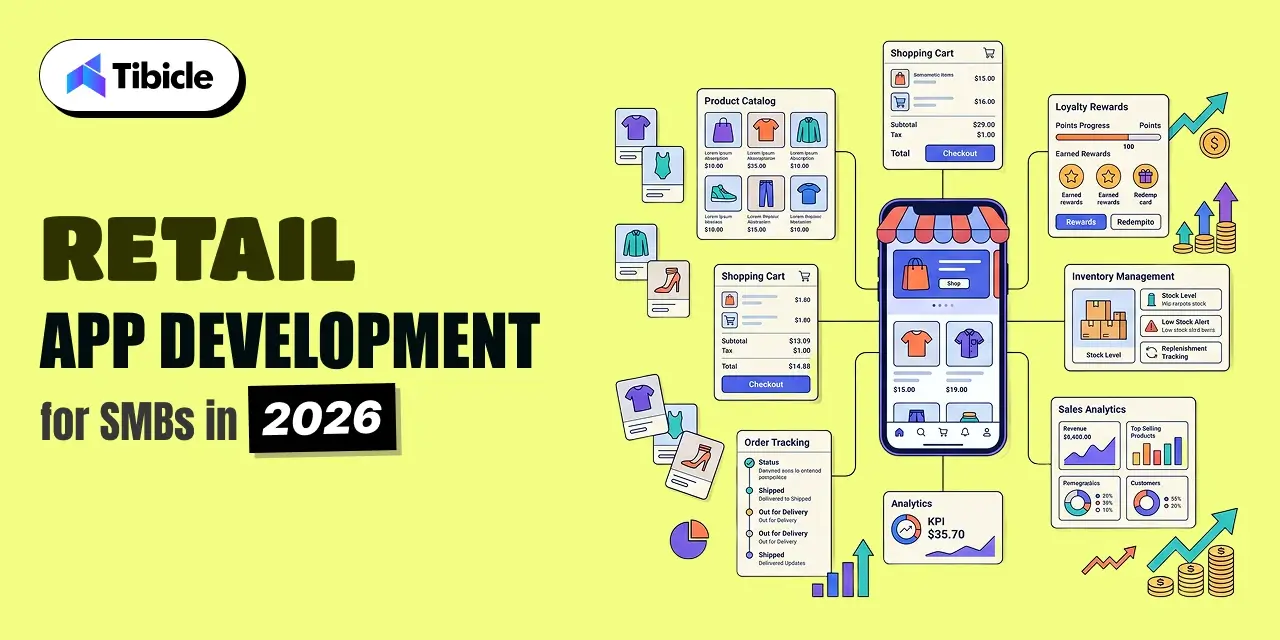
Unlike enterprise retailers, SMBs operate under tighter budgets, smaller operational teams, and stricter ROI expectations. Decisions around retail app development are no longer just about launching an app; they involve platform selection, feature prioritization, maintenance planning, and long-term scalability.
SMB retailers evaluating mobile growth strategies must balance development cost, feature priorities, scalability, vendor selection, and long-term ROI before investing in a retail application.
What Retail App Development Means for SMBs in 2026
How Retail Apps Differ from Mobile-Responsive Websites
Retail app development refers to the process of creating mobile applications for retail businesses that allow customers to browse products, place orders, track purchases, receive offers, and interact directly with brands through smartphones.
Retail app development gives SMBs direct access to customers through a dedicated mobile channel instead of relying entirely on browser traffic. Mobile apps consistently outperform responsive websites in engagement and conversion because they provide faster checkout experiences, personalized recommendations, and stronger retention systems.
Industry studies show mobile apps convert nearly 30% higher than mobile-responsive websites. Push notifications also significantly outperform email engagement rates, allowing retailers to communicate directly with customers without depending entirely on paid advertising algorithms or search traffic. A mobile app for retail business additionally creates an owned customer data channel, giving SMBs more control over customer behavior analytics, retention campaigns, and long-term monetization strategies.
Why 2026 Is a Tipping Point for SMB Retail Apps
Cross-platform frameworks like Flutter and React Native have reduced retail mobile app development costs by approximately 30–40% since 2023. SMBs can now launch iOS and Android apps using a shared codebase without maintaining separate engineering teams.
AI-powered features such as chatbots, recommendation systems, and predictive search are also increasingly available through affordable third-party APIs. Combined with shifting customer behavior, where nearly 70% of US mobile shoppers prefer apps over mobile websites, retail app adoption has become more commercially viable for SMBs than ever before.
Core Features SMBs Should Prioritize (and What to Skip)
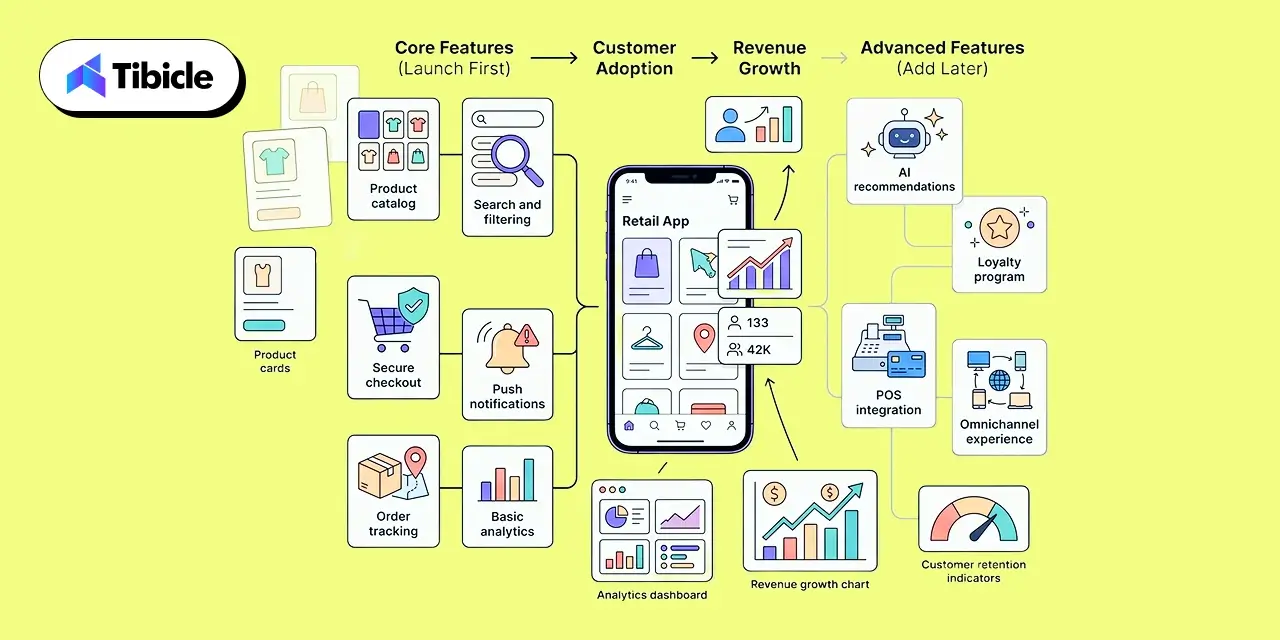
Must-Have Features for an SMB Retail App MVP
An effective retail app MVP should prioritize features directly tied to conversion, retention, and operational simplicity rather than attempting enterprise-level functionality immediately.
Core ecommerce app features should include:
These foundational capabilities support customer acquisition and transaction efficiency while keeping development complexity manageable.
High-Impact Add-Ons Worth the Extra Spend
After establishing a stable MVP, SMBs can improve customer retention and average order value through carefully selected enhancements.
High-value additions include:
- AI-powered product recommendations
- In-app loyalty program systems
- AR product visualization for applicable retail sectors
- POS integration, mobile app connectivity for omnichannel retail solution strategies
These additions typically improve repeat purchases and customer engagement without requiring a full platform rebuild.
Features to Defer Until Post-Launch
Many SMBs overspend by prioritizing advanced functionality too early. Features best delayed until later growth stages include:
- Voice commerce
- Social commerce integrations
- Advanced CRM and ERP connections
- Multi-language support
Deferring these features helps reduce launch complexity and shortens time-to-market.
Retail App Development Approaches: Build, Buy, or Convert
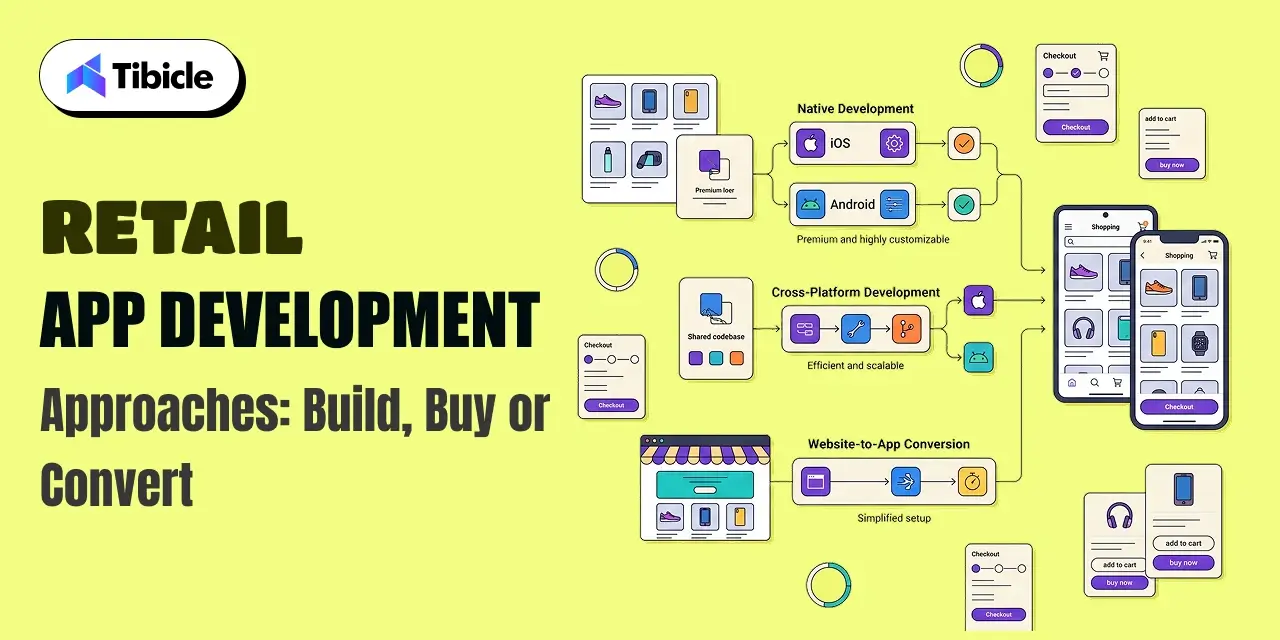
Custom Native Development
Native retail app development offers maximum customization and performance but involves significantly higher costs and longer development timelines. This approach works best for retailers requiring highly customized workflows, advanced hardware integrations, or enterprise-level scalability.
- Timeline: 4–9 months
- Cost: $50K–$220K+
- Risk: Higher upfront investment and slower launches
Cross-platform retail app development enables SMBs to launch on both iOS and Android using a single codebase. This model balances cost efficiency with scalability for most retail applications.
- Timeline: 3–6 months
- Cost: $35K–$120K
- Risk: Minor performance trade-offs for hardware-intensive features
App Builders and Website-to-App Converters
App builders help retailers launch quickly using existing Shopify or WooCommerce stores. They are useful for mobile commerce for small business operations needing rapid deployment.
- Timeline: 2–6 weeks
- Cost: $5K–$25K
- Risk: Limited customization and vendor lock-in
| Approach |
Cost |
Timeline |
Scalability |
Best Fit |
| Native Development |
$50K–$220K+ |
4–9 months |
Very High |
Enterprise retailers |
| Cross-Platform |
$35K–$120K |
3–6 months |
High |
SMBs and scaling brands |
| App Builders |
$5K–$25K |
2–6 weeks |
Moderate |
Small e-commerce stores |
Retail App Development Cost Breakdown for SMBs
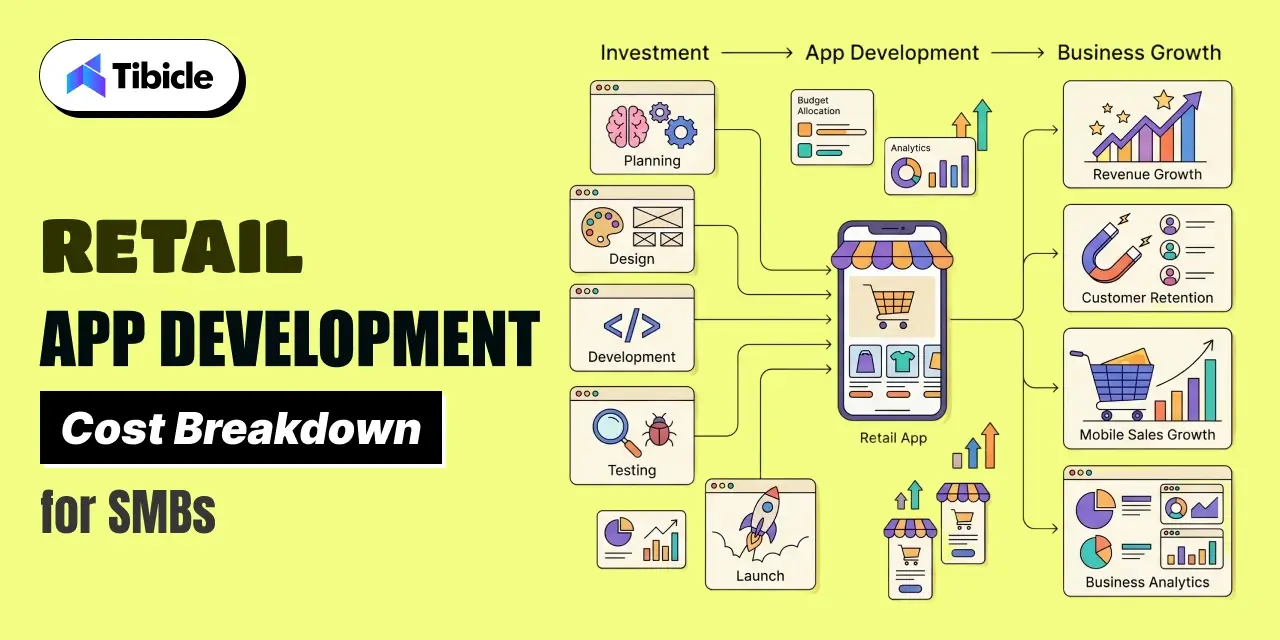
Cost by App Complexity Tier
Retail app development cost varies based on integrations, backend infrastructure, UI complexity, and scalability requirements.
| Complexity |
Estimated Cost |
| Basic MVP |
$25K–$55K |
| Mid-range Multi-Feature App |
$55K–$120K |
| Advanced AI / AR App |
$120K–$220K+ |
Industry benchmarks place the average custom app development investment around $171,450 across industries during 2025–2026.
Hidden Costs Most SMBs Miss
Many retailers underestimate operational expenses beyond engineering work. Common overlooked costs include:
- Discovery and scoping phases ($2K–$10K)
- Annual maintenance (15–20% of build cost)
- App store optimization
- Marketing campaigns
- Third-party API subscriptions
Ignoring these costs often creates budget overruns after launch.
Budget Allocation Framework for a $50K–$80K Build
A typical SMB retail app budget allocation may look like:
- Discovery and planning → 10%
- UI/UX design → 15%
- Development → 45%
- QA and testing → 20%
- Launch and optimization → 10%
This structure improves cost predictability while maintaining product quality.
ROI and Business Impact of a Retail App for SMBs
Revenue Metrics That Matter
Retail apps consistently outperform mobile web experiences in customer retention and monetization. Studies show app users spend nearly three times more and return twice as often as mobile website users.
Push notifications also generate conversion rates between 12–18%, substantially higher than traditional email campaigns. AI personalization features can further increase revenue by approximately 40% through improved product targeting and engagement.
Timeline to Positive ROI
Well-scoped retail apps commonly achieve breakeven within 8–16 months depending on adoption rate, retention, and customer acquisition efficiency.
Businesses generally require:
- 18%+ first-year customer adoption
- 45%+ monthly active user retention
- Strong repeat purchase behavior
to sustain positive ROI growth.
How to Calculate ROI Before You Build
Retail app ROI can be estimated using:
(Projected Revenue + Operational Savings) – (Development + Maintenance + Marketing Cost) ÷ Total Investment
Key metrics to monitor include:
- Retention rate
- ARPU
- Customer lifetime value
- Cart abandonment reduction
Risks and Challenges in SMB Retail App Development
Scope Creep and Feature Overload
Poor scoping creates technical debt that often costs three to five times more to fix later. SMBs should prioritize lean launches over feature-heavy first versions.
Low Adoption After Launch
Performance optimization is critical because 53% of users abandon apps that take longer than three seconds to load.
Vendor Mismatch
Some agencies overengineer solutions designed for enterprise retainers rather than SMB budgets, increasing unnecessary development expense.
Security and Compliance Gaps
Retailers handling payments and customer data must evaluate PCI-DSS requirements, GDPR, and state-level privacy compliance obligations carefully.
Vendor Selection Checklist for SMB Retail App Development
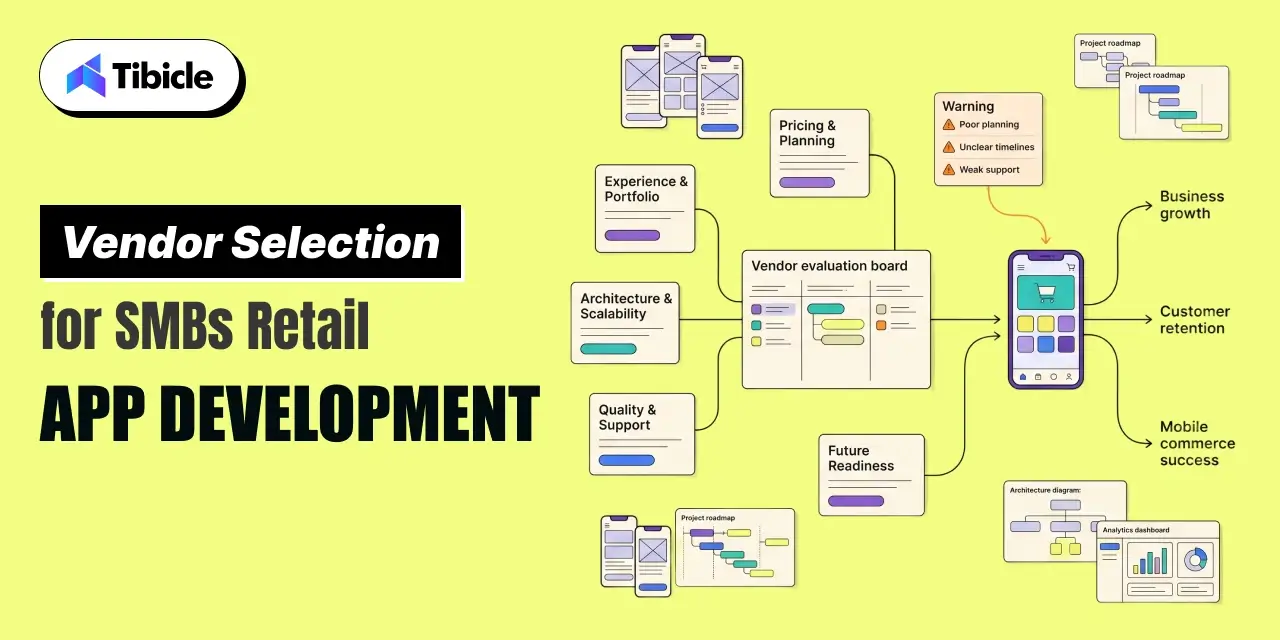
10-Point Evaluation Framework
Businesses evaluating a retail app development company should review:
- Retail-specific portfolio experience
- Fixed-scope pricing options
- Post-launch support agreements
- API-first scalable architecture
- Discovery phase clarity
- Reference clients within a similar revenue size
- Milestone-based project timelines
- Internal QA process
- Data ownership clauses
- AI/ML integration readiness
Red Flags to Watch For
Warning signs include:
- No discovery process before quoting
- Monolithic, outdated tech stacks
- No support for accountability after launch
- Vague delivery timelines
Need help evaluating your retail app options? Talk to Tibicle’s team for a scoped assessment.
Why Tibicle Is a Strong Choice for Retail App Development
What Sets Tibicle Apart for SMB Retail Projects
Tibicle approaches custom retail app development with SMB-focused delivery models designed around predictable budgets and measurable ROI expectations. Their engagement structure prioritizes fixed-scope planning, scalable API-first architectures, and practical launch strategies instead of unnecessary enterprise complexity.
The company supports retail businesses through planning, UI/UX design, mobile engineering, integrations, testing, and post-launch optimization. Tibicle also builds AI-ready architectures so retailers can introduce automation, personalization, and analytics enhancements without rebuilding the platform later.
Post-launch support, operational transparency, and scalable technology planning remain central throughout the engagement lifecycle.
Explore how Tibicle approaches retail app builds. Request a free project scoping call.
Conclusion
SMBs do not need enterprise-scale retail applications to compete effectively in 2026. They need the right feature set, realistic budget planning, scalable architecture, and a vendor capable of aligning development decisions with measurable business outcomes.
For many retailers, a properly scoped $35K–$80K investment can reach breakeven within the first year while improving customer retention, conversion, and operational efficiency substantially.
Talk to Tibicle’s retail app team to scope your build and get a transparent cost estimate.
FAQs
How much does retail app development cost for a small business in 2026?
Retail app development costs generally range from $25K for basic MVPs to more than $220K for advanced platforms with AI, AR, and ERP integrations.
How long does it take to build a retail app MVP?
Most SMB retail app MVPs take between 2–6 months depending on platform strategy, integrations, and feature complexity.
Should SMBs choose native or cross-platform retail app development?
Most SMBs benefit more from cross-platform retail app development because it reduces engineering cost while supporting both iOS and Android through one shared codebase.
What is the average ROI timeline for a retail mobile app?
Well-executed retail apps commonly achieve breakeven within 8–16 months when retention and adoption targets are met.
What features should an SMB retail app include at launch?
Core launch features should include product catalogs, secure checkout, push notifications, order tracking, and analytics dashboards.
How do I evaluate a retail app development company before signing a contract?
Review retail-specific experience, pricing transparency, support terms, technical architecture, references, and milestone-based delivery processes carefully before signing.