Introduction
The global mobile app market is on a trajectory to reach USD 1,103.48 billion by 2034, and businesses that delay their digital transformation are already falling behind. But here is the real challenge: finding the right mobile app development company is not just a vendor decision, it is a product decision. Choosing a top mobile app development company in Ahmedabad directly determines your product’s quality, how efficiently your budget is used, and how fast you reach your market
Ahmedabad has emerged as one of India’s most cost-efficient IT hubs, with developer rates running 40–60% lower than cities like Bangalore and Hyderabad without sacrificing output quality. This is why global startups, SMEs, and enterprises increasingly prefer app development services in Ahmedabad for their digital projects.
This guide breaks down costs, ROI benchmarks, vendor evaluation criteria, and risk factors to help you pick the right mobile app development company in Ahmedabad.
What Does a Top Mobile App Development Company in Ahmedabad Actually Deliver?
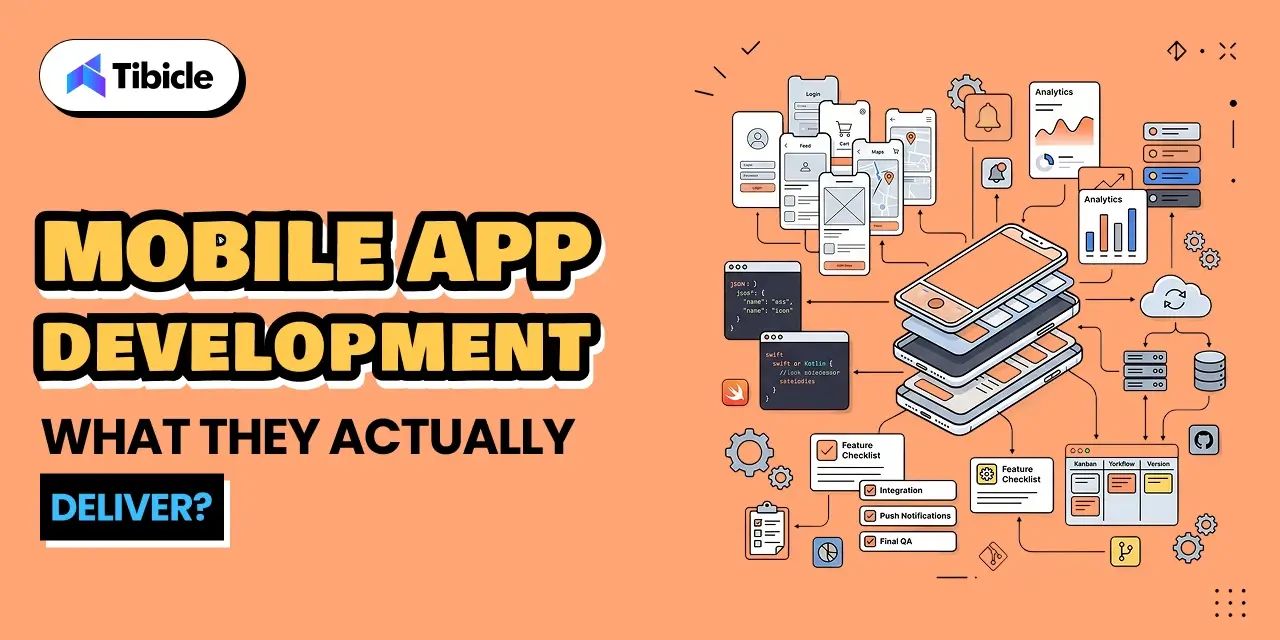
Before comparing vendors, it helps to understand what a full-service mobile app development company actually provides.
Core Service Stack
A capable partner delivers end-to-end app development services: iOS and Android development, cross-platform app development, UI/UX design, quality assurance testing, and post-launch support. These are not optional add-ons,they are the baseline for a production-ready product.
Engagement Models
Most companies offer three engagement models. Fixed Price works best for well-defined projects with a clear scope. Dedicated Team models suit long-term product development where the scope may evolve. Time and Material contracts offer flexibility for agile projects where requirements shift through development cycles.
Why Ahmedabad Is a Strategic Choice for a Top Mobile App Development Company
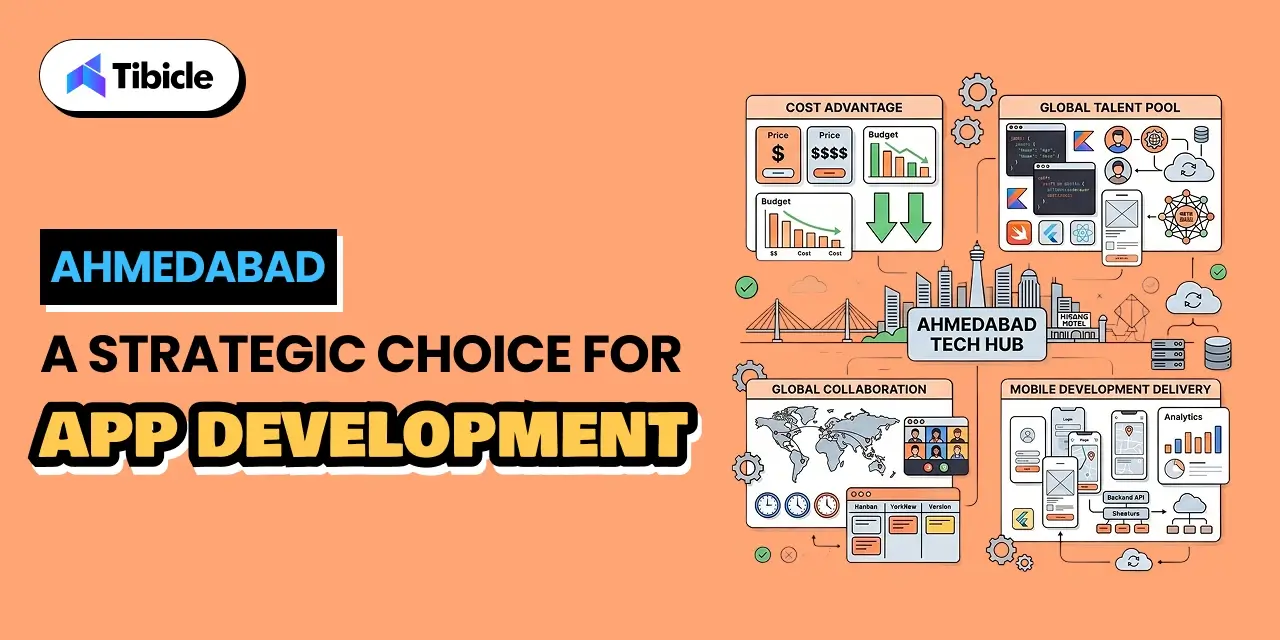
Cost Advantage Over Tier-1 Cities
Ahmedabad developer rates average $20–$25/hour, compared to $30–$50/hour in Bangalore. For a six-month project, that difference compounds into significant savings without any reduction in technical capability. This cost advantage makes app development outsourcing to India an attractive proposition, particularly for Western markets where development costs can be three to five times higher.
Talent Pool and Tech Stack Maturity
India has over 5 million software developers, and Gujarat’s IT sector has grown at 15% year-on-year in its GSDP contribution. Ahmedabad benefits directly from this growth, with a maturing talent pool that is well-versed in Flutter app development, React Native, Swift, Kotlin, and enterprise-grade backend technologies. Mobile app developers in Ahmedabad increasingly work across global projects, which has sharpened both technical skills and professional communication standards.
Time-Zone and Communication Fit for Global Clients
Ahmedabad’s IST time zone (UTC+5:30) offers a meaningful overlap window with European business hours and can accommodate early or late syncs with North American teams. Many established companies in the city have built communication workflows, such as daily standups, sprint reviews, and async documentation, specifically around distributed global teams.
Types of Mobile Apps and Their Business Use Cases
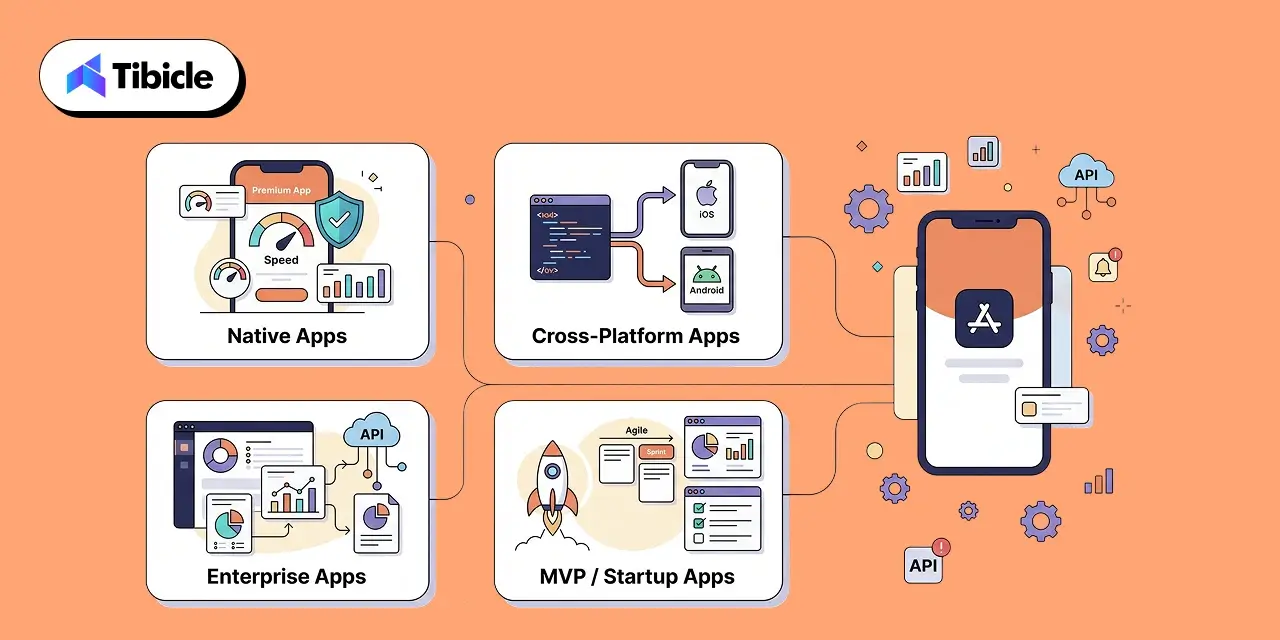
Not every app is built the same way. The right development approach depends on your performance requirements, budget, and target audience.
Native Apps (Performance-Critical Products)
Native apps built separately for iOS and Android deliver the highest performance and full access to device-specific features. They are the right choice for apps where speed, security, and a premium user experience are non-negotiable: healthcare platforms, real-time trading tools, and high-volume consumer apps.
Cross-Platform Apps (Budget-Optimized Multi-OS Launch)
Cross-platform frameworks like Flutter reduce development costs by 30–40% by allowing a single codebase to run on both iOS and Android. For startups and businesses that need to launch quickly across platforms without doubling their development budget, this is the practical, ROI-friendly choice. Custom app development using Flutter has become especially popular for MVP launches and mid-scale SaaS products.
Enterprise Apps (Internal Workflow, CRM, ERP Integrations)
Enterprise mobile solutions address internal operational challenges, field team management, approval workflows, CRM access on mobile, ERP integrations, and automated reporting. These apps are rarely customer-facing, but their impact on operational efficiency is measurable from day one.
MVP / Startup Apps (Market Validation With Lean Budgets)
MVP development is about building just enough product to test a hypothesis in the real market. A well-scoped MVP covering core user journeys and basic analytics allows founders and product teams to validate demand before committing to full-scale development. Agile app development methodology is the standard approach here, with sprint-based delivery keeping the process transparent and cost-controlled.
How Much Does Top Mobile App Development Cost in Ahmedabad?
Cost Breakdown by App Complexity
Prices vary based on features, tech stack, and development team. Use this as a starting benchmark not a final quote.
| App Type |
Feature Scope |
Estimated Cost (INR) |
Timeline |
| Basic / MVP |
Login, forms, profiles |
₹5–12 Lakh |
1–3 months |
| Mid-Complexity |
Payments, dashboards, APIs |
₹12–25 Lakh |
3–6 months |
| High-Complexity |
Real-time sync, AI/ML, multi-role |
₹25–80 Lakh |
6–12 months |
India’s average app development range sits at $6,000–$95,000 depending on complexity, and Ahmedabad-based companies consistently deliver within this range at the lower end of the global cost spectrum.
Hidden Costs Most Vendors Don’t Mention
The line items above cover development, but several cost categories routinely get underestimated or left out of initial proposals. Third-party API licensing for payment gateways, maps, messaging, or analytics adds ongoing recurring costs. Apple Developer Program and Google Play Console fees are mandatory for app store submissions. Post-launch maintenance, including bug fixes, OS compatibility updates, and performance monitoring, typically runs 15–20% of the original development cost annually. Security audits, especially for apps handling financial or health data, are an additional line item that should be budgeted from the start, not bolted on later.
ROI of Investing in a Mobile App for Your Business
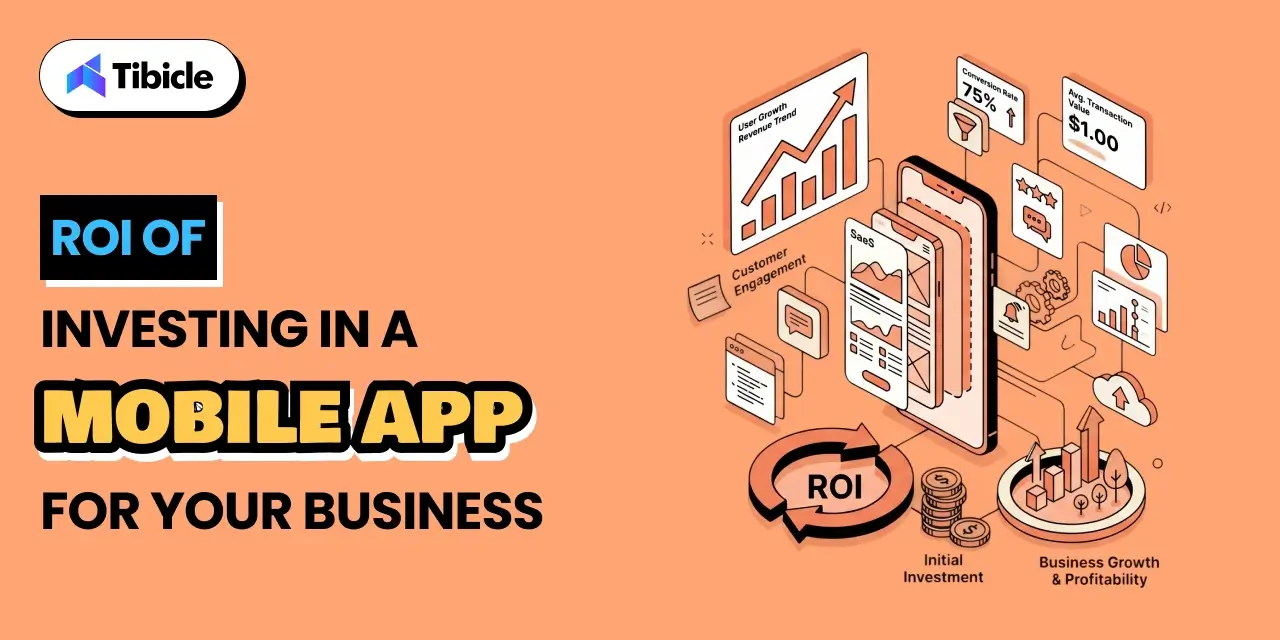
A mobile app isn’t just a digital presence for most businesses, it becomes the highest-ROI channel within the first 12–18 months when built with clear revenue or efficiency goals.
Revenue Impact
Mobile commerce accounted for over 60% of India’s total e-commerce transactions in 2025. For businesses with a consumer-facing offering, a well-built app is not a cost center, it is a direct revenue channel. Subscription models, in-app purchases, and push notification-driven re-engagement all contribute to measurable top-line impact.
Operational Efficiency Gains
For enterprise and B2B applications, ROI often shows up first on the cost side. Automating manual reporting, digitizing approval workflows, and giving field teams real-time data access reduces overhead and human error in ways that are easy to quantify.
Customer Retention and Lifetime Value
Apps increase the frequency and quality of customer touchpoints. Push notifications, loyalty features, and personalized experiences increase retention rates, and a retained customer’s lifetime value is significantly higher than the cost of re-acquisition.
How to Calculate App ROI Before Development Starts
Use this formula as a starting benchmark:
ROI = (Net Revenue from App – Total Development + Maintenance Cost) / Total Cost x 100
Run this calculation with conservative and optimistic revenue assumptions before committing budget. If the break-even timeline is beyond 24 months under the conservative scenario, revisit the scope or monetization model before development begins.
How to Compare Top Mobile App Development Company in Ahmedabad (Side-by-Side)
| Criteria |
What to Look For |
Red Flags |
| Portfolio Depth |
Industry-specific case studies |
Only template-based apps |
| Tech Stack |
Flutter, React Native, Swift, Kotlin |
Outdated or single-framework only |
| Team Structure |
Dedicated PM, QA, DevOps |
No QA or post-launch team |
| Pricing Model |
Transparent estimates, milestone billing |
Lump-sum with no scope doc |
| Client Retention |
Repeat clients, 3+ year relationships |
No references or testimonials |
| Post-Launch Support |
SLA-backed maintenance, version updates |
No support after delivery |
Freelancer vs. Agency vs. Dedicated Team: Which Model Fits?
Freelancers offer the lowest upfront cost but carry the highest risk, no QA, no accountability structure, and high dependency on a single person. Agencies provide a structured team but vary significantly in process maturity; a detailed portfolio review is essential. A dedicated team model where you hire app developers in India through a firm that assigns a committed team to your project offers the best balance of cost, quality control, and long-term scalability for projects beyond the MVP stage. Need help shortlisting the right mobile app development company? Tibicle’s team can walk you through a free project assessment.
Risks of Choosing the Wrong App Development Partner
Most app projects don’t fail because of bad ideas, they fail because of bad partnerships. Know the risks before you sign.
Scope Creep and Budget Overruns
Vague initial agreements lead to scope disputes mid-project. Mitigation: require a detailed Statement of Work (SOW) before signing. Milestone-based billing keeps the vendor accountable and gives you off-ramps if delivery standards slip.
Poor Code Quality and Technical Debt
Badly written code compounds over time. A fast build that cuts corners becomes expensive to maintain, scale, or hand off to another team. Mitigation: Request a code review or architecture walkthrough from a third party before final delivery.
IP and Data Security Gaps
Without a clear IP ownership clause in your contract, you may not legally own the code you paid for. Data handling practices matter equally, especially if your app processes user financial or health information. Mitigation: Ensure your contract includes explicit IP transfer terms and review the vendor’s data security protocols before onboarding.
Vendor Lock-In With Proprietary Frameworks
Some vendors build on proprietary or obscure frameworks that make it difficult or costly to migrate away from them later. Mitigation: insist on industry-standard tech stacks and ensure your codebase and all project assets are handed over completely at project close.
Vendor Selection Checklist to Choose a Top Mobile App Development Company in Ahmedabad
Don’t rely on sales calls alone, a vendor worth hiring will pass every point on this list without hesitation.
10-Point Evaluation Framework
- Verified portfolio with live, downloadable apps
- Industry-specific experience relevant to your domain
- Transparent pricing and clearly documented SOW
- Defined tech stack and documented architecture approach
- Dedicated project manager assigned from day one
- Clear IP ownership terms and executed NDA
- Post-launch SLA with defined response time guarantees
- Agile methodology with sprint-based milestone delivery
- Client references from projects of comparable scale and complexity
- Documented scalability plan for version 2 and beyond
Run every vendor you evaluate through this list before requesting a formal proposal. Any company that cannot answer questions on IP ownership, post-launch support, or their QA process should be removed from consideration immediately.
Why Tibicle Is a Strong Choice for Mobile App Development in Ahmedabad
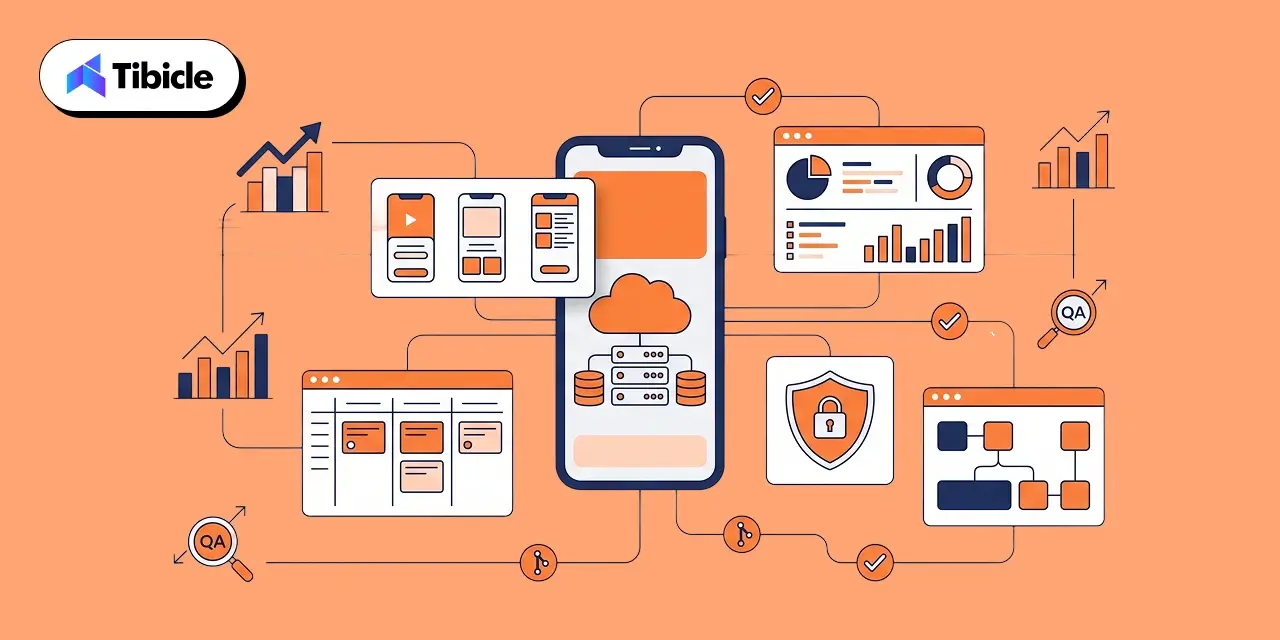
When measured against the vendor checklist above, Tibicle stands out as a strong option for businesses looking for a reliable mobile app development company in Ahmedabad.
Technical Capabilities of a Top Mobile App Development Company in Ahmedabad
Tibicle’s development team works across Flutter app development, React Native, Swift, and Kotlin, covering the full spectrum of native and cross-platform app development requirements. Their backend expertise spans REST APIs, cloud infrastructure, and third-party integrations, which is critical for mid-complexity and enterprise mobile solutions.
Client Engagement Approach of a Top Mobile App Development Company in Ahmedabad
Tibicle operates on an agile app development methodology, with sprint-based delivery and milestone billing built into every engagement. Scope of work documentation is completed before development begins, not after, which significantly reduces the risk of scope creep and budget overruns that affect too many custom app development projects.
Differentiators
What separates Tibicle from generalist vendors is their combination of industry-specific solution design, a transparent post-launch support model with defined SLAs, and a dedicated team structure where clients work with the same project manager, developer, and QA engineer throughout the engagement. These are not marketing claims, they are checkboxes from the vendor evaluation framework outlined in this guide.
For businesses evaluating app development services in Ahmedabad, Tibicle’s approach to hire app developers India through structured, accountable team models reduces the delivery risk that commonly derails projects with less organized vendors. Explore Tibicle’s app development portfolio and schedule a no-obligation consultation.
Conclusion
Choosing the right mobile app development company is not a decision to make based on price alone. The partner you select will directly affect the quality of your product, your ability to control costs through development, and the long-term scalability of what you build.
Ahmedabad offers a compelling combination of cost efficiency, technical talent, and delivery maturity, but only when you work with the right company. Use the vendor checklist and cost benchmarks from this guide as your evaluation framework before signing any contract.
Get in touch with Tibicle today to discuss your app development requirements and receive a detailed project estimate.
FAQs
How much does a top mobile app development company in Ahmedabad charge to develop a mobile app?
Basic apps start at ₹5–12 Lakh. Mid-complexity apps with payment gateways, dashboards, and API integrations range from ₹12–25 Lakh. Enterprise-grade apps with real-time sync, AI/ML features, or multi-role systems can go up to ₹80 Lakh depending on scope and timeline.
How long does a top mobile app development company in Ahmedabad take to build a mobile app?
MVP apps typically take 1–3 months. Feature-rich apps with payment integrations, dashboards, and third-party APIs generally require 4–8 months. Enterprise apps with complex backend requirements can extend to 12 months or beyond.
What do top mobile app development companies in Ahmedabad recommend native or cross-platform?
Native development works best for performance-heavy or security-critical products. Cross-platform frameworks like Flutter reduce development costs by 30 to 40% and are the practical choice for businesses launching simultaneously on iOS and Android with a defined budget.
What should I check before hiring a mobile app development company?
Verify their live app portfolio, request client references, confirm IP ownership terms in writing, review their post-launch SLA, and ensure they follow agile delivery with documented sprint-based milestones.
Is Ahmedabad cheaper than Bangalore for app development?
Yes. Ahmedabad developer rates average $20–$25/hour compared to $30–$50/hour in Bangalore, with comparable technical output quality. This makes app development outsourcing to India particularly attractive when Ahmedabad-based companies are included in the shortlist.
What’s the ROI of building a custom mobile app for my business?
ROI depends on your revenue model, subscriptions, in-app purchases, or operational cost savings. Most businesses with a validated market need to see measurable returns within 12–18 months of launch, provided the app is built to the right scope and maintained post-launch.