
Cross-Platform App Development Guide for All Businesses

Jun 08, 2026

Read in 4 Minutes
Table of Contents
- Introduction
- What Is Cross-Platform Development?
- Why Businesses Are Shifting to Cross-Platform Development in 2026
- Top Cross-Platform App Development Frameworks Compared
- Cross-Platform App Development Cost Breakdown
- Measuring ROI of Cross-Platform Development
- Use Cases: Which Industries Benefit Most?
- Risks and Challenges to Plan For
- How to Choose the Right Cross-Platform App Development Company
- Why Tibicle Is a Strong Choice for Cross-Platform App Development
- Conclusion
- FAQs
Introduction
The global cross-platform app development software market grew from $104.6 billion in 2025 to nearly $121 billion in 2026, expanding at a 15.7% CAGR as businesses accelerate mobile-first transformation strategies. For many organizations, building separate native applications for iOS and Android no longer makes financial or operational sense because it doubles engineering effort, increases maintenance complexity, and slows product launches.
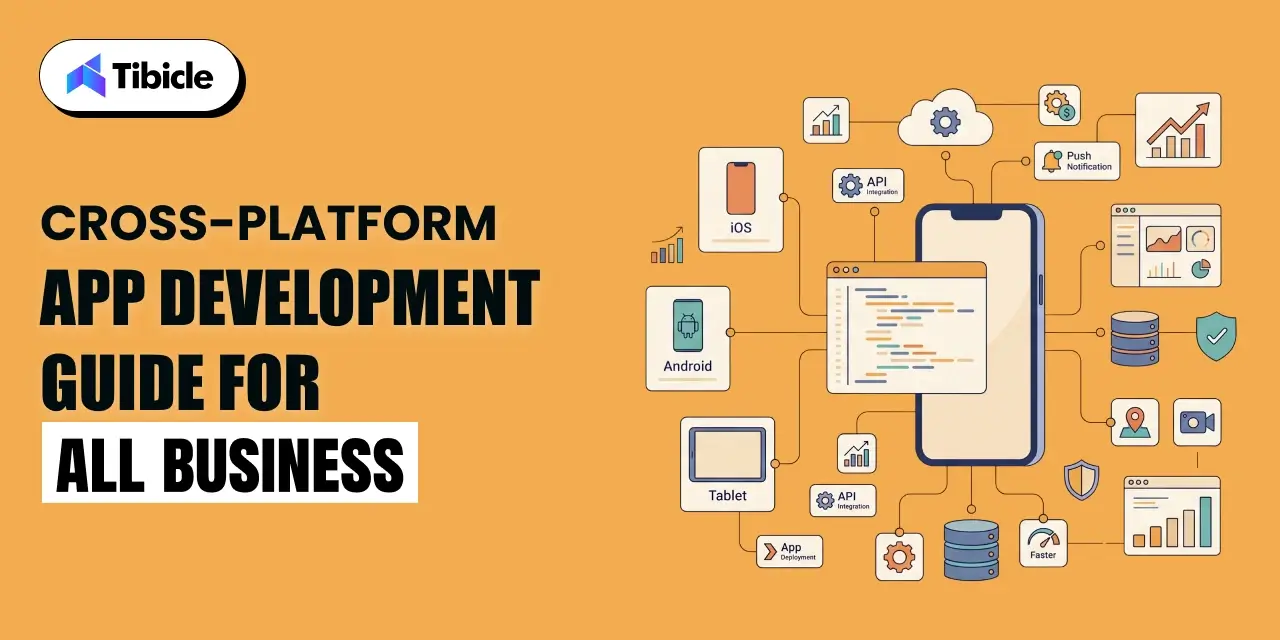
Executives evaluating digital products now prioritize faster delivery, lower app development cost, and scalable customer experiences across devices. As a result, cross-platform development has become a strategic choice for startups, enterprises, SaaS platforms, logistics companies, and consumer brands seeking broader reach without maintaining two independent mobile teams.
This article explores how cross-platform mobile app development works, what it costs, how businesses calculate mobile app ROI, and how to evaluate the right technology and vendor strategy in 2026.
What Is Cross-Platform Development?
How Cross-Platform App Development Uses a Shared Codebase
Cross-platform app development allows developers to build iOS and Android applications using a single codebase rather than creating two separate native applications. The shared logic layer is typically written in Dart, JavaScript, TypeScript, or Kotlin, depending on the framework.
Modern cross-platform app development frameworks either compile directly into native machine code or use optimized bridges to communicate with native APIs. This architecture enables access to device capabilities such as GPS, push notifications, biometrics, camera systems, and offline storage while improving code reusability across platforms.
Why Businesses Are Shifting to Cross-Platform Development in 2026
How Cross-Platform App Development Reduces Costs
One of the biggest reasons companies choose cross platform app development is cost efficiency. Industry studies from 2025–2026 show that businesses reduce development costs by approximately 30–40% compared to maintaining separate native iOS and Android teams. Development timelines also decrease substantially because product teams build, test, and deploy features simultaneously across platforms.
Reports from Bolder Apps indicate that overall engineering effort can drop by as much as 50–80% depending on app complexity and feature overlap. Faster release cycles directly improve business agility and competitive response time.
Unified Codebase for Simplified Maintenance
A shared codebase simplifies long-term maintenance because updates, bug fixes, and feature releases apply across platforms simultaneously. Instead of coordinating separate engineering pipelines, organizations manage one deployment cycle, one QA workflow, and one product roadmap.
Broader Market Reach from Day One
Businesses launching on both iOS and Android immediately gain broader customer access. Android currently holds approximately 72.5% global mobile OS market share, while iOS maintains nearly 27%, making simultaneous deployment critical for growth-focused businesses.
Top Cross-Platform App Development Frameworks Compared
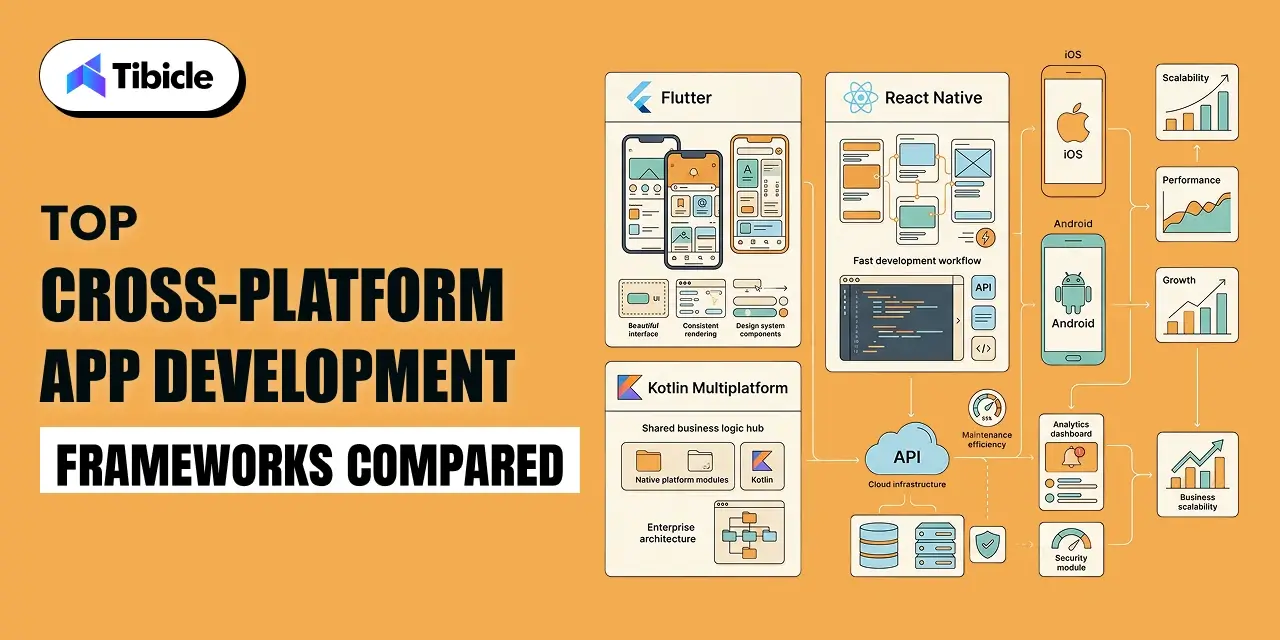
Flutter vs React Native vs Kotlin Multiplatform in 2026
Businesses evaluating cross-platform app development frameworks typically compare Flutter, React Native, and Kotlin Multiplatform based on performance, developer ecosystem, UI flexibility, and scalability.
| Factor | Flutter | React Native | Kotlin Multiplatform |
| Language | Dart | JavaScript/TypeScript | Kotlin |
| Rendering | Custom engine (pixel-perfect UI) | Native components | Native UI per platform |
| Best For | UI-heavy apps, MVPs, e-commerce | Teams with JS expertise | Shared logic + native UI |
| Developer Adoption (2025) | 46% | 28% | 120% YoY enterprise growth |
| Performance | Near-native | Near-native | Native-grade |
| Backed By | Meta | JetBrains |
Flutter performs especially well for visually rich applications requiring consistent UI rendering across devices. React Native remains popular because of its mature JavaScript ecosystem and large developer community. Kotlin Multiplatform is increasingly adopted by enterprises seeking shared business logic while preserving native UI precision.
When to Use Each Framework
Framework selection depends on product goals, internal team expertise, and platform priorities. Flutter is often preferred for startups and UI-centric applications. React Native works effectively for businesses already invested in JavaScript ecosystems. Kotlin Multiplatform is better suited for enterprise-grade applications needing deeper native integration with shared backend logic.
Cross-Platform App Development Cost Breakdown
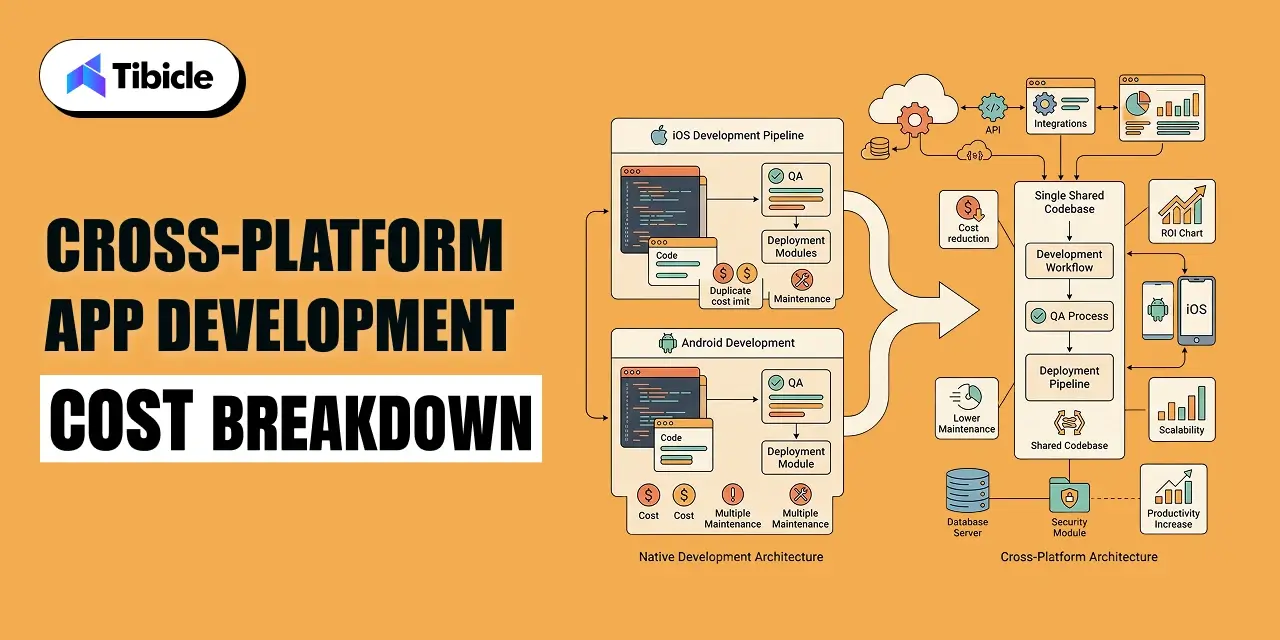
Cross-Platform App Development Cost by Complexity
The total cost of cross-platform mobile app development depends primarily on application complexity, integrations, backend architecture, and scalability requirements.
| Complexity | Cross-Platform Cost | Native (Both Platforms) Cost |
| Basic (MVP/utility) | $15,000 – $50,000 | $50,000 – $100,000 |
| Mid-level (business app) | $50,000 – $120,000 | $100,000 – $200,000 |
| Complex (enterprise/AI) | $120,000 – $300,000+ | $200,000 – $500,000+ |
Key Cost Drivers Beyond Development
Several operational factors influence the overall cost of app development beyond engineering hours. These include backend infrastructure, API integrations, authentication systems, cloud hosting, analytics tools, QA testing, and post-launch support.
Businesses should also account for annual maintenance costs, which typically range between 15–25% of the initial project investment. Industry benchmarks across more than 5,000 projects place the average custom mobile app development cost at around $171,450 in 2025–2026.
Measuring ROI of Cross-Platform Development
Direct Financial Impact
Cross-platform app development usually delivers 30–50% lower total development costs than maintaining dual native applications. Faster launches also accelerate revenue generation because businesses can acquire users simultaneously across Android and iOS markets.
Global consumer spending on mobile applications is projected to reach $233 billion in 2026, making launch speed increasingly important for monetization.
Operational Efficiency Gains
Organizations benefit operationally from maintaining one engineering team instead of two platform-specific teams. Unified QA workflows, consolidated DevOps pipelines, and shared deployment systems improve operational efficiency while reducing overhead.
Studies show that maintaining nearly 80% shared codebase coverage can reduce long-term maintenance costs by approximately 30–40%.
ROI Calculation Framework for Executives
A simplified ROI framework for executives can be structured as:
(Revenue Generated + Operational Savings) ÷ Total Development and Maintenance Cost = ROI Multiplier
This calculation helps businesses evaluate long-term platform efficiency rather than focusing solely on initial development expense.
Use Cases: Which Industries Benefit Most?
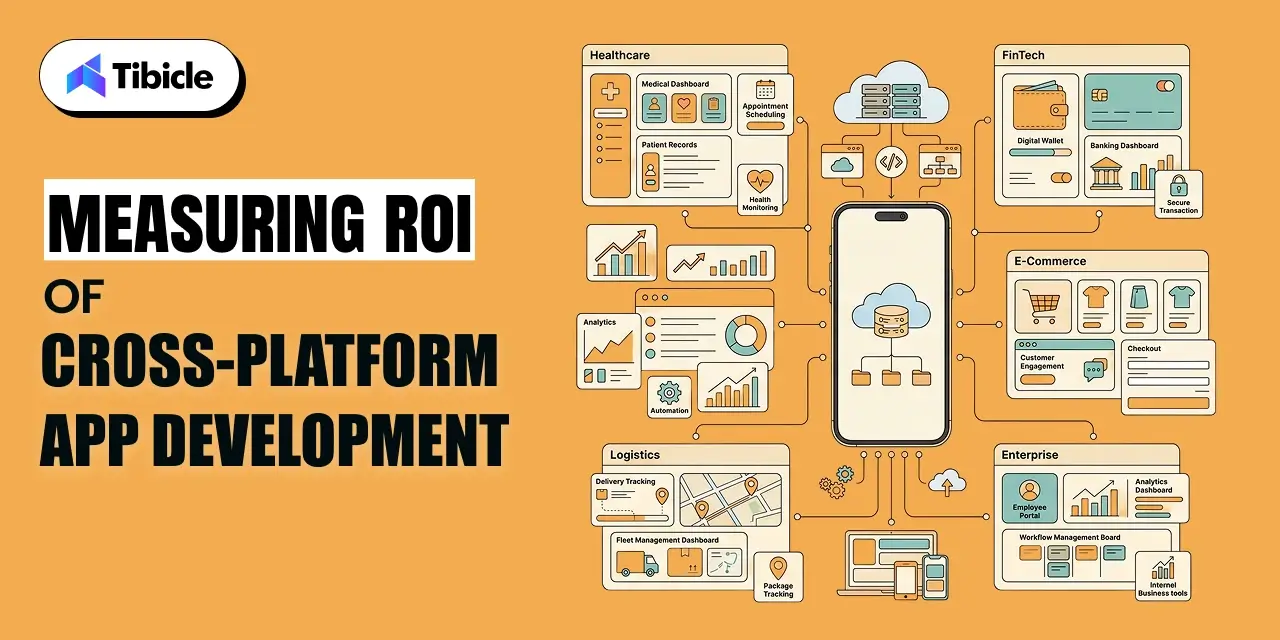
E-Commerce and Retail
Retail businesses benefit from faster feature deployment, synchronized customer experiences, and reduced maintenance overhead across shopping platforms.
Healthcare and Telemedicine
Healthcare platforms use cross-platform mobile app development to launch patient portals, appointment systems, and remote consultation apps faster while maintaining scalability.
FinTech and Banking
Financial services companies use shared codebase architectures to reduce operational complexity while accelerating mobile banking and payment product rollouts.
On-Demand Services and Logistics
Delivery platforms and logistics businesses rely on multi-platform app strategies to manage customer apps, driver systems, and operational dashboards efficiently.
Enterprise Internal Tools
Enterprises frequently build employee management apps, analytics dashboards, and internal workflow tools using cross-platform architectures for simplified maintenance and faster deployment.
Risks and Challenges to Plan For
Performance Limitations for Hardware-Intensive Apps
Applications involving AR/VR rendering, advanced graphics, or real-time hardware processing may still perform better with fully native architectures.
Delayed Access to New OS Features
Framework updates occasionally lag behind new iOS and Android releases, delaying access to the latest native APIs and platform features.
Plugin and Native Module Dependencies
Complex integrations sometimes require custom native modules or platform-specific bridging layers that increase technical complexity.
Vendor Lock-In with Specific Frameworks
Businesses should evaluate long-term framework stability because platform deprecation risks exist, as seen when Microsoft phased out Xamarin.
How to Choose the Right Cross-Platform App Development Company
Vendor Selection Checklist
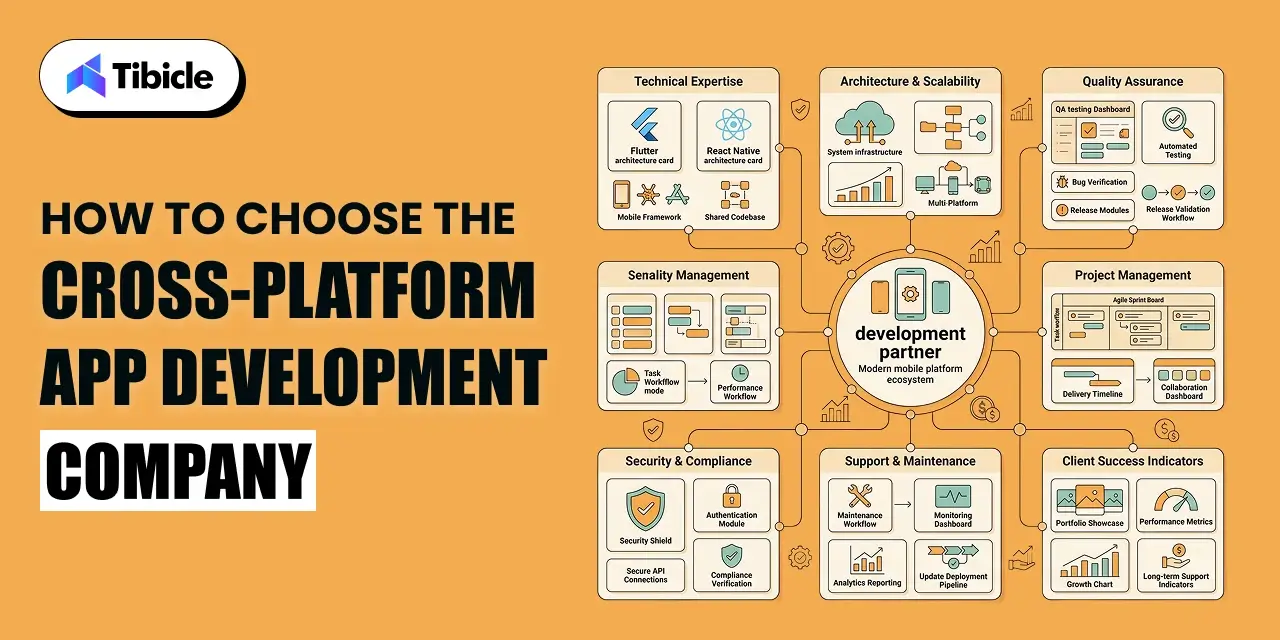
Businesses evaluating a cross-platform app development company should assess:
- Flutter, React Native, or Kotlin Multiplatform expertise
- Portfolio of shipped mobile applications
- Dedicated QA, PM, and engineering structure
- Maintenance and support SLAs
- Code ownership and IP policies
- Security compliance standards
- Architecture scalability planning
- Client retention and references
Red Flags During Vendor Evaluation
Warning signs include vague pricing structures, lack of live portfolio demonstrations, missing project managers, and reluctance to provide client references or architecture documentation.
Looking for a cross-platform app development company that delivers measurable results? Talk to Tibicle’s team for a free project assessment.
Why Tibicle Is a Strong Choice for Cross-Platform App Development
Tibicle builds cross-platform app development solutions for startups, SMBs, and enterprise organizations using Flutter, React Native, and scalable full-stack architectures. Their delivery model focuses on operational ROI, transparent development planning, and long-term maintainability instead of purely feature-based execution.
The company supports businesses through architecture planning, mobile engineering, deployment strategy, testing, and post-launch optimization while maintaining cost visibility throughout the engagement lifecycle.
Schedule a consultation with Tibicle to evaluate the right cross-platform strategy for your business.
Conclusion
Cross-platform app development has become the preferred mobile strategy for most businesses in 2026 because it reduces engineering cost, accelerates launch timelines, simplifies maintenance, and improves operational scalability. While native development still matters for hardware-intensive applications, cross-platform architectures now support the majority of business use cases effectively.
Companies evaluating mobile initiatives should prioritize long-term ROI, vendor expertise, framework selection, and operational scalability before committing to a development strategy.
Connect with Tibicle today to build a cross-platform app that drives real business growth.
FAQs
How much does cross-platform app development cost in 2026?
Cross-platform app development costs range from approximately $15,000 for MVPs to more than $300,000 for enterprise-grade applications with AI integrations and advanced backend infrastructure.
Is cross-platform app development suitable for enterprise applications?
Yes. Modern frameworks like Flutter and React Native support enterprise-grade applications, including dashboards, CRM systems, customer portals, and operational platforms.
Which cross-platform framework is best for my business?
Flutter works best for UI-heavy applications and rapid product launches. React Native suits businesses with JavaScript expertise, while Kotlin Multiplatform is ideal for shared business logic with native UI precision.
What is the ROI of cross-platform vs native app development?
Businesses typically save 30–50% on development and maintenance expenses while accelerating launch timelines and reducing operational overhead.
Can cross-platform apps access native device features like GPS and camera?
Yes. Modern frameworks support device hardware access through native APIs, plugins, and optimized bridging layers.
How long does it take to build a cross-platform app?
Basic MVPs usually take 2–3 months, mid-level applications require 4–6 months, and enterprise-grade systems can take 6–12 months depending on integrations and scope.
Schedule A Developer Interview And Get 15 Days Risk-Free Trial
Schedule a Call

Relevant Blog
Enterprise LLM Integration Services

Prejin Nadar

Building Private local AI Desktop App Development
Prejin Nadar
Written by

Recent Blogs
Enterprise LLM Integration Services
What This Guide Covers Who this is for Enterprise LLM integration services help engineering leaders, platform teams, and technology executives turn existing model access into working production workflows. This guide is for organisations connecting OpenAI, Claude, or both to systems that support real business processes, including CRM platforms, ticketing systems, document pipelines, and internal tools. […]
When to Hire an AI Software Development Consulting Firm.
What This Guide Covers Who this is for Engineering leaders, technology executives, and AI teams often struggle to turn completed initiatives into measurable results. This guide helps organisations address stalled pilots, failed AI implementations, rising costs, poor data quality, and workflows that function technically but fail to deliver measurable business value. An AI software development […]
Building Private local AI Desktop App Development
What This Guide Covers Who this is for: US tech firms, SaaS companies, startups, CTOs, engineering managers, and product teams looking for experienced Electron.js developers for ongoing private local AI desktop app development and custom desktop application development. Search intent: Hiring and decision. This guide covers where to find Electron.js developers, how to evaluate their […]
Got an Idea? Get FREE Consultation
In our world, there's no such thing as having too many clients

