
What is Mobile Commerce? Benefits, Examples and Trends

May 19, 2026

Read in 7 Minutes
Table of Contents
- Introduction
- What is Mobile Commerce?
- Business Benefits of Mobile Commerce
- Mobile Commerce Examples Across Industries
- Mobile Commerce Trends in 2026
- Mobile Commerce vs Traditional E-commerce
- Cost and Pricing Insights for Mobile Commerce Implementation
- ROI of Mobile Commerce: What the Numbers Show
- Risks and Challenges in Mobile Commerce
- Vendor Selection Checklist for Mobile Commerce Development
- Why Tibicle is a Strong Choice for Mobile Commerce Development
- Conclusion
- Frequently Asked Questions
Introduction
Global mobile commerce revenue is projected to exceed $2.5 trillion in 2026, representing approximately 60% of total e-commerce sales worldwide. That is not a forecast executives can afford to ignore, it is a revenue reality shaping every sector from retail and banking to travel and food delivery.
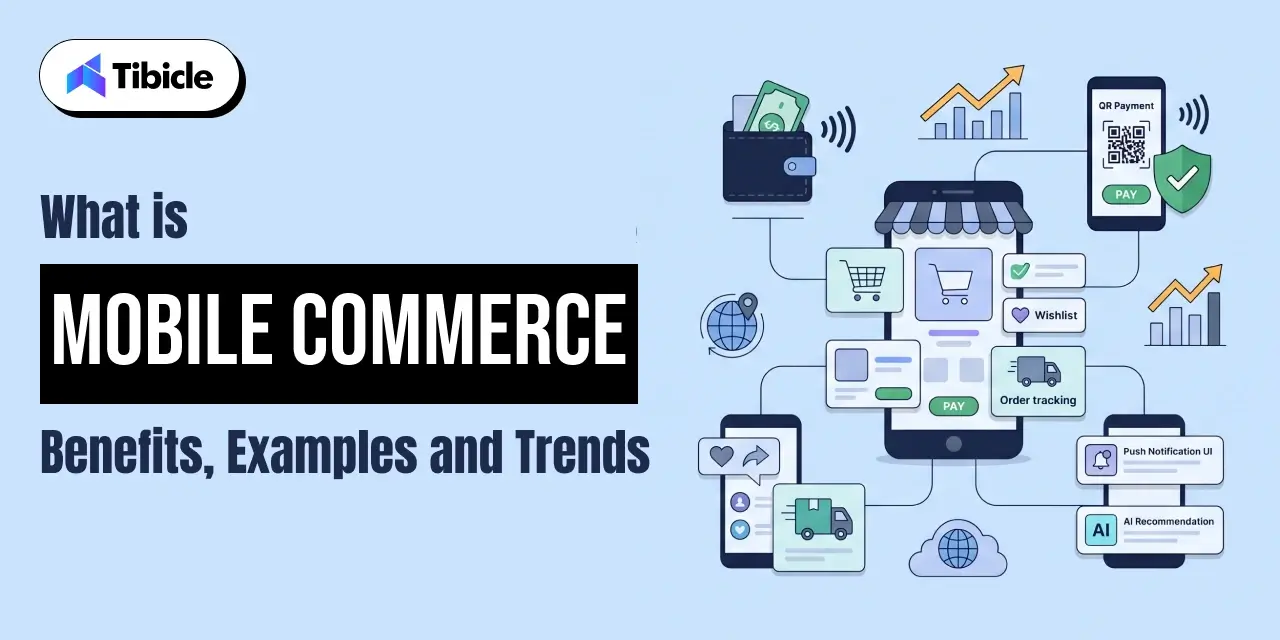
Yet most businesses still treat mobile as an afterthought, a scaled-down version of their desktop experience bolted on after the fact. That gap between how companies approach mobile and how consumers actually behave on their devices is costing real conversions, real revenue, and real customer relationships.
The companies winning in this today have made a deliberate strategic choice: they treat mobile not as a UX update but as a primary revenue channel, with dedicated investment in apps, AI-driven personalization, and seamless payment infrastructure.
This blog explains what mobile commerce is, breaks down its core business benefits with data that C-suite leaders can act on, shares real-world examples across industries, and covers the trends in 2026 that are redefining how commerce is won and lost on the small screen.
What is Mobile Commerce?
Mobile commerce, also called m-commerce, refers to the buying and selling of goods and services through wireless handheld devices primarily smartphones and tablets. It is a subset of e-commerce, but it is not simply e-commerce on a smaller screen. Mobile commerce operates under different behavioral rules: sessions are shorter, decisions are more impulsive, and the entire experience is built around touch, speed, and contextual relevance.
Where traditional e-commerce is browser-led and desk-bound, m-commerce is app-driven, location-aware, and tightly integrated with native device features such as biometric authentication, camera-based search, and tap-to-pay. A customer browsing a flash sale during a commute, paying for groceries via a digital wallet, or completing a hotel check-in from a boarding gate are all mobile commerce moments that traditional web commerce was never designed to capture.
The scale is significant: smartphones generate between 75% and 78% of all e-commerce traffic globally. Every business with an online revenue model must have a clear mobile commerce strategy and ‘a responsive website’ is no longer sufficient.
Types of Mobile Commerce
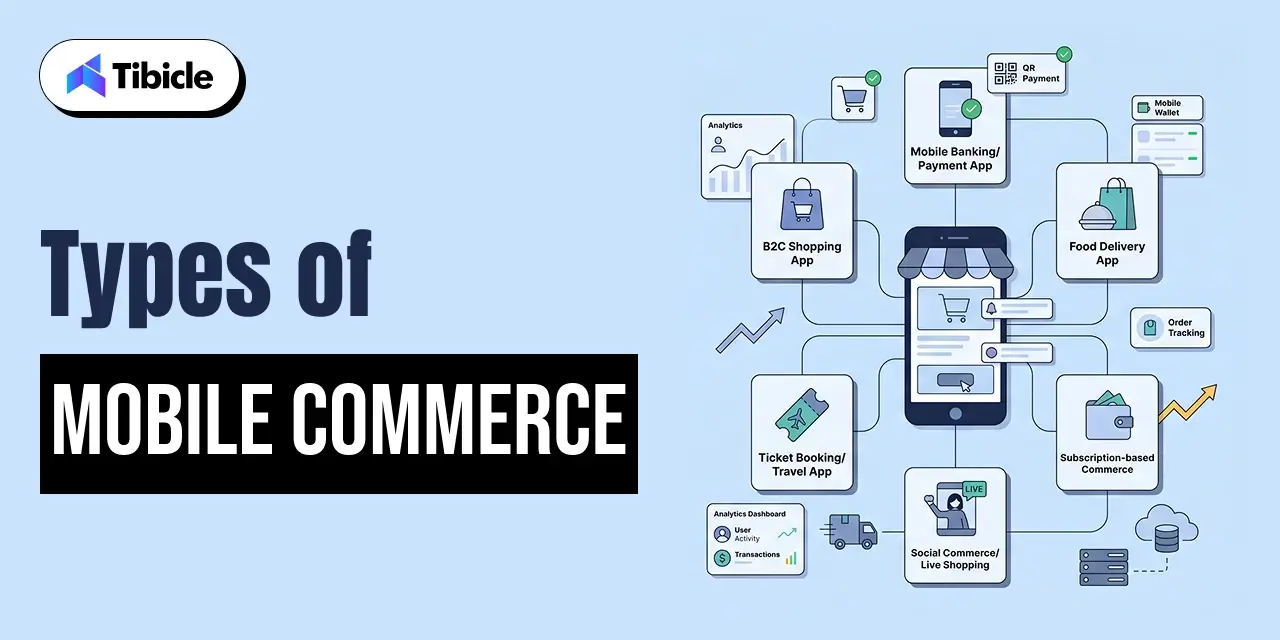
Mobile commerce spans several distinct transaction models, each with its own conversion dynamics:
- Mobile shopping purchasing through retail apps or
- Mobile banking and payments fund transfers, account management, and contactless transactions
- Mobile ticketing and boarding event, transit, and travel tickets delivered and scanned on-device
- In-app purchasing and subscriptions digital goods, software, and recurring service billing
- Social commerce purchases completed directly within platforms such as TikTok Shop and Instagram Checkout
Business Benefits of Mobile Commerce
For C-suite leaders, mobile commerce is not a feature request from the product team, it is a lever for revenue growth, margin improvement, and customer retention. Here is how each benefit maps to executive priorities.
Higher Conversion Rates Through Mobile Apps
The conversion gap between a mobile commerce app and a mobile website is substantial. Mobile apps convert at approximately 3.5% compared to just 2% on mobile web, a 75% improvement that compounds across millions of sessions. More significantly, cart abandonment drops to around 20% within apps versus a staggering 97% on mobile browsers.
For any business with meaningful mobile traffic, that abandonment delta represents recoverable revenue in the tens of thousands of dollars per month. The app experience saved payment credentials, one-click checkout, personalized product surfaces removes the friction that kills conversions on mobile web. This is not a UX nicety; it is a measurable revenue driver.
Increased Customer Lifetime Value
App users are not just higher-converting they are more valuable over time. Customer lifetime value is 2.8x to 5x higher for mobile app users compared to web-only shoppers, driven by higher purchase frequency, larger basket sizes, and stronger brand recall.
60% of first-time app buyers make at least one repeat purchase within 90 days, a figure that rarely materializes in mobile web journeys. For subscription businesses, D2C brands, and any retailer dependent on repeat purchase cycles, a mobile commerce app is one of the highest-ROI investments available for improving LTV without increasing acquisition spend.
Lower Customer Acquisition Costs Over Time
One of the underappreciated advantages of mobile commerce is its ability to reduce long-term customer acquisition costs. Push notifications, in-app loyalty programs, and personalized re-engagement campaigns replace expensive paid media retargeting and they convert at higher rates because they are contextual and permission-based.
McKinsey research shows that AI-driven personalization, a core feature of mature mobile commerce platforms, generates 40% more revenue for fast-growing companies. When your app knows a customer’s preferences, purchase history, and browsing behavior, every touchpoint becomes more efficient. The cost to retain a customer through an app is a fraction of what it costs to reacquire them through paid channels.
Omnichannel Revenue Integration
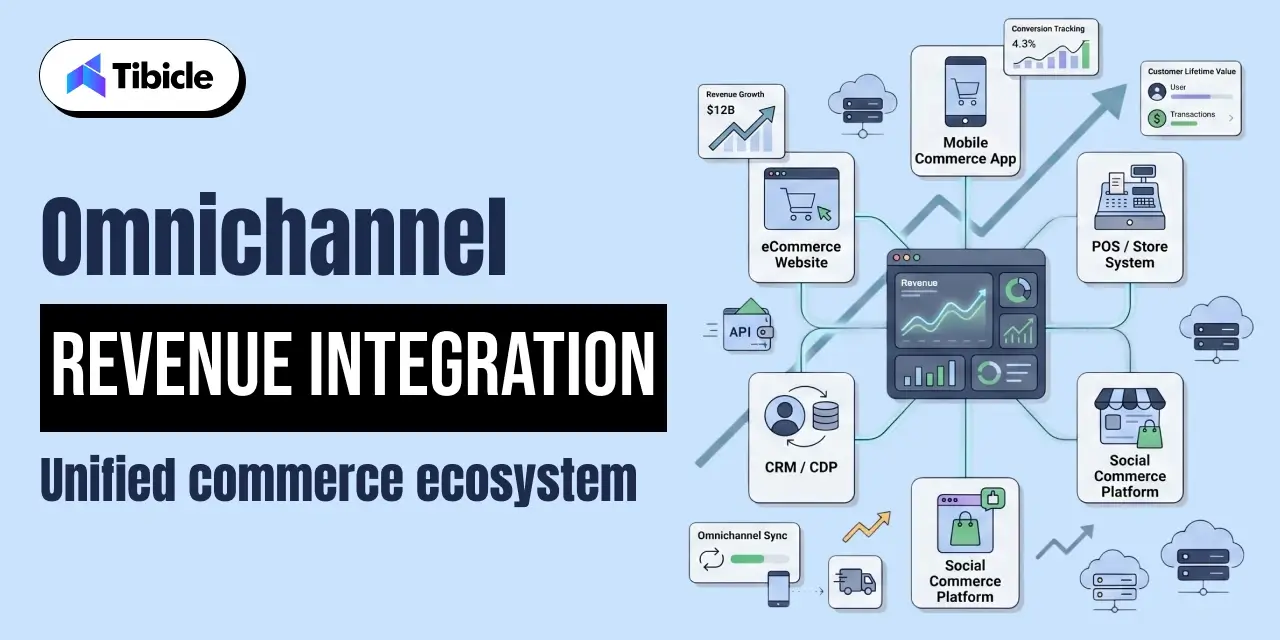
A well-architected mobile commerce platform is the backbone of an omnichannel retail strategy. Saved carts sync across devices. Wishlists populate in-store kiosk recommendations. A purchase started on the desktop completes on the phone during a lunch break. This continuity is invisible to the customer but engineered deliberately reduces drop-off at every stage of the purchase journey and increases the overall basket completion rate.
Mobile Commerce Examples Across Industries
Understanding mobile commerce in the abstract is useful; seeing how it performs across specific verticals makes the business case concrete.
Retail and D2C
In retail and direct-to-consumer, mobile commerce apps are most commonly deployed for app-exclusive loyalty programs that reward frequent purchasers with points redeemable only through the app, AR-enabled product try-ons that let customers visualize apparel, furniture, or cosmetics in their own environment before purchase, and flash sale push notifications that create urgency-driven traffic spikes with conversion windows measured in minutes. These features work in concert: the loyalty program drives app installs, AR reduces return rates, and push notifications convert dormant users.
Banking and Financial Services
Financial services were early adopters of m-commerce, and the use cases have evolved well beyond mobile check deposits and peer-to-peer transfers. Today, AI-powered spend tracking surfaces personalized savings recommendations, predictive overdraft alerts reduce support call volumes, and in-app loan pre-approval journeys replace branch visits. For financial institutions, the mobile banking app is now the primary relationship channel, branch traffic is in structural decline, and digital engagement is the principal driver of product cross-sell and retention.
Food and Grocery Delivery
Food and grocery delivery platforms have refined mobile shopping to its most frictionless form: one-tap reordering of previous baskets, location-triggered promotions when a customer is near a partner outlet, and subscription meal plans that convert single-order customers into committed monthly revenue. The mobile conversion rate in this vertical consistently outperforms all others because the purchase intent is high, the session duration is short, and the app removes every barrier between intent and checkout.
Travel and Hospitality
In travel and hospitality, mobile commerce has compressed the entire guest journey into a single app: mobile boarding passes eliminate check-in queues, in-app itinerary management handles real-time flight changes, and contactless hotel check-in via smartphone unlocks rooms without front-desk interaction. For airlines and hotel groups, this app-centric model reduces operational costs, improves data capture for personalization, and shifts upsell revenue seat upgrades, room enhancements, ancillary services into a mobile context where impulse conversion rates are highest.
Mobile Commerce Trends in 2026
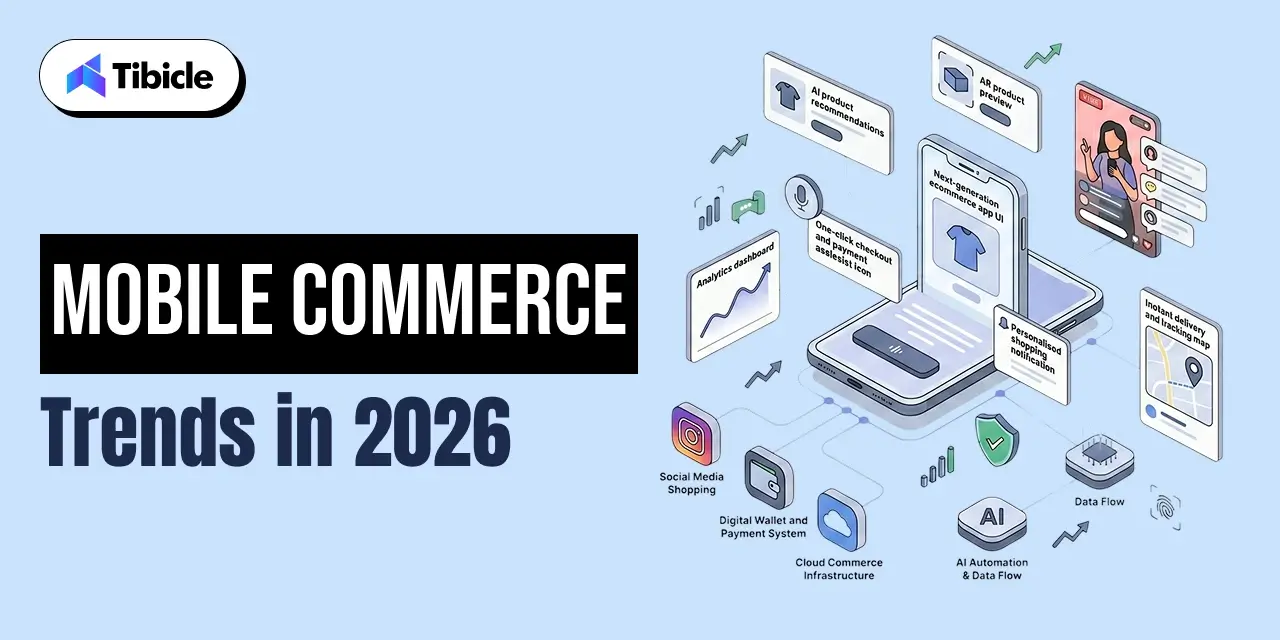
The mobile commerce trends shaping revenue in 2026 are not incremental UX improvements; they are structural shifts in how consumers discover, evaluate, and purchase products through their devices.
AI-Powered Personalization at Scale
AI product recommendations now drive approximately 25% of mobile commerce revenue across leading platforms, and personalized experiences increase customer loyalty by 31% compared to generic browsing journeys. In 2026, AI personalization has moved beyond ‘customers who bought X also bought Y’ into natural language search within apps, real-time inventory matching based on location, and predictive reordering built on individual purchase cadence. For CMOs and product leaders, the question is no longer whether to invest in AI-driven personalization, it is how quickly they can close the gap with platforms already deploying it at scale.
Social Commerce as a Sales Channel
Social commerce has graduated from an experimental channel to a core mobile commerce revenue stream. Global social commerce sales are projected to surpass $1.63 trillion in 2026, with TikTok Shop alone forecast to reach $23.41 billion in US sales. The model discovery, product content, checkout, and post-purchase support all within a single platform removes the redirect friction that kills conversion in traditional digital advertising. For brands targeting consumers under 40, a social commerce presence is no longer optional; it is a primary acquisition and transaction channel.
Digital Wallets and One-Click Checkout
There are now 5.6 billion digital wallet users globally, and digital wallets are expected to handle 50% of all e-commerce transactions by 2027. Apple Pay, Google Pay, UPI, and regional equivalents have made one-click checkout the baseline consumer expectation, not a premium feature. Any mobile commerce implementation that requires manual card entry at checkout is operating with a structural conversion disadvantage. Payment integration is no longer a backend consideration, it is a front-line revenue decision.
Progressive Web Apps (PWAs) vs Native Apps
The strategic approach to mobile-first design in 2026 increasingly separates acquisition and retention into distinct technical layers. Progressive web apps serve as the acquisition vehicle they load instantly in-browser, require no install, and capture first-time visitors who would not download an app on first exposure. Native apps serve as the retention vehicle richer features, push notifications, biometric login, and offline capability that drive the repeat purchase behavior that generates LTV. High-growth brands are running both tracks simultaneously, using the PWA to convert first-time visitors and the native app to lock in loyalty.
Voice Commerce Growth
Voice-enabled commerce, completing purchases through voice assistants on smartphones and smart speakers reached a market value of $151.39 billion in 2025 and is projected to grow to $186.28 billion by 2030. For mobile commerce operators, the near-term implication is optimizing product catalogs for natural language queries and building conversational checkout flows that accommodate voice-initiated transactions particularly relevant for reorder-heavy categories like grocery, health, and household consumables.
Mobile Commerce vs Traditional E-commerce
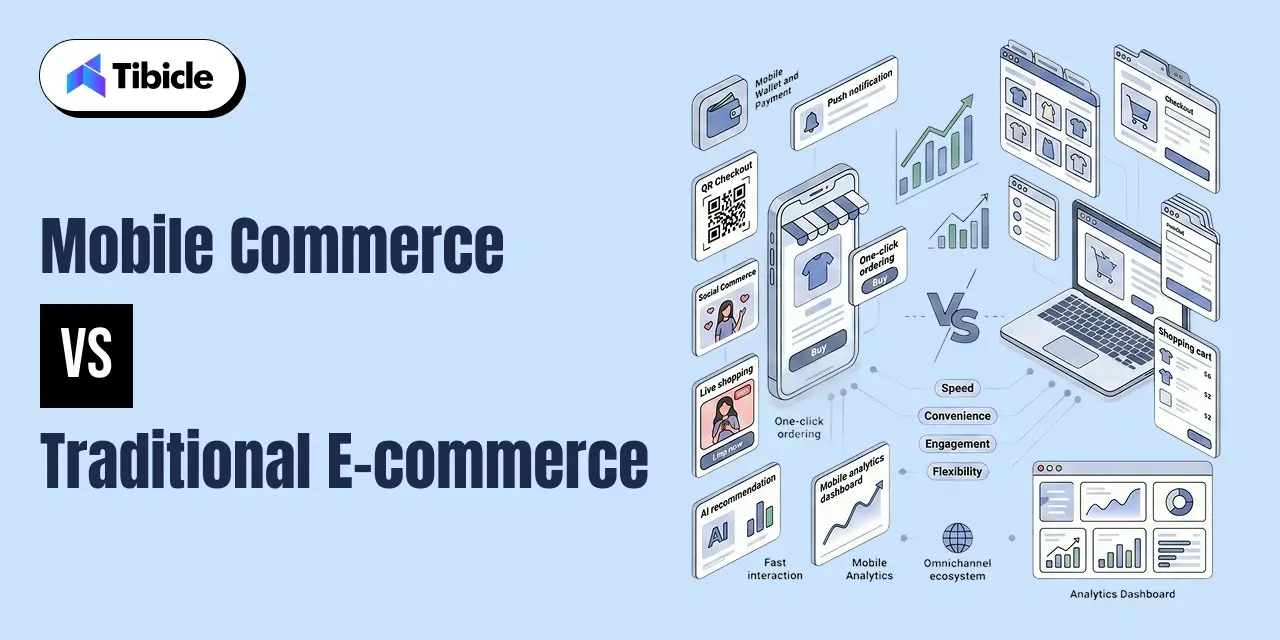
The following comparison maps the key operational and commercial differences between traditional e-commerce and mobile commerce across eight dimensions that directly affect revenue performance:
| Dimension | Traditional E-Commerce | Mobile Commerce |
| Device Dependency | Any web browser | Smartphone/tablet optimized |
| Session Behavior | Longer, desktop-led | Short,frequent,app-driven |
| Checkout Friction | Moderate | Low(one-click,biometric pay) |
| Conversion Rates | ~3-4%(desktop) | App: ~3.5%: Mobile web: ~2% |
| Personalization | Cookie-based | AI-driven, real-time |
| Payment Methods | Card, PayPal | Digital wallets, tap-to-pay, UPI |
| Retention Tools | Email, retargeting | Push notifications, loyalty apps |
| Cart Abandonment | ~70% | App:~20%:Mobile browser: ~97% |
This data in this table has a single common thread: mobile commerce removes friction at every stage of the customer journey. Lower cart abandonment, higher conversion rates, richer personalization, and faster checkout all translate directly into revenue not hypothetically, but measurably, within weeks of a properly executed mobile commerce app launch. For any business where mobile traffic accounts for more than 40% of sessions, the ROI case for investing in dedicated mobile commerce infrastructure is overwhelmingly positive.
Ready to evaluate your mobile commerce readiness? Speak with Tibicle’s mobile commerce specialists for a gap analysis tailored to your current stack and revenue goals.
Cost and Pricing Insights for Mobile Commerce Implementation
One of the most common barriers to mobile commerce investment is uncertainty about cost and timeline. The range is wide and the right choice depends on business variables that go beyond budget alone.
Traditional App Development vs Modern Web-to-App Solutions
Traditional mobile commerce app development custom native iOS and Android builds with full e-commerce integration typically costs between $100,000 and $250,000 and requires a 10-to-13-month development cycle from brief to launch. This route makes sense for businesses with large, complex product catalogs, high repeat purchase rates, and a commitment to app-led retention as a core strategic priority.
Modern managed solutions and web-to-app platforms reduce upfront investment to the $1,000- $2,000 range with significantly faster go-live timelines, though they trade customization depth for speed. Progressive web apps sit between these poles lower development cost than native, faster build cycles, and meaningful performance improvements over mobile web, but without the full feature parity of a native app. The right decision depends on catalog size, average order frequency, and whether retention or acquisition is the primary strategic objective.
Hidden Costs to Budget For
Any honest mobile commerce budget must account for costs beyond initial development. Payment gateway integration fees vary by provider and transaction volume. Ongoing maintenance OS updates, security patches, feature additions typically runs 15 20% of development cost annually. PCI DSS and regional data protection compliance requires both technical implementation and periodic auditing. Third-party API costs for shipping, inventory, loyalty, and analytics platforms accumulate quickly. App store marketing spend app store optimization, install campaigns, and early retention incentives is necessary to make the investment perform.
ROI of Mobile Commerce: What the Numbers Show
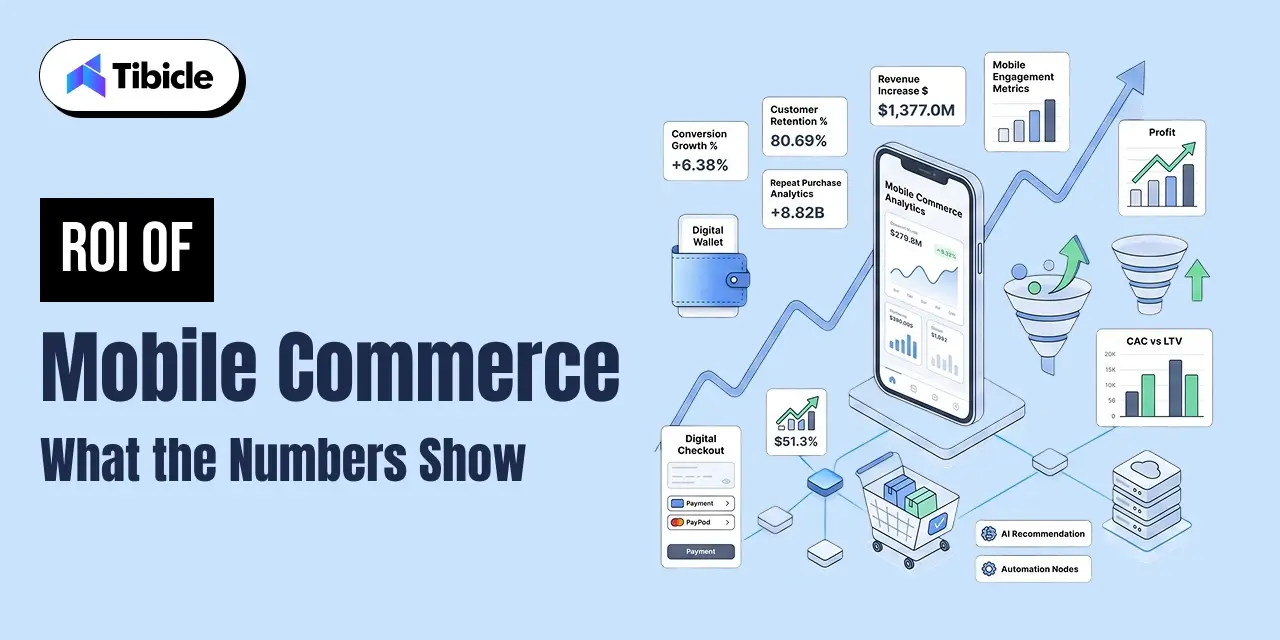
The ROI case for mobile commerce can be framed across three axes: direct revenue lift, operational cost reduction, and customer retention gains. Each axis is independently significant; together, they make the investment straightforward to justify at the executive level.
Direct revenue lift: Abandoned cart push notifications alone generate more than $10,000 in monthly recovered revenue for mid-sized retailers delivering a 5x to 10x ROI on push notification infrastructure costs. AI-driven product recommendations lift average order values by up to 369%, a figure that consistently appears across e-commerce platform case studies and directly impacts gross margin without increasing acquisition spend.
Operational cost reduction: For businesses where 40% or more of customers are repeat buyers, a mobile commerce app typically becomes ROI-positive within months of launch not years. The combination of lower paid media dependency (push replaces retargeting for engaged users), reduced support costs (self-service in-app resolves queries that would otherwise generate tickets), and lower return rates (AR and richer product content set accurate expectations) compresses payback periods significantly.
Customer retention gains: SMS marketing, a complementary mobile commerce channel, delivers benchmark ROI of $71 for every $1 spent outperforming email, paid social, and display by a considerable margin. Combined with app-based loyalty programs and personalized re-engagement, the retention economics of a mature mobile commerce platform make customer acquisition costs a diminishing constraint over time.
Risks and Challenges in Mobile Commerce
A credible mobile commerce strategy requires honest assessment of the risks involved not to avoid investment, but to design mitigations before they become expensive problems.
Security and Data Privacy Compliance
Any mobile commerce implementation handling payments must achieve and maintain PCI DSS compliance with the Payment Card Industry Data Security Standard governing how payment data is transmitted, stored, and processed. Businesses operating across geographies must also navigate GDPR in Europe, India’s Digital Personal Data Protection Act, and other regional data protection frameworks. Non-compliance generates fines, reputational damage, and platform removal costs that far exceed the investment in getting compliance right from the start.
Platform Fragmentation
Android and iOS differ meaningfully in UX conventions, payment integration requirements, app store policies, and performance benchmarks. A mobile commerce app that performs well on iOS may deliver a materially different experience on Android if it was not built with platform parity as a design requirement. Cross-platform frameworks like React Native and Flutter reduce this risk but require experienced developers who understand platform-specific nuances rather than simply sharing code across both.
High Cart Abandonment on Mobile Web
The 97% cart abandonment rate on mobile browsers is not a user problem it is a structural limitation of the mobile web checkout experience. Slow page loads, form-heavy checkout flows, and the absence of saved payment credentials create abandonment at a rate that no amount of UX optimization can fully overcome. The mitigation is clear: invest in a native mobile commerce app or, as an interim measure, a progressive web app with streamlined checkout both of which dramatically reduce abandonment to the 20% range.
Dependency on Third-Party Platforms
Building a mobile commerce strategy on third-party social platforms introduces regulatory and operational risk that owned-channel strategies avoid. TikTok’s uncertain regulatory future in the United States is the most prominent current example: brands that built meaningful social commerce revenue on TikTok Shop faced disruption when the platform’s US availability was repeatedly threatened. A diversified mobile commerce approach owned app, social commerce, and PWA in combination reduces dependency on any single platform’s policy decisions or regulatory exposure.
Vendor Selection Checklist for Mobile Commerce Development
Selecting a mobile commerce development partner is a consequential decision. Use the following checklist to evaluate vendors against the criteria that matter most for long-term platform performance:
- Cross-platform expertise (iOS, Android, PWA)
- Payment gateway integration experience (Stripe, Razorpay, Apple Pay, Google Pay)
- AI/ML capability for personalization and product recommendations
- E-commerce platform knowledge (Shopify, WooCommerce, custom builds)
- Post-launch support and maintenance model
- Scalability: architecture that can handle 10x growth
- Security and compliance track record (PCI DSS, GDPR)
- Transparent pricing model (fixed-scope, hourly, or dedicated team)
- Portfolio of live mobile commerce projects
- Clear communication cadence and agile project management methodology
Why Tibicle is a Strong Choice for Mobile Commerce Development
Tibicle is an end-to-end product engineering firm with deep specialization in mobile commerce app development across React Native, Flutter, and native iOS/Android. The team has delivered mobile commerce platforms across e-commerce, healthcare, logistics, and fintech verticals that demand performance, compliance, and scalability in equal measure.
Against the vendor checklist criteria outlined above: Tibicle brings cross-platform engineering depth, demonstrated AI/ML integration for personalization and recommendations, and proven experience with major e-commerce platforms including Shopify, WooCommerce, and custom builds. Payment gateway integration Stripe, Razorpay, Apple Pay, Google Pay is a standard component of every mobile commerce engagement, not an add-on.
Engagement models are flexible: dedicated development teams for businesses that want embedded capacity, project-based delivery for defined-scope builds, and hourly arrangements for early-stage discovery work. Each model is priced transparently with clear scope definitions and no hidden costs of the kind described in the pricing section above.
If you are evaluating mobile commerce app development partners, Tibicle‘s portfolio of live m-commerce deployments provides a grounded basis for comparison against your own requirements.
Conclusion
Mobile commerce is not a channel to monitor, it is the channel where the majority of global e-commerce revenue is now generated. At 60% of total e-commerce sales and $2.5 trillion in projected 2026 revenue, mobile commerce demands C-suite investment, not IT-level delegation.
The business case is quantifiable: mobile apps convert at 3.5%, deliver 2.8x 5x higher LTV, reduce cart abandonment to 20%, and generate measurable ROI within months for businesses with meaningful repeat purchase rates. The risks of security compliance, platform fragmentation, cart abandonment on mobile web are real but well-understood and entirely mitigable with the right technical partner.
The vendor checklist in this guide is a practical starting point for evaluating development partners against the criteria that determine long-term mobile commerce platform performance. Choose a partner who has built live m-commerce platforms, understands payment integration at depth, and can scale with your growth trajectory.
Contact Tibicle to discuss your mobile commerce app development requirements and get a project roadmap tailored to your business objectives.
Frequently Asked Questions
What is the difference between mobile commerce and e-commerce?
E-commerce is the broader category covering all online buying and selling, across any device or platform. Mobile commerce (m-commerce) is a subset of e-commerce conducted specifically through wireless handheld devices smartphones and tablets.
How much does it cost to build a mobile commerce app?
Cost depends on scope, complexity, and development approach. Traditional custom mobile commerce app development native iOS and Android with full e-commerce integration typically costs $100,000 to $250,000 and takes 10 to 13 months. Modern managed and web-to-app solutions start from $1,000 to $2,000 with faster launch timelines. Progressive web apps fall between these points.
What industries benefit most from mobile commerce?
Retail and D2C, banking and financial services, food and grocery delivery, and travel and hospitality consistently show the strongest returns from mobile commerce investment.
How does mobile commerce improve customer retention?
Mobile commerce apps improve retention through multiple reinforcing mechanisms: push notifications re-engage dormant users at a fraction of the cost of paid retargeting; in-app loyalty programs reward repeat purchase behavior with compounding incentives; AI-driven personalization surfaces relevant products that increase basket size and purchase frequency.
What are the biggest mobile commerce trends in 2026?
The two most commercially significant mobile commerce trends in 2026 are: AI-powered personalization driving 25% of mobile revenue; social commerce surpassing $1.63 trillion globally with TikTok Shop at $23.41 billion in US sales alone.
How do you measure ROI on a mobile commerce investment?
ROI on mobile commerce investment is measured across three primary axes. Direct revenue lift is quantified through app conversion rate improvement over mobile web, average order value uplift from AI recommendations, and recovered revenue from abandoned cart push notifications (typically $10,000+ monthly for mid-sized retailers).
Schedule A Developer Interview And Get 15 Days Risk-Free Trial
Schedule a Call

Relevant Blog
3 Best Restaurant Management App for 2026

Prejin Nadar


Mobile AI App Development Company Guide

Diya Koradiya
AI Integration Company for B2B SaaS Guide
Diya Koradiya
Written by

Recent Blogs
Enterprise LLM Integration Services
What This Guide Covers Who this is for Enterprise LLM integration services help engineering leaders, platform teams, and technology executives turn existing model access into working production workflows. This guide is for organisations connecting OpenAI, Claude, or both to systems that support real business processes, including CRM platforms, ticketing systems, document pipelines, and internal tools. […]
When to Hire an AI Software Development Consulting Firm.
What This Guide Covers Who this is for Engineering leaders, technology executives, and AI teams often struggle to turn completed initiatives into measurable results. This guide helps organisations address stalled pilots, failed AI implementations, rising costs, poor data quality, and workflows that function technically but fail to deliver measurable business value. An AI software development […]
Building Private local AI Desktop App Development
What This Guide Covers Who this is for: US tech firms, SaaS companies, startups, CTOs, engineering managers, and product teams looking for experienced Electron.js developers for ongoing private local AI desktop app development and custom desktop application development. Search intent: Hiring and decision. This guide covers where to find Electron.js developers, how to evaluate their […]
Got an Idea? Get FREE Consultation
In our world, there's no such thing as having too many clients

