
Hire Category: Framer Developer
Flutter App Development: Why Top Brands Choose Flutter
Introduction
In the competitive world of digital products, businesses can’t afford slow and expensive Flutter App Development. They need tools that help them build quickly, deliver beautifully, and scale effortlessly.
That’s why Flutter, Google’s open-source UI framework, has emerged as the preferred option for creating contemporary apps.
Flutter enables teams to develop high-performance, cross-platform applications for mobile, web, and desktop from a single, unified codebase.
From startups to large corporations, Flutter powers many successful apps worldwide, demonstrating that innovation can maintain efficiency.
Why Flutter Is Revolutionizing App Development
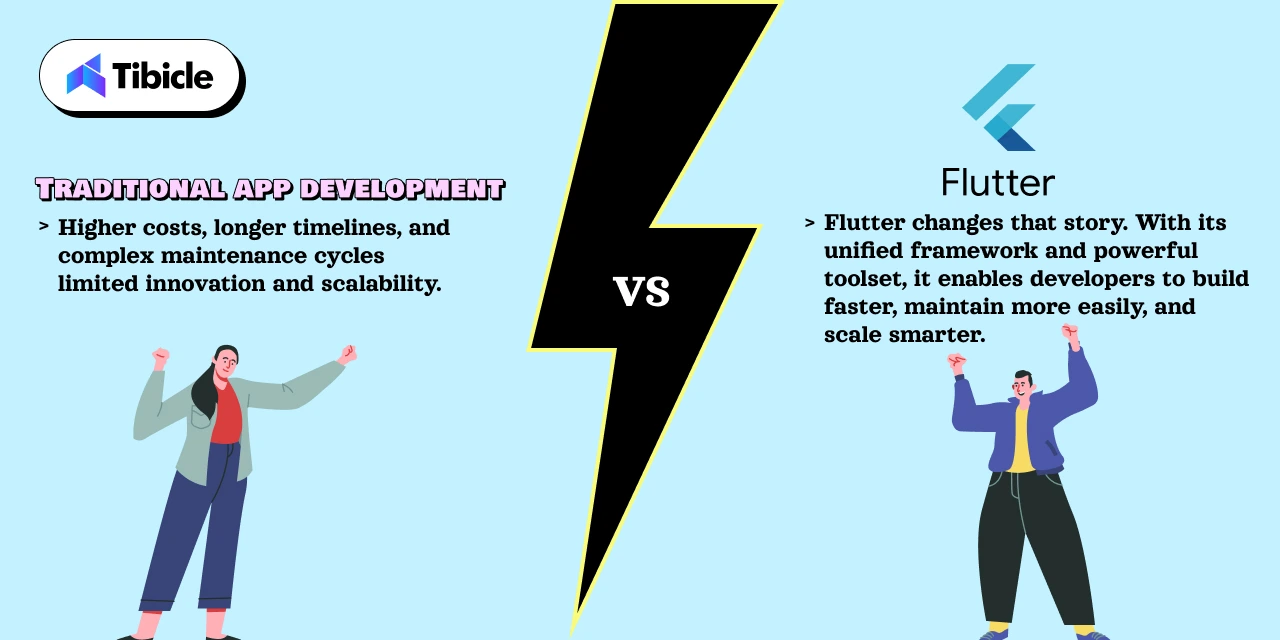
In the past, app development was typically a slow and costly process. Businesses often had to manage separate teams for Android and iOS, maintain two different codebases, and face inconsistent user experiences across platforms.
The result? Higher costs, longer timelines, and more complex maintenance cycles limited innovation and scalability.
Flutter changes that story. With its unified framework and powerful toolset, it enables developers to build faster, maintain more easily, and scale smarter.
Here’s how Flutter transforms the process:
- Faster Development: Build once, launch everywhere.
- Native-Level Performance: Compiles to ARM code for exceptionally fast speed.
- Consistent UI: Unified design across all platforms.
- Instant Updates: Hot Reload for real-time changes and testing.
- Cost Efficiency: Fewer developers, less code, more results.
Flutter combines speed, flexibility, and reliability, making it the smartest choice for any business ready to scale.
Why Businesses Are Switching to Flutter App Development
The shift toward Flutter is not just a trend; it is a strategic decision. Here are several reasons why more businesses, from startups to large enterprises, are choosing Flutter in 2025:
- Unified Brand Experience:
Customers expect consistency. Flutter ensures that your brand maintains the same look and feel across all platforms. - Rapid Time-to-Market:
Startups need to act quickly. Flutter’s single codebase enables the launch of minimum viable products (MVPs) in weeks rather than months. - Lower Development Costs:
By building one app for multiple platforms, businesses can save 40% to 60% on development costs, freeing up budgets for growth and marketing. - High Developer Productivity:
Features such as hot reload, pre-built UI widgets, and real-time testing significantly accelerate the development process.
- Backed by Google and the Community:
Regular updates, Google’s long-term commitment, and a vibrant open-source community make Flutter a future-proof choice. - Scalable Architecture:
Whether your app has 1,000 or 10 million users, Flutter’s performance remains stable and smooth. - Easy Integration with AI and APIs:
In today’s business landscape, companies increasingly rely on AI, analytics, and automation. Flutter’s flexibility facilitates easy connections to APIs and modern backend systems.
Top 10 Popular Apps Built with Flutter App Development
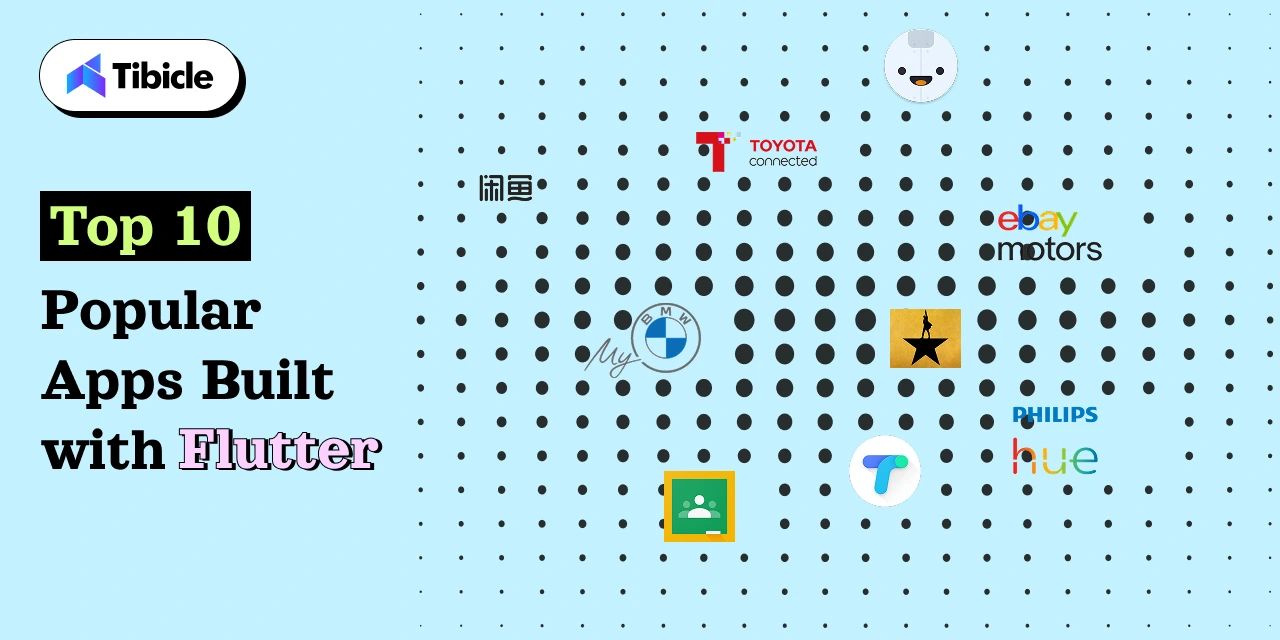
Flutter has become the preferred framework for leading brands globally, powering applications that deliver outstanding performance and seamless user experiences, trusted by millions of users every day.
These apps show how Flutter delivers speed, performance, and scalability across industries.
- Google Pay (Tez)
- One of the most widely used digital payment apps.
- Flutter ensures smooth performance, consistent UI, and reliable scalability.
- One of the most widely used digital payment apps.
- BMW (My BMW App)
- Offers car control, navigation, and remote monitoring.
- Built on Flutter for a unified user experience across iOS and Android.
- Offers car control, navigation, and remote monitoring.
- eBay Motors
- Simplifies car buying and selling through a sleek, responsive interface.
- Flutter reduced development time and improved app performance.
- Simplifies car buying and selling through a sleek, responsive interface.
- Alibaba Group (Xianyu App)
- Used by over 50M users for resale and e-commerce.
- Flutter helped Alibaba maintain quality while scaling rapidly.
- Used by over 50M users for resale and e-commerce.
- Reflectly
- A personal journaling and mindfulness app known for its beautiful animations.
- Flutter’s expressive UI tools make its experience smooth and interactive.
- A personal journaling and mindfulness app known for its beautiful animations.
- Toyota Connected
- Uses Flutter for in-vehicle applications and real-time data display.
- Achieves performance consistency across embedded systems.
- Uses Flutter for in-vehicle applications and real-time data display.
- Google Classroom
- Streamlines digital education for millions of students globally.
- Flutter enables quick updates and multi-platform accessibility.
- Streamlines digital education for millions of students globally.
- Philips Hue
- Smart lighting control app with intuitive user design.
- Flutter powers fast, responsive controls and seamless connectivity.
- Smart lighting control app with intuitive user design.
- Realtor.com
- Leading real estate platform in the U.S.
- Flutter boosted the speed of feature rollouts and improved design consistency.
- Leading real estate platform in the U.S.
- Hamilton Musical App
- Leading real estate platform in the U.S.
- Flutter boosted the speed of feature rollouts and improved design consistency.
- Leading real estate platform in the U.S.
Who Can Benefit from Flutter
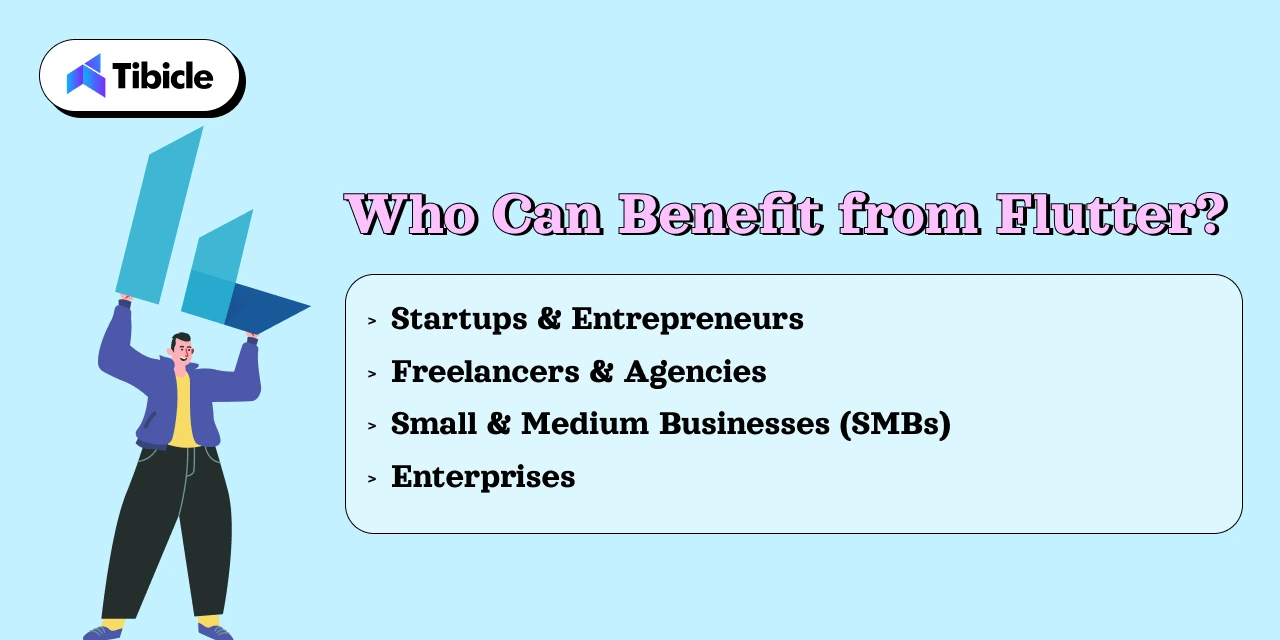
Startups & Entrepreneurs
-
- Build and launch your first version quickly.
- Test ideas, gather feedback, and scale without heavy costs.
- Build and launch your first version quickly.
Freelancers & Agencies
- Deliver high-quality apps faster.
- Reuse components and handle more projects with ease.
Small & Medium Businesses (SMBs)
- Create customer apps or internal tools affordably.
- Go digital without needing a full development team.
Enterprises
- Manage multiple platforms with one solution.
- Keep performance and design consistent across all devices.
Behind the Code: What Makes Flutter So Powerful

Flutter is popular not just for its aesthetic appeal but also because it is built on robust technology that makes app development faster, simpler, and more reliable. Here’s what makes Flutter stand out:
- Built with Dart – Fast and Reliable
Flutter uses a programming language called Dart, developed by Google. It is fast because it directly compiles code into a format that devices can understand, allowing apps to run smoothly and start quickly. - Beautiful Graphics with Skia Engine
Flutter features its own graphics engine called Skia, which renders everything displayed on the screen. This is why apps built with Flutter have a clean, modern design and maintain a consistent look and feel across Android, iOS, and other devices. - Simple Way to Build User Interfaces (UI)
Flutter allows developers to describe what the interface should look like rather than writing lengthy, detailed instructions. This simplifies the process of creating attractive and interactive designs with less effort. - Consistent Appearance on Every Device
Since Flutter has control over how the app appears and functions, it relies less on the device’s native design. Consequently, your app will look and feel the same on smartphones, tablets, the web, and desktops, providing a seamless experience everywhere.
- Instant Updates with Hot Reload
Developers can make changes to the code and see the results immediately without restarting the app. This feature saves time, simplifies error correction, and fosters creativity during development.
- High Performance Like Native Apps
Unlike many other frameworks, Flutter apps are designed to perform almost as well as those developed specifically for Android or iOS. This means fast load times, smooth animations, and an excellent user experience. - Strong Support and Regular Updates
Google and the large Flutter community continuously improve the framework by adding new features, fixing bugs, and preparing it for the future. This dedication makes Flutter a reliable, long-term choice for any business.
At Tibicle, we use Flutter’s powerful features, from its smooth UI engine to its cross-platform speed, to build apps that are fast, beautiful, and ready for the future.
Conclusion: Flutter Is the Future
Flutter is not just another framework; it’s the foundation for modern digital innovation. It enables teams to build beautiful, high-performance apps faster than ever, without sacrificing quality or scalability.
Flutter is transforming the way apps are developed by combining speed, scalability, and seamless design into one powerful framework. It allows teams to:
- Develop high-quality apps more quickly across multiple platforms.
- Reduce costs and development time.
- Deliver smooth, native-like user experiences.
- Easily scale as business needs grow.
If global brands trust Flutter to power their digital presence, it’s time to consider it for your next app.
Partner with Tibicle to Build Your Flutter App
At Tibicle, we specialize in developing Flutter apps that combine performance, innovation, and scalability.
Our expert team helps businesses of all sizes:
- Plan and design stunning Flutter interfaces.
- Develop cross-platform apps with robust architecture.
- Integrate with backend systems and cloud platforms.
- Optimize performance and user engagement.
Whether you’re starting small or scaling globally, Tibicle helps you build smarter with Flutter faster, cleaner, and cost-effectively.
👉 Have an idea?
Schedule a call or share your project details here, and our team will guide you in building your next app with Flutter.
Key Takeaways
- Flutter powers some of the world’s most successful apps like Google Pay, BMW, and Alibaba.
- Enables cross-platform development from one codebase.
- Delivers faster time-to-market and native performance.
- Tibicle provides end-to-end Flutter expertise to bring ideas to life.
With Flutter, creating high-performance apps is faster and smarter than ever. Whether you’re launching your first idea or scaling your next major product, Flutter empowers you to develop seamless, future-ready experiences with ease.
Frequently Asked Questions (FAQ)
- Why is Flutter considered the future of app development?
Flutter allows developers to build apps for Android, iOS, web, and desktop from a single codebase – reducing time, cost, and complexity while maintaining high performance. - Can Flutter handle large-scale business applications?
Yes. Global brands like BMW, Alibaba, and Google Pay use Flutter for enterprise-grade apps due to its stability, scalability, and smooth user experience. - How does Flutter reduce app development costs?
With just one team and one codebase for all platforms, Flutter cuts development and maintenance costs by up to 40–60% compared to native development. - Is Flutter suitable for startups and MVPs?
Absolutely. Flutter helps startups launch MVPs quickly, test ideas faster, and bring products to market in weeks instead of months – perfect for fast growth and iteration. - Why should I choose Tibicle for Flutter app development?
Tibicle’s expert team specializes in end-to-end Flutter development – from UI/UX to backend integration – delivering scalable, high-performance apps that align with your business goals. - Is Flutter the future of app development?
Yes, Flutter continues to evolve under Google’s support, offering unmatched flexibility and innovation. It’s already shaping the future of cross-platform app development.
The Rise of FlutterFlow: Build MVPs and Tech Products Without Coding
Introduction: Build MVPs Quickly With FlutterFlow
In today’s fast-paced digital world, turning a great idea into a fully functional tech product no longer requires complex coding skills. The rise of no-code platforms has changed how startups, solopreneurs, and small businesses bring their ideas to life.
Platforms like FlutterFlow, Bubble, and Adalo enable anyone, even non-technical founders, to:
- Build MVPs without writing a single line of code
- Validate ideas quickly before committing major resources
- Launch apps faster to reach their target audience
The Traditional App Development Challenge
Before no-code tools like FlutterFlow, creating a mobile or web app meant:
- Hiring specialized developers, often at high cost
- Setting up complex infrastructure for the backend and databases
- Spending months in development cycles with iterative delays
- Facing financial and operational risks, especially for small teams
This traditional approach often slowed innovation and made rapid experimentation nearly impossible for startups and solopreneurs.
How FlutterFlow Simplifies App Development?
FlutterFlow addresses these challenges with:
- Drag-and-Drop Interfaces: Design app screens, layouts, and navigation flows visually
- Ready-Made Templates: Quickly prototype apps with pre-built components
- Seamless Backend Integration: Connect to Firebase and other cloud services without coding
- Cross-Platform Development: Build for both iOS and Android from a single codebase
With FlutterFlow, entrepreneurs can focus on solving real user problems instead of worrying about technical complexities, server setups, or coding errors.
Why No-Code Platforms Are Changing the Game?
The growing adoption of no-code app development is reshaping the startup ecosystem:
- Founders can test ideas in real-world scenarios without heavy upfront investment
- Businesses can gather feedback from early users to refine features
- Teams can iterate rapidly, improving products with each cycle
This method lowers risk, saves time, and helps businesses confirm demand before expanding. This makes FlutterFlow a great tool for startups and small businesses that want to grow quickly.
What This Blog Covers?
In this article, we will dive deep into FlutterFlow, a leading no-code platform for building cross-platform apps. You will learn:
- Why FlutterFlow is popular among startups and freelancers
- Who can benefit from using FlutterFlow for app development
- Real-world examples of MVPs built without coding
- Practical tips for getting started quickly
Whether you are a non-technical founder, freelancer, or small business owner, this guide will show you how to use FlutterFlow and other no-code tools to turn your idea into a functional, market-ready app more quickly, at a lower cost, and with less technical difficulty.
Why FlutterFlow is Popular?
FlutterFlow has quickly become one of the top no-code platforms for building mobile and web applications. Its rising popularity comes from a unique mix of simplicity, speed, and strong features. This makes it a great option for startups, solopreneurs, and small businesses that want to create MVPs without coding.
Here’s why FlutterFlow stands out in the crowded no-code ecosystem:
1. Intuitive Drag-and-Drop Interface
One of the main reasons FlutterFlow is so widely adopted is its user-friendly drag-and-drop interface.
- Even founders with no programming experience can design fully functional apps
- Create app screens, layouts, and navigation flows in minutes
- No coding required to produce visually appealing, professional apps
This makes FlutterFlow an ideal solution for entrepreneurs with ideas but without technical skills. It opens up app development to users without a technical background.
2. Seamless Backend Integration with Firebase
FlutterFlow integrates effortlessly with Firebase, offering ready-to-use backend services such as:
- Authentication systems for secure user login
- Database management for storing and retrieving app data
- Cloud storage for media and files
With these integrations, you can create real-time apps that grow with your business. You won’t need to worry about complicated server setups.
Additional Features:
- Real-time updates for live content
- API integrations for connecting with third-party services
- Support for dynamic, database-driven applications
This flexibility lets FlutterFlow serve many types of applications, including e-commerce and booking apps, community platforms, and internal business tools.
3. Rapid Development and Faster Time-to-Market
Speed is another major advantage of FlutterFlow:
- Traditional app development may take months and require significant investment
- With FlutterFlow, you can design, launch, and test an MVP in weeks
- Ideal for non-technical founders who want to validate ideas quickly
Rapid development means:
- Early user feedback can be gathered faster
- Iterations are simpler and cost-effective
- Product launches happen ahead of competitors
4. Cross-Platform App Development
FlutterFlow supports building apps for both iOS and Android from a single codebase.
- Reach a broader audience without creating separate apps
- Save significant time and development resources
- Maintain consistent features and design across platforms
This cross-platform ability makes FlutterFlow a very flexible tool for startups, freelancers, and small businesses that want to increase their reach without extra coding work.
5. Cost-Effective and Scalable Solution
- Reduces dependency on large development teams
- Lowers overall development costs
- Scales with your business using cloud-based backend infrastructure
Who Can Benefit From FlutterFlow?

FlutterFlow is more than a no-code platform. It is a tool that helps anyone build mobile and web applications quickly and efficiently, without needing a lot of programming knowledge. Its simplicity, flexibility, and ability to integrate make it perfect for a variety of users, including startups, freelancers, small businesses, and educational or nonprofit organizations.
Here’s a closer look at who can benefit most from FlutterFlow:
1. Startups and Entrepreneurs
Early-stage startups face unique challenges:
- Tight timelines to validate product ideas
- Limited budgets for full-scale development
- High risk if development goes wrong or is delayed
FlutterFlow solutions:
- Build a fully functional MVP in weeks, not months
- Test market demand and gather real user feedback rapidly
- Iterate features efficiently without heavy financial or time investment
- Focus on solving customer problems and refining core features
| Example Use Case: A startup can launch a booking or e-commerce MVP using FlutterFlow, gather user insights in just a few weeks, and refine their app before investing in a fully coded solution. |
2. Solopreneurs and Freelancers
Individuals with creative ideas but no technical background can bring their vision to life on their own using FlutterFlow.
Benefits for Solopreneurs:
- Drag-and-drop interface simplifies app design
- Pre-built templates and Firebase integration speed up development
- Create apps that are professional and fully functional
Benefits for Freelancers:
- Deliver client projects faster and efficiently
- Scale offerings without hiring large development teams
- Offer app development services without coding expertise
| Example Use Case: A freelancer can build a local business app for restaurant reservations using FlutterFlow and deliver it in weeks instead of months, increasing client satisfaction and turnover. |
3. Small Businesses
Small businesses can leverage FlutterFlow to digitize operations and engage customers without hiring dedicated developers.
Use Cases for Small Businesses:
- Retailers: Build e-commerce apps
- Service Providers: Create booking and appointment systems
- Local Businesses: Develop loyalty or engagement apps
Benefits:
- Stay competitive in a digital-first environment
- Reduce development costs significantly
- Maintain agility and scalability without technical overhead
4. Educational Institutions, Nonprofits, and Community Organizations
Organizations with limited technical resources can also benefit from FlutterFlow:
- Schools and Universities: Build apps for student engagement, course management, or event tracking
- Nonprofits: Create apps for program management, volunteer coordination, or fundraising campaigns
- Community Organizations: Develop apps for member communication and activity tracking
Benefits:
- Low technical barrier allows building functional apps without a dedicated IT staff
- Quickly launch apps for internal operations or public engagement
- Focus on mission and impact rather than coding
Tips to Get Started with FlutterFlow

Starting with FlutterFlow can feel overwhelming at first, especially if you are new to no-code platforms. However, by using the right strategies, you can quickly build, test, and scale your MVP. Here are some practical tips to help you get started:
1. Start Small and Focus on Core Features
When building your first app with FlutterFlow:
- Begin with only the essential features that solve the primary user problem
- Avoid adding unnecessary functionalities at the MVP stage
- Focus on what provides real value to early users
Why it matters:
Starting small leads to quicker development, lowers complexity, and helps you collect valuable feedback from early users.
| Example: If you’re creating a booking app, begin with the booking and user login features. You can add more options like reviews, ratings, or payment gateways later based on user feedback. |
2. Test Early, Iterate Fast
- Launch your MVP to a limited audience first
- Observe how users interact with the app and note pain points
Gather insights on usability, engagement, and feature relevance - Iterate quickly to refine the product based on real user feedback
Why it matters:
Rapid iterations help you align your app with actual user needs, reducing the risk of building features no one uses.
| Example: A small business app can initially track customer appointments. After getting feedback, you might add notifications or loyalty rewards to boost user engagement. |
3. Leverage Cost-Effectiveness
FlutterFlow eliminates the need for large development teams or expensive coding resources.
- Startups and small businesses can save on development costs
- Allocate resources to marketing, user acquisition, or additional feature development
- Reduce dependency on technical expertise without compromising quality
| Example: Instead of hiring a team of developers, a solopreneur can use FlutterFlow to create an e-commerce MVP. They can invest the money they save in social media campaigns to attract users. |
4. Experiment and Learn
- Use FlutterFlow to prototype multiple ideas quickly
- Test various layouts, UI designs, and features
- Learn what resonates with your target audience before committing to a full product
Why it matters:
The low barrier to entry encourages creative experimentation, helping founders discover optimal solutions without high risk.
| Example: You can try out different onboarding processes for a fitness app and see which one leads to better user retention. |
5. Utilize FlutterFlow’s Key Features
Take advantage of FlutterFlow’s unique capabilities to accelerate development:
- Drag-and-drop interface for easy UI design
- Pre-built templates to jumpstart app creation
- Firebase integration for backend services, authentication, and real-time updates
- Cross-platform support to build for both iOS and Android simultaneously
These features ensure your app is professional, functional, and scalable from day one.
Conclusion: Turn Ideas Into Apps with FlutterFlow
FlutterFlow has changed the way tech products are built. It shows that anyone, no matter their technical skills, can turn an idea into a working mobile or web application. With its easy drag-and-drop interface, smooth Firebase integration, and real-time features, FlutterFlow helps startups, solo entrepreneurs, and small businesses to:
- Launch quickly without months of development
- Iterate efficiently based on real user feedback
- Validate ideas without heavy financial or technical investment
Build MVPs That Deliver Real Value
By starting small, focusing on essential features, and testing early, you can create a minimum viable product (MVP) that solves real user problems while reducing risk. The benefits of using FlutterFlow for MVP development include:
- Faster development cycles compared to traditional coding
- Cost-effectiveness by reducing the need for large development teams
- Flexibility to scale your app based on actual market feedback
This approach lets founders and businesses try things out, learn, and improve before investing a lot of resources. This way, your final product will really connect with users.
The No-Code Revolution
The rise of no-code platforms like FlutterFlow shows a bigger trend in technology. Building apps is no longer just for people with coding skills. Today, anyone with a vision, an idea, or a business need can:
- Create and launch a tech product independently
- Bridge the gap between concepts and market-ready solutions
- Rapidly iterate based on user insights and market demand
FlutterFlow makes this possible by removing old technical barriers. This allows creators to focus on innovation, design, and user experience instead of backend complexities.
Partner with Tibicle to Bring Your Ideas to Life
At Tibicle, we specialize in helping businesses transform ideas into scalable MVPs using FlutterFlow. Whether you are a startup, freelancer, or small business, you don’t need to wait for a large development team or budget to get started.
Here’s how we can help:
- Understand your vision and core requirements
- Guide you in building your MVP with FlutterFlow efficiently
- Assist in scaling and iterating your app based on user feedback
If you have an idea, you can schedule a call from here or share your requirements from here, and our team will guide you in building your MVP with FlutterFlow. Together, we’ll move your concept from idea to execution seamlessly and cost-effectively.
Key Takeaways
- FlutterFlow empowers everyone to build apps without coding
- MVP-first approach reduces risk and accelerates market testing
- No-code platforms democratize app development for startups, freelancers, and small businesses
- Tibicle provides expert guidance to turn ideas into market-ready apps using FlutterFlow
With FlutterFlow, app development is fast, easy, and effective. Whether you’re trying out a new idea or growing an existing business, FlutterFlow gives you the tools to build, improve, and succeed.
The MVP Mindset: Stand Out or Innovate?
🌟 What is an MVP and Why Do You Need One?
An MVP (Minimum Viable Product) is the simplest version of your product that delivers core value to early adopters. It’s not about launching a half-baked product — it’s about validating your idea quickly, gathering real user feedback, and iterating fast. The goal? Minimize risk, save time, and ensure you’re building something people truly want.
Without a strong MVP strategy, you risk building features no one needs or over-engineering a product before finding product-market fit. That’s why it’s crucial to define your approach early on.

🛠️ Choosing the Right Team for Your MVP
The success of your MVP doesn’t rely on the idea alone — it’s about execution. And for that, you need the right team. Here’s what to prioritize:
- Visionaries: You need people who understand the market and the problem you’re solving.
- Product Managers: To keep the team aligned and prioritize features.
- Developers: Lean, multi-skilled developers who can build fast without sacrificing quality.
- UI/UX Designers: A clean, intuitive experience is a must — even for the first version.
- Marketers: Someone to build early buzz and attract first users.
Pro Tip: A small, agile, cross-functional team often works better than a large one in MVP stages.
🚀 If You’re Building Something Brand New
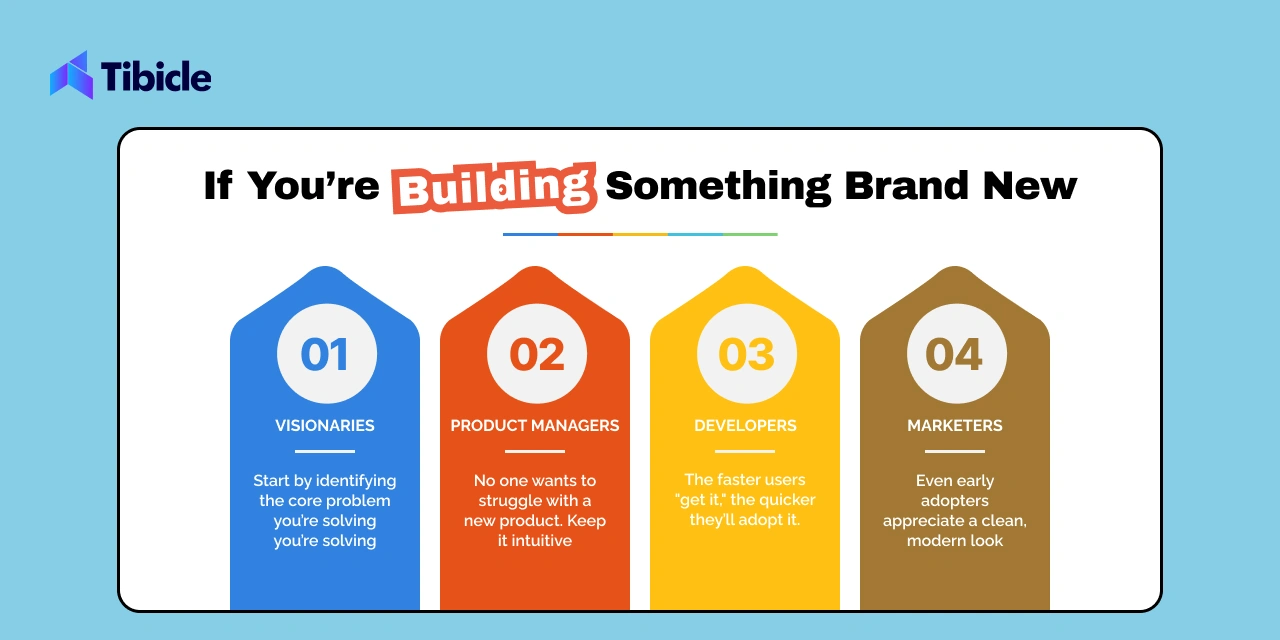
When creating a brand-new MVP for startups, your focus should revolve around these four pillars:
- Features: Start by identifying the core problem you’re solving. Focus only on essential, high-impact features. Every feature should directly address a pain point or create undeniable value.
- Ease of Use: No one wants to struggle with a new product. Keep it intuitive. The fewer the clicks, the better.
- Ease of Understanding: The faster users “get it,” the quicker they’ll adopt it. Your messaging and functionality must be crystal clear.
- UI/UX: Even early adopters appreciate a clean, modern look. A polished UI enhances credibility, while a smooth UX keeps them engaged.
💡 Pro Tip: Test small. Validate the core concept before you expand.
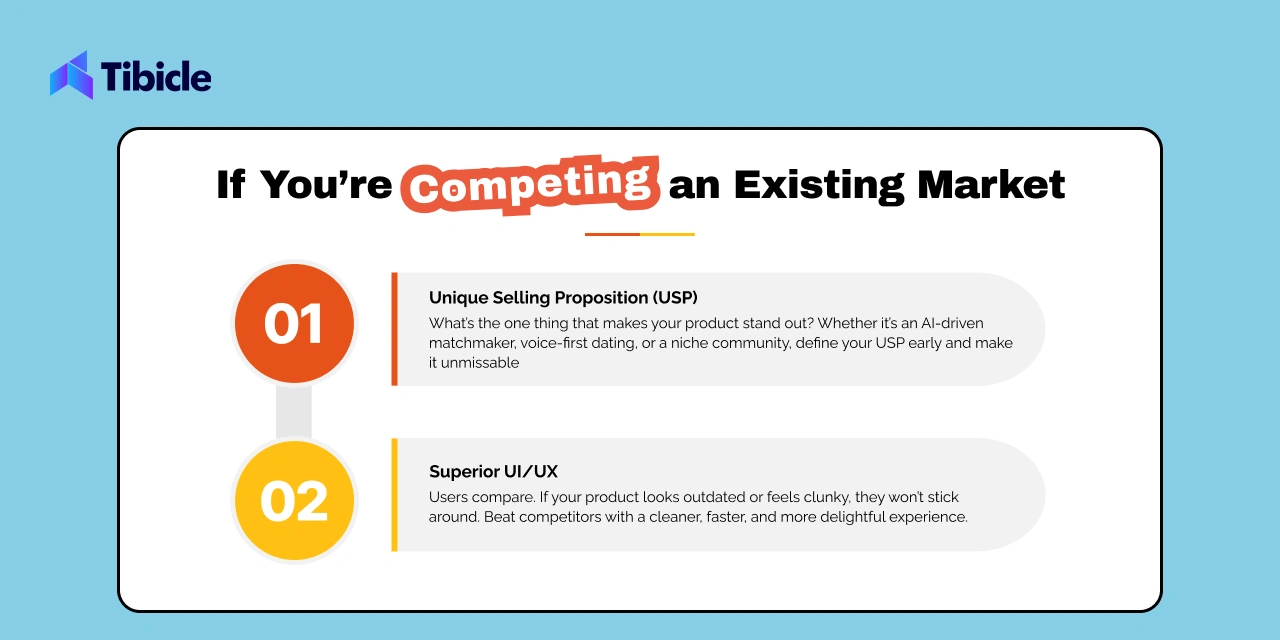
🔥 If You’re Competing in an Existing Market
For MVPs in spaces like dating apps or fitness trackers — where giants already rule — you need an edge. Focus on these essentials:
- Unique Selling Proposition (USP): What’s the one thing that makes your product stand out? Whether it’s an AI-driven matchmaker, voice-first dating, or a niche community, define your USP early and make it unmissable.
- Superior UI/UX: Users compare. If your product looks outdated or feels clunky, they won’t stick around. Beat competitors with a cleaner, faster, and more delightful experience.
💡 Pro Tip: Study user complaints on existing apps. Solve those pains.
🔧 Bonus Tips (For Any MVP!)
- Scalability: Build with future growth in mind — but don’t over-engineer.
- Feedback Loop: Build, measure, learn. Quickly.
- Monetization: Plan early. Will it be freemium? Subscription? Ads?
🎯 Final Thoughts
Whether you’re blazing a new trail or taking on a crowded market, the MVP’s goal is the same: get to market fast, learn fast, and adapt fast.