

Turning Facts into Gameplay
Converting concepts like atomic numbers, circuits, and cell structures into interactive mechanics without losing scientific accuracy

Case Study
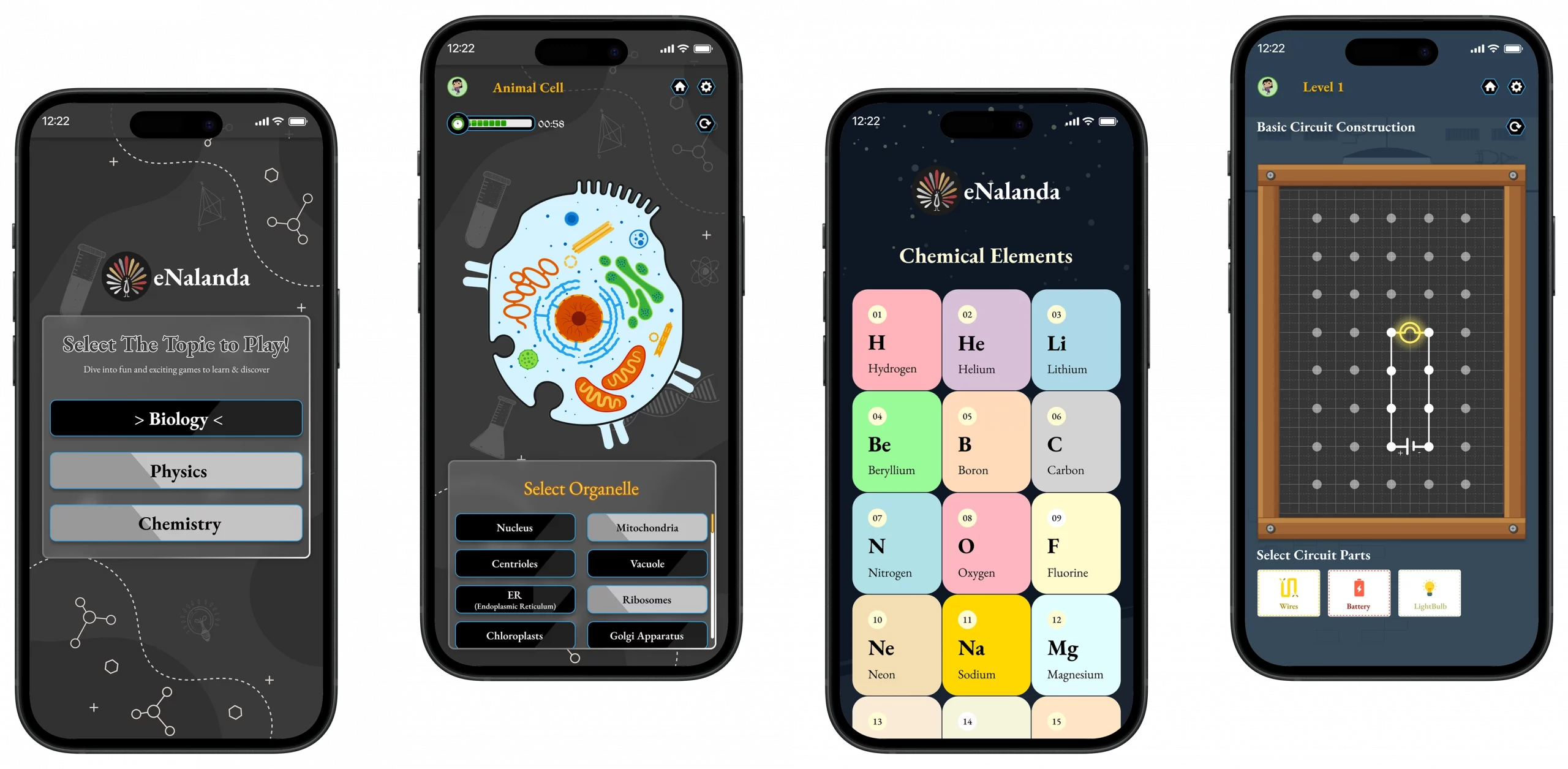
eNalanda is a collection of educational mini-games built for kids, covering core school subjects: chemistry, physics, and biology, through interactive, timed gameplay instead of static lessons.
Turning Complex Concepts into Simple, Engaging Gameplay
Converting concepts like atomic numbers, circuits, and cell structures into interactive mechanics without losing scientific accuracy
Keeping the same core concept recognizable while increasing complexity across difficulty levels.
Making fast-paced gameplay engaging while still requiring exact scientific answers and conditions.
Creating simple menus, instructions, and feedback that work for children with limited reading speed and attention span.
Keeping moving objects, circuit states, and draggable elements responsive across different Android and iOS devices.
Giving Chemistry, Physics, and Biology different mechanics while keeping them consistent within one app.
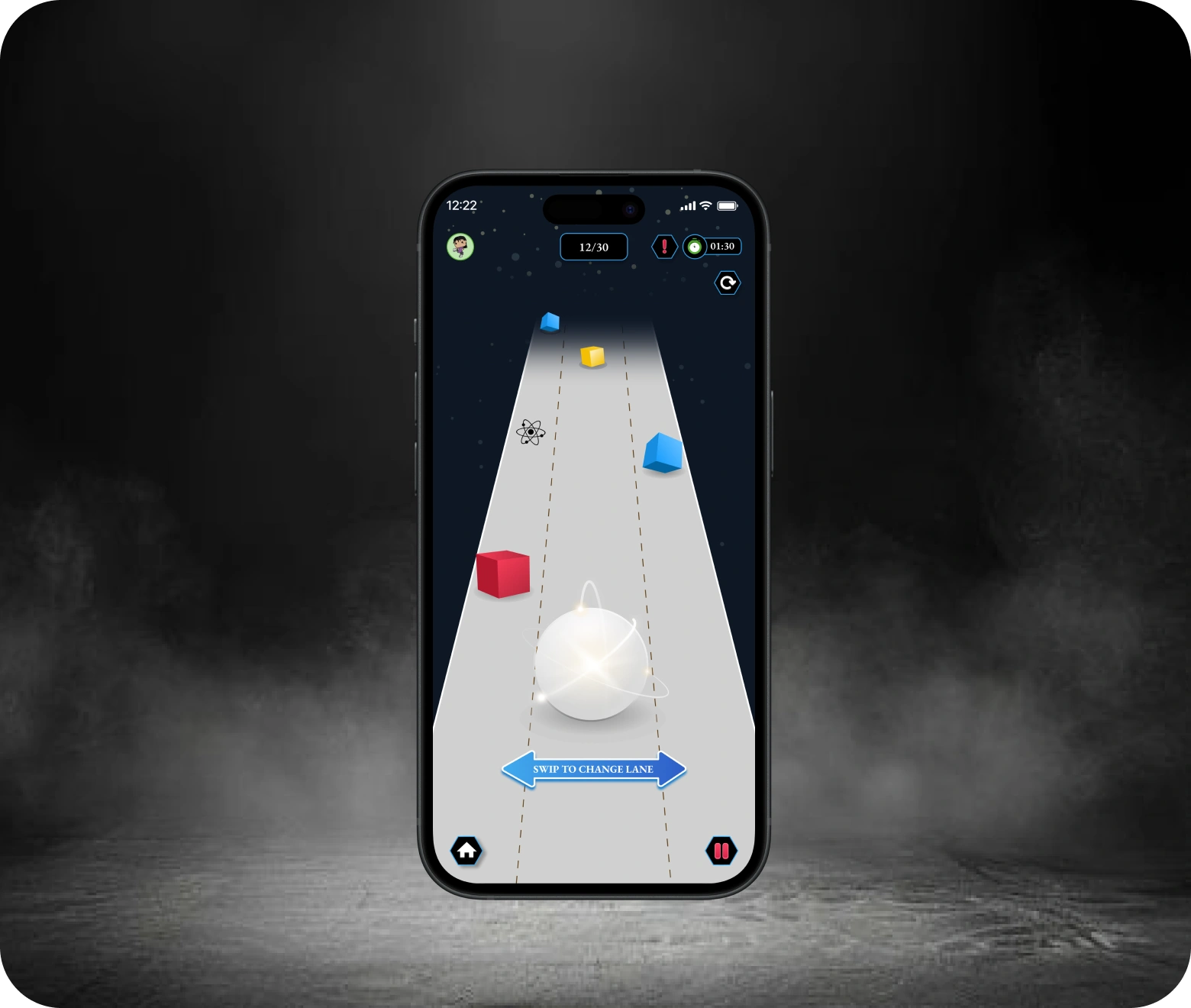
The Chemistry game opens on a periodic table, letting the player choose any element to play as their target for the round. Once selected, gameplay shifts into a continuous, Subway Surfers-style lane where particles representing protons and electrons approach the player, who must collect exactly the right count to match that element's atomic number before time runs out.
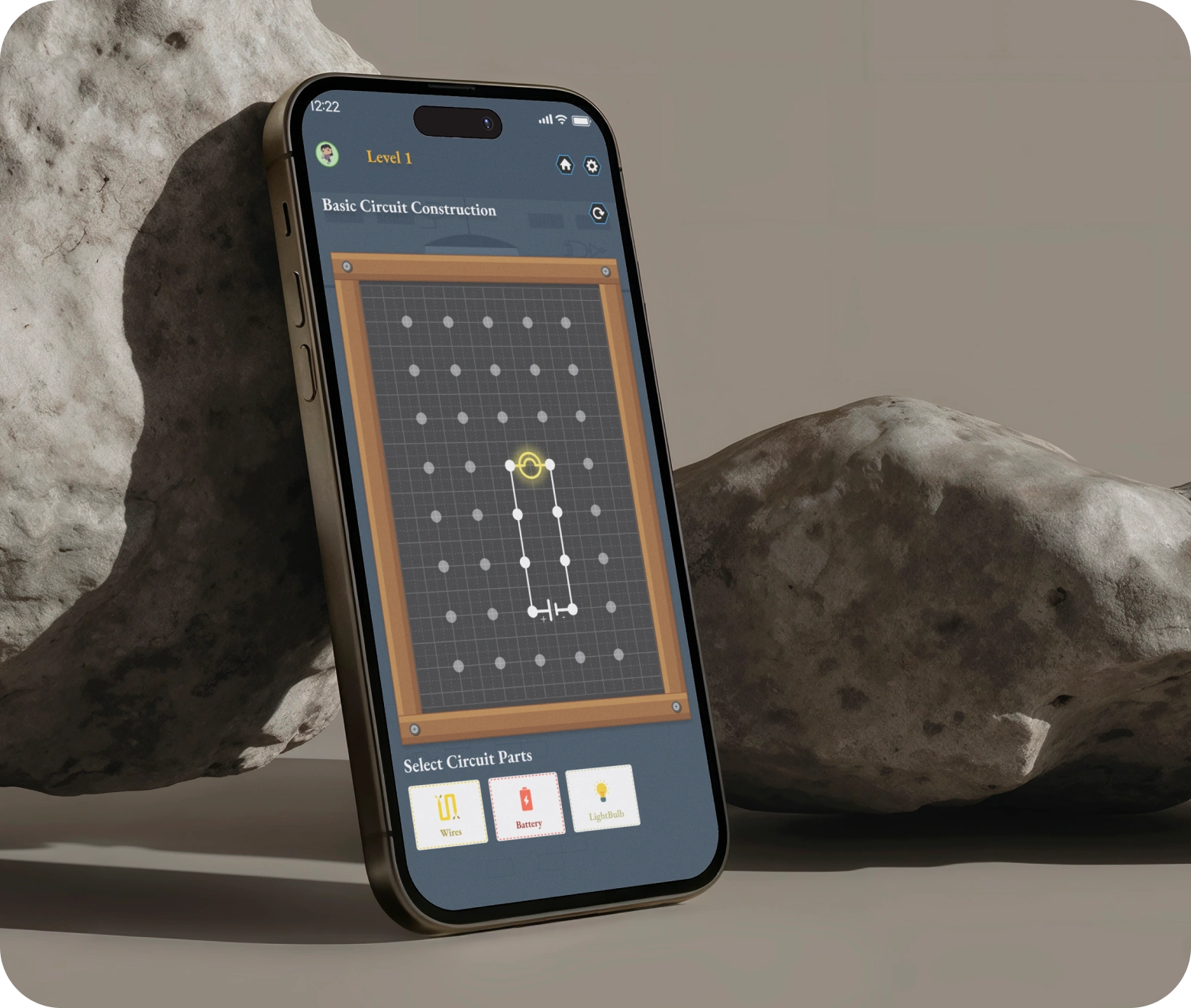
The Physics game teaches series and parallel circuits by having players physically construct a working circuit to light a bulb, with three difficulty tiers that scale the same core concept rather than introducing unrelated mechanics.
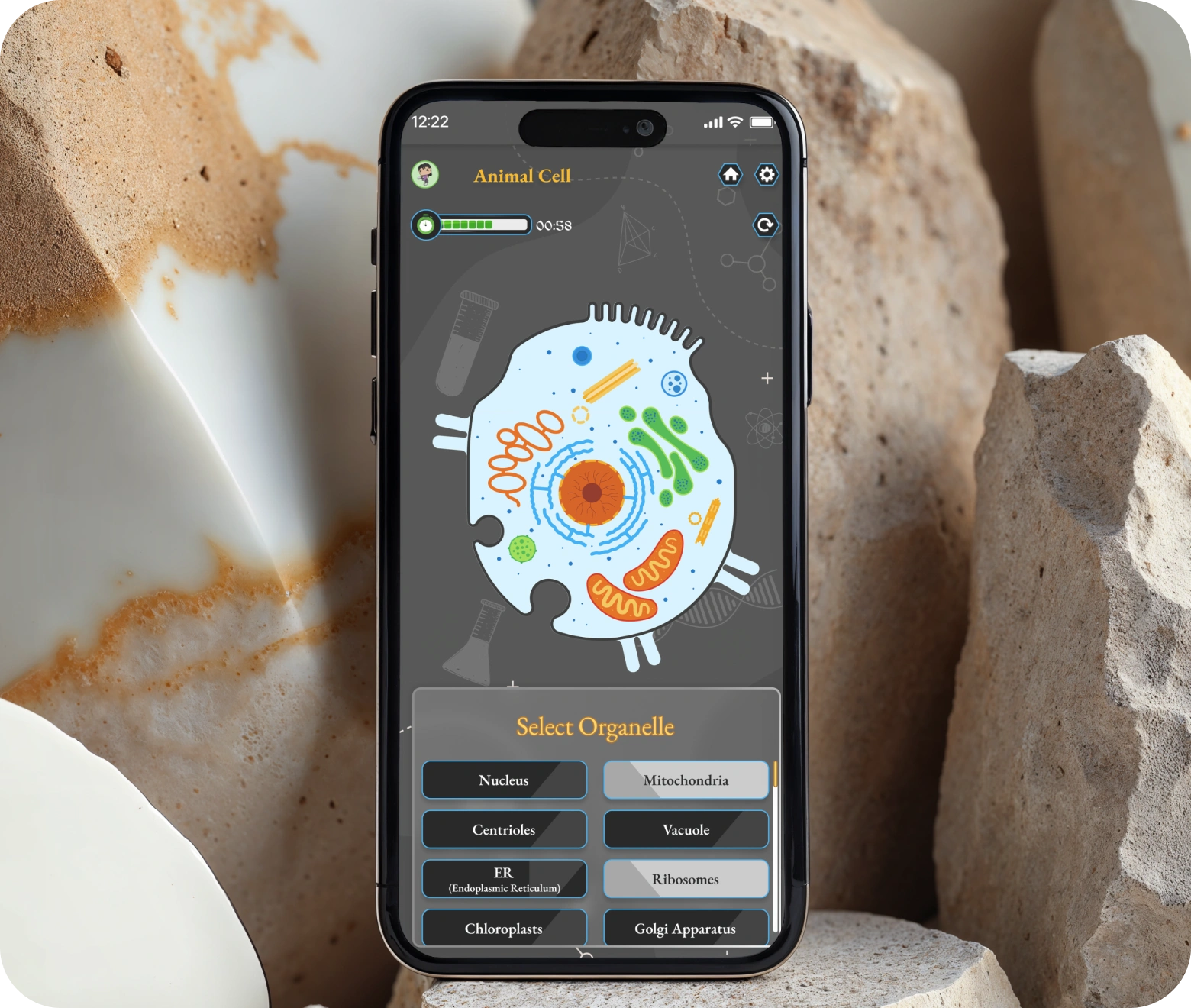
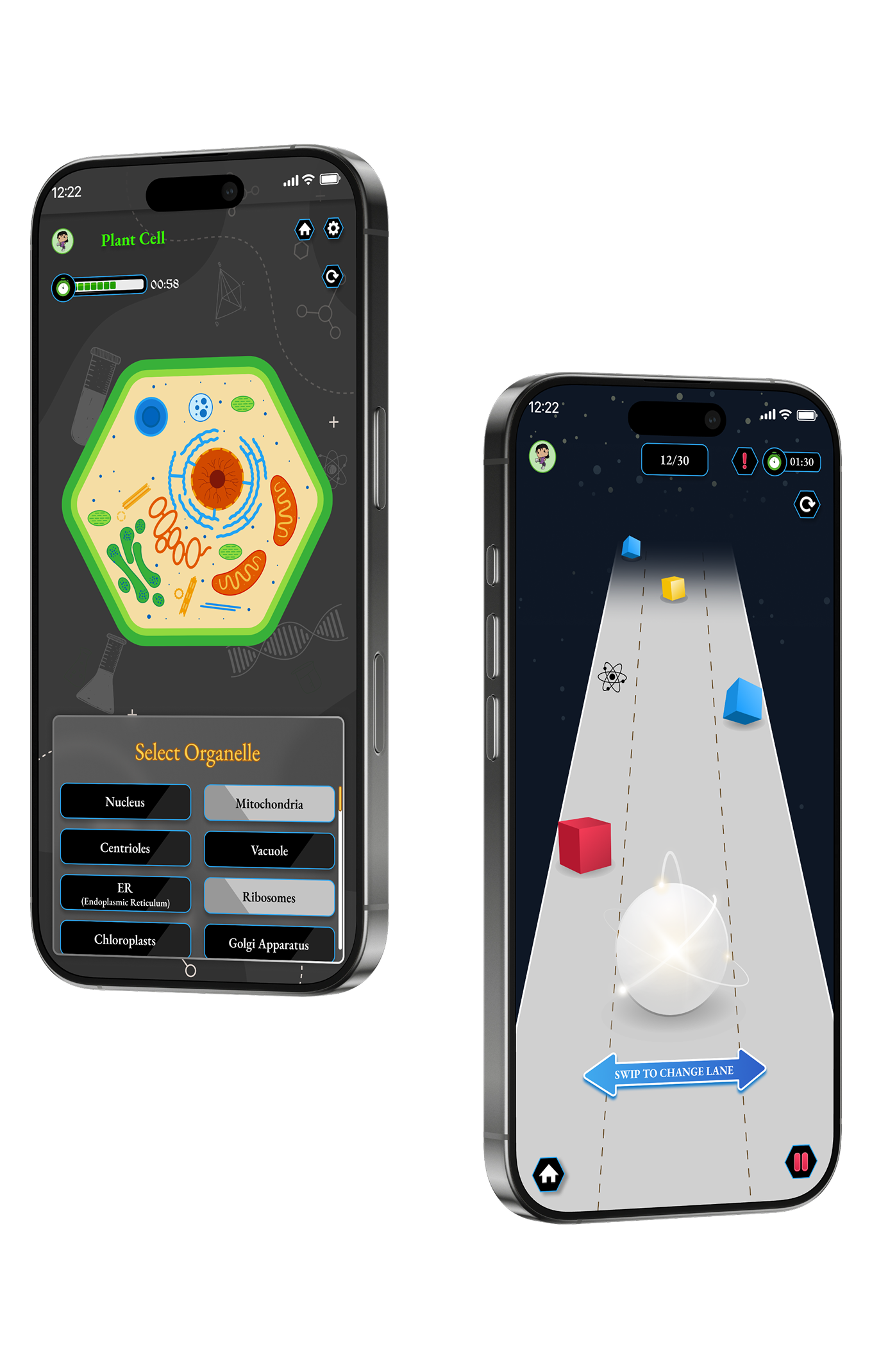
The Biology game asks players to first choose a cell type, then correctly identify and place that cell's organelles into their proper positions within a time limit.
Three
A single app suite spanning Chemistry, Physics, and Biology, letting kids move between subjects without switching apps shorten this
3-Tier
Physics gameplay scales from single-switch circuits to multi-component setups with resistors and diodes, keeping the app relevant as a child's understanding grows
Real-Time
Flutter Flame powers responsive, timer-based mechanics across all three games, keeping interactions fast and fluid on both Android and iOS
One
Chemistry, Physics, and Biology run as one cohesive experience under a shared navigation and app structure, rather than as separate standalone apps
In our world, there's no such thing as having too many clients


