
The MVP Mindset: Stand Out or Innovate?

Jun 05, 2025

Read in 2 Minutes
Table of Contents
🌟 What is an MVP and Why Do You Need One?
An MVP (Minimum Viable Product) is the simplest version of your product that delivers core value to early adopters. It’s not about launching a half-baked product — it’s about validating your idea quickly, gathering real user feedback, and iterating fast. The goal? Minimize risk, save time, and ensure you’re building something people truly want.
Without a strong MVP strategy, you risk building features no one needs or over-engineering a product before finding product-market fit. That’s why it’s crucial to define your approach early on.
🛠️ Choosing the Right Team for Your MVP
The success of your MVP doesn’t rely on the idea alone — it’s about execution. And for that, you need the right team. Here’s what to prioritize:
- Visionaries: You need people who understand the market and the problem you’re solving.
- Product Managers: To keep the team aligned and prioritize features.
- Developers: Lean, multi-skilled developers who can build fast without sacrificing quality.
- UI/UX Designers: A clean, intuitive experience is a must — even for the first version.
- Marketers: Someone to build early buzz and attract first users.
Pro Tip: A small, agile, cross-functional team often works better than a large one in MVP stages.
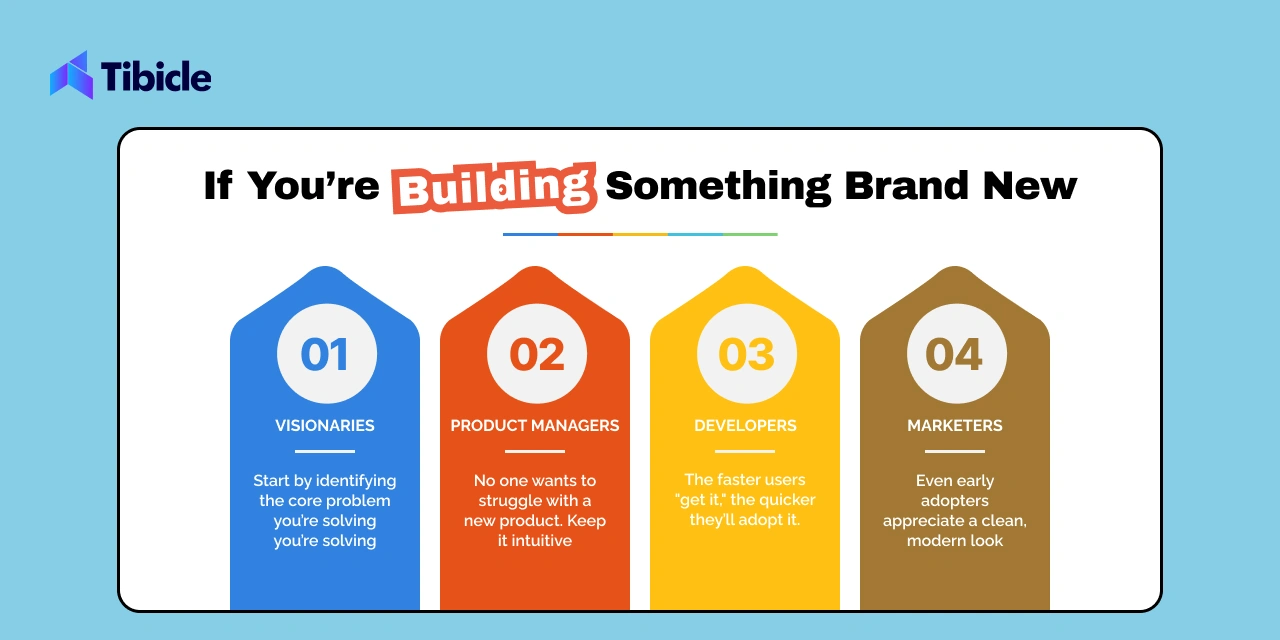
🚀 If You’re Building Something Brand New
When creating a brand-new MVP for startups, your focus should revolve around these four pillars:
- Features: Start by identifying the core problem you’re solving. Focus only on essential, high-impact features. Every feature should directly address a pain point or create undeniable value.
- Ease of Use: No one wants to struggle with a new product. Keep it intuitive. The fewer the clicks, the better.
- Ease of Understanding: The faster users “get it,” the quicker they’ll adopt it. Your messaging and functionality must be crystal clear.
- UI/UX: Even early adopters appreciate a clean, modern look. A polished UI enhances credibility, while a smooth UX keeps them engaged.
💡 Pro Tip: Test small. Validate the core concept before you expand.
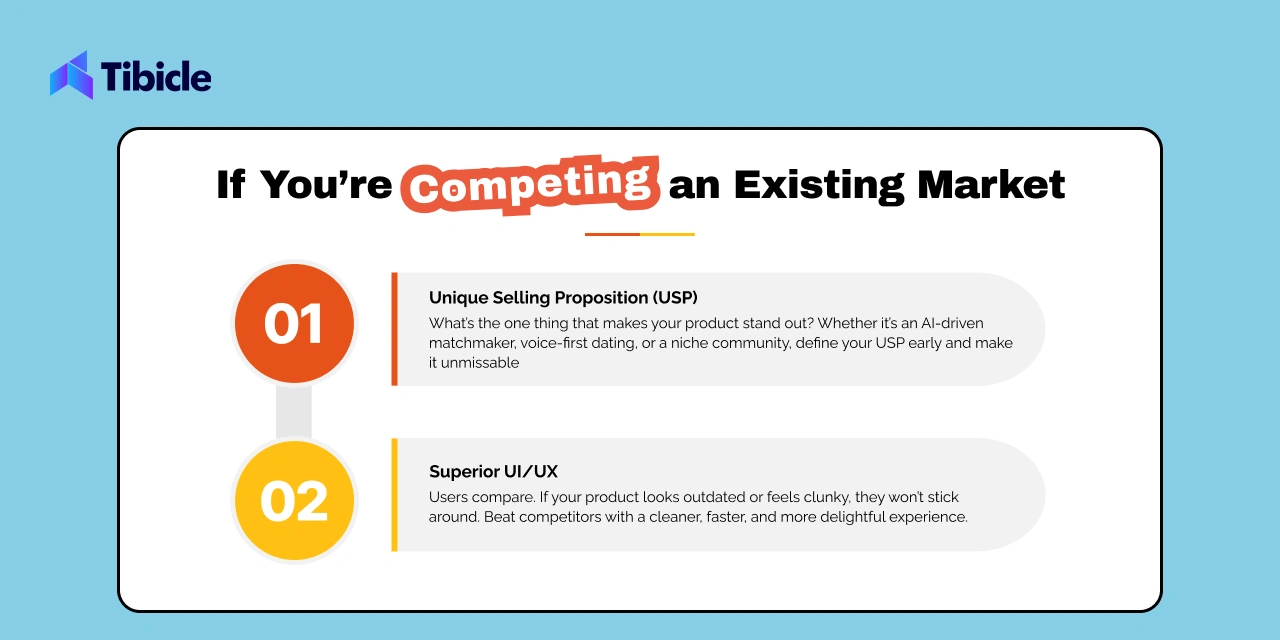
🔥 If You’re Competing in an Existing Market
For MVPs in spaces like dating apps or fitness trackers — where giants already rule — you need an edge. Focus on these essentials:
- Unique Selling Proposition (USP): What’s the one thing that makes your product stand out? Whether it’s an AI-driven matchmaker, voice-first dating, or a niche community, define your USP early and make it unmissable.
- Superior UI/UX: Users compare. If your product looks outdated or feels clunky, they won’t stick around. Beat competitors with a cleaner, faster, and more delightful experience.
💡 Pro Tip: Study user complaints on existing apps. Solve those pains.
🔧 Bonus Tips (For Any MVP!)
- Scalability: Build with future growth in mind — but don’t over-engineer.
- Feedback Loop: Build, measure, learn. Quickly.
- Monetization: Plan early. Will it be freemium? Subscription? Ads?
🎯 Final Thoughts
Whether you’re blazing a new trail or taking on a crowded market, the MVP’s goal is the same: get to market fast, learn fast, and adapt fast.
Schedule A Developer Interview And Get 15 Days Risk-Free Trial
Schedule a Call

Relevant Blog
Migrate Web AI App to Electron Desktop via Electron

Aditya Changlani

Building Private local AI Desktop App Development

Prejin Nadar
Written by

Raj Jagani
C.E.O.
I am a C.E.O. @ Tibicle LLP & a Technology Professional, with over 12+ years of experience, strong knowledge of SAAS development, product Architecture, and a passion for entrepreneurship.
Related posts
Fine-Tuning vs. RAG Deployment: Total Cost of Ownership (TCO) for Enterprise AI Apps
What This Guide Covers Who this is for Commercial investigation. The reader is comparing two viable technical approaches before a budget or architecture decision, not looking for a definition of either term. They want numbers, a framework, and a clear answer on when each approach wins on cost. Search intent Enterprise engineering leads, ML platform […]
05 Oct 2026 | Aditya Changlani
Migrate Web AI App to Electron Desktop via Electron
What This Guide Covers Who this is for CTOs, VP Engineering, and technical founders at companies running an AI feature inside a web app who are weighing whether to migrate their web AI app to Electron desktop. This applies most directly to teams where the AI workflow is central to the product, not a side […]
02 Oct 2026 | Aditya Changlani
Building Private local AI Desktop App Development
What This Guide Covers Who this is for: US tech firms, SaaS companies, startups, CTOs, engineering managers, and product teams looking for experienced Electron.js developers for ongoing private local AI desktop app development and custom desktop application development. Search intent: Hiring and decision. This guide covers where to find Electron.js developers, how to evaluate their […]
28 Sep 2026 | Prejin Nadar
Got an Idea? Get FREE Consultation
In our world, there's no such thing as having too many clients

Email
tea@tibicle.com

Phone
+91 9724922880