
What Is Food Service Technology? A Decision-Maker’s Guide

Jul 28, 2026

Read in 5 Minutes
Table of Contents
- What This Guide Covers
- Introduction
- What Is Food Service Technology?
- Core Types of Food Service Technology
- Where Food Service Technology Creates the Most Business Impact
- Food Service Technology Comparison: Core Platforms by Function
- Food Service Technology Pricing: What Operators Actually Pay
- ROI and Business Impact: The Numbers That Matter
- Risks and Implementation Challenges Operators Don’t Talk About
- Vendor Selection Checklist for Food Service Technology
- Top Food Service Technology Platforms to Evaluate in 2025–26
- Why Tibicle LLP Is a Considered Choice for Food Service Technology Implementation
- Conclusion
- FAQs
What This Guide Covers
Who this is for: Restaurant owners, multi-location operators, hospitality groups, cloud kitchen businesses, and operations leaders evaluating food service technology to improve operational efficiency, reduce costs, and build a technology stack that supports long-term growth.
Search intent: Commercial investigation. This guide is written for decision-makers who already understand the role of technology in restaurants and are evaluating which systems to implement, how much they cost, what return they generate, and how to avoid expensive implementation mistakes.
What you will walk away with: A detailed breakdown of the major categories of food service technology, pricing expectations, implementation costs, ROI benchmarks, vendor evaluation criteria, technology comparisons, and a practical framework for selecting the right technology stack for your restaurant.
Introduction
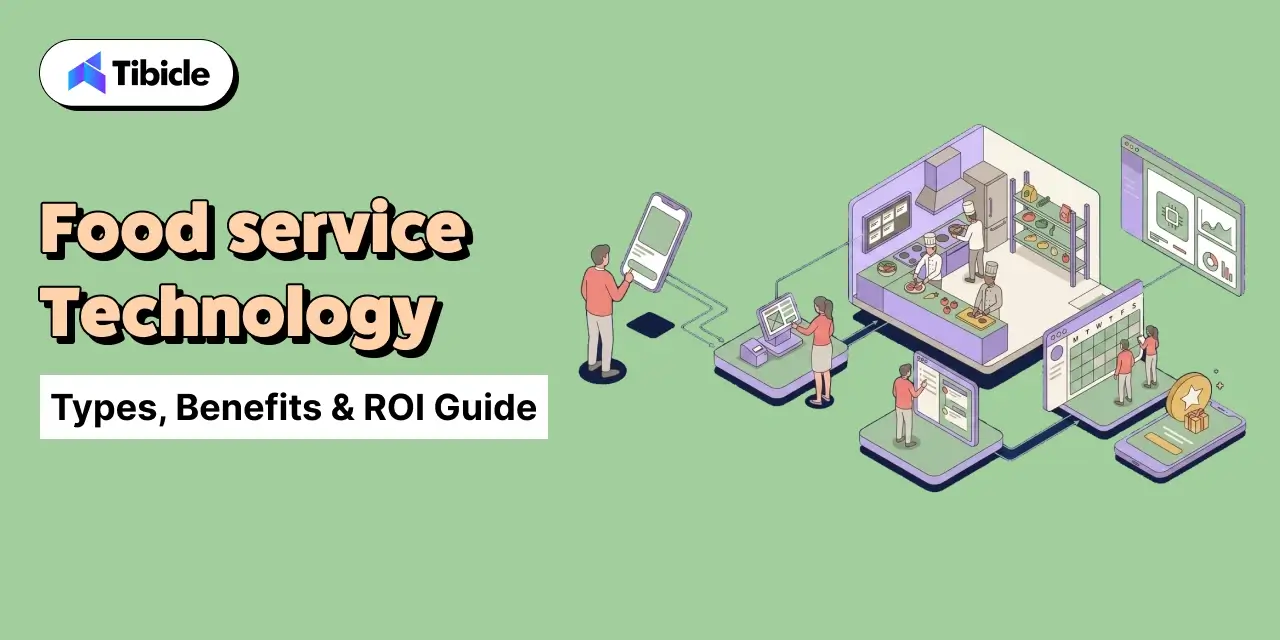
Restaurant margins sit at 3 to 5%. Labor costs consume 30 to 35% of revenue. Without proper tracking, 30 to 40% of food inventory gets wasted before it ever reaches a plate. These are not abstract industry complaints; they are the exact gaps food service technology exists to close.
Food service technology is the connected stack of hardware, software, and AI-driven systems that runs restaurant operations end to end: order capture, kitchen execution, inventory, labor, compliance, and customer retention, all reporting through one operational layer instead of three disconnected ones.
If you’re evaluating whether food service technology is worth the investment, this guide gives you the numbers, the comparisons, and the checklist to decide.
What Is Food Service Technology?
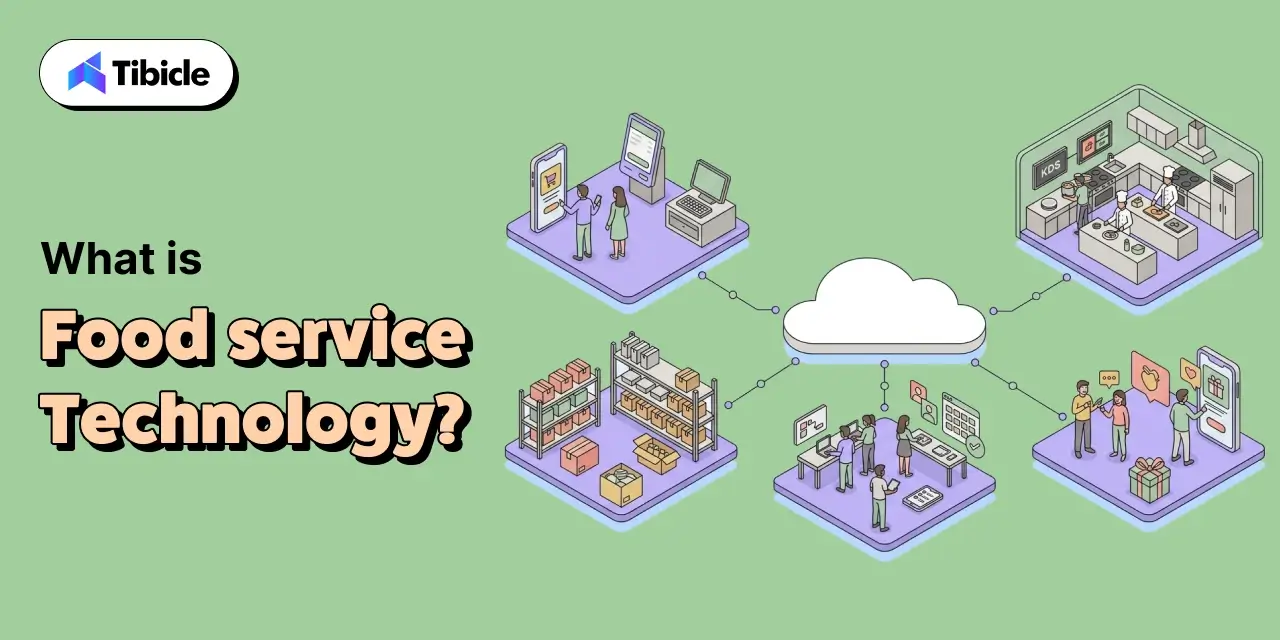
Food service technology refers to the integrated stack of hardware, software, and AI-driven systems that manage restaurant operations end to end, from order capture and kitchen execution to inventory, labor, compliance, and customer retention. It is the layer connecting the front counter, the back kitchen, and the supply chain into one reporting system.
How It Differs from Generic Business Software
Generic ERP or retail POS platforms are not built for food service math. Retail software handles a static SKU count and predictable shelf life. A restaurant runs real-time order throughput across dine-in, delivery, and pickup at once, carries HACCP compliance requirements, and manages inventory that spoils in days rather than months. That gap is why category-specific architecture exists instead of retrofitted retail software.
Where Food Service Technology Sits in Your Operations Stack
Four layers make up the stack. Front-of-house handles order capture and guest interaction. Back-of-house handles kitchen execution and prep. Supply chain covers procurement and inventory. The data layer sits above all three, turning transaction records into reporting and forecasting.
Core Types of Food Service Technology
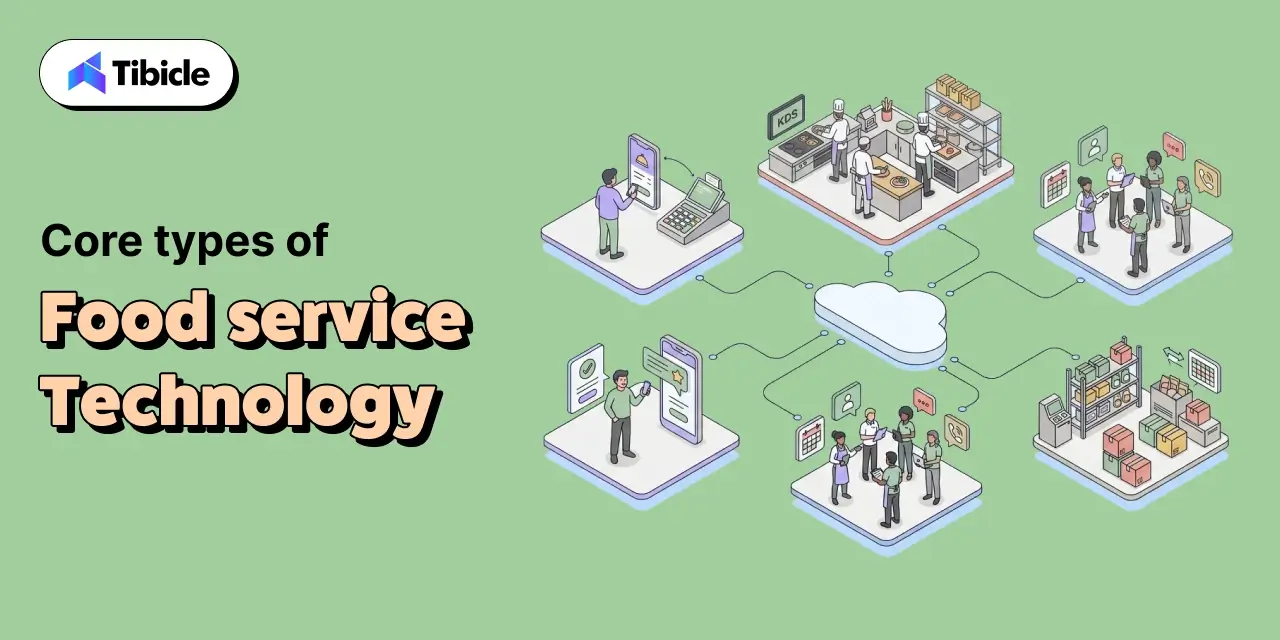
Point-of-Sale (POS) Systems
Modern POS software is no longer a transaction terminal; it functions as the central data hub for a restaurant. Multi-location support, real-time reporting, and native integrations with loyalty and delivery platforms determine which POS actually operates as infrastructure rather than a cash register with a screen. Toast, Square, Lightspeed, and Clover cover most of the market across different price and complexity tiers.
Kitchen Display Systems (KDS) and Automation
Kitchen display systems replace paper tickets with digital, updatable order queues visible across the entire back of house. This removes the miscommunication that paper handoffs cause during a rush and keeps modifiers and special requests visible in real time. Restaurants running a connected KDS report measurable improvement in table turn speed during peak service hours.
Inventory and Procurement Management Software
Inventory and procurement software tracks stock at the ingredient level, flags variance in real time, and generates AI-powered reorder recommendations tied directly to supplier data. Restaurants implementing modern inventory platforms report ROI above 150% in year one. (Supy, 2025)
Online Ordering and Digital Channels
Online ordering spans third-party marketplaces, first-party ordering apps, and QR code menus, each carrying its own margin profile. Restaurants running digital ordering channels see average check sizes roughly 30% higher than dine-in-only locations.
Labor Scheduling and Payroll Platforms
Labor is the single largest controllable expense in food service, typically 30 to 35% of revenue. Scheduling software targets that cost directly through demand forecasting, compliance tracking, and overtime alerts, catching problems before payroll processes them.
Food Safety and Compliance Technology
Cloud-based HACCP logging, IoT temperature sensors, and audit trail software turn compliance from a paper binder into a searchable record. A single safety violation or foodborne illness outbreak can cost an operator millions in lost sales and recall expenses, which is why this category functions as risk management rather than admin overhead.
Customer Loyalty and CRM Platforms
Loyalty and CRM platforms tied directly to POS data allow personalized offers based on actual visit and spend history instead of generic discounting. A 5 percentage point improvement in customer retention through loyalty programs can lift profit by up to 95%. (Bain, 2025)
Where Food Service Technology Creates the Most Business Impact
Multi-Location Chains
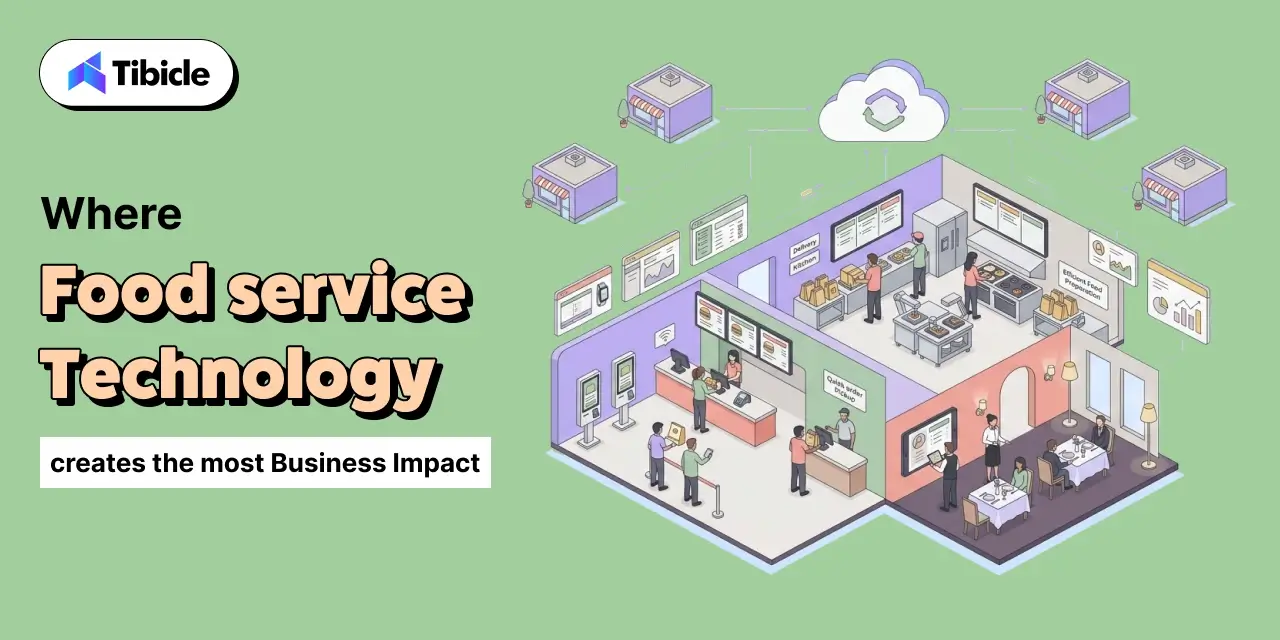
At a multi-location scale, manual reporting and inconsistent operational controls stop working. Centralized data visibility, standardized processes, and cross-location benchmarking turn restaurant operations technology into required infrastructure rather than a convenience.
Fast-Casual and QSR Operators
Speed is the core KPI for fast-casual and QSR operators. Self-ordering kiosks, AI-powered drive-thru voice systems, and dynamic menu pricing all target throughput directly. IHOP and Applebee’s have both deployed voice AI agents to manage phone order volume at scale.
Fine Dining and Hospitality Groups
For fine dining and hospitality groups, CRM-driven personalization, reservation integration, and guest preference tracking build the ROI case around lifetime customer value rather than transaction speed.
Ghost Kitchens and Delivery-First Operators
For ghost kitchens and delivery-first operators, digital ordering systems are the entire operation, not supporting infrastructure. Integration between delivery aggregators, POS, and inventory data decides whether the business runs at a profit or bleeds margin on order errors.
Food Service Technology Comparison: Core Platforms by Function
Each technology category serves a distinct operational function at a different price point and payback window. Use the table below to match the category to your segment and expected ROI timeline before shortlisting vendors.
| Technology Category | Core Function | Best For | Avg. Monthly Cost | ROI Timeline |
| POS Systems | Order management, payments, reporting | All segments | $0–$399/location | 3–6 months |
| Inventory Management | Stock tracking, AI ordering | Multi-unit, high volume | $169–$429/month | 3–9 months |
| Kitchen Automation / KDS | Back-of-house speed and accuracy | QSR, fast-casual | $50–$150/station | 3–6 months |
| Labor Scheduling Software | Staffing, overtime, compliance | All segments | $50–$200/location | 6–12 months |
| Digital Ordering / Delivery | Online channels, third-party integration | Ghost kitchens, QSR | Variable + commissions | 3–6 months |
| Food Safety & Compliance Tech | HACCP, IoT monitoring, audit logs | All segments, regulated | $100–$300/month | Ongoing risk reduction |
| Loyalty & CRM Platforms | Guest retention, personalization | Multi-unit, full service | $99–$500/month | 3–6 months |
Enterprise pricing is custom across most categories. The figures above reflect mid-market tiers.
Not sure which stack fits your operation? Tibicle’s food tech consultants can map the right architecture to your scale and margin goals. Book a discovery call.
Food Service Technology Pricing: What Operators Actually Pay
Software Licensing vs. Total Cost of Ownership
Monthly SaaS pricing is one line item in a longer cost model. Hardware, including terminals, KDS screens, and IoT sensors, implementation and training, transaction processing rates, and integration fees all add to the total cost of ownership. A $189 per month POS plan commonly reaches $800 to $1,200 per month, all-in, once hardware and processing fees are factored in for a single location.
Free Tier vs. Paid Tier; When Free Stops Working
Free plans, such as Square, are the most common example and suit early-stage, single-location operators. Three signals indicate a business has outgrown the free tier: reporting needs span more than one location, inventory tracking requires ingredient-level detail rather than item counts, or the operation needs API access to connect third-party systems. At that point, paid tiers stop being optional.
Enterprise Pricing; What to Negotiate
Above a certain location count, custom pricing becomes standard. The levers worth negotiating are multi-location bundling, annual billing discounts of roughly 10 to 15%, dedicated support SLAs, and onboarding fee waivers.
ROI and Business Impact: The Numbers That Matter
Measured Returns by Technology Category
- Inventory software: ROI above 150% in year one, with 10 to 15% reduction in food waste. (Supy, 2025)
- AI forecasting: 20 to 50% reduction in inventory errors. (McKinsey, 2025)
- Food cost control: 2 to 5% cost reduction through real-time variance detection.
- Digital ordering: average check is roughly 30% higher than dine-in only.
- Scheduling automation: $15,000–$40,000 in avoided manager replacement costs over three years.
- Loyalty programs: a 5% retention improvement lifting profit 25 to 95%. (Bain, 2025)
- AI phone reception: $3,000–$18,000 in recovered monthly revenue per location.
Payback Timelines by Segment
Payback windows run 3 to 6 months for POS and digital ordering, and 6 to 12 months for labor scheduling platforms, since scheduling ROI compounds through avoided overtime and turnover cost rather than an immediate transaction gain. A 2025 National Restaurant Association survey found that 76% of operators consider technology a measurable competitive edge. (NRA, 2025)
The Margin Math: Why Every Percentage Point Matters
At 3 to 5% margins, a 2 percentage point food cost reduction changes the outcome of a full year. For a five-unit operator running $1M in annual revenue per location, a 2% food cost reduction recovers $100,000 across the group, well above what most inventory platforms cost annually.
Risks and Implementation Challenges Operators Don’t Talk About
Integration Failure – When Systems Don’t Talk to Each Other
The most common hidden cost of new restaurant management software is a system that does not connect cleanly to what is already running. A platform that fails to integrate with existing POS or accounting software creates data silos, operational disruption, and unplanned custom development spend.
Data Quality Dependency
AI-powered forecasting and inventory tools only produce useful output when the data feeding them is accurate. Operators migrating from manual processes carry real exposure here, since messy historical data produces wrong predictions before anyone notices.
Staff Resistance and Change Management
Technology that staff refuse to use, or were never properly trained on, returns zero value regardless of cost. Skipping structured training and change management is one of the most predictable ways an implementation fails.
Cybersecurity Exposure
Every additional connected system, from payment processing to loyalty databases to supplier integrations, adds another point of vulnerability. Vendors should be evaluated directly on security certifications, specifically PCI DSS and SOC 2, not on sales assurances.
Over-Automation Risk
In full-service segments, particularly, removing too much human interaction erodes the guest experience that drives repeat visits and loyalty.
Vendor Selection Checklist for Food Service Technology
Before You Shortlist – Internal Readiness Questions
- What is the current tech stack, and where are the integration dependencies?
- Is there a dedicated implementation owner internally?
- What payback timeline is acceptable?
- Is the goal a single-point solution or a unified platform?
Vendor Evaluation Criteria
| Criteria | What to Verify |
| Integration capability | Native connectors to your existing POS/ERP |
| Pricing transparency | All-in TCO, not just the SaaS fee |
| Security compliance | PCI DSS, SOC 2 certification |
| Scalability | Multi-location support, API flexibility |
| Implementation support | Onboarding, training, go-live SLA |
| Reference customers | Same segment, similar scale |
| Support model | 24/7 vs. business hours, matters on a Friday night |
Red Flags to Watch For
Vague pricing, no reference customers in your segment, thin integration documentation, and contracts with no clearly defined data ownership terms are all reasons to keep looking.
Top Food Service Technology Platforms to Evaluate in 2025–26
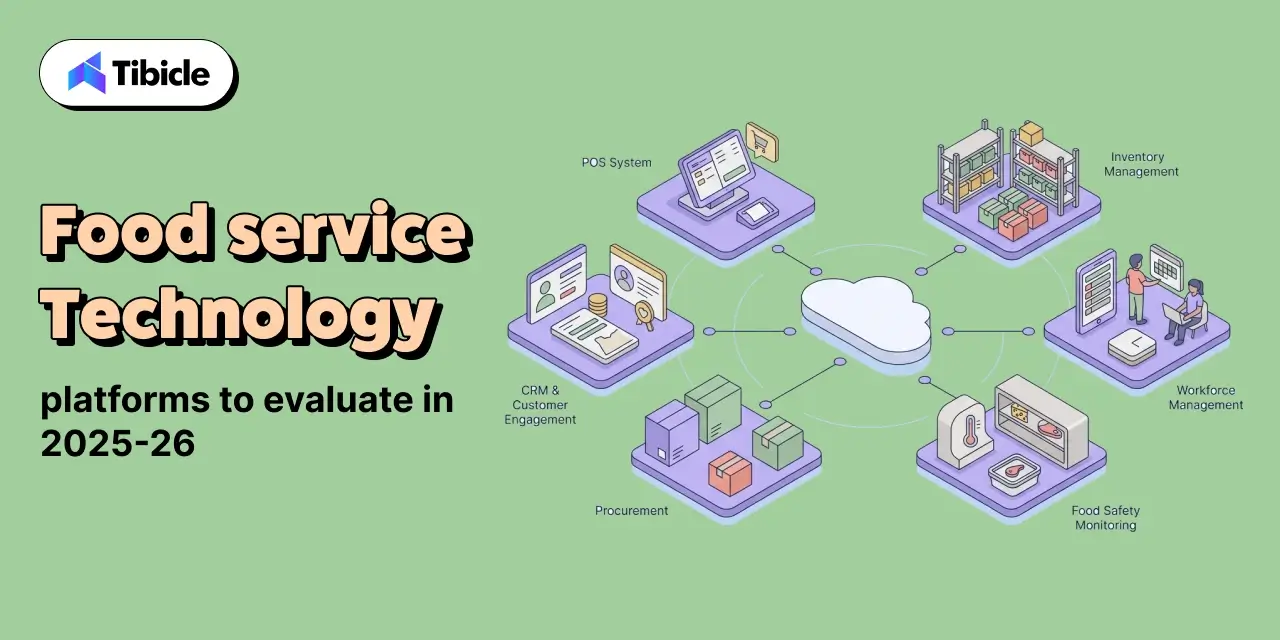
This is a neutral, informational list, not ranked and not endorsed. These platforms are frequently evaluated by operators at different scale points. Match them against the checklist above rather than brand recognition alone.
- Toast – Full-stack restaurant management: POS, payroll, and marketing.
- Square for Restaurants – Strong free tier, suited to early-stage and single-location operators.
- Lightspeed Restaurant – Enterprise-grade, multi-location inventory and reporting.
- Oracle Food and Beverage – Large chain and hospitality-grade infrastructure.
- 7shifts – Labor scheduling and workforce management specialist.
- Supy – Inventory and procurement for F&B, strong AI-driven ordering.
- Smart Food Safe – Food safety, compliance, and HACCP automation.
No ranking is implied. Best fit depends on operator type, scale, and existing stack.
Why Tibicle LLP Is a Considered Choice for Food Service Technology Implementation
Tibicle works with food and hospitality operators at the intersection of software development, integration architecture, and custom food tech builds. Where off-the-shelf platforms hit a ceiling, in custom ordering flows, proprietary loyalty engines, POS integrations with legacy infrastructure, or multi-channel delivery orchestration, Tibicle’s development team builds to spec instead of forcing a workaround.
The difference is not price. It is the ability to close the gap between what a SaaS vendor ships out of the box and what a scaling operator actually needs to run in production, day to day.
Evaluating a custom food tech build or integration project? Talk to Tibicle’s team.
Conclusion
Thin margins, labor cost pressure, and food waste are not abstract industry complaints. They are measurable line items that food service technology is proven to move. The operators pulling ahead in 2025 to 2026 are not running the most technology; they are running the stack matched correctly to their scale, deployed with real training discipline, and measured against actual operational benchmarks rather than vendor promises.
Ready to build or optimize your food service technology stack? Tibicle’s team helps operators at every scale, from integration audits to full custom builds. Schedule a consultation.
FAQs
What is food service technology and what does it include?
Food service technology covers all hardware, software, and AI systems used to manage restaurant operations, from POS and inventory to scheduling, safety compliance, and customer loyalty platforms.
How much does food service technology cost for a mid-size restaurant group?
Costs vary by category and scale. Mid-market inventory platforms run $169–$429/month per location, POS solutions run $189–$399/month. Enterprise plans are custom, and total cost of ownership including hardware and integrations typically runs 3 to 5 times the base SaaS fee.
What ROI can operators realistically expect from restaurant operations technology?
ROI timelines range from 3 to 12 months depending on category. Inventory software delivers 150%+ ROI in year one for many operators, AI forecasting reduces inventory errors 20 to 50%, and scheduling automation can save $15,000–$40,000 in management costs over three years.
What are the biggest risks when implementing food service technology?
Integration failure with existing systems, poor data quality undermining AI tools, staff resistance without structured training, cybersecurity exposure from connected systems, and over-automation that degrades guest experience in full-service segments.
How do I choose the right food service technology solutions for my operation?
Start with a tech stack audit and map integration dependencies before shortlisting vendors. Evaluate on total cost of ownership, integration capability, security certifications, scalability, and reference customers in your specific segment, not brand recognition alone.
Is custom food service technology development better than off-the-shelf platforms?
Off-the-shelf platforms suit most operators at standard scale. Custom development becomes justified when ordering flows, loyalty architecture, or multi-system integrations exceed what SaaS vendors support natively, particularly for chains with proprietary processes or complex supplier ecosystems.
Schedule A Developer Interview And Get 15 Days Risk-Free Trial
Schedule a Call

Relevant Blog
Custom Computer Vision Software Development Company

Arjun Shinojiya

How to Hire Dedicated Electron.js Developers in 2026

Avni Kanabar

Written by

Recent Blogs
Custom Computer Vision Software Development Company
Who this is for: Engineering leads, product owners, and operations heads at B2B enterprises evaluating a custom computer vision software development company for a real visual-data workflow rather than a demo. Search intent: Commercial evaluation with a technical backbone. The reader has moved past “what is computer vision” and wants architecture choices, accuracy data, and […]
Custom Autonomous AI Agent Development Services: Building Task-Driven Workflow Bots
What This Guide Covers Who this is for: Engineering leads, product owners, and operations heads evaluating AI agent development services for a real internal workflow rather than a chatbot pilot. Search intent: Commercial evaluation with a technical backbone. The reader has moved past “what is an AI agent” and wants architecture choices, failure data, and […]
How to Hire Dedicated Electron.js Developers in 2026
What This Guide Covers Who this is for: US tech firms, SaaS companies, startups, CTOs, engineering managers, and product teams looking to hire dedicated Electron.js developers for ongoing desktop application development. Search intent: Hiring and decision. This guide covers where to find Electron.js developers, how to evaluate their technical skills, and how dedicated developers compare […]
Got an Idea? Get FREE Consultation
In our world, there's no such thing as having too many clients

