
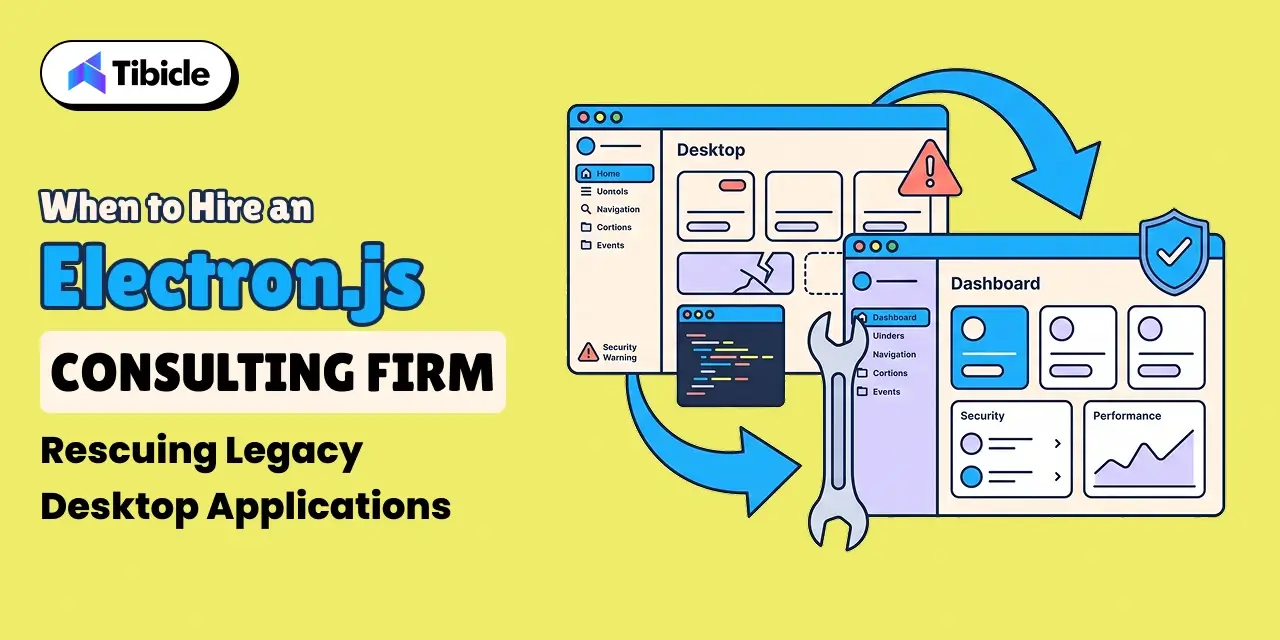
When to Hire an Electron.js Consulting Firm: Rescuing Legacy Desktop Applications

Aug 13, 2026

Read in 5 Minutes
Table of Contents
Who this is for: Engineering leaders and IT decision-makers responsible for an aging Electron application, especially those who can’t confidently answer what Electron version is running in production, why the last upgrade attempt was rolled back, or whether nodeIntegration and contextIsolation are configured safely.
Search intent: Vendor evaluation under risk pressure. The reader is likely responding to a failed internal upgrade attempt, a security audit finding, or a departure of the original developers, and is deciding whether the problem needs outside help, not looking for a general explanation of what Electron is.
What you will walk away with: The specific security risk patterns that make an unpatched Electron app dangerous even with no code changes, real CVE examples and CVSS scores from 2026 advisories, documented production exploit chains from Discord and VS Code, a cost breakdown across audit, incremental modernization, and full rearchitecture engagement tiers, six questions to ask before hiring any firm, and how Tibicle’s desktop app development team structures an audit-first legacy rescue rather than a rewrite-first sales pitch.
Introduction
Most companies do not hire an Electron.js consulting firm because they want to. They hire one because a legacy Electron application has quietly become the riskiest piece of software the business runs, and nobody on staff can say with confidence what version it is patched against. That is not a rare situation: technical debt absorbs 21% to 40% of total IT spending at the average enterprise, and developer productivity loss from maintaining legacy systems runs to 42% of a typical engineering week spent on upkeep instead of product work.
Electron carries a specific version of this problem that generic legacy software does not: every unpatched release ships with a bundled, aging copy of Chromium and Node.js, and Electron’s own security advisories move fast. This guide covers what makes a legacy Electron application dangerous to leave alone, what it actually costs to wait, the concrete signs that a business needs Electron development services from an outside team rather than another internal sprint, what a real rescue engagement looks like, and what to ask before signing with an Electron.js consulting firm. By the end, you should be able to tell whether an Electron.js consulting firm is actually the right call for your situation, or whether the fix is smaller than it looks.
What Makes a Legacy Electron App a Ticking Liability
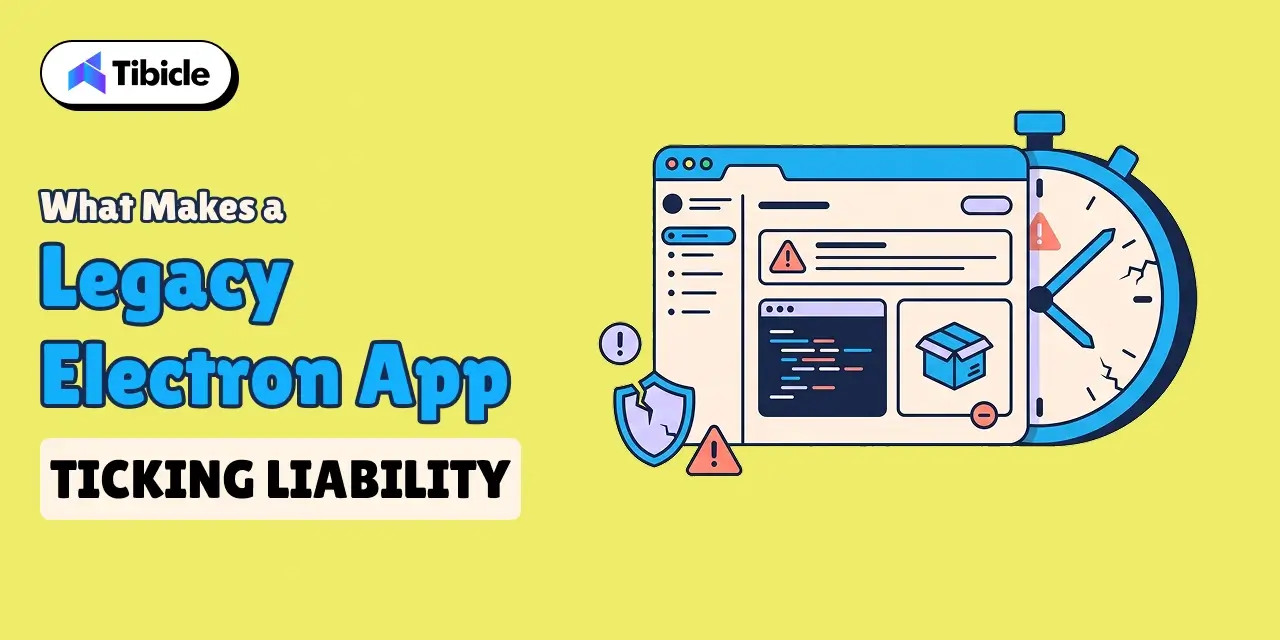
This is the question every Electron.js consulting firm gets asked first, and the answer, before any Electron development services engagement even starts, has three layers.
Bundled Chromium and Node.js Age Whether You Touch the Code or Not
A legacy Electron application does not need new feature work to become more dangerous over time; it becomes more dangerous simply by sitting still while Electron’s upstream Chromium and Node.js versions keep shipping security fixes it never receives. Recent Electron advisories make the pace concrete: in April 2026 alone, researchers disclosed five new Electron vulnerabilities, including a context isolation bypass via the WebCodecs VideoFrame API rated CVSS 8.4 and a renderer command-line switch injection rated CVSS 7.8, both fixed only in current releases, 41.0.0-beta.8, 40.7.0, 39.8.0, or 38.8.6. A legacy Electron application still running a version from even a year or two earlier simply does not have these fixes, which is the single most common finding in an Electron.js consulting firm’s first audit.
Security Defaults Changed, and Old Apps Often Never Adopted Them
Electron’s own maintainers made a deliberate call, documented in a public GitHub discussion, to deprecate the nodeIntegration flag and change the default of contextIsolation from false to true starting in Electron 12, specifically because leaving it off lets code running in the renderer reach into Electron internals or the preload script and perform privileged actions. A legacy Electron application built before that shift, and never revisited, frequently still ships with the old, insecure configuration, because nobody went back to change a setting that was never flagged as broken. This single configuration detail is often the first thing an Electron.js consulting firm checks.
Deprecated Patterns Compound the Risk
This is another item any Electron development services audit checks early. Older Electron codebases also tend to lean on patterns the framework has since walked back, most notably the remote module, which often requires nodeIntegration to be enabled in the renderer process to function, a significant security risk the framework’s own maintainers have recommended against since Electron 14. A legacy Electron application carrying both an old Electron version and a dependency on the remote module is carrying two compounding vulnerabilities at once, not one, and this combination shows up often enough that it is worth checking for by name.
The Real Cost of Waiting
None of this is theoretical, and a legacy Electron application is not a hypothetical risk category. Security researchers have documented production exploit chains in exactly this category of software: Discord’s desktop bootstrapper was running Chromium 83.0.4103.122, dozens of patches behind, with sandboxing off, which turned a V8 memory bug into full system access rather than a contained renderer crash, a chain researchers later presented at Black Hat USA and DEF CON. VS Code shipped a separate XSS-to-RCE chain through a webview, tracked as CVE-2020-15174 and CVE-2021-43908. Both were widely used, well-resourced products, and both still shipped exploitable legacy configurations before they were caught.
The financial pattern behind deferred modernization is just as concrete. A Pegasystems study of more than 500 IT decision-makers found the average enterprise loses over $370 million annually to failed or delayed legacy modernization, and the Software Improvement Group estimates the direct labor cost of poor maintainability at roughly €870,000 per system per year for a poorly maintained system, using a €150,000 loaded developer cost as the baseline. Waiting on a legacy Electron application does not freeze the cost; it compounds it, and it is exactly the pattern that makes early Electron development services cheaper than a late one.
Signs You Need an Electron.js Consulting Firm
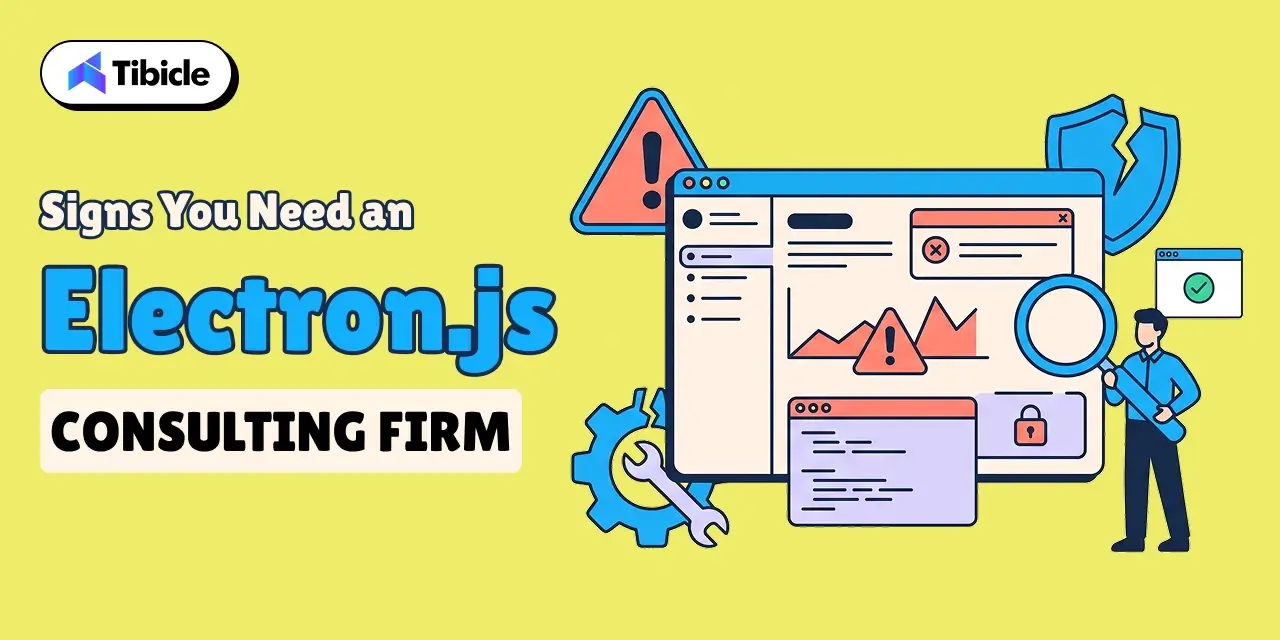
Not every aging Electron app needs outside help immediately. These signs mean it is time to bring in Electron development services rather than schedule another internal sprint, and they are the same signals an Electron.js consulting firm will ask about in a first call:
- Nobody on staff can name the Electron version in production, or why it has not been upgraded.
- The original developers who built the app are gone, and the codebase has no meaningful documentation.
- A security audit or pen test flagged nodeIntegration, disabled contextIsolation, or remote module usage, and no one owns fixing it.
- Previous internal attempts to upgrade Electron versions broke the app and were rolled back more than once.
- Users report crashes, memory growth, or slow performance that the team suspects but cannot diagnose.
- The business wants to ship AI features, offline support, or new integrations, but the current architecture cannot absorb them without a rewrite of unclear scope, which is usually the point where Electron development services pay for themselves.
What a Legacy Electron Rescue Engagement Looks Like
A legacy Electron application rescue follows a different order of operations than a greenfield build, and this is where an Electron.js consulting firm earns its fee or fails to.
Audit and Triage First
A competent Electron.js consulting firm does not start with a rewrite quote. It starts with an audit: current Electron and Chromium versions against the latest security advisories, a review of nodeIntegration, contextIsolation, and IPC channel exposure, a dependency audit for abandoned packages, and an honest assessment of what still works versus what is held together by nobody touching it. Any Electron.js consulting firm that skips straight to a rewrite estimate without this step should be treated as a red flag, not a shortcut. This step exists specifically to avoid quoting a rewrite the business does not actually need.
Incremental Modernization Over a Full Rewrite
Most legacy Electron application rescues are not full rewrites. The dominant pattern across legacy modernization generally is the Strangler Pattern: replacing components in stages rather than all at once, which keeps the app shipping and usable throughout the engagement instead of freezing the product for months. Good Electron development services sequence the work deliberately: the Electron version upgrade first, since security exposure is the most time-sensitive risk, then IPC and process-isolation hardening, then dependency and tooling modernization, and only a full rewrite when the underlying architecture itself cannot support the product’s next phase.
Typical Rescue Engagement Costs
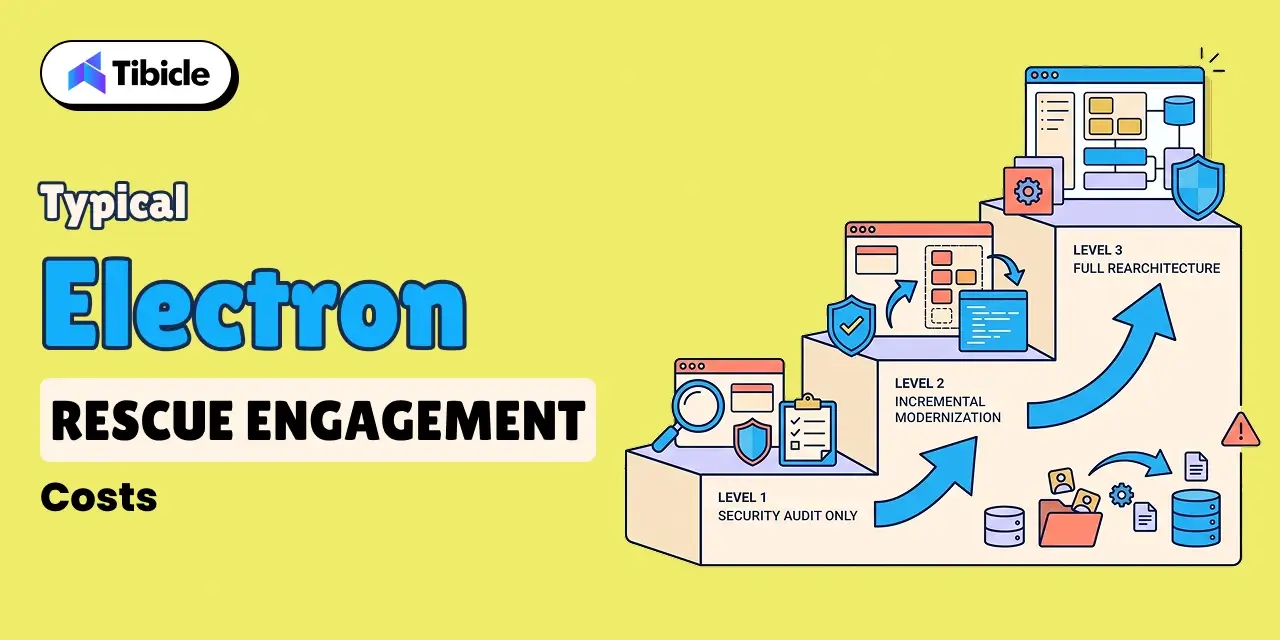
Costs vary by how deep the rot goes, but a typical Electron.js consulting firm structures engagements into three tiers:
| Engagement Type | Typical Scope | What It Resolves |
| Security audit only | Version, config, and dependency review, no code changes | A prioritized risk list and a real scope for the next phase |
| Incremental modernization | Electron upgrade, security hardening, dependency cleanup, staged | Closes the acute security gap without a product freeze |
| Full rearchitecture | New process architecture, modern build tooling, feature parity rebuild | Reserved for apps where the architecture itself blocks the roadmap |
Data migration and cleanup is frequently the hidden cost inside any of these tiers: data migration alone can account for 15 to 30% of a total modernization budget when a legacy Electron application has years of locally stored user data or settings that need to carry forward cleanly. Ask any Electron development services provider to itemize this cost separately before signing.
What to Ask Before You Hire
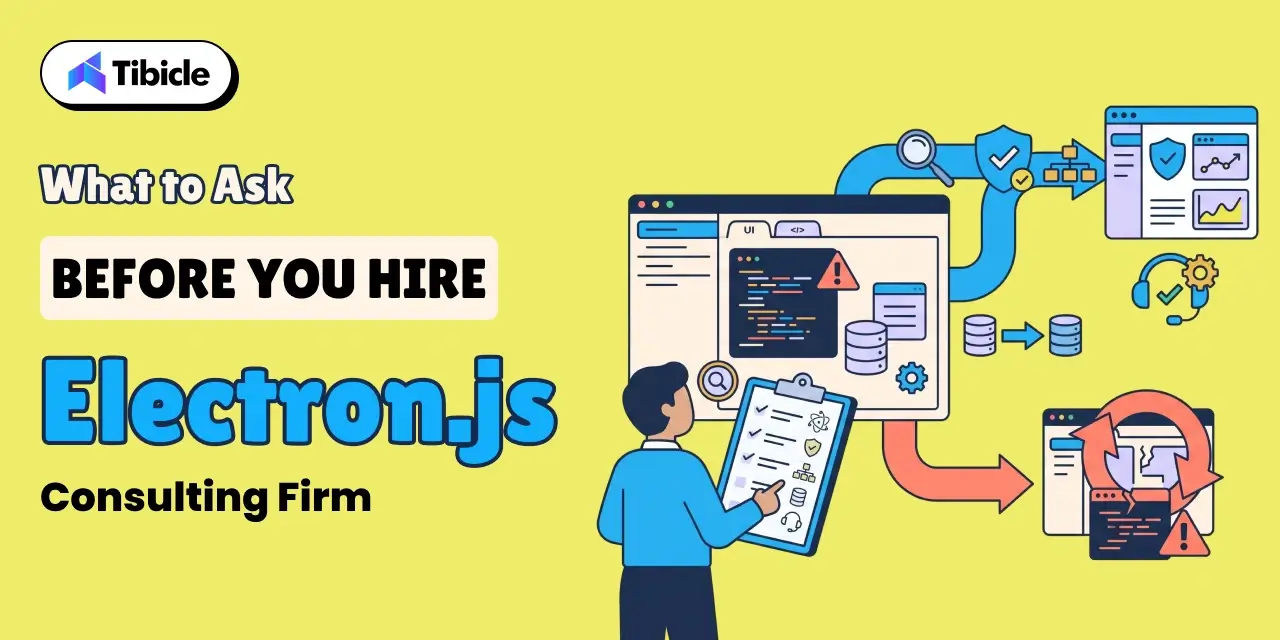
These six questions separate an Electron.js consulting firm that fixes the problem from one that just charges for a rewrite:
- Do they audit before quoting, or do they quote a rewrite before reviewing the actual code?
- Can they show experience with Electron specifically, not just general JavaScript or web consulting?
- Will they prioritize the security-relevant fixes, Electron version, contextIsolation, IPC exposure, ahead of cosmetic or feature work?
- Do they propose a staged, incremental path, or only an all-or-nothing rewrite?
- What is their plan for preserving user data and settings through the migration?
- Do they offer ongoing support after the rescue, or only the one-time engagement?
A vendor that answers these six questions clearly is offering real Electron development services. One that cannot is offering a generic web-dev rate card with an Electron label on it.
Tibicle LLP provides Electron development services for exactly this situation, auditing, modernizing, and rescuing legacy Electron applications, alongside new custom builds, through its desktop app development service. These Electron development services are built around the audit-first approach described above, not a rewrite-first sales process. For background on the framework decisions behind a healthy Electron app, see Tibicle’s guides on Electron vs Native for your next desktop app and the best framework for desktop application in 2026.
Conclusion
A legacy Electron application does not stay static while a business decides whether to act on it. Its bundled Chromium and Node.js keep aging, new CVEs keep landing against versions it never received, and the cost of the eventual fix keeps compounding in the meantime. The right moment to bring in an Electron.js consulting firm is not after an incident; it is when nobody on staff can confidently answer what version is running and why the last upgrade attempt was rolled back.
A competent Electron.js consulting firm engagement starts with an audit, not a rewrite quote, and most rescues succeed through staged modernization rather than a full restart. Have a legacy Electron application that needs a second look? Talk to the Tibicle team.
Frequently Asked Questions
How do I know if my Electron app is actually a security risk?
If nobody can confirm the current Electron version against recent security advisories, or if nodeIntegration is enabled, contextIsolation is disabled, or the remote module is in use, the app carries known, documented risk classes. A short audit from an Electron.js consulting firm will confirm the specifics.
Does rescuing a legacy Electron application always mean a full rewrite?
No. Most Electron development services engagements use a staged, incremental approach, upgrading the Electron version and hardening security first, then addressing dependencies and architecture, reserving a full rewrite for cases where the underlying design itself blocks the product roadmap.
What is the first thing an Electron.js consulting firm should do?
Audit before quoting: current version against security advisories, configuration review of nodeIntegration and contextIsolation, a dependency check, and an honest scope, not a rewrite estimate before anyone has reviewed the actual code. Any Electron.js consulting firm that skips this step is guessing at the price.
How much does a legacy Electron rescue typically cost?
It depends on the tier: a security audit alone is the smallest engagement, incremental modernization covers the upgrade and hardening work, and a full rearchitecture is reserved for apps whose architecture blocks new functionality. Data migration alone can add 15 to 30% to the total budget for these Electron development services.
Why do Electron apps age into security risks faster than other software?
Because every Electron app bundles its own copy of Chromium and Node.js. Those upstream projects ship frequent security fixes, and a legacy Electron application that is never rebuilt against a current release does not receive them, even if none of its own code changes.
Is it cheaper to fix a legacy Electron application early or wait?
Early, consistently. Legacy maintenance costs compound over time as talent, dependencies, and unpatched CVEs accumulate, so an Electron.js consulting firm engaged before an incident is almost always cheaper than one brought in to clean up after one.
Schedule A Developer Interview And Get 15 Days Risk-Free Trial
Schedule a Call

Relevant Blog
Enterprise LLM Integration Services

Prejin Nadar

Building Private local AI Desktop App Development
Prejin Nadar
Written by

Recent Blogs
Enterprise LLM Integration Services
What This Guide Covers Who this is for Enterprise LLM integration services help engineering leaders, platform teams, and technology executives turn existing model access into working production workflows. This guide is for organisations connecting OpenAI, Claude, or both to systems that support real business processes, including CRM platforms, ticketing systems, document pipelines, and internal tools. […]
When to Hire an AI Software Development Consulting Firm.
What This Guide Covers Who this is for Engineering leaders, technology executives, and AI teams often struggle to turn completed initiatives into measurable results. This guide helps organisations address stalled pilots, failed AI implementations, rising costs, poor data quality, and workflows that function technically but fail to deliver measurable business value. An AI software development […]
Building Private local AI Desktop App Development
What This Guide Covers Who this is for: US tech firms, SaaS companies, startups, CTOs, engineering managers, and product teams looking for experienced Electron.js developers for ongoing private local AI desktop app development and custom desktop application development. Search intent: Hiring and decision. This guide covers where to find Electron.js developers, how to evaluate their […]
Got an Idea? Get FREE Consultation
In our world, there's no such thing as having too many clients

