
3 Best Restaurant Management App for 2026

Sep 25, 2026

Read in 6 Minutes
Table of Contents
- Introduction
- What a Restaurant Management App Actually Does (and What It Shouldn’t Cost You)
- How We Evaluated These Apps
- The 3 Best Restaurant Management Apps for 2026
- Side-by-Side Comparison: Which Restaurant Management App Fits Your Operation?
- Restaurant Management Software Pricing: What You’ll Actually Pay in 2026
- ROI From a Restaurant Management App: What the Numbers Show
- Risks and Challenges When Choosing a Restaurant Operations App
- Vendor Selection Checklist: 9 Questions Before You Sign
- Why Tibicle LLP Is Worth Considering When Off-the-Shelf Doesn’t Fit
- FAQs
What This Guide Covers
Who this is for: This guide is for restaurant management app operators, multi-location F&B group owners, and general managers evaluating whether a restaurant management app can reduce labor costs, food waste, and manual reconciliation time.
Search intent: Comparison and decision. The reader is not researching what restaurant management software is. They already know they need one. They are deciding which platform fits their operation, what it will actually cost, and whether the ROI justifies the switch.
What you will walk away with: A side-by-side evaluation of the 3 best restaurant management app solutions for 2026, with real pricing data, documented ROI benchmarks, a 9-point vendor checklist, and a clear decision framework mapped to your restaurant’s revenue stage and location count.
Introduction
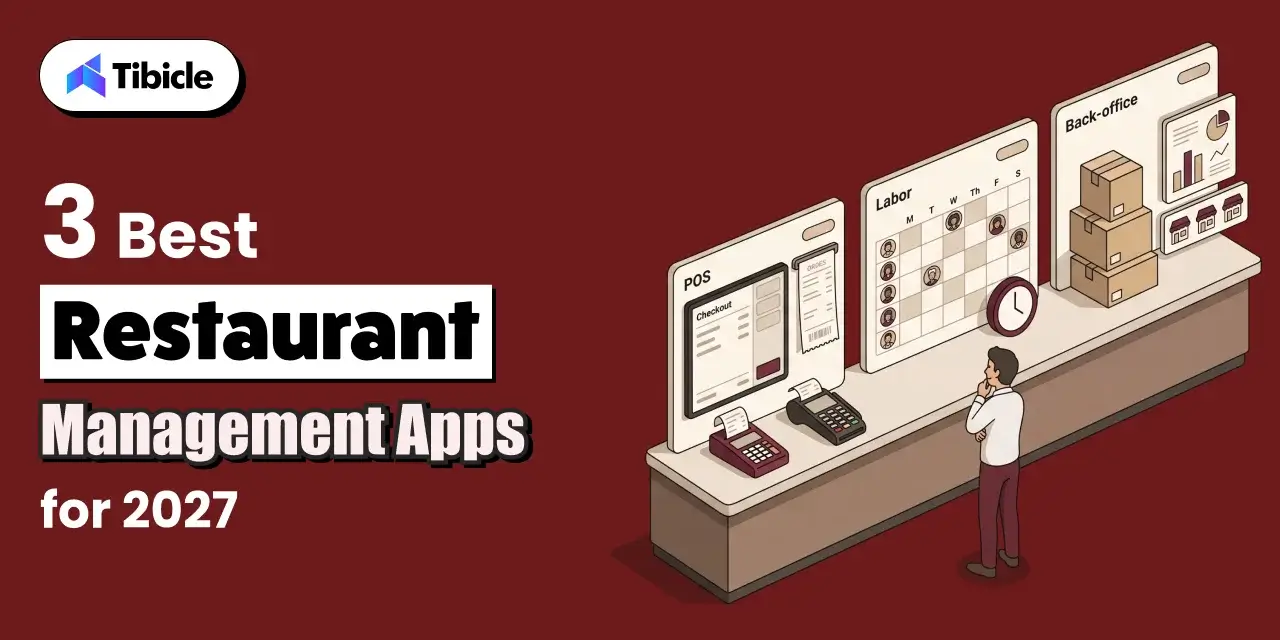
Restaurant margins average 3–9%, yet most operators still manage scheduling on spreadsheets, track inventory on paper, and run four or more disconnected tools that never talk to each other. The result is a predictable cost structure: labor overruns nobody catches in time, food waste that only shows up at month-end, and managers spending hours on reconciliation instead of floor operations.
This is a decision-making resource, not a feature dump. What follows is a comparison of rigorously evaluated 3 Best restaurant management apps for 2026, real pricing data, and a checklist to make the right call without second-guessing.
Here is what each tool actually costs, where it earns its money back, and how to avoid the integration trap that derails most rollouts.
What a Restaurant Management App Actually Does (and What It Shouldn’t Cost You)
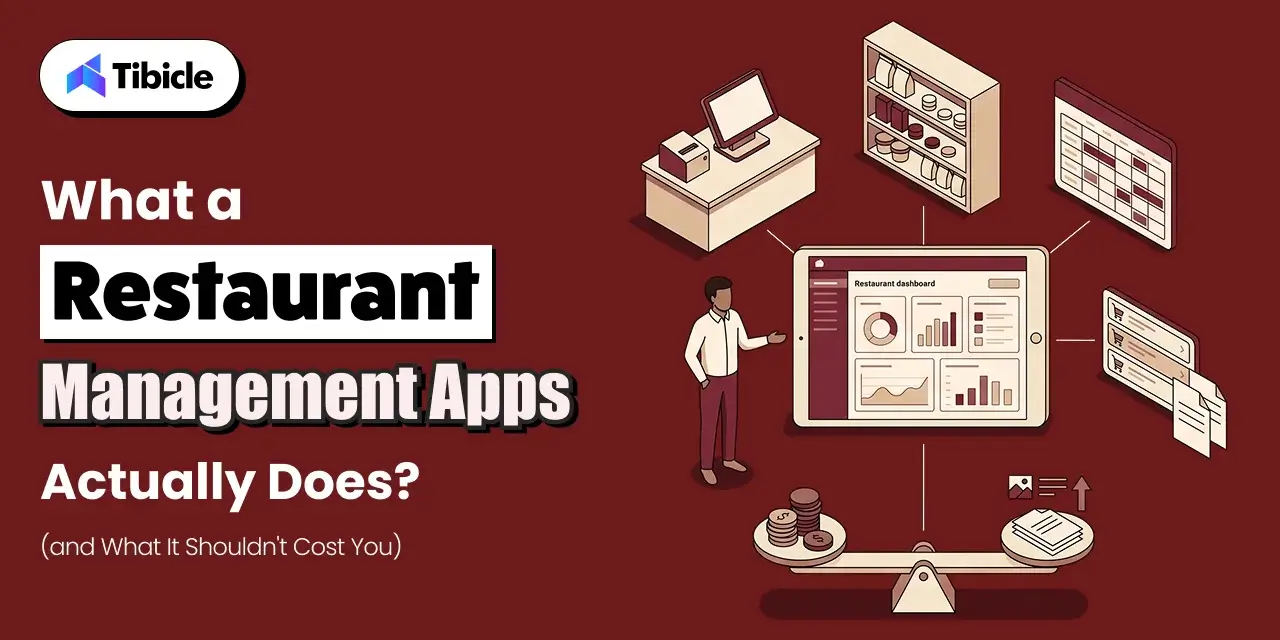
Core Functions That Justify the Monthly Fee
POS processing is the foundation for every transaction, tip, and payment method handled in one place, with errors that compound directly into end-of-day reconciliation when the system is fragmented. Labor scheduling without automation costs 3–5% of labor revenue in scheduling errors alone, per NRA 2025 data, a recoverable number the moment the process is systemized.
Inventory tracking converts what would otherwise be a weekly manual count into a real-time depletion signal. Online order aggregation pulls Uber Eats, DoorDash, and direct orders into a single queue, eliminating the parallel tablet problem that slows ticket times and inflates error rates. Analytics and reporting convert all of the above into the P&L visibility that operators currently reconstruct manually every week.
The Integration Problem Most Operators Ignore
Sixty-seven percent of restaurants using three or more disconnected tools report data reconciliation as a daily time drain. The cost is not just time, it is the decisions that get made on data that is 48 hours old because the export has not been run yet.
The real evaluation criteria for any restaurant management software is not the feature list. It is whether the platform connects natively to your POS, your payroll system, and your supplier network without manual exports that reintroduce the exact errors the software was supposed to eliminate.
How We Evaluated These Apps
The three platforms below were selected based on six criteria: real, published pricing rather than “contact us” ranges, integration depth with major POS systems, documented labor and food cost ROI, multi-location scalability, review pattern analysis across operator segments, and staff adoption friction at the floor level.
No platform made this list on feature count. Each was evaluated on whether it moves a measurable cost metric for the operator type it claims to serve. That distinction eliminates most of what fills competitor roundups.
The 3 Best Restaurant Management Apps for 2026
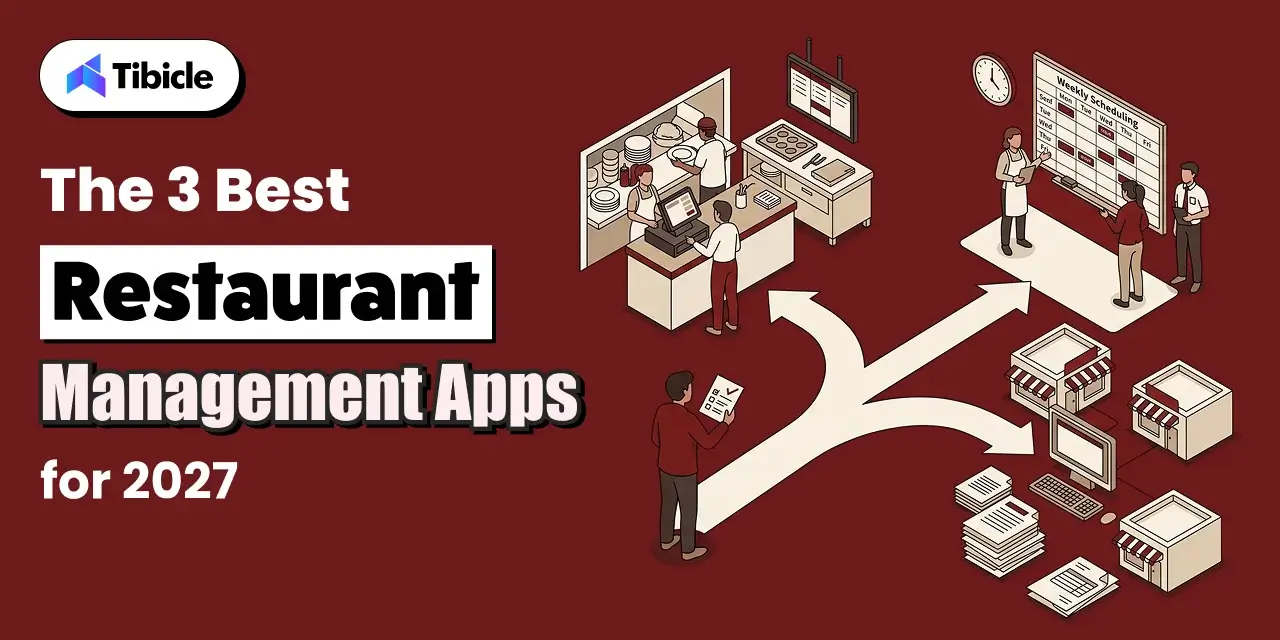
1. Toast — Best All-in-One Restaurant Operations Platform
What It Does Well
Toast is a purpose-built restaurant POS system with native kitchen display system integration, real-time inventory depletion, tip pooling, and payroll covering front-of-house and back-of-house in a single system. The KDS integration is not a bolt-on: kitchen display systems built on Toast reduce ticket times by 15–30% against 2026 benchmark data, which translates directly into table turn rate and peak-hour throughput.
Food cost tracking is built into the inventory layer,recipe-level costing, depletion alerts, and variance flagging are active without requiring a separate platform. The strongest fit is full-service restaurants running $1M–$5M in annual revenue where FOH and BOH coordination is the primary operational variable.
Pricing
- Starter: $0/month (hardware costs apply)
- Point of Sale: $69/month
- Build Your Own: from $110/month
- Hardware: $627–$1,076 per terminal
- Processing fees: 2.49%+ per transaction
Where It Falls Short
A steep learning curve is the most consistent flag across operator reviews at scale. Customer support quality has declined as the platform has grown, which matters most during a Friday night system issue. Below $500K in annual revenue, the hardware and processing cost structure erodes the ROI case significantly.
ROI Snapshot
Restaurants on Toast with automated inventory active report food waste reduction averaging 26% and over-ordering cut by 31%, translating to $18,000–$45,000 in annual savings for operations in the $1M–$2M revenue range. Payback on the full system typically arrives within three to six months at this revenue tier.
2. 7shifts — Best Restaurant Scheduling App for Labor Cost Control
What It Does Well
7shifts is purpose-built for restaurant workforce management. The AI-assisted auto-scheduler learns from historical patterns to prevent over-staffing during slow periods not by cutting shifts reactively, but by forecasting demand before the schedule is published. It integrates directly with Toast, Square, and Lightspeed, so sales data feeds labor cost control forecasting automatically without a manual export step.
Shift swap automation reduces manager scrambling on call-outs. The mobile interface is designed for floor staff, not back-office managers, which is the variable that determines whether a scheduling tool gets used or gets worked around. As a restaurant scheduling app, it solves one problem and solves it completely.
Pricing
- Comp: Free (up to 10 employees)
- Entrée: $29.99/location/month (up to 30 employees)
- The Works: $76.99/location/month
- Gourmet: $135/location/month (multi-location, advanced analytics)
Where It Falls Short
7shifts is not a POS or full operations platform, operators still need a separate system for ordering and inventory. Per-location pricing compounds quickly for groups running five or more sites, and the Gourmet tier cost structure should be modeled against Restaurant365 before committing at that scale. Auto-scheduling suggestions require manual adjustment for complex labor arrangements involving tipped and non-tipped roles in the same shift.
ROI Snapshot
7shifts users report scheduling automation breaking even in 90–120 days. Managers using full shift scheduling automation score 34% higher satisfaction than peers using manual scheduling methods, a metric that reduces management turnover costs by $15,000–$40,000 over a three-year window when the replacement cost per manager is factored in.
3. Restaurant365 — Best Back-Office Platform for Multi-Unit Groups
What It Does Well
Restaurant365 is a true all-in-one back-office platform: accounting, inventory, scheduling, and financial reporting in a single system with no middleware layer between them. Automated daily POS-to-accounting reconciliation eliminates manual data entry at the close of each service period. Recipe costing and food cost variance analysis are built into the inventory layer,not added on.
The core value proposition is multi-location restaurant management for groups running five or more locations where fragmented tools create reporting delays and financial blind spots that compound across units. A CFO who currently builds a weekly P&L from five separate exports will recognize the problem this solves immediately.
Pricing
Quote-based. Typically starts around $469/month for basic back-office functions. Implementation timeline runs three to six months with dedicated staff time required, a cost that needs to be included in the total investment calculation, not footnoted.
Where It Falls Short
Restaurant365 is not a plug-and-play tool. Implementation is a project, not an onboarding. Single and dual-location operators will find the investment disproportionate to the problem it solves at that scale. Maintaining accurate recipe and inventory data requires ongoing staff commitment the system reflects the quality of data that goes into it.
ROI Snapshot
Operators who consolidate onto Restaurant365 from a fragmented stack separate POS, inventory, and scheduling tools running independently report eliminating 3–5 hours of weekly manual reconciliation at the operations management level. The financial visibility available inside a single dashboard replaces a reporting process that previously required pulling from three systems and reconciling the gaps.
Side-by-Side Comparison: Which Restaurant Management App Fits Your Operation?
| Criteria | Toast | 7shifts | Restaurant365 |
| Best for | Full-service operators | Labor-heavy restaurants | Multi-unit groups (5+ locations) |
| Starting price | $0/month + hardware | Free / $29.99 per location | $469/month |
| POS included | Yes | No | No (integrates with POS) |
| Inventory management | Yes (basic to advanced) | No | Yes (deep recipe costing) |
| Scheduling | Yes | Yes (core strength) | Yes (with advanced analytics) |
| Multi-location support | Yes | Yes (per-location pricing) | Yes (built for groups) |
| Implementation time | 1–4 weeks | 1–2 days | 3–6 months |
| G2 category leadership | Restaurant POS | Restaurant Scheduling | Restaurant Back-Office |
The right restaurant management app for your operation is determined by where your highest-cost inefficiency sits right now, not by which platform has the longest feature list.
Not sure which platform fits your operation? Talk to a restaurant tech specialist before committing to a contract — the wrong choice at five locations costs more than the software fee. [Contact Tibicle]
Restaurant Management Software Pricing: What You’ll Actually Pay in 2026
What’s Usually Left Out of the Headline Price
The monthly subscription is the starting number. Per-terminal hardware costs run $627–$1,076 for POS terminals, a line item that does not appear in the headline pricing of any platform reviewed here. Per-location add-ons for scheduling tiers compound at scale: five locations on 7shifts Gourmet is $675/month before any other platform cost.
Transaction and processing fees run 2.49% or more per swipe on Toast at $2M in annual card volume, which is $49,800 per year in processing costs alone. Integration middleware for non-native POS connections adds monthly cost and introduces the data lag that defeats the automation value proposition. Implementation and staff training time at QSR scale typically runs 20–40 manager hours a real cost that vendor proposals consistently omit.
Budget Benchmarks by Restaurant Type
The total technology stack cost by operator tier in 2026:
- Single location under $500K revenue: $50–$200/month
- Single location $1M–$3M revenue: $300–$700/month covering POS, scheduling, and inventory
- Multi-unit group at five or more locations: $1,500–$5,000+/month depending on active modules
This is the frame for evaluating any food service management app’s total cost against the revenue stage, not the headline subscription fee against a feature checklist.
ROI From a Restaurant Management App: What the Numbers Show
Food Cost Reduction
Automated inventory management reduces food waste by an average of 26% and over-ordering by 31% generating $18,000–$45,000 in annual savings for a $1M–$2M revenue restaurant. Inventory waste reduction at this level pays back the platform cost within three to six months in most full-service restaurant configurations. The variable that determines whether this return materializes is whether the inventory module is connected natively to the POS or requires a daily manual sync.
Labor Cost Recovery
Labor inefficiency from manual scheduling accounts for 3–5% of revenue in restaurants without automation. At $2M in annual revenue, that is $60,000–$100,000 in avoidable cost leaving the business every year. Scheduling automation breaks even within 90–120 days for most full-service operators, making it the highest-velocity ROI lever available to restaurants that have not yet automated this function.
Manager Time Recovery
A scheduling tool that returns five hours per week to a manager frees more than 20 hours per month. At most pricing tiers, that time saving alone covers the software cost — and redirects manager capacity toward floor operations and guest experience instead of spreadsheet maintenance. Real-time sales reporting removes the additional hours currently spent pulling and consolidating daily data from disconnected systems.
Risks and Challenges When Choosing a Restaurant Operations App
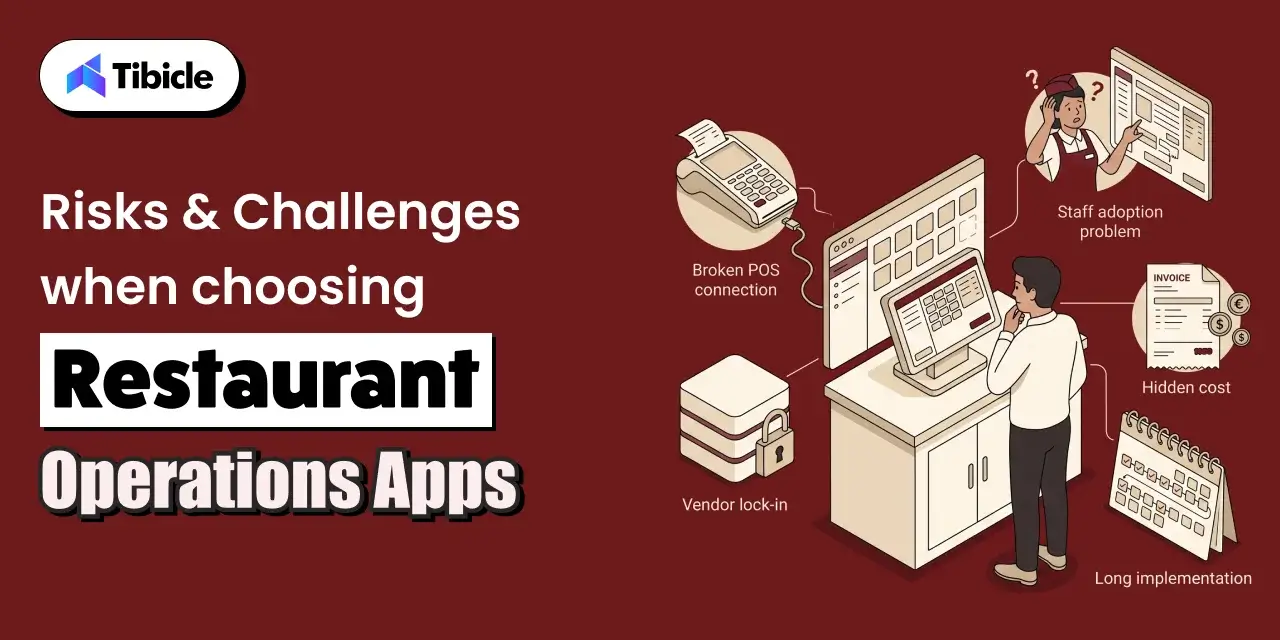
The Integration Trap
Always verify POS compatibility before signing. A restaurant operations app that does not connect natively to your POS requires manual data exports, which eliminates the automation ROI and reintroduces the errors the platform was purchased to prevent. Ask for a live integration demo with your specific POS model before the contract is discussed.
Staff Adoption Risk
The best software that nobody uses is worse than a spreadsheet. Mobile-first interfaces designed for floor staff, not just back-office managers, are the variable that determines adoption rate. Platforms that require staff to log into a desktop system between service periods will be worked around within two weeks of go-live.
Vendor Lock-In
Some platforms retain ownership of customer and transaction data, particularly in third-party delivery integrations. Ask explicitly before signing: who owns the data, and what does a full export look like if you leave? The answer to that question reveals more about a vendor’s confidence in their product than any demo will.
Implementation Timeline Underestimation
Restaurant365 users consistently report three to six months to full operational setup. Underestimating this leads to parallel-running legacy systems and subscription costs accumulating before the new platform is generating any return. Build the implementation timeline into the ROI calculation not as a footnote, but as a line item.
Vendor Selection Checklist: 9 Questions Before You Sign
Before committing to any restaurant management app, require clear answers to the following:
- Does it integrate natively with your current POS, or require a middleware layer?
- Is pricing per location, per user, or flat, and what does the cost look like at your next growth stage?
- Can you export your full dataset if you switch vendors, contractually guaranteed?
- What is the realistic implementation timeline, and does the vendor provide dedicated onboarding support or documentation only?
- Does it cover FOH, BOH, and back-office, or will you still need two to three additional tools?
- What are the processing fees, and do they cap or scale with transaction volume?
- Is there a free trial or pilot program available before a full-contract commitment?
- How does the vendor handle system downtime during peak service hours, and what is the SLA?
- Do customer reviews from restaurants at your revenue stage and location count reflect actual ROI, not just ease of setup?
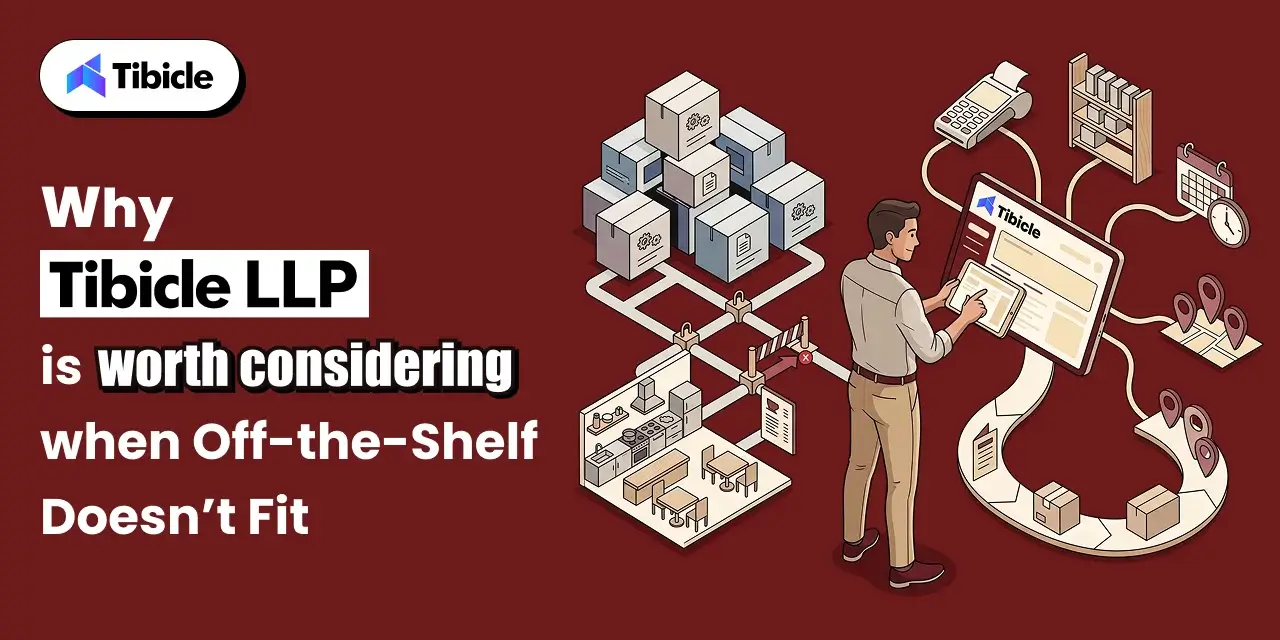
Why Tibicle LLP Is Worth Considering When Off-the-Shelf Doesn’t Fit
When Custom Makes More Financial Sense Than SaaS
Multi-location groups with highly specific workflows, franchise compliance tracking, custom POS logic, and proprietary loyalty mechanics consistently hit the ceiling of off-the-shelf platforms within 18–24 months of growth. At that inflection point, the total cost of forcing a generic platform to accommodate non-standard requirements typically exceeds the cost of building a system that fits the operation from the ground up.
Tibicle LLP builds AI-powered mobile and web applications with POS integrations, real-time analytics dashboards, and cross-platform offline support. Clients have reported 40%+ improvements in operational metrics within four months of deployment. Engagement models are structured around the operator’s stage: fixed-scope, dedicated developers, or team augmentation depending on what the project requires.
If your operation has outgrown what SaaS can offer, start with a scoping conversation, not a sales call. Contact Tibicle
Conclusion
The three-way decision framework maps cleanly to the operational profile. Toast for operators who want POS and operations unified in a single system without middleware complexity. 7shifts for labor-intensive restaurants where scheduling inefficiency is the highest-cost and fastest-recoverable margin leak. Restaurant365 for multi-unit groups that need unified financial and operational visibility across locations and have the implementation runway to build it properly.
Use the vendor checklist above as the action step before any demo call. The nine questions it contains will surface the integration gaps, pricing gaps, and data ownership terms that vendor presentations will not volunteer. The right restaurant management software is the one that solves your highest-cost problem first, not the one with the most features on the comparison slide.
FAQs
What is the best restaurant management app for a single-location full-service restaurant?
Toast is the strongest all-in-one option at this scale: POS, inventory, scheduling, and payroll in one system with no integration middleware required. The hardware investment is the primary threshold to clear; above $500K in annual revenue, the ROI case is straightforward.
How much does restaurant management software cost per month?
Single-location operators typically spend $50–$200/month on a combined tech stack beyond their POS. Multi-unit groups running five or more locations should budget $1,500–$5,000 or more per month depending on modules active and location count.
Can a restaurant management app reduce food costs?
Yes. Restaurants using automated inventory management reduce food waste by an average of 26% and over-ordering by 31%, with payback on the investment arriving within three to six months at the $1M–$2M revenue range. The return is contingent on native POS integration manual sync processes negate most of the gain.
What is the difference between 7shifts and Restaurant365?
7shifts focuses on labor scheduling and workforce management. Restaurant365 is a back-office platform covering accounting, inventory, and financial reporting across locations. They address different cost problems that many multi-unit groups use both in parallel.
When does a custom restaurant management app make more sense than SaaS?
When operational workflows do not map to off-the-shelf platform logic, custom POS requirements, franchise compliance tracking, proprietary loyalty programs, custom development typically delivers stronger long-term ROI than configuring a generic platform around requirements it was not built to handle.
Schedule A Developer Interview And Get 15 Days Risk-Free Trial
Schedule a Call

Relevant Blog

Mobile AI App Development Company Guide

Diya Koradiya

AI Integration Company for B2B SaaS Guide
Diya Koradiya
Custom AI Chatbot Development Services
Diya Koradiya
Written by

Recent Blogs
3 Best Restaurant Management App for 2026
What This Guide Covers Who this is for: This guide is for restaurant management app operators, multi-location F&B group owners, and general managers evaluating whether a restaurant management app can reduce labor costs, food waste, and manual reconciliation time. Search intent: Comparison and decision. The reader is not researching what restaurant management software is. They […]
Mobile AI App Development Company Guide
What This Guide Covers Who this is for: Mobile AI App Development company for B2B SaaS targeting founders, CTOs, product leaders, and technology decision-makers. It is particularly relevant for teams deciding between an offshore vs nearshore AI engineering team, assessing whether an external partner has the technical capability to take an AI feature from proof […]
AI Integration Company for B2B SaaS Guide
What This Guide Covers This guide examines how to choose an AI integration company for B2B SaaS when comparing offshore and nearshore engineering teams. It covers the factors that go beyond hourly rates, including talent access, time zone overlap, communication speed, and collaboration requirements for iterative AI projects. You will learn how to compare offshore […]
Got an Idea? Get FREE Consultation
In our world, there's no such thing as having too many clients

