
Ecommerce Personalisation: A Complete Guide

Jul 31, 2026

Read in 6 Minutes
Table of Contents
- What This Guide Covers
- Introduction
- What Is Ecommerce Personalisation?
- Why Ecommerce Personalisation Matters for Revenue Growth
- Core Components of an Ecommerce Personalisation Strategy
- Ecommerce Personalisation Use Cases by Funnel Stage
- Ecommerce Personalisation Tools Comparison
- Pricing Insights: What Ecommerce Personalisation Actually Costs
- ROI Benchmarks: Measuring the Business Impact
- Risks and Challenges in Ecommerce Personalisation
- Vendor Selection Checklist for Ecommerce Personalisation
- Top Ecommerce Personalisation Platforms to Evaluate in 2026
- Why Tibicle Is a Strong Choice for Ecommerce Personalisation Implementation
- Conclusion
- Frequently Asked Questions
What This Guide Covers
Who this is for:
Ecommerce business owners, digital commerce leaders, marketing executives, product managers, and technology decision-makers who are evaluating ecommerce personalisation platforms to increase conversion rates, improve customer lifetime value, reduce acquisition costs, and deliver data-driven shopping experiences at scale.
Search intent:
Commercial investigation and platform evaluation. This guide is written for decision-makers who already understand the importance of ecommerce personalisation and are comparing technologies before investing. Rather than explaining the fundamentals of personalisation, it focuses on evaluating implementation models, AI capabilities, pricing, total cost of ownership, integration complexity, and measurable ROI to help businesses choose the right solution for their ecommerce growth strategy.
What you will walk away with:
A comprehensive guide to ecommerce personalisation in 2026, including the business case for implementation, core strategy components, funnel-specific use cases, comparison of leading personalisation platforms, pricing across SMB, mid-market, and enterprise tiers, ROI benchmarks, implementation risks, vendor evaluation criteria, and a practical framework for selecting and deploying the right ecommerce personalisation platform based on your business size, technology stack, and long-term growth objectives.
Introduction
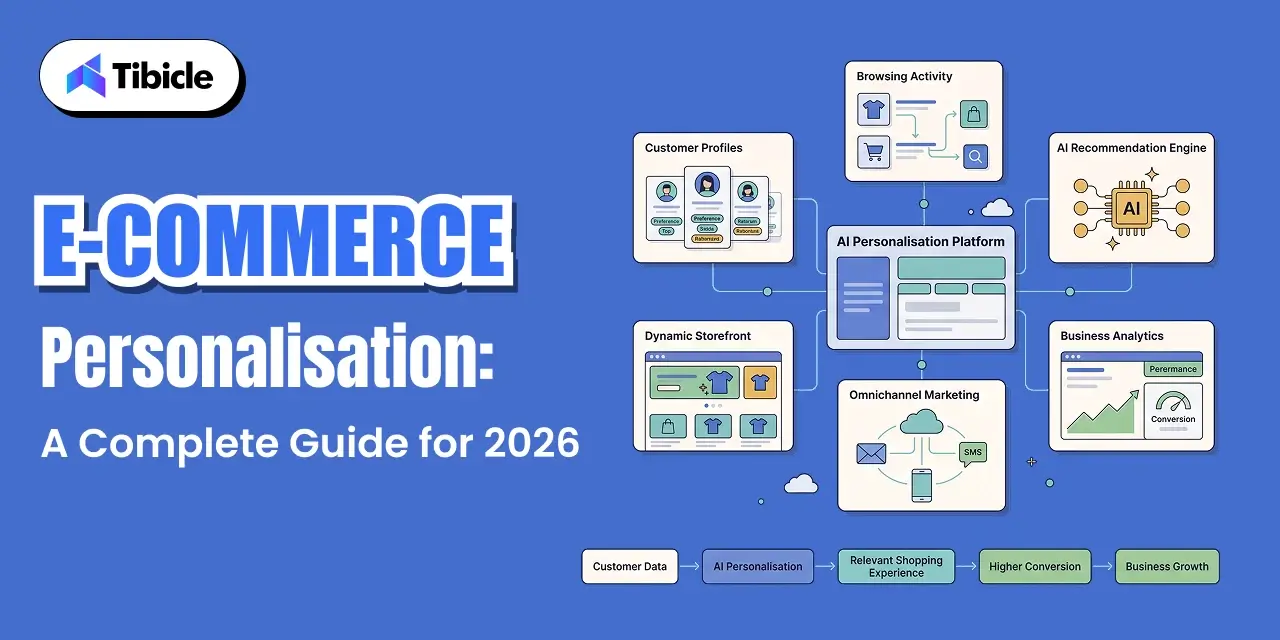
Ecommerce personalisation is no longer a differentiation play. Instead, it has become a revenue baseline. 89% of businesses report positive ROI from personalisation, and McKinsey data shows a 10 to 30% improvement in marketing ROI for companies that execute it at scale. As a result, generic shopping experiences, the same homepage, the same product grid, and the same email for every visitor, cost businesses revenue through higher cart abandonment and lower customer lifetime value.
It is positioned for C-level decision-makers evaluating whether to build, buy, or scale a personalisation capability in 2026. The framing throughout is cost versus value, not feature lists.
This guide covers the business case, pricing realities, platform comparisons, and vendor selection criteria for ecommerce personalisation in 2026.
What Is Ecommerce Personalisation?
Ecommerce personalisation is the automated delivery of individualized shopping experiences, product recommendations, dynamic content, pricing, and messaging, based on behavioural, transactional, and demographic data. The engine is software. The output is a shopping environment that adjusts in real time to who is browsing, what they have purchased before, and what similar customers have done. It operates without manual curation at the individual level.
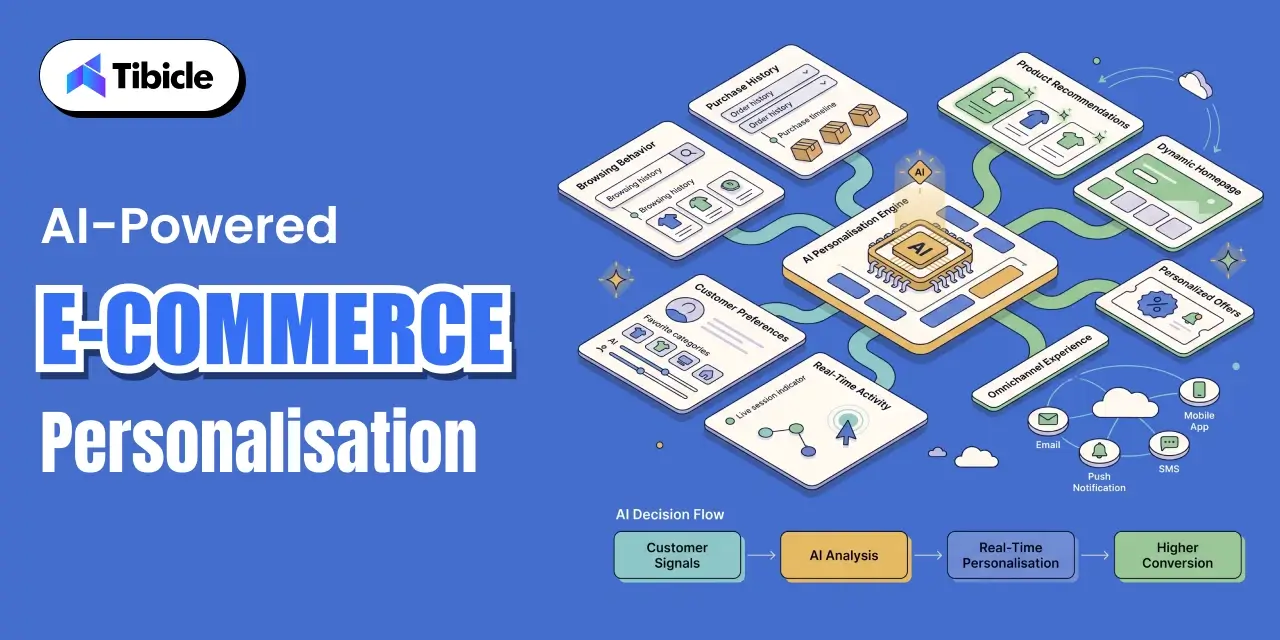
How It Differs from Product Customisation
Product customisation is buyer-controlled: the customer selects a colour, engraves a name, or configures a spec. Ecommerce personalisation is system-controlled: the platform adapts the experience before the customer makes any explicit choice, based on inferred or declared preferences. The distinction matters for budget allocation; customisation is a product decision; personalisation is a data and technology decision. In B2B contexts, the data models differ significantly: buying cycles are longer, purchasing is committee-driven, and account-level rather than individual-level signals drive the most relevant personalisation logic.
Why Ecommerce Personalisation Matters for Revenue Growth
The financial case for personalisation is well documented. Therefore, the real question in 2026 is not whether it works but which implementation model delivers the strongest return.
Impact on Conversion Rates and AOV
Product recommendations alone drive up to 31% of ecommerce revenue across mature implementations. At the session level, AI product recommendations increase average order value by up to 369% in high-engagement sessions, reflecting what happens when the right product reaches the right customer at the right moment in the purchase flow, rather than when a generic bestsellers grid occupies that real estate. These are not marginal improvements. They are structural revenue differences between personalised and non-personalised commercial environments.
Reduction in Customer Acquisition Cost
Personalisation reduces customer acquisition cost by up to 50%, according to McKinsey research. The mechanism: relevant experiences improve conversion rates at every funnel stage, which reduces the cost-per-acquisition from paid channels. First-party data strategies, collecting and activating data directly from customer interactions rather than purchasing third-party audiences, deliver a 2.9x revenue increase compared to cohorts still relying on third-party data models. As third-party cookie deprecation continues, the gap between operators with mature first-party data infrastructure and those without it widens every quarter.
Core Components of an Ecommerce Personalisation Strategy
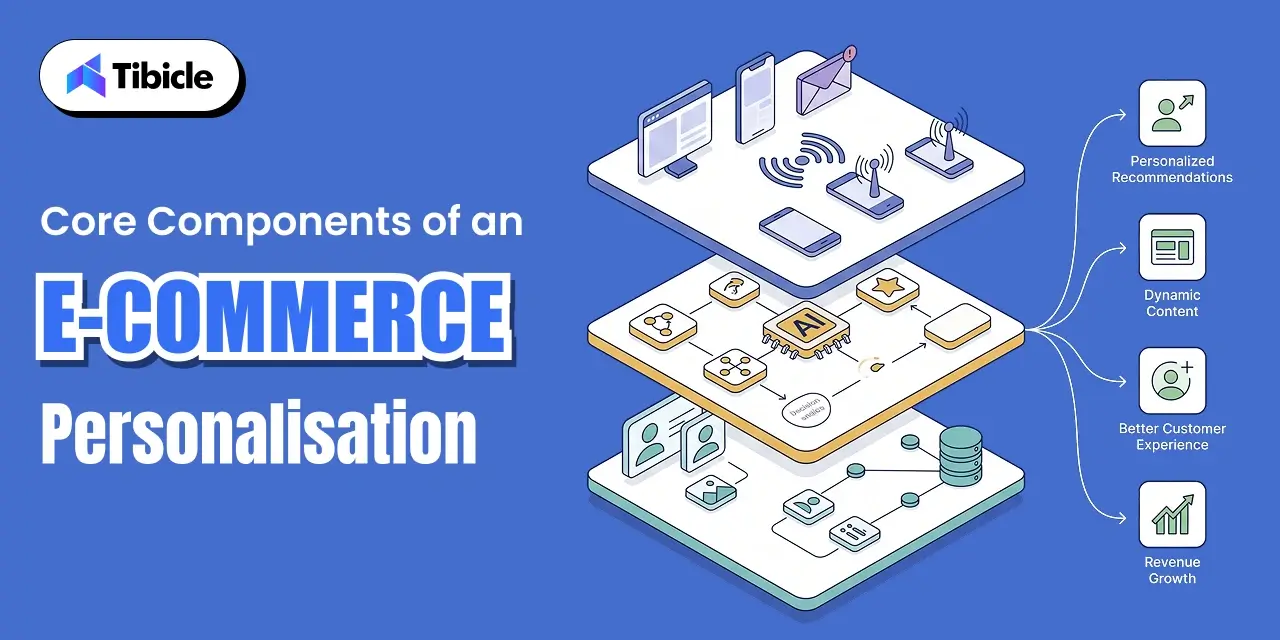
A personalised shopping experience at scale is built on three interdependent layers. Weakness in any one of them limits the output of the others.
Data Infrastructure and First-Party Data
The deprecation of third-party cookies has made zero-party data, data customers share voluntarily through quizzes, preference centers, and account profiles, and first-party behavioural data the primary inputs for personalisation engines. A customer data platform unifies these sources into a single customer profile. Without this foundation, personalisation engines operate on incomplete signals.
AI and Machine Learning Layer
92% of businesses now use AI-driven personalisation in some form. Additionally, the AI layer handles tasks that manual segmentation simply : real-time personalisation of product recommendations based on session behaviour, dynamic pricing adjustments informed by demand signals, and predictive commerce that surfaces products a customer is statistically likely to want before they have searched for them. The accuracy of this layer is a direct function of data volume and model training quality, which is why platform selection and data infrastructure decisions are inseparable.
Omnichannel Orchestration
Likewise, personalisation that operates only on the website misses many valuable customer touchpoints. Omnichannel personalisation coordinates individualised experiences across email, web, push notifications, SMS, and social channels from a unified data model. Cross-channel brands see 6.5x more purchases per user than single-channel operators, a figure that reflects the compounding effect of consistent, relevant messaging across every surface a customer encounters.
Ecommerce Personalisation Use Cases by Funnel Stage
The specific capability that delivers the highest ROI depends on where the largest revenue leak sits in the current funnel. Each stage has a distinct set of personalisation levers.
Acquisition: Personalised Landing Pages and Retargeting
Behavioural targeting at the acquisition stage uses traffic source, device type, referral keyword, and prior session data to serve landing page variants that match the visitor’s inferred intent. A visitor arriving from a branded search query sees a different commercial proposition than one arriving from a generic category keyword, and conversion rates reflect that difference.
Consideration: Dynamic Product Recommendations and Search
Dynamic content at the consideration stage surfaces relevant products based on browse history, category affinity, and collaborative filtering signals. Personalised search, where results are ranked by individual relevance rather than global popularity, is one of the highest-leverage interventions available, particularly for large-catalog retailers where the default search experience buries relevant items under top-sellers.
Conversion: Cart Recovery and Checkout Optimisation
$260 billion in lost orders are recoverable through better checkout personalisation, according to Baymard Institute research. Cart abandonment personalisation, triggered emails, browser push notifications, and SMS recovery sequences with session-specific product references directly target that recoverable figure. Conversion rate optimisation at checkout also includes personalised payment method display, address pre-fill, and delivery option prioritisation based on past purchase behaviour.
Retention: Post-Purchase Flows and Loyalty Triggers
Post-purchase personalisation extends the commercial relationship beyond the transaction. Replenishment reminders timed to product consumption cycles, cross-sell sequences based on purchase category affinity, and loyalty milestone triggers all operate on first-party data the brand already holds. Operators running structured personalised recovery campaigns report a 56% repeat purchase rate, a benchmark that illustrates the compounding value of treating retention as a personalisation problem, not a discounting problem.
Ecommerce Personalisation Tools Comparison
The ecommerce personalisation tools market spans from $39 a month SMB solutions to $100,000+ a year enterprise platforms. The capability gap between tiers is significant, and choosing the wrong tier in either direction is expensive. Use this table as a first-pass filter before engaging vendors.
| Tool | Best For | AI Capability | Pricing Model | Integration Depth |
| Dynamic Yield | Enterprise on-site personalisation | Advanced ML | Custom/enterprise | Deep (multi-platform) |
| Klaviyo | Email + SMS personalisation | Predictive analytics | Tiered (usage-based) | Strong (Shopify, BigCommerce) |
| Bloomreach | Full-stack commerce experience | Loomi AI engine | Custom | CRM, CDP, search |
| Nosto | Mid-market product recommendations | Experience AI | Tiered | Shopify, Magento |
| Insider | Omnichannel journey orchestration | Sirius AI | Custom (~$48K-$100K/yr) | 12+ channels |
| Adobe Target | Enterprise testing + personalisation | Adobe Sensei | Enterprise custom | Adobe ecosystem |
| Personizely | SMB on-site personalisation | Rules + basic AI | $39-$59/mo (starting) | Shopify, WordPress |
Pricing Insights: What Ecommerce Personalisation Actually Costs
Personalisation platform pricing spans three distinct tiers, each with different capability ceilings and total cost of ownership implications. The sticker price is rarely the complete picture.
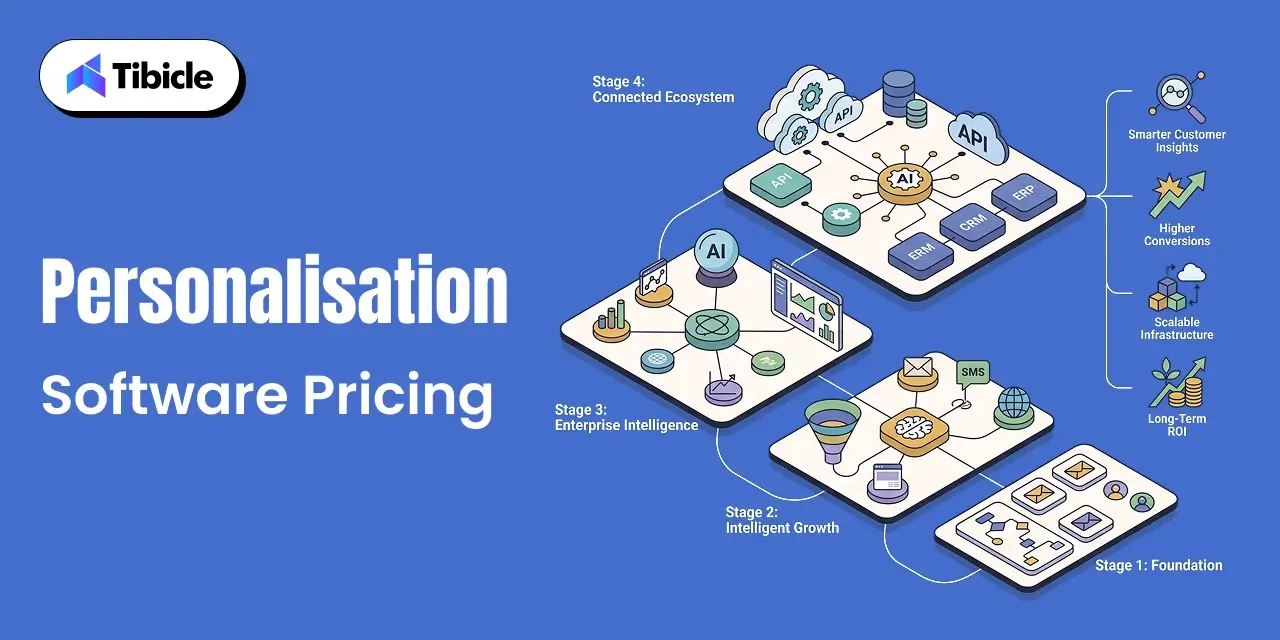
SMB Tier ($39 to $500 per Month)
Tools at this tier, Personizely, Klaviyo’s entry plans, Nosto’s lower tiers, cover rule-based segmentation and basic e-commerce personalisation tools functionality. AI capability is limited. Suitable for single-channel operators with under $5M in annual revenue and relatively simple personalisation requirements.
Mid-Market Tier ($1,000 to $5,000 per Month)
Platforms like Bloomreach and Dynamic Yield at this tier deliver ML-driven recommendations, multi-channel support, and the integration depth needed to pull from CRM, CDP, and delivery platform data simultaneously. This is where the ROI case becomes compelling for operators with meaningful traffic volume and catalog complexity.
Enterprise Tier ($48,000 to $100,000+ per Year)
Insider, Adobe Target, and Salesforce Commerce Cloud operate at this level. Full-stack personalisation, dedicated implementation support, and contract structures that include onboarding and ongoing optimisation resource are standard. The pricing reflects platforms built for operators where personalisation is infrastructure, not a feature.
Hidden Costs to Account For
When planning an ecommerce personalisation strategy, the platform licence is only one part of the investment. Businesses should also budget for integrating systems such as the CDP, CRM, ecommerce platform, and email tools. In addition, building a reliable data infrastructure requires identity resolution and well-designed data pipelines.
Effective personalisation also requires creating multiple versions of content for different customer segments, which increases creative production efforts. Finally, achieving long-term success depends on continuous optimisation through testing, monitoring, and performance analysis rather than a one-time implementation.
ROI Benchmarks: Measuring the Business Impact
The ROI data on ecommerce personalisation is consistent across multiple independent sources and operator segments. Companies with advanced personalisation capabilities see $20 return per $1 spent. A Forrester study on Optimizely customers found 446% three-year ROI, with AI-powered personalisation reaching full ROI within 4 to 6 months of implementation. Personalised email campaigns generate 122% higher ROI compared to generic sends to the same contact list.
Metrics That Matter for Executive Reporting
Four KPIs translate personalisation performance into board-level language:
1) Revenue per visitor – the cleanest measure of whether personalisation is moving commercial outcomes
2) Recommendation-driven revenue share – percentage of total revenue attributable to personalised product surfaces
3) CAC reduction rate – improvement in cost-per-acquisition from paid channels as conversion rates increase
4) Customer lifetime value uplift – personalisation correlates with 33% higher CLV; track this at 6 and 12-month cohort intervals
Risks and Challenges in Ecommerce Personalisation
Three risk categories account for the majority of personalisation programmes that underperform their ROI projections.
Data Privacy and Compliance Exposure
GDPR, CCPA, and expanding regional consent requirements have changed the legal baseline for personalisation data collection. Consent-based data models are not optional infrastructure; they are a compliance requirement. Platforms that haven’t migrated away from third-party cookie dependency carry compounding legal and operational risk as cookie deprecation extends across browsers.
Over-Personalisation and Customer Pushback
However, personalisation has limits. If it becomes too intrusive, customer trust quickly declines. 76% of consumers report frustration when personalisation is irrelevant or feels intrusive, suggesting that getting it wrong erodes trust faster than not personalising at all. The failure mode is using data signals the customer hasn’t intentionally shared, or surfacing recommendations that reveal how much behavioural data is being tracked.
Integration Complexity and Vendor Lock-In
CDP dependency, siloed data across legacy tools, and non-portable data formats create switching costs that extend well beyond the contract exit fee. Evaluate data portability clauses and API openness before signing. The platforms with the deepest native integration typically create the deepest lock-in, and that trade-off needs to be explicit in the vendor selection decision.
Vendor Selection Checklist for Ecommerce Personalisation
Use this scorecard when evaluating any ecommerce personalisation strategy platform. Score each vendor against these criteria before shortlisting.
| Criteria | Weight | What to Verify |
| AI / ML capability depth | High | Does it generate predictive recommendations or apply static rules? |
| CRM and commerce stack integration | High | Native connectors vs. middleware dependency |
| Data residency and privacy | High | GDPR, CCPA compliance; consent-based data model |
| Implementation timeline | Medium | Self-service (hours), managed (days), enterprise (weeks to months) |
| Attribution model transparency | Medium | Same-session vs. multi-day attribution clarity |
| Scalability | Medium | Performance against traffic spikes and large catalog size |
| Support and onboarding quality | Medium | Dedicated CSM, structured onboarding, SLA response times |
| Total cost of ownership | High | License + integration + content production + ongoing headcount |
Ultimately, any vendor that provides vague answers on data residency, attribution models, or total cost of ownership should not progress beyond the shortlist. These are not edge-case questions; they are the variables that determine whether the investment pays back.
Top Ecommerce Personalisation Platforms to Evaluate in 2026
Shortlisted by use case. Selection should be driven by the scorecard criteria above, not brand recognition or analyst positioning.
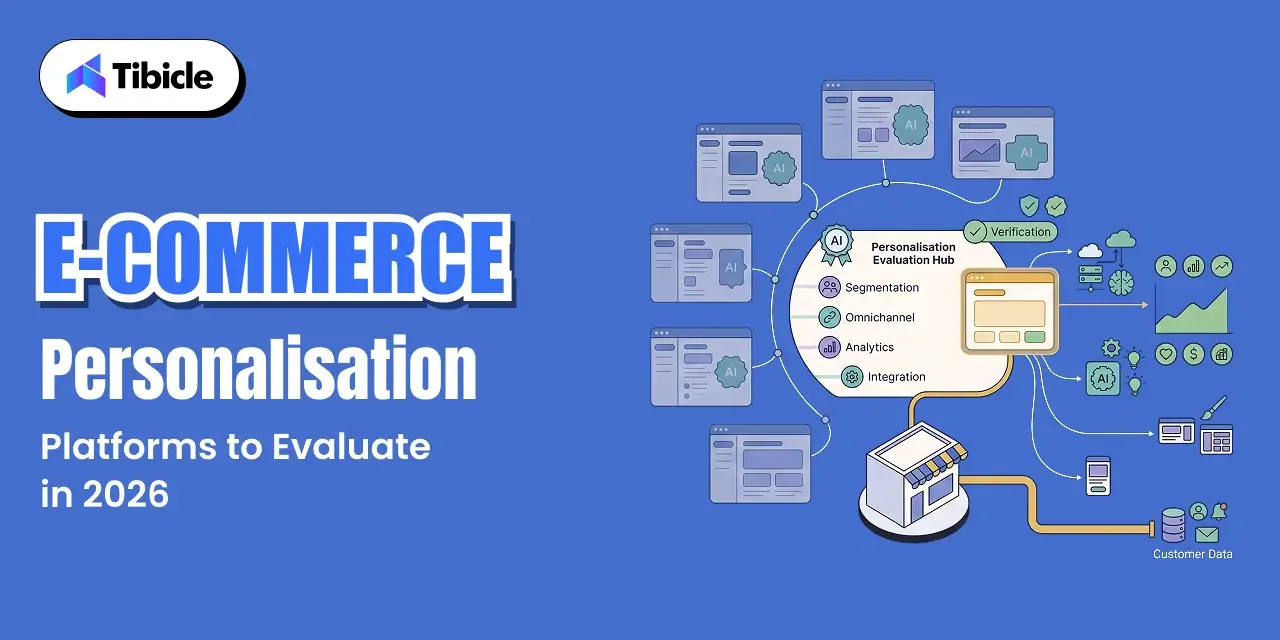
- Dynamic Yield – best for enterprise A/B testing and on-site personalisation at scale
- Bloomreach – best for unified commerce search combined with AI-driven product recommendations
- Klaviyo – best for email and SMS-first personalisation with strong Shopify and BigCommerce integration
- Insider – best for omnichannel journey orchestration across 12+ channels
- Nosto – best for mid-market product discovery on Shopify and Magento
- Algolia – best for AI-powered personalised search and catalog relevance
- Personizely – best for SMB on-site personalisation on a budget without enterprise overhead
Why Tibicle Is a Strong Choice for Ecommerce Personalisation Implementation
Platform selection is the first decision. However, successful implementation is what ultimately determines ROI. Implementation is where ecommerce personalisation programmes succeed or fail. Tibicle operates as an implementation and technology partner, not a product vendor for ecommerce businesses at the stage where off-the-shelf configuration isn’t sufficient.
The integration complexity challenges covered earlier in this guide- CDP dependency, siloed data, non-native POS connectors, omnichannel orchestration across fragmented tools- are exactly the problems Tibicle’s development teams are built to solve. The scope covers custom ecommerce development, integration architecture across commerce and CRM platforms, data infrastructure consulting, and scalable build-to-operate models for teams that don’t have in-house engineering capacity.
Conclusion
The market data on ecommerce personalisation supports action, not observation. A 4 to 6 month payback window on AI-powered implementations, $20 return per $1 spent at mature deployments, and a 33% customer lifetime value uplift are not marginal gains; they are the gap between operators who treat personalisation as infrastructure and those who treat it as a feature on a roadmap.
Overall, the comparison table, pricing breakdown, and vendor checklist are designed to help you create a practical shortlist rather than simply provide background information.
Talk to Tibicle to scope your ecommerce personalisation strategy and implementation roadmap.
Frequently Asked Questions
What is ecommerce personalisation and how does it work?
Ecommerce personalisation is the automated delivery of individualised shopping experiences, product recommendations, content, pricing, and messaging based on behavioural and transactional data. It works through a data layer that captures customer signals, a machine learning engine that identifies patterns, and a delivery layer that adapts the on-site or off-site experience in real time.
How much does ecommerce personalisation software cost in 2026?
SMB-tier tools start at $39 to $500 a month. Mid-market platforms run $1,000 to $5,000 a month. Enterprise platforms like Insider and Adobe Target start at $48,000 a year and scale upward. Total cost of ownership, including integration, content, and optimisation headcount, typically runs 2 to 3 times the license fee.
What ROI can businesses expect from ecommerce personalisation?
Companies with advanced personalisation see $20 return per $1 spent. AI-powered personalisation reaches full ROI within 4 to 6 months, with a Forrester-documented 446% three-year ROI for enterprise implementations. At the campaign level, personalised emails generate 122% higher ROI versus generic sends.
What is the difference between ecommerce personalisation and product customisation?
Product customisation is buyer-initiated; the customer selects product attributes. Ecommerce personalisation is system-initiated; the platform adapts the shopping experience based on data, before the customer makes any explicit choice. They operate at different layers of the commerce stack and require different technology and budget allocation.
Which ecommerce personalisation tools are best for mid-market businesses?
Bloomreach and Dynamic Yield are the strongest mid-market options for full-stack personalisation. Nosto is the most accessible entry point for product recommendation-focused use cases on Shopify and Magento. Klaviyo leads for email and SMS personalisation at this tier. The right choice depends on which funnel stage holds the largest revenue gap.
How long does it take to implement an ecommerce personalisation platform?
Self-service SMB tools are live within hours. Managed mid-market implementations typically take days to weeks depending on data complexity. Full enterprise deployments including CDP setup, multi-channel integration, and QA run 4 to 12 weeks. Budget 2 to 4 hours of team training before go-live regardless of platform tier.
Schedule A Developer Interview And Get 15 Days Risk-Free Trial
Schedule a Call

Relevant Blog
Custom AI Chatbot Development Services

Diya Koradiya

GraphRAG Implementation Services

Arjun Shinojiya
Enterprise AI Automation Development Agency
Arjun Shinojiya
Written by
Recent Blogs
Custom AI Chatbot Development Services
What This Guide Covers Who this is for: CIOs, CTOs, AI leaders, operations executives, customer support teams, and enterprise technology decision-makers evaluating custom AI chatbot development services for internal knowledge access, customer support, helpdesk automation, or other business-critical use cases. It is particularly relevant for organisations with proprietary knowledge bases, sensitive data, complex access controls, […]
GraphRAG Implementation Services
Who this is for: Engineering leads and product owners at enterprise SaaS companies evaluating GraphRAG implementation services for a knowledge base or retrieval system that vector search alone is not answering well. Search intent: Commercial evaluation with a technical backbone. The reader has moved past “what is GraphRAG” and wants to know when a knowledge […]
Enterprise AI Automation Development Agency
Who this is for: Operations leads, CTOs, and process owners evaluating an enterprise AI automation development agency for a full business process rather than a single bolted-on bot. Search intent: Commercial evaluation with a technical backbone. The reader has moved past “what is workflow automation” and wants to know why point-solution RPA plateaus, what end-to-end […]
Got an Idea? Get FREE Consultation
In our world, there's no such thing as having too many clients

