
Online Ordering Systems for Restaurants: Top 5 in 2026

Jul 24, 2026

Read in 7 Minutes
Table of Contents
- What This Guide Covers
- Introduction
- Why 2026 Is a Turning Point for Restaurant Direct Online Ordering Systems
- What Makes an Online Ordering Systems Worth the Monthly Fee
- Top 5 Online Ordering Systems for Restaurants in 2026
- Side-by-Side Comparison: Online Ordering Systems Ranked
- Pricing Reality Check: What You’ll Actually Pay in Year One For Online Ordering Systems
- ROI Framework: Measuring What Your Online Ordering System Actually Delivers
- Risks and Failure Modes Restaurants Don’t Talk About
- Vendor Selection Checklist for Online Ordering Systems: Before You Sign Anything
- Why Tibicle LLP Is Worth Considering for Online Ordering Systems Implementation in Restaurant Tech
- Conclusion
- Frequently Asked Questions
What This Guide Covers
Who this is for: Independent restaurant owners, multi-location restaurant operators, cloud kitchen businesses, and F&B decision-makers who are evaluating online ordering systems to reduce third-party delivery commissions, improve profit margins, and choose the right platform for direct customer ordering in 2026.
Search intent: Commercial investigation and platform comparison. The reader already understands online ordering and is actively comparing vendors based on pricing, POS compatibility, commission structure, customer ownership, implementation costs, scalability, and expected ROI before selecting a platform.
What you will walk away with: A detailed comparison of the top 5 online ordering systems for restaurants in 2026, including pricing, commission models, POS integrations, hidden Year-1 costs, ROI calculations, break-even analysis, platform limitations, vendor evaluation checklist, and guidance on selecting the right solution based on restaurant size, order volume, and operational requirements.
Introduction
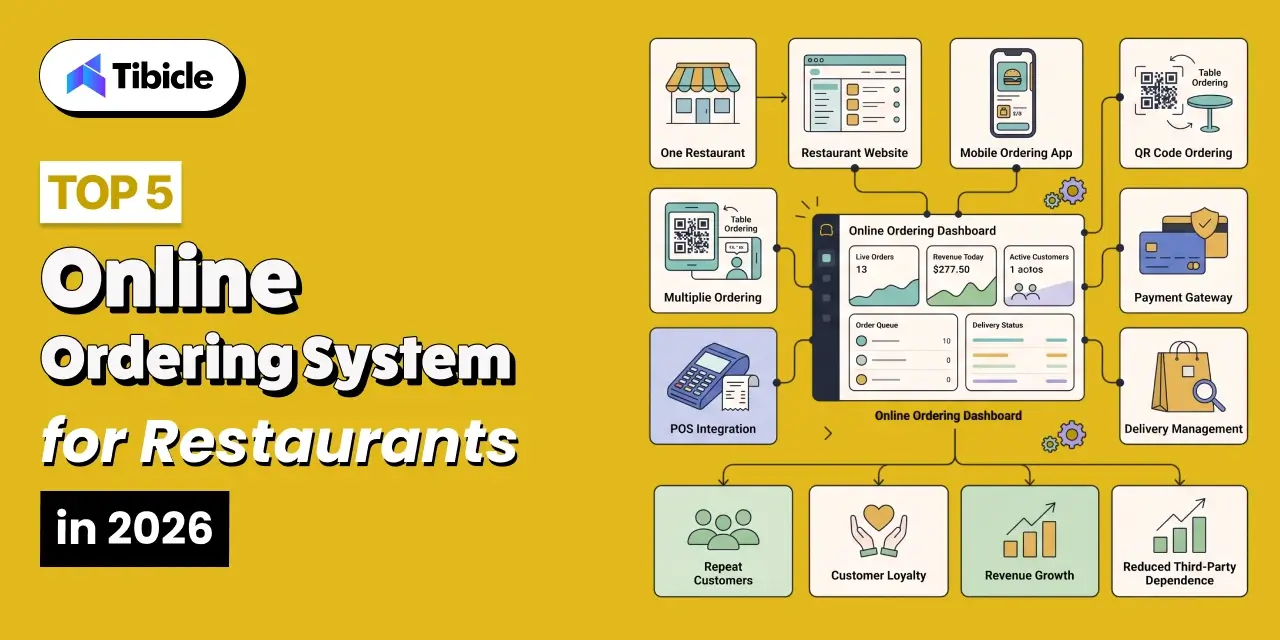
The best online ordering systems for restaurants aren’t the ones with the longest feature list. They’re the ones that stop the margin bleed. A restaurant running 200 weekly orders at a $35 average ticket through a 25% commission platform loses more than $90,000 a year to that platform alone, before food cost, labor, or occupancy take their share.
This guide is for operators past the awareness stage. You know what direct ordering means. What you need is a clear decision on which platform fits your order volume, your POS stack, and your growth plan for the next 12 months. That’s what this comparison delivers.
The right online ordering system isn’t the cheapest option or the most recognized brand. It’s the one that aligns with how your restaurant grows.
Why 2026 Is a Turning Point for Restaurant Direct Online Ordering Systems
Third-party delivery apps built the discovery infrastructure for restaurant ordering over the last decade. What’s changed is the cost of using that infrastructure for customers who already know and order from you, and the quality of the direct alternatives now available.
The Commission Model Is Structurally Broken for Repeat Business
Third-party platforms publish 15 to 30% commission rates. The real effective cost hits 30 to 40% once mandatory promotions and processing fees are stacked in. On $10,000 a month in online orders, a 30% commission structure costs $3,000 every month, $36,000 a year through a single channel. The less-visible cost is structural: third-party platforms retain the customer relationship. The email address, purchase history, and remarketing access belong to DoorDash, not to the restaurant. The operator cooked the food and handed it to the customer.
What Restaurants Are Doing Differently in 2026
The operators gaining ground aren’t cutting third-party apps out entirely. They’re using marketplace platforms for first-time customer discovery, then pulling repeat customers into direct channels where the economics are entirely different. Restaurants that have completed this shift report 35% savings per order compared to commission-based platforms. The channel is also increasingly mobile: 72% of online food orders are placed on a phone, which makes POS-connected, mobile-first ordering a baseline requirement, not a differentiating feature, for any platform considered in 2026.
What Makes an Online Ordering Systems Worth the Monthly Fee
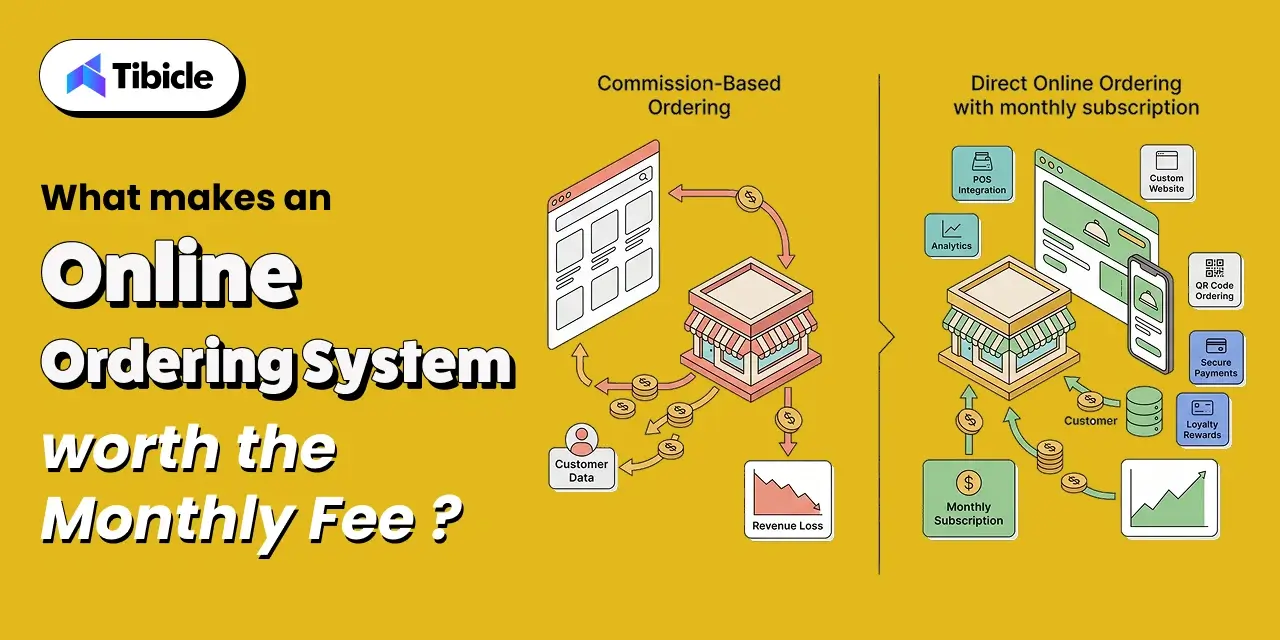
The monthly fee question is only answerable in the context of what it replaces. Operators who frame platform cost as a software expense rather than a margin-recovery decision consistently choose the wrong tool for their order volume.
Commission Structure vs. Monthly Fee: What the Math Actually Says
Flat-fee platforms and commission-based models cross at different monthly order volumes, and the crossover is closer than most operators realize. At $8,000 a month in online orders, a $499 flat-fee platform already outperforms a 10% commission model by over $300 a month. At $15,000 a month, the monthly gap widens past $1,000. Run that break-even calculation against your actual order volume before comparing feature sets or sitting through demos. Commission-free platforms can still apply processing fees, so model those against your average ticket before assuming the headline rate is the real rate.
Five Criteria That Separate Good Systems from Expensive Mistakes
These five factors determine whether a platform reduces the cost structure or adds a new line item to it:
- Commission structure: zero percent flat fee versus a percentage deducted from every transaction
- Customer data ownership: unrestricted export of emails, order history, and behavioral data versus platform-controlled access
- POS integration depth: native connection versus middleware that breaks during software version updates
- Mobile ordering experience: one-tap checkout with Apple Pay and Google Pay built in, not bolted on
- Loyalty and direct marketing: SMS, push notifications, and automated offer tools included in the base plan versus sold as add-ons
Top 5 Online Ordering Systems for Restaurants in 2026
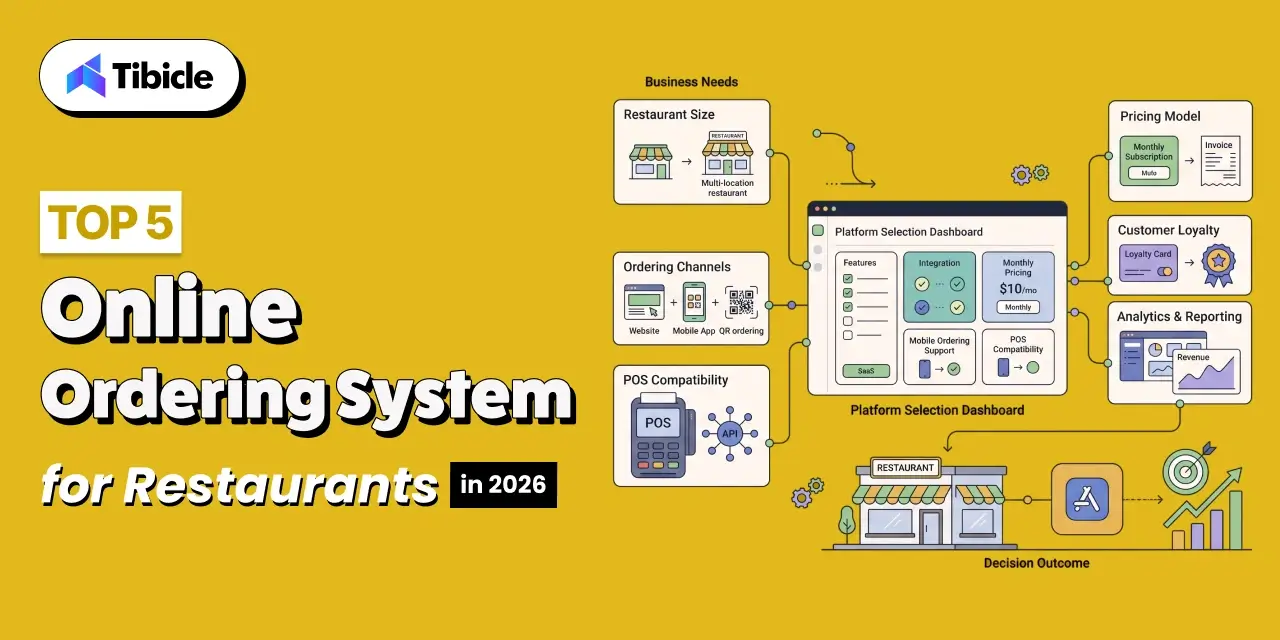
Each platform below is assessed on what it does, who it’s built for, its standout capability, its real pricing signal, and the one limitation that matters most before committing to a contract.
1. Toast: Best for Full-Service Restaurants Wanting an Integrated Ecosystem
What it is: Toast is built exclusively for restaurants, combining POS, online ordering, kitchen display systems, and labor management in a single platform. For operators who want consolidated vendor relationships rather than disconnected tools, that integration argument is the core value proposition.
Standout capability: Tableside ordering via Toast Go 2 handhelds, paired with AI-driven sales forecasting and fraud detection. These capabilities are relevant specifically to full-service dining, where tableside interaction defines the guest experience; they don’t exist in comparable form in standalone food delivery software.
Pricing signal: $69 a month base plus add-ons, hardware purchased upfront, and a $0.99 per-order transaction fee at higher volume tiers. The advertised starting price understates the real cost once terminals and feature tiers are added.
Limitation: Pricing goes quote-based as complexity increases, making total year-one cost difficult to model without getting into a sales process. Hardware lock-in is a real constraint, switching platforms later means replacing terminals, not just canceling a subscription.
2. Owner: Best for Established Restaurants Scaling Direct Orders
What it is: Owner charges a flat $499 a month with all features included. Commission-free direct ordering pairs with an AI-powered website builder optimized for local search and an automated marketing suite that runs without manual management.
Standout capability: Native POS integration with both Square and Toast removes the middleware dependency that breaks many competing platforms during updates. For restaurants with consistent online order volume, the commission-free model compounds in value as monthly orders grow.
Pricing signal: $499 a month flat, no processing fees passed to the restaurant, no add-on tiers required. All features are in the base price.
Limitation: The flat fee is a poor fit for restaurants in the early digital transition with low online order volume. The savings model activates at volume; operators who haven’t yet built a digital ordering habit among their customers will pay $499 a month for a platform whose economics don’t work at low order counts.
3. ChowNow: Best for Restaurants Prioritizing POS Flexibility
What it is: ChowNow offers three pricing tiers, Hub at $119 a month, Pro at $229 a month, and Premier at $328 a month, and connects with more than 30 POS systems. That’s the widest POS compatibility range in this comparison, making it the practical answer for operators locked into a specific POS they’re not replacing anytime soon.
Standout capability: Commission-free on direct orders, with Flex Delivery adding last-mile logistics through flat-fee pricing and smart driver dispatching. This gives operators a branded delivery channel without a marketplace intermediary taking a cut of every order.
Pricing signal: Commission-free on direct orders with a 2.95% plus $0.29 per transaction processing fee applied. The processing fee doesn’t disappear from the cost equation; at lower average ticket sizes or high order volumes, it can erode a significant portion of the commission savings.
Limitation: Lower tiers hit a feature ceiling quickly, and the processing fee creates a hidden cost that the headline pricing doesn’t surface. Operators need to model the fee against their actual average ticket before assuming ChowNow is cheaper than alternatives at scale.
4. Square Online: Best for Small Restaurants and Food Trucks Getting Started
What it is: Square Online offers a free entry plan where the only cost is a 2.9% plus $0.30 processing fee per transaction, with paid tiers starting around $60 a month. No long-term contracts, no setup complexity, fully transparent pricing from day one.
Standout capability: Native integration with Square POS and a solid mobile ordering experience make this the lowest-friction starting point for operators building an online ordering presence from zero. There’s no procurement process and no implementation timeline; it’s live within hours.
Pricing signal: Free plan available with processing fees only. Paid tiers start at approximately $60 a month with additional features at higher levels.
Limitation: Square Online is a multi-industry platform, not a restaurant-specific order management system. Advanced loyalty programs, delivery logistics, and restaurant-specific workflow tools are thin or absent compared to dedicated platforms. Most operators outgrow it as volume and menu complexity increase.
5. Olo: Best for Multi-Location and Enterprise Restaurant Groups
What it is: Olo is purpose-built for restaurant chains and franchise operators managing high-volume ordering across multiple locations with centralized menu control. It’s the only platform in this comparison designed from the ground up for that level of operational complexity.
Standout capability: Deep POS connectivity and custom integrations with loyalty, CRM, and delivery partners give enterprise operators a single system of record for ordering across a large portfolio. No other platform in this comparison handles multi-location ordering at chain scale without significant customization.
Pricing signal: Enterprise contracts with custom pricing. Olo is not a self-serve purchase and requires a sales process and contract negotiation before onboarding.
Limitation: Olo is not designed for independent restaurants or small groups. The pricing model, implementation scope, and contract structure are mismatched to operations below a meaningful multi-location threshold.
Side-by-Side Comparison: Online Ordering Systems Ranked
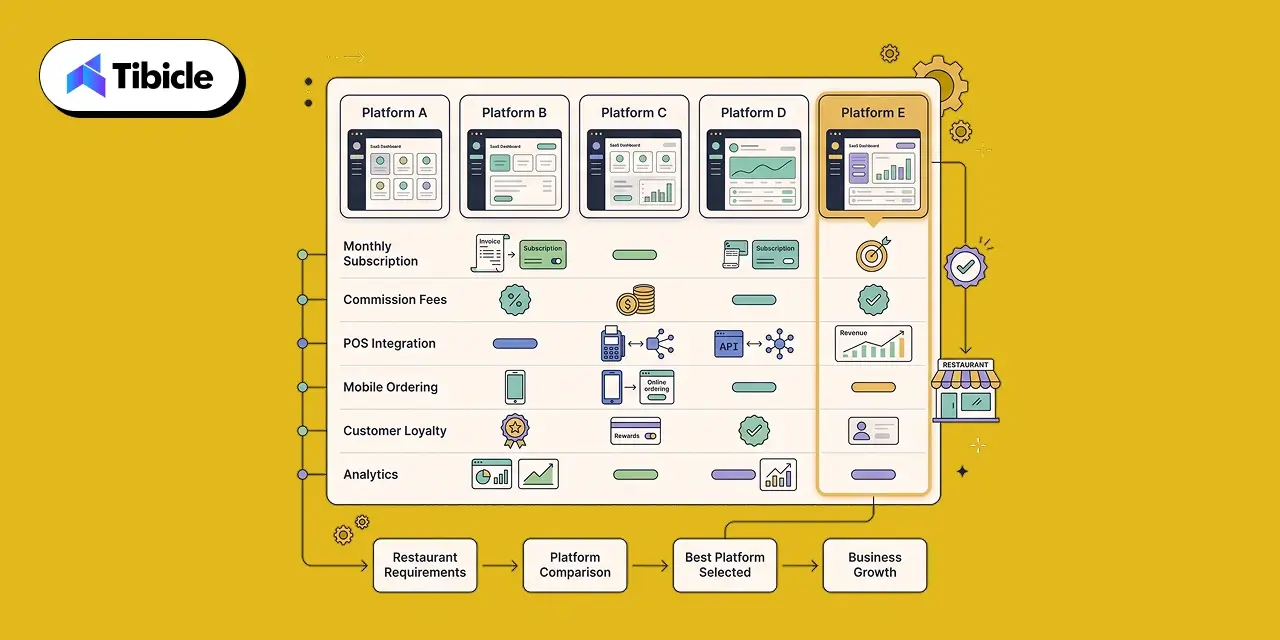
Use this table to narrow the field before going deeper on any platform. Pricing reflects publicly available 2026 figures and varies with contract terms, hardware, and add-ons. Verify directly with vendors before building a year-one budget.
| Platform | Monthly Cost | Commission | POS Integrations | Best For | Loyalty Built-In |
|---|---|---|---|---|---|
| Toast | $69+ (add-ons) | $0.99/order | Native | Full-service restaurants | Yes |
| Owner.com | $499 flat | 0% | Square, Toast | High-volume direct ordering | Yes |
| ChowNow | $119 to $328 | 0% (+ processing fee) | 30+ systems | POS-flexible independents | Partial |
| Square Online | Free to $60+ | 0% | Native Square | Small / entry-level restaurants | Limited |
| Olo | Custom | 0% | Enterprise-grade | Multi-location chains | Yes |
Pricing Reality Check: What You’ll Actually Pay in Year One For Online Ordering Systems
The number on a vendor’s pricing page is a starting point. Year-one costs for restaurant ordering platforms consistently run higher once hardware, onboarding, and per-transaction fees are accounted for. Budget from the full picture, not the headline.
The Hidden Costs Operators Miss Before Signing
- Hardware: Toast requires proprietary terminals purchased upfront; Square Online works on existing iPads, significantly lowering the entry cost
- Setup and onboarding fees that don’t appear in the advertised monthly subscription
- Processing fees underneath commission-free claims: ChowNow charges 2.95% plus $0.29 per transaction; Owner.com passes no processing fee to the restaurant
- Add-on pricing for loyalty, SMS marketing, and delivery logistics that fall outside the base plan on several platforms
Rough Year-One TCO Snapshot by Restaurant Type
Food truck or cafe generating $5,000 a month online: Square Online on the free plan runs approximately $1,800 a year in processing fees alone, with no monthly subscription cost.
Independent full-service restaurant at $15,000 a month: ChowNow Pro runs $2,748 a year plus processing. The same monthly volume through a third-party marketplace at 30% commission costs $54,000 a year. The platform choice at this volume materially changes the P&L.
Established multi-location group: Owner.com runs $5,988 a year at a flat fee across locations versus Olo’s custom enterprise pricing. The right answer depends on whether centralized multi-location management at the group’s unit count justifies the Olo contract structure.
ROI Framework: Measuring What Your Online Ordering System Actually Delivers
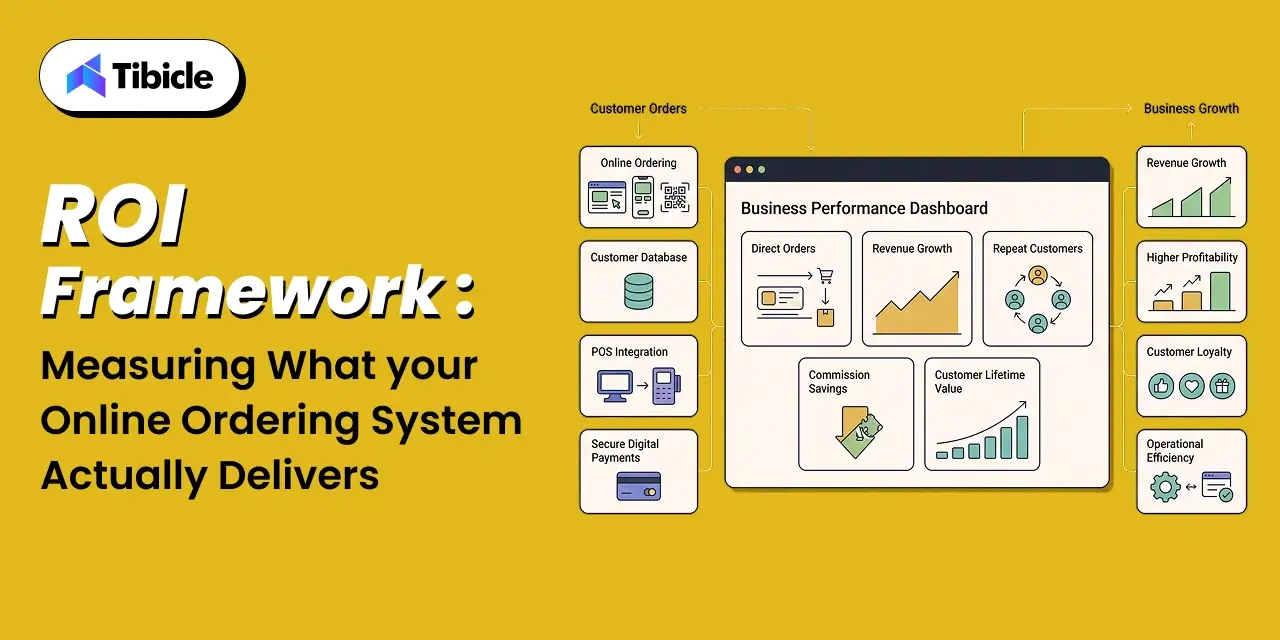
ROI on a direct ordering platform isn’t a single figure. It’s three levers operating at once. Operators who track only commission savings typically undercount the financial impact by 30 to 40%.
The Three ROI Levers That Matter
- Commission savings: the dollar amount retained per order when volume shifts from a marketplace platform to a direct channel
- Customer lifetime value: owning customer data directly increases customer lifetime value by 67% through direct marketing and loyalty programs, based on industry research
- Operational efficiency: a consolidated order management system reduces kitchen errors, eliminates multi-tablet workflows, and cuts the labor cost of managing fragmented ordering channels
Break-Even Calculator Logic
At 50 delivery orders a week, a $35 average ticket, 25% third-party commission, the annual fee to the marketplace is $22,750. Switching to a $ 229-a-month flat-fee platform costs $2,748 a year plus processing. Net year-one saving: approximately $19,000 before loyalty uplift or repeat-order growth is counted. Restaurants implementing direct online ordering platforms report a 10% increase in overall sales post-implementation, which means the commission savings figure typically understates the full financial outcome.
What Strong ROI Looks Like at 12 Months
- A measurable reduction in effective cost per order across the online channel
- Growth in an owned customer contact list, emails, and SMS numbers that the restaurant controls
- A higher repeat order rate from the direct channel compared to third-party referrals
- A higher average order value on direct orders, driven by upsell prompts and loyalty integration that marketplace platforms don’t surface
Risks and Failure Modes Restaurants Don’t Talk About
Most platform evaluations focus on the upside. These three failure modes show up consistently after the contract is signed and the credentials are issued.
Choosing a Platform That Owns Your Customer Data
Data portability is a contract issue, not a feature. Some platforms restrict export formats or require specific data structures that make the customer list difficult to use in external email or SMS tools. Full, unrestricted access to customer emails, order history, and behavioral data should be confirmed in writing before signing. Running a hybrid model that keeps third-party apps for discovery doesn’t change this: DoorDash and Uber Eats retain guest data even when the restaurant fulfills the order directly.
POS Mismatch and Integration Failures
Middleware integrations introduce a dependency layer that fails during POS software updates in ways that native connections don’t. A Square-to-Square or Toast-to-Toast integration is built to stay synchronized across version changes. A middleware-dependent connection relies on a third party maintaining compatibility between two systems it didn’t build. If staff is managing incoming orders across multiple tablets, that’s an integration failure, not an operational preference. It signals that data isn’t moving cleanly between the ordering platform and the POS.
Scaling Without a Direct Marketing Channel
A restaurant processing 10,000 monthly orders through a direct platform but with no owned customer contact list hasn’t captured the full value of the switch. The restaurant online ordering platform should feed directly into SMS campaigns, email sequences, and loyalty programs from day one. A direct ordering system that operates in isolation from the marketing stack reduces the investment to a commission-saving exercise and misses the customer lifetime value increase that makes the economics compelling in the long term.
Vendor Selection Checklist for Online Ordering Systems: Before You Sign Anything
These are the questions that separate a platform that pays for itself from one that becomes a recurring cost. Work through this list with every vendor before committing to a contract.
- Does the platform charge commission per order or a flat monthly fee?
- Do you have full, unrestricted export rights to all customer data?
- Does it connect natively with your current POS, or through a middleware layer?
- Is mobile ordering built for one-tap checkout with Apple Pay and Google Pay?
- Does the base plan include loyalty, SMS, and email marketing, or are these billed separately?
- What is the true year-one cost, including hardware, setup fees, and processing?
- Is delivery logistics built into the platform, or does it require a separate third-party delivery integration?
- Is the contract month-to-month, or does it carry an annual lock-in with early exit terms?
Why Tibicle LLP Is Worth Considering for Online Ordering Systems Implementation in Restaurant Tech
Choosing the right platform is the first decision. Implementing it correctly is what determines whether it pays off. Restaurant operators regularly select a strong platform and then miss POS sync configurations, skip loyalty setup, or never build the direct marketing funnel that makes the economics compound over time.
Tibicle handles end-to-end restaurant technology implementation: matching the platform to actual order volume and POS infrastructure, integrating it with existing systems, and building the direct-ordering funnel, branded app, loyalty program, and SMS channel from day one rather than as an afterthought six months into the contract.
The difference between a vendor relationship and a Tibicle engagement is that the vendor issues a login and a documentation link. Tibicle maps the entire setup to revenue goals. The checklist above is the same framework the team applies before recommending a platform to any restaurant client.
Speak with Tibicle’s restaurant tech team before your next contract renewal.
Conclusion
The five online ordering systems in this comparison each solve a specific problem. Toast is an ecosystem decision for full-service restaurants that want one vendor across POS, ordering, and labor. Owner.com delivers margin recovery for restaurants with enough order volume to make a flat fee work. ChowNow gives operators broad POS compatibility without forcing a system replacement. Square Online removes the cost and complexity barrier for food trucks and smaller operations getting started. OLO handles the operational complexity of enterprise chains at a scale the other four platforms aren’t built for.
The platform decision comes down to order volume, POS stack, and 12-month growth targets, not which brand has the most recognition or the most features listed on a pricing page. Third-party marketplaces remain part of the customer acquisition strategy for most restaurants in 2026. But the operators building durable margins are the ones who own the repeat customer relationship and the revenue that comes with it.
Frequently Asked Questions
What is an online ordering systems for restaurants?
A software platform that allows customers to place food orders through a restaurant’s website, branded app, or QR code, without routing the transaction through a third-party delivery marketplace.
How much do restaurants lose to third-party delivery commissions?
Headline commissions run 15 to 30% per order. The effective cost reaches 30 to 40% once processing fees, promotional discounts, and refund adjustments are included. At $10,000 a month in order volume, that’s $3,000 to $4,000 leaving the business every month through one channel.
Can an online ordering systems integrate with my existing POS?
Most current platforms support POS integration. ChowNow connects with more than 30 POS systems. Toast and Square offer native integrations within their own ecosystems. Owner.com integrates directly with both Square and Toast. Always confirm your specific POS version is on the vendor’s supported list before signing a contract.
What is a commission-free online ordering systems?
A platform that charges a flat monthly fee rather than a percentage of each transaction, letting the restaurant retain full revenue per order regardless of volume. Some commission-free platforms still apply per-transaction processing fees; confirm the full cost structure before assuming zero commission equals zero per-order cost.
How long does it take to see ROI from a direct online ordering systems?
Most operators see measurable margin improvement within 60 to 90 days of migrating repeat customers from third-party platforms to direct ordering. Time to ROI depends on current monthly order volume and how much commission exposure the restaurant was carrying before making the switch.
Schedule A Developer Interview And Get 15 Days Risk-Free Trial
Schedule a Call

Relevant Blog
Custom AI Chatbot Development Services

Diya Koradiya

GraphRAG Implementation Services

Arjun Shinojiya
Enterprise AI Automation Development Agency
Arjun Shinojiya
Written by
Recent Blogs
Custom AI Chatbot Development Services
What This Guide Covers Who this is for: CIOs, CTOs, AI leaders, operations executives, customer support teams, and enterprise technology decision-makers evaluating custom AI chatbot development services for internal knowledge access, customer support, helpdesk automation, or other business-critical use cases. It is particularly relevant for organisations with proprietary knowledge bases, sensitive data, complex access controls, […]
GraphRAG Implementation Services
Who this is for: Engineering leads and product owners at enterprise SaaS companies evaluating GraphRAG implementation services for a knowledge base or retrieval system that vector search alone is not answering well. Search intent: Commercial evaluation with a technical backbone. The reader has moved past “what is GraphRAG” and wants to know when a knowledge […]
Enterprise AI Automation Development Agency
Who this is for: Operations leads, CTOs, and process owners evaluating an enterprise AI automation development agency for a full business process rather than a single bolted-on bot. Search intent: Commercial evaluation with a technical backbone. The reader has moved past “what is workflow automation” and wants to know why point-solution RPA plateaus, what end-to-end […]
Got an Idea? Get FREE Consultation
In our world, there's no such thing as having too many clients

