
Restaurant Automation: Complete Operations Guide (2026)

Jul 15, 2026

Read in 6 Minutes
Table of Contents
- What This Guide Covers
- Introduction
- What Is Restaurant Automation?
- The Six Core Areas of Automated Restaurant Operations
- Where Restaurant Automation Delivers the Fastest Business Impact
- Restaurant Automation vs. Manual Operations Side-by-Side Comparison
- What Does Restaurant Automation Actually Cost?
- ROI Framework Calculating Real Returns on Restaurant Automation Investment
- Implementation Risks Operators Underestimate
- Vendor Selection Checklist for Restaurant Automation
- Top Restaurant Automation Tools by Category (2026)
- Why Tibicle Is a Strong Choice for Restaurant Automation Implementation
- Conclusion
- FAQs
What This Guide Covers
Who this is for: Restaurant operators, multi-location F&B group owners, and general managers who are running disconnected tools and evaluating whether a dedicated restaurant automation stack can reduce labor costs, food waste, and manual reconciliation time.
Search intent: Evaluation and decision the reader is not researching what restaurant automation is. They already know they need it. They are deciding what to automate first, what it will actually cost, and whether the ROI justifies the investment.
What you will walk away with: A breakdown of the six core areas of restaurant automation with real pricing data, documented ROI and payback-period benchmarks, a 6-part vendor selection checklist, and a clear decision framework mapped to your restaurant’s location count and operating model.
Introduction
Labor and food costs together consume 60–71% of revenue at a full-service restaurant before rent is paid. That is not a staffing problem or a menu problem. It is a structural margin problem, and restaurant automation is the structural response.
Twenty-six percent of operators already use AI in daily operations, with adoption accelerating across both independent restaurants and multi-location groups, according to the National Restaurant Association’s State of the Restaurant Industry report. The operators driving that number are not chasing technology. They are protecting margin by removing high-repetition, high-cost tasks from human workflows before those costs compound.
This guide covers what to automate first, what it costs in 2026, and how to calculate return before signing any vendor contract.
What Is Restaurant Automation?
Restaurant automation is the deployment of software, AI, and connected hardware to remove high-repetition, margin-eroding tasks from human workflows across both front-of-house and back-of-house operations. It is not a single platform or product category. It is an operational architecture decision one that determines how labor, inventory, and guest data move through the business without requiring manual intervention at each step.
The distinction that matters for operators: restaurant automation is not about replacing staff. It is about removing the work that consumes management time without producing proportional revenue. It’s a theme we cover in more depth in our breakdown of the restaurant industry’s technology shift.
Front-of-House vs. Back-of-House Automation
Front-of-house automation covers the guest-facing layer: self-ordering kiosks, digital ordering systems, automated reservation management, and guest messaging sequences. Back-of-house automation covers the operational core: inventory management systems, AI-powered scheduling, kitchen display systems, and automated invoice processing.
Both areas deliver ROI. The sequencing of which to address first depends on where your highest-cost inefficiencies currently sit.
The Six Core Areas of Automated Restaurant Operations
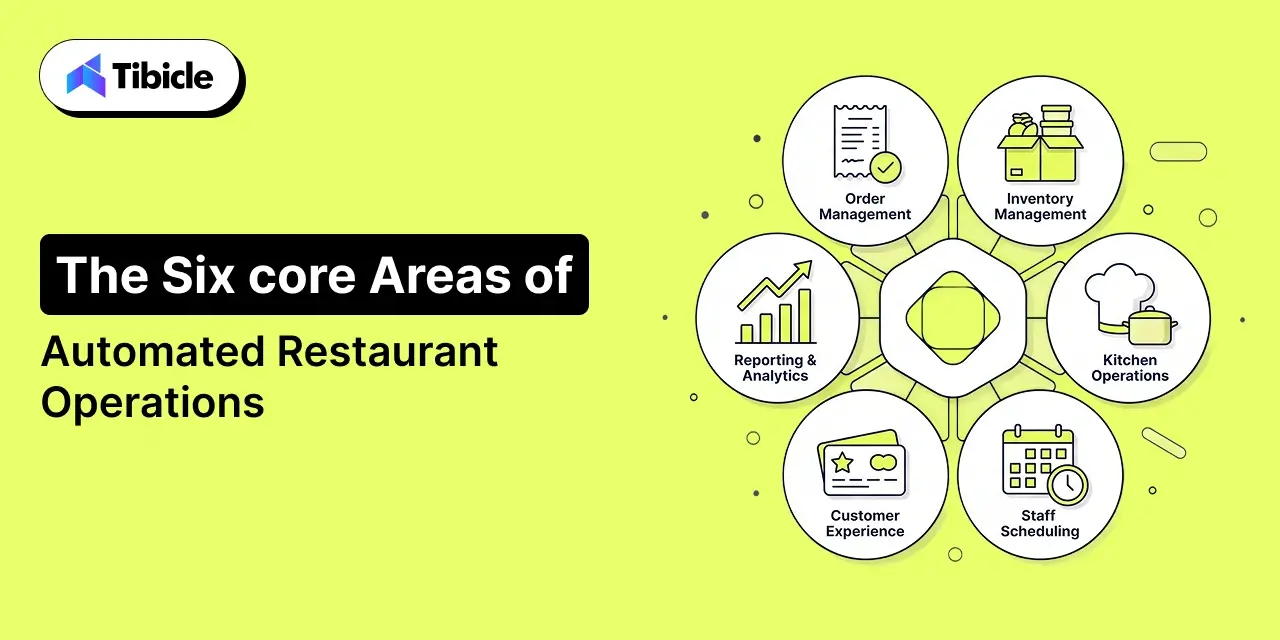
Order Management and POS Integration
Digital ordering systems synced directly to POS eliminate order entry errors, reduce ticket times, and connect online channels without manual input. The integration point between ordering and POS is also the most common failure point in food service automation. Fragmented POS stacks create data gaps that undermine every downstream reporting and scheduling function built on top of them, one of the reasons operators increasingly opt for a custom POS and restaurant management system built around their actual workflow instead of stitching together disconnected tools.
Inventory and Supply Chain Automation
Automated reordering triggered by real-time sales data, stock threshold alerts, and AI-driven demand forecasting removes the guesswork from purchasing. The numbers here are material: automated inventory systems reduce food waste by an average of 26% and over-ordering by 31%, translating to $18,000–$45,000 in annual savings for a typical $1M–$2M revenue restaurant. Food waste reduction at this scale is not incremental, it changes the cost structure of the operation. Much of this depends on connected sensors and real-time data feeds, which is where IoT and smart solutions come in.
AI-Powered Staff Scheduling
Forecasting-based scheduling that pulls from POS history and demand patterns reduces idle labor costs by 15–25%. The secondary benefit is often undervalued: predictable schedules reduce voluntary turnover, which costs an estimated $5,864 per hourly replacement when recruiting, training, and productivity loss are factored in, per Cornell University’s turnover cost research. Platforms like 7shifts and HotSchedules are the category leaders here, though many operators eventually fold scheduling into a broader AI automation consulting engagement so it shares data with inventory and POS.
Kitchen Automation Technology
Kitchen display systems, automated cooking equipment, and smart batching workflows define kitchen automation technology for most operators in 2026. Robotics, like the fry-station systems from Miso Robotics, is part of this category, but not the starting point. Most operators begin with software-driven kitchen flow improvements, reducing ticket times and error rates before committing to hardware capital expenditure.
Guest Communication and Marketing Automation
Automated SMS sequences, loyalty program triggers, review request flows, and win-back campaigns constitute guest experience automation. Independent and multi-location restaurants using automated guest campaigns see 20–35% higher repeat visit rates compared to those relying on manual outreach. The compounding effect on customer lifetime value is where this category pays back disproportionately, and it’s closely related to the retention gains we’ve seen play out in broader retail and e-commerce digital transformation work.
Finance and Invoice Automation
Automated invoice processing platforms eliminate more than 90% of manual AP coding. The average independent restaurant burns 17 hours per month on invoice reconciliation. Automation reduces that to under 4 hours, freeing management time for decisions that actually require judgment. If this is the function costing you the most time, it’s worth reading our companion piece on the best restaurant accounting software in 2026 before you shortlist vendors.
Where Restaurant Automation Delivers the Fastest Business Impact
Single-Location Operators
Prioritize inventory automation and AI-powered scheduling. These two functions deliver the fastest payback, typically within 60–90 days on software-only platforms with low implementation overhead and no hardware capital requirement. Robotics and complex back-of-house automation should come later, after the software layer is generating measurable returns.
Multi-Location and Chain Operators
Unified restaurant technology solutions become operationally essential beyond three locations. Point solutions that work independently create data silos that slow decision-making and obscure unit-level performance. Forty percent of restaurant operators cite data availability gaps as a major operational issue. The shift in 2026 is toward integrated platforms that consolidate multi-location restaurant management, not toward adding more best-of-breed tools that do not share data, a challenge that overlaps closely with what we solve for clients through enterprise and internal tools development.
Ghost Kitchens and Delivery-First Operations
Automation is native to the ghost kitchen model. Digital ordering systems, automated dispatch, and real-time menu sync across aggregators are table stakes. Margin protection depends on eliminating commission leakage and manual reconciliation across delivery platforms like Olo and Checkmate, both of which automation addresses directly.
Restaurant Automation vs. Manual Operations Side-by-Side Comparison
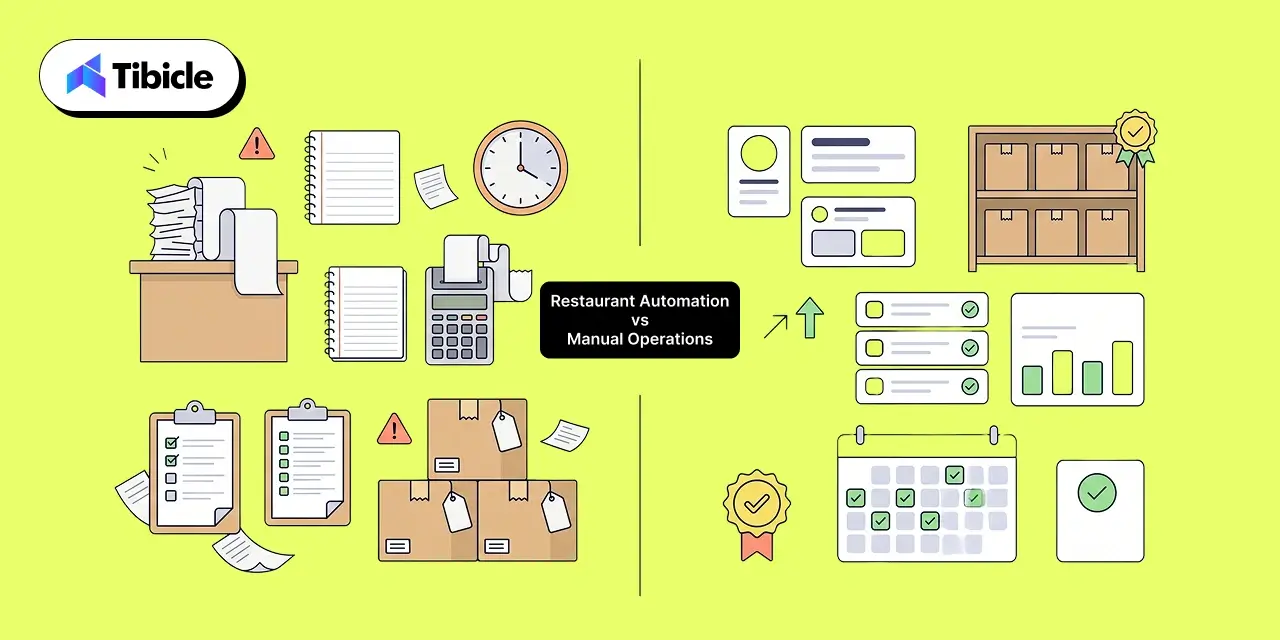
| Operational Area | Manual Process | Automated Process | Efficiency Gain |
| Inventory Counting | 15–20 hrs/week | Real-time POS-synced tracking | 75% time reduction |
| Invoice Processing | 17 hrs/month, error-prone | Auto-coded, ERP-integrated | Reduced to 4 hrs/month |
| Staff Scheduling | Intuition-based, reactive | Forecast-driven, POS-powered | 15–25% labor cost reduction |
| Order Management | Manual ticketing, high error rate | Digital ordering + KDS sync | Near-zero order errors |
| Guest Re-engagement | Manual campaigns, low frequency | Automated triggers based on behavior data | 20–35% higher repeat visits |
| Food Waste Management | No real-time visibility | Threshold alerts + demand forecasting | 26% waste reduction |
At the P&L level, what this table represents is the difference between a 3–5% net margin and a 7–10% net margin for a mid-market operator running two to five locations. The efficiency gains above are not additive in isolation they compound across the cost structure when the underlying platforms share data.
What Does Restaurant Automation Actually Cost?
Software-Only Platforms
Scheduling tools like 7shifts and When I Work are priced on a per-employee-per-month model. Inventory management platforms start at $200–$400/month for mid-market operators. Marketing automation ranges from $0–$149/month at the entry level to $149–$399/month for full-featured platforms. All-in-one POS bundles from providers like Toast and Square for Restaurants run approximately $69/month per terminal plus hardware, which starts at $799 upfront or is available on lease terms.
The real cost question for most operators is not what each platform costs individually, it is whether to consolidate or continue stacking point solutions. Most operations that have grown organically are over-stacked and under-integrated.
Hardware and Robotics
Kitchen automation hardware, robotic fry stations, self-ordering kiosks, and smart cooking equipment carry capital costs ranging from $15,000 to $125,000 or more per installation. Hardware ROI timelines run 18–36 months, compared to 60–90 days for software-layer automation. Scaling hardware from two or three pilot locations to fifty or more remains an unresolved operational challenge across the industry.
Hidden Costs Operators Miss
- POS integration fees are not included in base platform pricing
- Staff retraining hours, which are rarely quantified in vendor proposals
- API connection costs for non-native integrations
- Ongoing maintenance and vendor support contracts
- Data migration from legacy systems
Not sure which automation tier matches your operation? Tibicle helps restaurant operators map the right stack to their margin goals without over-engineering.
ROI Framework Calculating Real Returns on Restaurant Automation Investment
The Three ROI Levers
Food cost reduction through inventory automation typically delivers a 3–8 percentage point improvement in food cost variance. On $1.5M in revenue, a 5% food cost reduction equals $24,750 per year more than the annual cost of most platforms in this category.
Labor efficiency from scheduling automation reduces idle labor by 15–25%. A single understaffed peak shift costs $400–$1,200 in lost table turns. Multiply that across a year and the lost revenue from reactive scheduling becomes significant.
Revenue recovery is the lever most operators ignore. Fifteen to twenty percent of inbound calls go unanswered during peak hours. Voice AI and automated communication systems the kind we build through AI integration and automation capture this lost revenue without adding headcount.
Payback Period by Automation Type
| Automation Category | Avg. Annual Savings | Typical Platform Cost | Payback Period |
| Inventory management | $18,000–$45,000 | $2,400–$4,800/yr | 30–90 days |
| Scheduling automation | $12,000–$30,000 | $1,800–$3,600/yr | 45–90 days |
| Invoice/AP automation | $8,000–$15,000 | $3,000–$6,000/yr | 90–120 days |
| Marketing automation | $10,000–$25,000 | $1,800–$4,800/yr | 60–90 days |
What ROI Is Not
ROI from restaurant automation is not only cost-cutting. It includes revenue that was never earned because phones went unanswered, tables turned slowly, or repeat guests lapsed without a re-engagement trigger. Operators who calculate only labor savings are underestimating total return by 30–50%.
Implementation Risks Operators Underestimate
Integration Fragmentation
The most common failure mode in restaurant technology rollouts is buying platforms that do not connect. Without a unified data architecture, AI-powered scheduling and inventory tools become disconnected additions layered onto the same operational gaps they were meant to close. Choose vendors with robust API documentation and named integration partners for your existing POS, not just a general mention of API availability.
Staff Adoption and Change Resistance
Automation rollouts fail at the floor level when staff are not trained or are not bought into the change. The operators who see the fastest gains frame automation as workload relief, not headcount reduction. Implementation must include structured training before go-live, not just a vendor onboarding call after the contract is signed.
Scaling Hardware Before Software Is Proven
Early robotics pilots at 2–13 locations rarely scale predictably to 200 or more units. Operators should not commit hardware CapEx until software-layer automation is generating measurable and consistent returns. The sequence matters: software first, hardware second.
Cybersecurity and System Downtime Exposure
A crashed POS system during a Friday dinner service can cost three hours of revenue and trigger guest walkouts that do not come back. Multi-cloud redundancy and system failover planning are no longer optional considerations for operators running five or more locations this is exactly what our 24/7 monitoring and support service is built to prevent.
Vendor Selection Checklist for Restaurant Automation
Before committing to any restaurant management software or automation platform, evaluate against these criteria:
Integration Depth
- Native integration with your current POS, not just API mention
- Named integration partners that are listed and independently verifiable
Scalability
- Pricing model that works at one location and at twenty or more
- Multi-location management dashboard included in base plan, not treated as an add-on
Data Ownership
- You own your guest and operational data upon exit
- Full export functionality without vendor lock-in
Support and Implementation
- Dedicated onboarding support beyond documentation
- SLA commitments for uptime and issue resolution
ROI Transparency
- Vendor provides performance benchmarks, not just feature comparisons
- Reference customers in your specific segment same size, format, and location count
Contract Terms
- Month-to-month or short-term contracts available for the initial phase
- Clear, complete pricing, no undisclosed processing fees or hardware lease traps
Top Restaurant Automation Tools by Category (2026)
| Category | Leading Platforms | Best For |
| All-in-One POS + Ops | Toast, Square for Restaurants | Full-service, QSR, chains |
| Inventory Automation | MarketMan, MarginEdge, Apicbase | COGS tracking, enterprise chains |
| Scheduling | 7shifts, HotSchedules, When I Work | Multi-location shift management |
| Guest Engagement | SevenRooms, Popmenu, Fishbowl | Loyalty, CRM, retention automation |
| Invoice/AP Automation | Ottimate (formerly Plate IQ), MarginEdge | Invoice digitization, ERP integration |
| Kitchen Automation | Miso Robotics, Brightpearl | QSR, high-volume BOH |
| Delivery Optimization | Checkmate, Olo | Omnichannel ordering, delivery aggregation |
2026 is the year operators are consolidating stacks. The movement is away from accumulating point solutions that operate independently and toward fewer platforms that integrate deeply across the operational layer. The number of tools matters less than whether they share data.
Why Tibicle Is a Strong Choice for Restaurant Automation Implementation
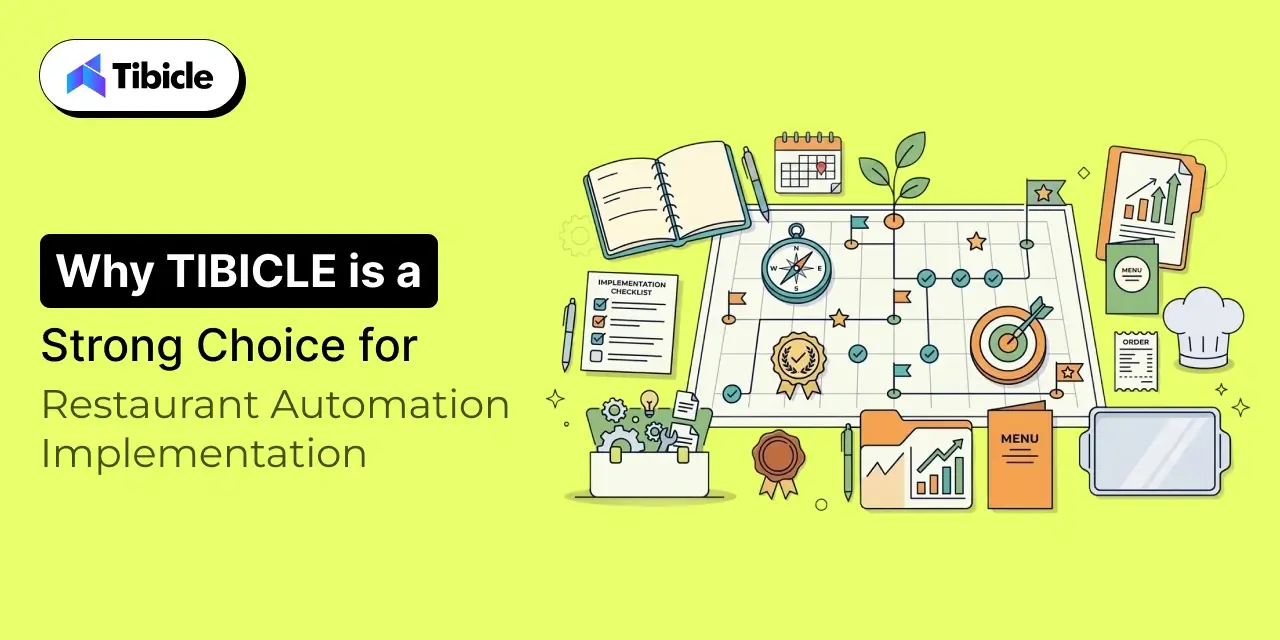
Restaurant automation requires more than buying the right software. The gap between a platform’s feature list and its actual operational performance is where most implementations stall and where the ROI projections in vendor proposals fail to materialize.
Tibicle works with food service operators to close that gap: scoping the right automation tier for current revenue and operational complexity, managing vendor integration, and ensuring staff adoption before handoff. For restaurant groups managing multiple locations or evaluating a first automation investment, the approach is grounded in business impact first and technology selection second the same philosophy behind our restaurant management system and custom POS development work.
If you’re evaluating your first automation stack or auditing an existing one, contact Tibicle to schedule a working session.
Conclusion
Restaurant automation is not a technology decision. It is a marginal decision. Operators who sequence it correctly software before hardware, high-ROI functions first, integrated platforms over disconnected point solutions recover costs in weeks, not years.
The operators who stall are not those who moved too slowly on robotics. They are the ones still running fragmented systems while competitors operate with real-time visibility into labor, inventory, and guest behavior. The stack you build in 2026 will determine whether your margins are recoverable in 2027.
Talk to Tibicle about building your restaurant automation roadmap.
FAQs
What is the fastest-ROI area of restaurant automation?
Inventory management and scheduling automation consistently return investment within 60–90 days for software-based platforms. These two functions also carry the lowest implementation risk and require no hardware capital.
Can small restaurants afford restaurant automation?
Yes. Cloud-based platforms start at $149–$400/month and scale with the business. Most independent operators see payback before month three, particularly when inventory or scheduling inefficiencies are the primary margin leak.
What is the biggest mistake operators make when implementing restaurant automation?
Buying platforms that do not integrate with their existing POS creates data silos that eliminate the efficiency gains the software was purchased to deliver. Working with a partner who handles restaurant management system and custom POS development end-to-end avoids this trap.
Is restaurant robotics worth the investment in 2026?
For most operators, not yet. Robotics capital costs are high, scaling beyond pilot locations is unproven, and software-layer automation still offers faster and lower-risk returns across every major cost category.
How do I know if my restaurant is ready to automate?
If labor and food costs together exceed 60% of revenue and you lack real-time visibility into either, the case for automation is already clear. The question is not whether to start, it is which function to address first.
Schedule A Developer Interview And Get 15 Days Risk-Free Trial
Schedule a Call

Relevant Blog



Written by

Recent Blogs
Custom Computer Vision Software Development Company
Who this is for: Engineering leads, product owners, and operations heads at B2B enterprises evaluating a custom computer vision software development company for a real visual-data workflow rather than a demo. Search intent: Commercial evaluation with a technical backbone. The reader has moved past “what is computer vision” and wants architecture choices, accuracy data, and […]
Custom Autonomous AI Agent Development Services: Building Task-Driven Workflow Bots
What This Guide Covers Who this is for: Engineering leads, product owners, and operations heads evaluating AI agent development services for a real internal workflow rather than a chatbot pilot. Search intent: Commercial evaluation with a technical backbone. The reader has moved past “what is an AI agent” and wants architecture choices, failure data, and […]
How to Hire Dedicated Electron.js Developers in 2026
What This Guide Covers Who this is for: US tech firms, SaaS companies, startups, CTOs, engineering managers, and product teams looking to hire dedicated Electron.js developers for ongoing desktop application development. Search intent: Hiring and decision. This guide covers where to find Electron.js developers, how to evaluate their technical skills, and how dedicated developers compare […]
Got an Idea? Get FREE Consultation
In our world, there's no such thing as having too many clients

