
Data Privacy at the Edge: Engineering GDPR Compliant Desktop Apps with Electron Framework

Aug 31, 2026

Read in 5 Minutes
Table of Contents
- What This Guide Covers
- Introduction
- Why “Edge” Processing Changes the GDPR Compliance Picture for Desktop Apps
- GDPR’s Core Principles Applied to a Desktop Application Architecture
- Implementing Data Subject Rights in a Local-First Application
- Cross-Border Data Transfers When Processing Happens on the Device
- Data Protection Impact Assessments for Desktop Software for gdpr compliant desktop apps
- How Tibicle Engineers GDPR-Compliant Desktop Applications
- Key Takeaways for Product and Engineering Teams for gdpr compliant desktop apps
- FAQs
What This Guide Covers
Who this is for
Product owners, engineering leads, CTOs, and compliance teams at companies building or maintaining Electron-based desktop software for EU-facing customers, who need to engineer gdpr compliant desktop apps rather than rely on a backend-only compliance approach.
Search intent Implementation and reference.
This guide is for teams that already know GDPR applies to their product and want to understand exactly how to build for it inside a local-first desktop architecture. Instead of covering GDPR in general terms, it maps each core obligation, privacy by design, data subject rights, consent, cross-border transfers, and DPIAs, directly onto Electron’s process and storage model.
What you will walk away with
A working framework for engineering privacy by design into an Electron app’s main and renderer processes, a concrete approach to fulfilling data subject rights when a device is offline, a consent architecture that meets EDPB requirements, clarity on when local-to-cloud sync triggers cross-border transfer rules, and a clear set of criteria for when a DPIA is required.
Introduction
Regulators have now issued more than EUR 6 billion in GDPR fines since the regulation came into force in 2018, with the average fine sitting around EUR 2.28 million per case (CMS Enforcement Tracker Report). Companies building GDPR compliant desktop apps often assume that moving data processing onto the user’s device removes them from this exposure. It does not. Local-first data processing changes where compliance work happens, not whether it needs to happen. This guide explains what actually shifts when an Electron application processes personal data at the edge, and how to engineer privacy by design Electron application architecture that holds up under audit as part of a broader desktop app development process. It covers the core GDPR principles as applied to desktop software, data subject rights implementation, consent architecture, cross-border transfer rules, and DPIA triggers.
Why “Edge” Processing Changes the GDPR Compliance Picture for Desktop Apps
Desktop applications built on Electron frequently process data locally: form entries, cached records, offline queues, local databases. Teams sometimes read this as a compliance shortcut, since the data never touches a company server. GDPR does not draw that distinction. The regulation applies to any processing of personal data belonging to an EU resident, regardless of where the processing happens.
Local-First Processing Does Not Mean Data Leaves GDPR’s Scope
A company remains the data controller the moment it defines why personal data gets collected and how it gets used, even if the actual storage and computation run entirely on a user’s laptop. Article 4 of the GDPR defines processing broadly enough to cover local reads, writes, and computations. An Electron app that stores contact records in a local SQLite file, encrypts them, and never syncs them anywhere is still processing personal data under GDPR.
Where Compliance Obligations Actually Move in a Desktop Architecture
What changes is the location of the engineering work. A server-based SaaS product centralizes consent logging, access requests, and deletion in one backend. A desktop app has to replicate that logic across every installed instance, often without a live connection to check state. Engineering teams need to build request handling, audit logging, and rights fulfillment directly into the main process and local storage layer, not assume a backend will handle it later.
GDPR’s Core Principles Applied to a Desktop Application Architecture
Article 25 requires data protection by design and by default. The EDPB’s guidelines on this obligation state plainly that the requirement applies to every controller, regardless of the size of the organization or the complexity of the processing (EDPB Guidelines 4/2019 on Article 25). For an Electron team, this translates into specific decisions at the process, storage, and settings level rather than a policy document.
Data Minimization at the Renderer and Main Process Level
The renderer process should only receive the fields a given screen needs to display; it should never receive a full user record over IPC. Main process handlers should query local storage for only the fields each request needs, and drop unused fields before passing data across the IPC boundary.This limits what a compromised renderer or a debugging session can expose.
Purpose Limitation in Local Storage and Sync Logic
Each local table or storage bucket should map to one stated purpose: authentication, feature usage, or user content. Sync logic that pulls records for one purpose should not silently attach fields belonging to a different purpose. When a support team adds a new field to a sync payload for a debugging feature, that field needs its own purpose review before it goes live.
Default Settings That Process the Least Data Possible for gdpr compliant desktop apps
Analytics, crash reporting, and telemetry should default to off, with the user opting in rather than opting out. This single setting change removes a large share of the audit exposure a desktop app otherwise carries, since a default-on toggle counts as collection without a demonstrated lawful basis for every user who never saw the setting.
Implementing Data Subject Rights in a Local-First Application
GDPR’s Chapter III grants individuals the right to access, rectify, erase, restrict, port, and object to the processing of their data (EDPB, Data Subject Rights). A desktop app that stores data on a device the company doesn’t control has to fulfill these rights without assuming the device is online or even reachable.
Right of Access and Right to Portability for Locally Stored Data
Build an in-app export function that queries every local table containing personal data and outputs it in a structured, machine-readable format such as JSON or CSV. This single feature satisfies both the right of access and the right to portability for locally held records, and it removes the need for a manual, ticket-based process every time a user asks what data the app holds.
Right to Erasure Across Local Storage, Cache, and Sync Targets
Deletion has to reach the local database, any cached copies, log files that may contain personal identifiers, and the backend if the app ever synced the record.. A “delete account” button that only clears the primary table but leaves crash logs or cached search history behind does not satisfy Article 17. Map every location a given data type can end up in before writing the deletion routine.
Handling Requests When the Device Is Offline
Queue rights requests locally when the app cannot reach a backend, and tell the user their request is pending rather than complete. Once connectivity returns, the app should reconcile the local deletion or export against any copies it has synced.. Design this reconciliation step early, since it’s the part teams most often skip until an audit surfaces the gap.
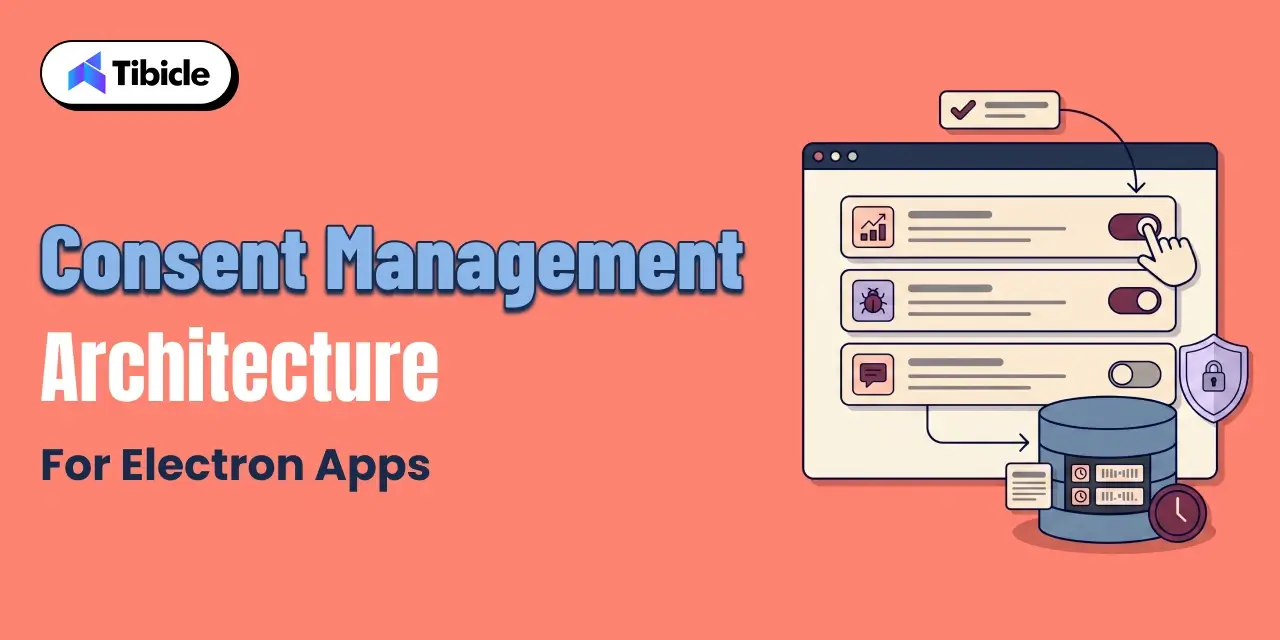
The EDPB’s guidelines on consent set a higher bar than a single “I agree” checkbox at first launch. Users must give consent freely, and it must be specific, informed, and unambiguous; withdrawing it has to be just as easy as giving it in the first place (EDPB Guidelines 05/2020 on Consent).
Granular, Purpose-Specific Consent Instead of One Blanket Toggle
Each optional processing purpose, analytics, crash reporting, marketing communication, needs its own toggle. A single “accept terms” action bundled with unrelated purposes does not meet the specificity requirement, and it creates a single point of failure if any one purpose gets challenged later.
Making Withdrawal as Easy as Giving Consent
Place consent controls in a visible settings screen, not buried behind a support request. If a user can turn analytics on with one click during onboarding, they should be able to turn it off with one click afterward. Onboarding-only consent screens that never resurface fail this test directly.
Logging Consent State Without Over-Collecting Data
Store a timestamped record of what the user agreed to and when, locally on the device, rather than transmitting that log to a server unless there’s a specific reason to. The consent record itself is personal data, and it should follow the same minimization rule as everything else in the app.
Practical build checklist for consent architecture:
- Separate consent toggles for analytics, crash reporting, and optional features
- A visible settings screen to withdraw consent, separate from the onboarding checkbox
- Timestamped consent records stored locally, not sent to a server unless necessary
- No pre-ticked boxes or consent bundled with unrelated terms
Cross-Border Data Transfers When Processing Happens on the Device
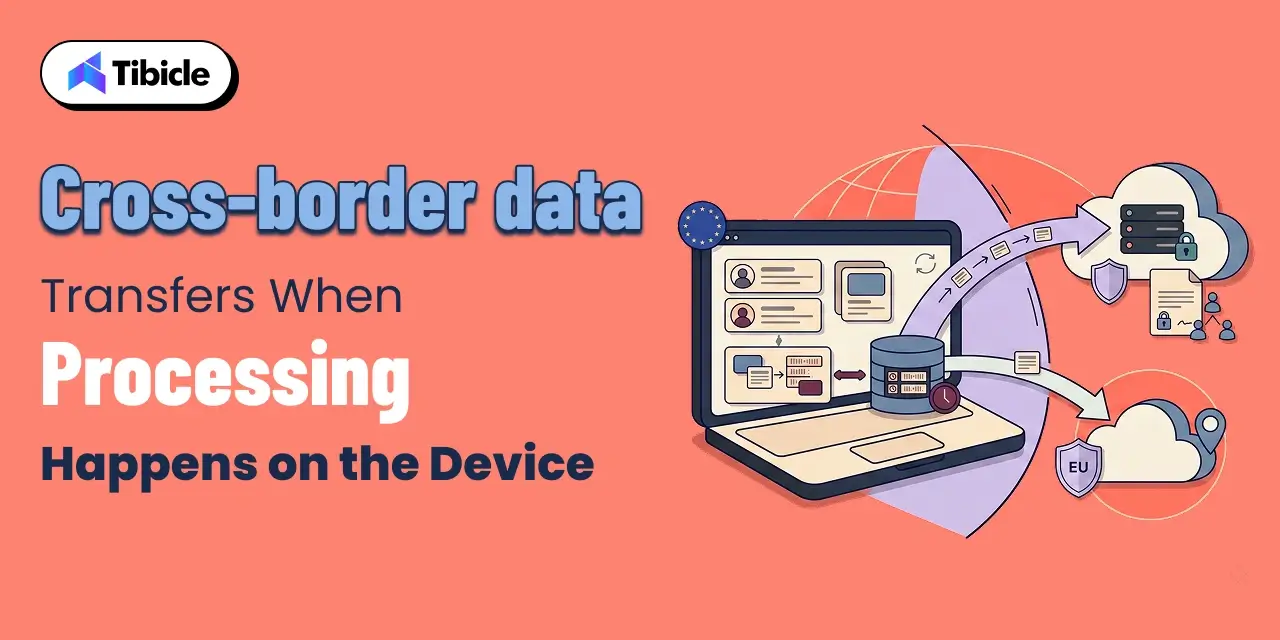
Processing personal data locally on a device inside the EU does not close the question of international transfers. The moment that data syncs to a backend hosted outside the EU, GDPR’s transfer rules apply exactly as they would for a cloud-first product.
Where Data “Resides” When It’s Processed Locally but Synced to the Cloud
A record can be created, edited, and used entirely on an EU-based laptop, and still trigger a transfer assessment the moment a sync job sends it to a non-EU server for backup or cross-device access. The trigger is the destination of the transfer, not the location where the data was first generated.
Standard Contractual Clauses for Any Non-EU Backend for gdpr compliant desktop apps
If the backend that receives synced data sits outside the EU or an adequacy-approved country, Standard Contractual Clauses need to be in place between the company and that backend provider. This applies whether the backend is a third-party cloud vendor or an internal server the company itself operates from a non-EU region.
Regional Data Residency Options for EU Customers
Offering an EU-hosted sync endpoint for EU customers removes the transfer question for that segment entirely. This is often simpler to build than a full SCC review process, particularly for teams that already run multi-region infrastructure for latency reasons.
Data Protection Impact Assessments for Desktop Software for gdpr compliant desktop apps
A DPIA becomes mandatory once a processing activity meets two or more of the EDPB’s risk criteria, drawn from Article 35(3) and the Article 29 Working Party’s guidance (European Commission, When a DPIA Is Required).
When Local Data Processing Triggers the DPIA Requirement
A desktop app that profiles user behavior for personalization, processes special category data such as health information, or operates at a large scale across many users can trigger the two-criteria threshold, regardless of whether every byte of processing happens on-device. Teams should run this assessment before development starts, not after a feature ships.
Structuring a DPIA Around the App’s Actual Data Flows
Document what data each feature collects, where it’s stored locally, whether it syncs anywhere, who can access it, and how long it’s retained. This data flow map becomes the backbone of the DPIA and doubles as documentation the engineering team can reuse for access and erasure request handling.
Keeping the DPIA Current as the App Changes
A DPIA written for version one goes stale the moment a new feature adds a new data flow. Treat it as a living document tied to the release process, reviewed whenever a feature touches personal data in a new way, rather than a one-time compliance exercise filed away after launch.
How Tibicle Engineers GDPR-Compliant Desktop Applications
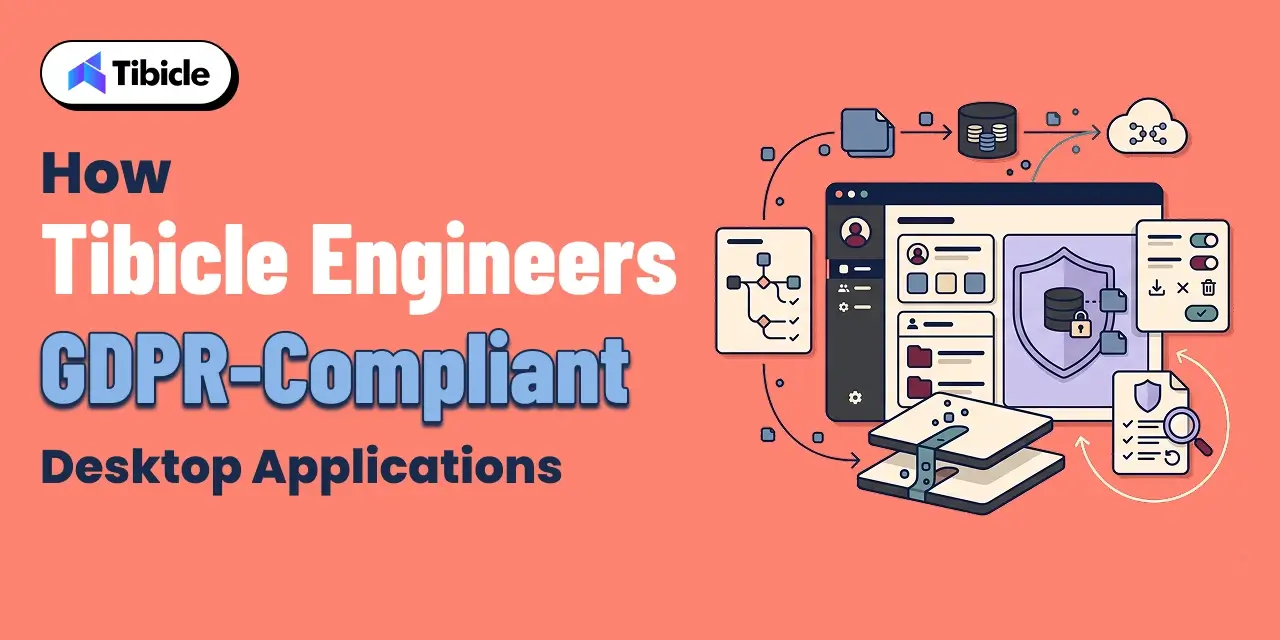
Tibicle builds Electron-based desktop software as part of its broader custom software development practice, for clients that need EU-facing products to meet these requirements from the first architecture decision, not retrofitted after a legal review flags gaps. Teams that also need offline-first data handling on the operational side can see a related build in Tibicle’s restaurant management system case work, where local-first architecture and sync logic follow the same principles covered above.
Data Flow Mapping and Privacy by Design Review for gdpr compliant desktop apps
Every desktop project starts with a map of what personal data each feature touches, where it’s stored, and where it moves. This map feeds directly into the DPIA and the consent architecture, so the two don’t get built separately and then reconciled later.
Implementation of Consent, Rights Requests, and Data Minimization in gdpr compliant desktop apps
Tibicle’s engineering process builds granular consent toggles, in-app export and deletion tools, and IPC-level data minimization into the application from the first sprint, rather than treating them as a separate compliance pass before launch.
DPIA Support and Ongoing Compliance Monitoring for gdpr compliant desktop apps
For clients that need a documented DPIA, Tibicle structures the assessment around the actual data flow map produced during development, and sets up a review checkpoint tied to future releases so the assessment doesn’t go stale as the app grows.
Key Takeaways for Product and Engineering Teams for gdpr compliant desktop apps
- Processing data on the device does not remove GDPR obligations, it relocates where they need to be engineered
- Privacy by Design under Article 25 means minimal data collection is the default setting, not an opt-in
- Data subject rights must work even when the app is offline, not only when connected to a backend
- A DPIA is often required earlier than teams expect once profiling or large-scale processing is involved
Building an Electron app that needs to meet these requirements? Book a call with Tibicle to map your app’s data flows before your next release.
FAQs
Does GDPR apply to data that only ever lives on a user’s device?
Yes. GDPR applies based on whose data is processed and why, not where the storage happens. A company that defines the purpose of processing remains the data controller even when every byte stays local to the user’s device.
What does Privacy by Design actually require in a desktop app’s architecture?
It requires data minimization at the IPC and storage level, purpose-specific local storage, and default settings that collect the least data possible, all decided at the architecture stage rather than added on before release.
How do you honor a right to erasure request when the app has been offline?
Queue the deletion request locally, confirm it to the user as pending, and reconcile it against local storage, cache, logs, and any synced backend records once the app reconnects.
Does syncing local data to a US-based cloud backend count as an international transfer?
Yes. The transfer assessment triggers at the point data leaves the EU for a non-EU backend, regardless of where the data was originally created or processed.
Does our desktop app need a Data Protection Impact Assessment?
It depends on whether the processing meets two or more of the EDPB’s risk criteria, such as profiling, large-scale processing, or special category data. Run the assessment before development starts on any feature that might qualify.
Does Tibicle build GDPR-compliant Electron applications for EU-facing products?
Yes. Tibicle maps data flows, builds consent and rights-request handling into the architecture, and supports DPIA documentation for gdpr compliant desktop apps for clients shipping desktop software to EU users.
Schedule A Developer Interview And Get 15 Days Risk-Free Trial
Schedule a Call

Relevant Blog
Electron vs Tauri 2026: Desktop Framework Guide

Diya Koradiya

Desktop Application Development Cost Guide for 2026
Diya Koradiya
Written by

Recent Blogs
Data Privacy at the Edge: Engineering GDPR Compliant Desktop Apps with Electron Framework
What This Guide Covers Who this is for Product owners, engineering leads, CTOs, and compliance teams at companies building or maintaining Electron-based desktop software for EU-facing customers, who need to engineer gdpr compliant desktop apps rather than rely on a backend-only compliance approach. Search intent Implementation and reference. This guide is for teams that already […]
Electron vs Tauri 2026: Desktop Framework Guide
What This Guide Covers Who this is for: Startup founders, CTOs, technical co-founders, product leaders, and engineering teams evaluating a desktop application framework for a new product or considering a migration from an existing Electron vs Tauri 2026 application. It is particularly relevant for small teams balancing time-to-market, engineering talent, application performance, security requirements, distribution […]
Desktop Application Development Cost Guide for 2026
What This Guide Covers Who this is for: SaaS founders, CTOs, product managers, engineering leads, and business owners planning to build or launch a cross-platform desktop application development cost in 2026. It is especially valuable for teams evaluating Electron or similar frameworks and looking to create a realistic budget before committing to development, whether working […]
Got an Idea? Get FREE Consultation
In our world, there's no such thing as having too many clients

