Introduction
The mobile app development market is valued at $305 billion in 2026, growing at a 15.18% CAGR (Mordor Intelligence). Yet despite this massive opportunity, incorrect budgeting remains the number one reason app projects fail mid-build. Understanding App Development Cost 2026: Complete Pricing Strategies is now essential for any business planning a digital product because what you don’t know about pricing can derail your entire roadmap.
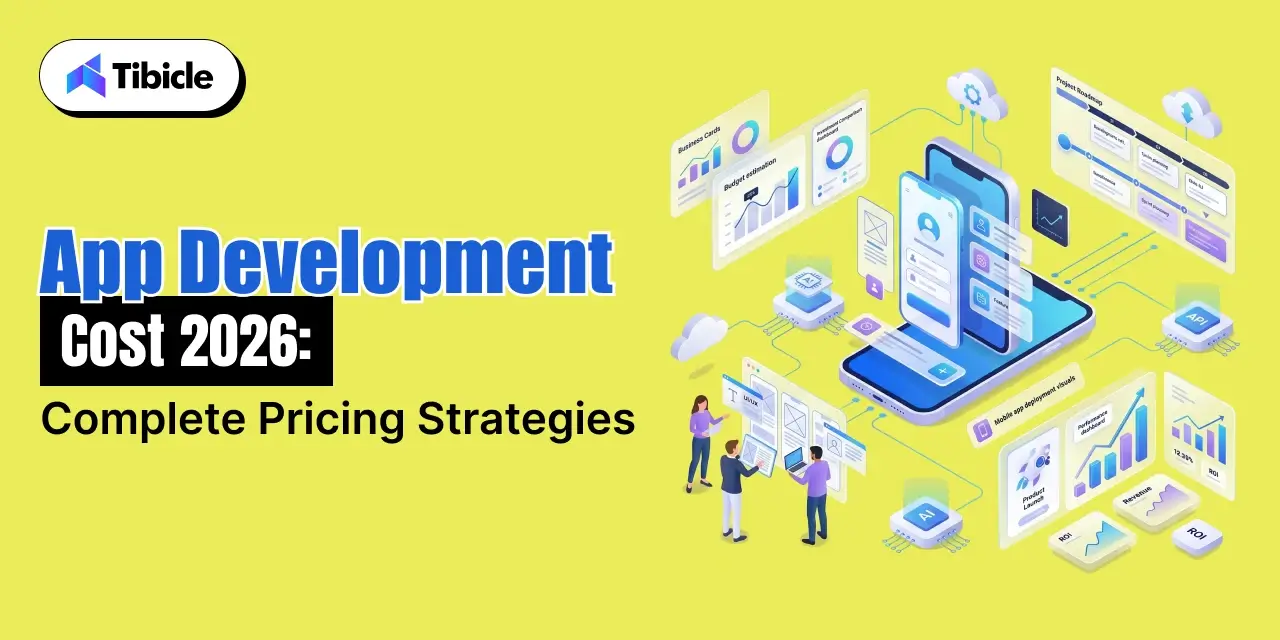
App development cost ranges from $15,000 to $500,000+, and that gap is not random. It is driven by platform choice, feature complexity, team location, and the vendor you choose to build with.
For executives evaluating build vs. buy, the real question is not “how much does it cost?” but “how much per unit of business value?”
This guide breaks down app development cost by complexity, platform, region, and business model, complete with ROI benchmarks and vendor selection criteria so you can plan your app development budget with confidence.
What Determines App Development Cost in 2026?
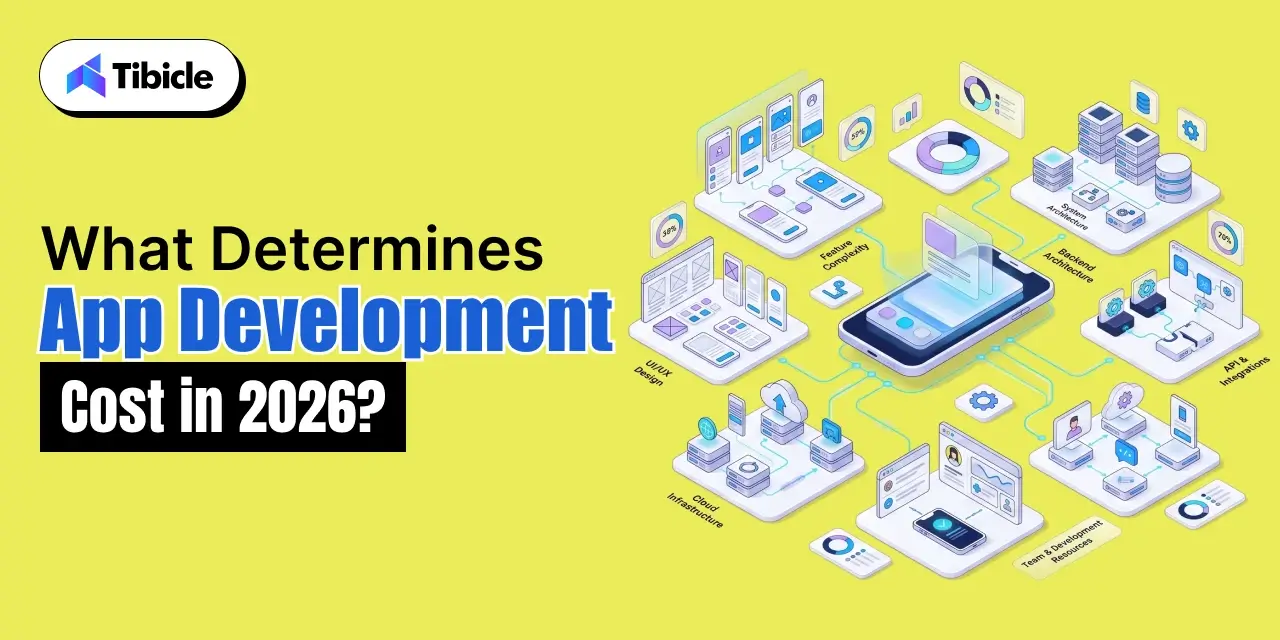
Understanding mobile app development cost starts with knowing which factors carry the most weight.
| Cost Driver |
Budget Impact |
| Feature complexity and screen count |
High |
| Backend architecture |
High |
| Platform choice (Native vs. Cross-Platform) |
High |
| Team structure (In-house vs. Offshore) |
High |
| Third-party integrations |
Medium |
| UI/UX design complexity |
Medium |
| QA and testing |
Medium |
| App Store compliance |
Low |
Feature Complexity and Screen Count
The more screens, interactions, and logic your app requires, the higher the app development cost. A simple 5–8 screen app is a fraction of the cost of a 30+ screen enterprise platform with custom workflows.
Platform Choice: Native vs. Cross-Platform vs. PWA
Building for iOS only, Android only, or both affects how many development hours are required. Cross-platform frameworks like Flutter and React Native allow a single codebase to run on both platforms, directly reducing the cost to build an app.
Backend Architecture and Third-Party Integrations
Apps that require custom APIs, real-time databases, payment gateways, or CRM integrations add significant development time. The more complex the backend, the higher the app development pricing.
Team Structure In-House vs. Outsourced vs. Hybrid
An in-house team in North America costs significantly more per hour than an equally skilled offshore team in South Asia or Eastern Europe. Team structure is one of the most direct levers on your total app development budget.
App Development Cost Breakdown by Complexity Level
| Complexity Tier |
Features |
Timeline |
Cost Range |
Best For |
| Simple |
5–8 screens, basic auth, no backend |
1–3 months |
$15K–$30K |
MVPs, prototypes, internal tools |
| Moderate |
10–20 screens, API integrations |
3–6 months |
$30K–$75K |
Startups, SMB apps, consumer apps |
| Complex |
20–40 screens, custom |
6–9 months |
$75K–$150K |
SaaS platforms, marketplaces |
| Enterprise |
40+ screens, AI, compliance |
9–18 months |
$150K–$500K+ |
Large orgs, regulated industries |
Simple Apps ($15K–$30K)
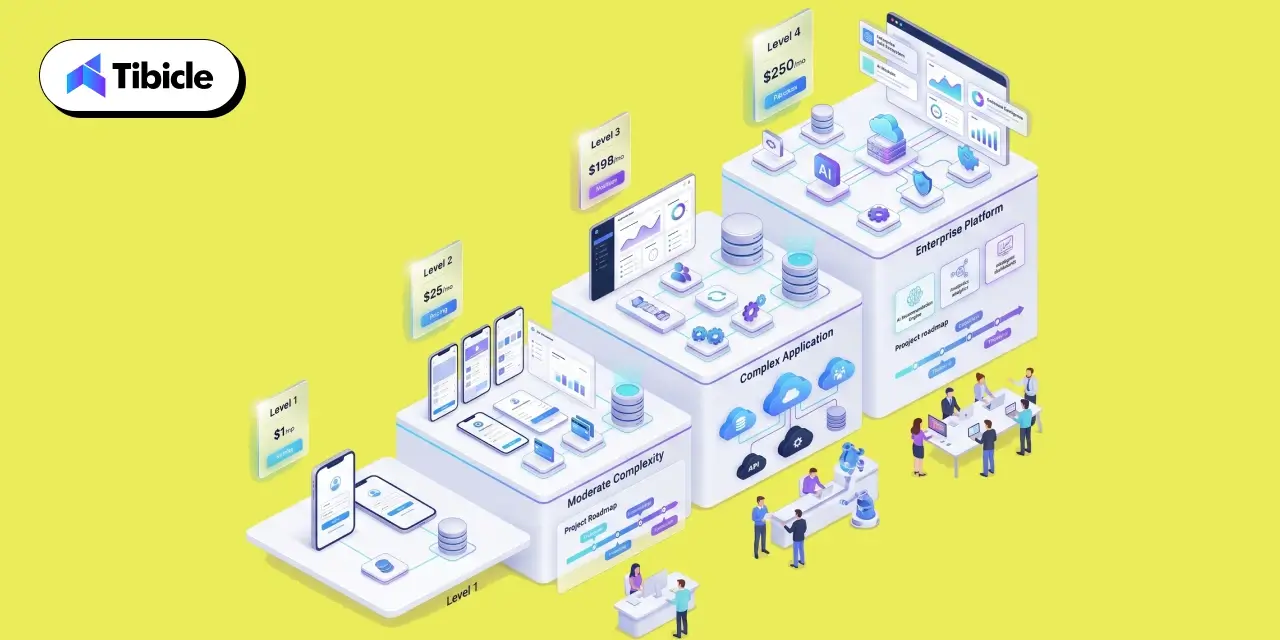
Simple apps typically include 5 to 8 screens, basic user authentication, and minimal or no custom backend. These are ideal for MVPs, internal tools, and proof-of-concept builds. Timeline is 1 to 3 months.
Moderate Apps ($30K–$75K)
Moderate apps include 10 to 20 screens, third-party API integrations, push notifications, and basic analytics. This is the most common range for startups and small business consumer apps. Timeline is 3 to 6 months.
Complex Apps ($75K–$150K)
Complex apps require 20 to 40 screens, custom backend logic, payment processing, real-time features, and more advanced UI. This tier covers SaaS platforms, two-sided marketplaces, and apps with role-based access. Timeline is 6 to 9 months.
Enterprise-Grade Apps ($150K–$500K+)
Enterprise apps include 40+ screens, AI/ML integrations, compliance requirements (HIPAA, GDPR), advanced security, and deep third-party system connections. These projects are built for large organizations in regulated industries and take 9 to 18 months.
How Platform Selection Impacts App Development Pricing
iOS vs. Android vs. Cross-Platform (Flutter / React Native)
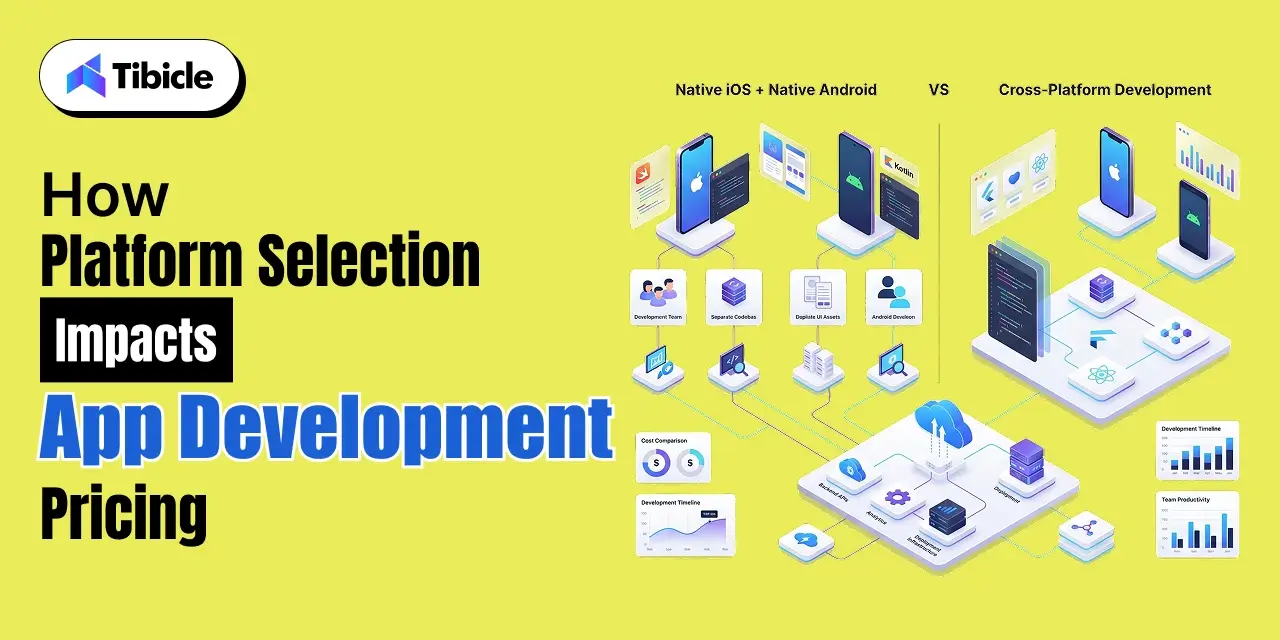
Native iOS development uses Swift; native Android uses Kotlin. Building both natively means two separate codebases, two teams, and roughly double the hours. Cross-platform frameworks like Flutter and React Native use a single shared codebase to deploy to both platforms, significantly reducing total app development costs.
Why Cross-Platform Reduces Cost by 30–40% in 2026
In 2026, cross-platform development frameworks now cover approximately 90% of use cases across more than 700 projects (Mobulous, 2026). Shared logic, shared UI components, and a single QA process make Flutter vs React Native cost comparisons nearly identical both deliver substantial savings over native.
Stat: Cross-platform frameworks now cover 90% of use cases (Mobulous, 2026 data from 700+ projects).
When Native Development Justifies the Premium
Native development is the right call when your app relies on platform-specific hardware features (ARKit, advanced Bluetooth, NFC), requires maximum runtime performance, or targets a single platform exclusively. For everything else, the cross-platform development cost is lower with no compromise in quality.
App Development Cost by Region: Global Rate Comparison
| Region |
Avg. Hourly Rate |
Project Cost Range |
Quality Benchmark |
| North America |
$100–$250/hr |
$80K–$500K+ |
Highest rates, premium talent |
| Western Europe |
$80–$180/hr |
$60K–$400K |
Strong engineering culture |
| Eastern Europe |
$40–$80/hr |
$30K–$150K |
High quality, growing supply |
| South Asia / India |
$20–$50/hr |
$15K–$80K |
Large talent pool, cost-efficient |
Stat: Offshore development cuts total project cost by 40–70% (Cynoteck, 2026).
North America ($100–$250/hr)
North American development teams offer proximity, cultural alignment, and deep enterprise experience. The trade-off is the highest hourly rate in any region, making it the least cost-efficient for large-scale projects.
Western Europe ($80–$180/hr)
Western European agencies provide strong engineering quality, EU data compliance expertise, and good English communication. Rates sit below North America but above Eastern Europe.
Eastern Europe ($40–$80/hr)
Eastern European developers, particularly in Poland, Ukraine, and Romania, are known for strong technical skills and high-quality delivery. This region offers an excellent balance of quality and cost for mobile app development cost reduction.
South Asia / India ($20–$50/hr)
India has the largest offshore development talent pool in the world. At $20 to $50 per hour, it is the most cost-efficient option for app development. Vet vendors carefully for communication processes and portfolio depth in your industry vertical.
That Inflate Hidden Costs Your App Development Budget
Stat: Add a 20–30% buffer to initial estimates (GoodFirms, 2026 survey of 267 companies).
QA and Testing (Often Underbudgeted by 20–30%)
Quality assurance is routinely underestimated. Manual testing, automated test suites, device compatibility testing, and regression testing add 15 to 25% to total development hours. Skipping this inflates post-launch bug costs dramatically.
Post-Launch Maintenance (15–20% of Initial Cost Annually)
App maintenance cost is an ongoing line item. OS updates, security patches, dependency upgrades, and new device support typically cost 15 to 20% of the original build cost every year. This is a critical component of your long-term app development budget.
Third-Party API and Cloud Infrastructure Scaling
API usage fees, cloud hosting (AWS, GCP, Azure), CDN costs, and database scaling charges are often excluded from initial quotes. These can grow significantly as your user base scales.
App Store Fees and Compliance Costs
Apple charges a $99/year developer fee for App Store distribution. Google Play charges a one-time $25 fee. GDPR, HIPAA, or PCI compliance requirements can add $5,000 to $50,000+ in legal and technical implementation costs depending on your industry.
App Development Pricing Models: Which Works for Your Business?
Fixed Price vs. Time & Material vs. Dedicated Team
Fixed Price: Best for well-defined scopes with minimal change expected. Provides cost certainty but reduces flexibility mid-build.
Time & Material: Best for evolving scopes where requirements may shift. You pay for actual hours worked with full flexibility, but costs can run over without close management.
Dedicated Team: Best for long-term product development. You hire a fully managed remote team at a monthly rate. This model works well for ongoing product iteration post-launch.
MVP-First Approach: How Phased Development Saves Up to 40%
The most effective cost control strategy in app development pricing is building an MVP first. Ship the core functionality, validate with real users, then invest in additional features based on actual data. Companies using an MVP-first and iterative scaling approach achieve up to 40% total cost savings (GoodFirms, 2026).
Cost-Quality Tradeoffs Every Executive Should Know
Choosing the lowest hourly rate without vetting quality leads to rework costs that often exceed what a stronger vendor would have charged. App development pricing is not just about hourly rates, it is about hours-to-outcome efficiency.
ROI of App Development: When Does Your Investment Pay Back?
AI-powered apps generate $3.70 ROI per dollar invested (Fullview, 2026), with order values running 10–50% higher than mobile web (CMARIX, 2026). Companies that adopt an MVP-first approach with iterative scaling achieve 40% cost savings (GoodFirms).
Revenue Impact Apps Generate 20–30% More Revenue Than Mobile Web
Apps outperform mobile web on conversion rate, session duration, and average order value. Businesses that shift from mobile web to a dedicated app consistently see revenue lifts of 20 to 30%.
Customer Retention Gains (30% Higher with Personalized App Experiences)
Push notifications, in-app personalization, and loyalty integrations drive 30% higher retention rates compared to mobile web experiences. Retention directly reduces customer acquisition cost over time, compounding your ROI.
Operational Efficiency AI Integration Cuts Costs Across Workflows
AI app development cost is higher upfront, but the operational return is significant. AI features like automated customer support, intelligent search, and predictive analytics reduce manual workload and operational overhead across teams.
Payback Timeline: Most Businesses Recoup Costs in 6–18 Months
For consumer apps with moderate adoption, the payback window is typically 6 to 12 months. For enterprise apps that replace manual processes, payback can occur in as little as 3 to 6 months. Even conservative projections support app investment for businesses with an active digital customer base.
Common Risks and Challenges in App Development Budgeting
Scope Creep and Feature Bloat
The single biggest budget risk in app development is scope creep, the gradual addition of unplanned features mid-build. Each new feature adds design, development, and QA hours. Lock scope before development begins and manage change requests through a formal process.
Vendor Lock-In with Proprietary Tech Stacks
Some vendors build on proprietary frameworks or tightly controlled codebases that make switching vendors expensive. Always confirm that your codebase is yours, that the tech stack is standard and open, and that documentation is thorough.
Underestimating Post-Launch Costs
The app does not stop costing money at launch. App maintenance cost, hosting, analytics tools, and ongoing feature development are recurring costs. Budget for at least two years of post-launch investment when calculating total cost of ownership.
Choosing Price Over Execution Quality
Low hourly rates are attractive, but poor-quality code creates technical debt that costs more to fix than it saved. Evaluate vendors on portfolio quality, communication processes, and reference checks, not just rate cards.
Vendor Selection Checklist: How to Choose the Right App Development Partner
Technical Expertise and Stack Alignment: What to verify: Does the vendor have proven expertise in Flutter, React Native, Swift, or Kotlin? Ask for code samples or GitHub repositories.
Portfolio Depth in Your Industry Vertical: What to verify: Has the vendor built apps in your industry (healthcare, fintech, retail, logistics)? Domain experience reduces build time and compliance risk.
Pricing Transparency and Contract Structure: What to verify: Is the quote itemized by phase and deliverable? Is the pricing model (fixed, T&M, dedicated) clearly defined and matched to your project type?
Post-Launch Support and SLA Commitments: What to verify: Does the vendor offer a defined support and maintenance plan post-launch? What are the response time SLAs for critical bugs?
Cultural Fit and Communication Cadence: What to verify: How often will you receive updates? What project management tools are used? Is there a dedicated point of contact?
Need a development partner who delivers on budget, on spec, and on time? Talk to Tibicle’s team for a free project estimate.
Why Tibicle Is a Strong Choice for App Development

Tibicle specializes in Flutter and cross-platform app development the frameworks that consistently deliver 30 to 40% cost savings compared to native builds. For businesses managing tight timelines and defined budgets, this matters.
The team brings industry-specific experience across multiple verticals, reducing the ramp-up time that inflates early-project costs. Tibicle’s MVP-first methodology means you validate before you fully invest, directly aligning with the phased development approach that GoodFirms identifies as the top cost-saving strategy in 2026.
What makes Tibicle different from generic development shops is transparent, itemized pricing tied to deliverables, not just hourly burn rates, and a post-launch support model that covers the maintenance costs most vendors leave unaddressed.
For organizations that need app development cost predictability alongside product quality, Tibicle’s approach closes the gap between what you budget and what you actually spend.
Explore Tibicle’s app development case studies and pricing models.
Conclusion
App development cost in 2026 ranges from $15,000 to $500,000+. But the right budget for your project depends on scope, platform choice, team location, and the partner you select not just how many features you want.
Phased development, cross-platform frameworks, and strategic vendor selection consistently reduce total app development cost while protecting ROI. Businesses that plan for hidden costs, budget for post-launch maintenance, and evaluate vendors on execution quality outperform those that optimize for the lowest initial quote.
Get a custom app development cost estimate from Tibicle built around your business goals, not generic templates.
FAQs
How much does it cost to develop a mobile app in 2026?
Mobile app development cost in 2026 ranges from $15,000 for simple apps to $500,000+ for enterprise-grade platforms. The final cost depends on complexity, platform, team location, and feature set. Most mid-range business apps fall between $30,000 and $150,000.
What is the cheapest way to build an app without sacrificing quality?
The most cost-effective approach is to start with an MVP, use a cross-platform framework like Flutter or React Native, and partner with a vetted offshore or nearshore team. This combination can reduce the cost to build an app by 40 to 60% compared to a full native build with an in-house North American team.
How long does app development take from MVP to full launch?
An MVP typically takes 1 to 3 months. A full product launch with all core features takes 3 to 9 months, depending on complexity. Enterprise apps with compliance requirements and deep integrations can take 12 to 18 months from kickoff to launch.
Is cross-platform app development cheaper than native in 2026?
Yes. Cross-platform development cost is 30 to 40% lower than building separate native apps for iOS and Android. Frameworks like Flutter and React Native now cover 90% of use cases, making native development the exception rather than the rule for most business applications.
What hidden costs should I budget for after app launch?
Budget for app maintenance cost (15 to 20% of initial build cost annually), cloud infrastructure and API usage fees, App Store and Play Store compliance updates, OS upgrade compatibility, and ongoing feature development. A 20 to 30% buffer on top of your initial estimate is recommended.
How do I calculate the ROI of my app development investment?
Start with projected incremental revenue (conversion rate improvement, higher average order value, new revenue channels), subtract total app development cost and annual maintenance, then divide by total investment. Most businesses see payback in 6 to 18 months. AI-powered apps generate approximately $3.70 in ROI per dollar invested, according to 2026 data from Fullview.