
When Machines Teach Minds: The New Face of Education

Dec 05, 2025

Read in 4 Minutes
Table of Contents
- Introduction: Education at an Inflection Point 🎓
- The transformation Waves of AI in Learning
- Shaping Tomorrow’s Workforce Today
- Edtech 2.0: The Catalyst of Change
- Our Journey in Edtech Innovation
- What the Platform Offers:
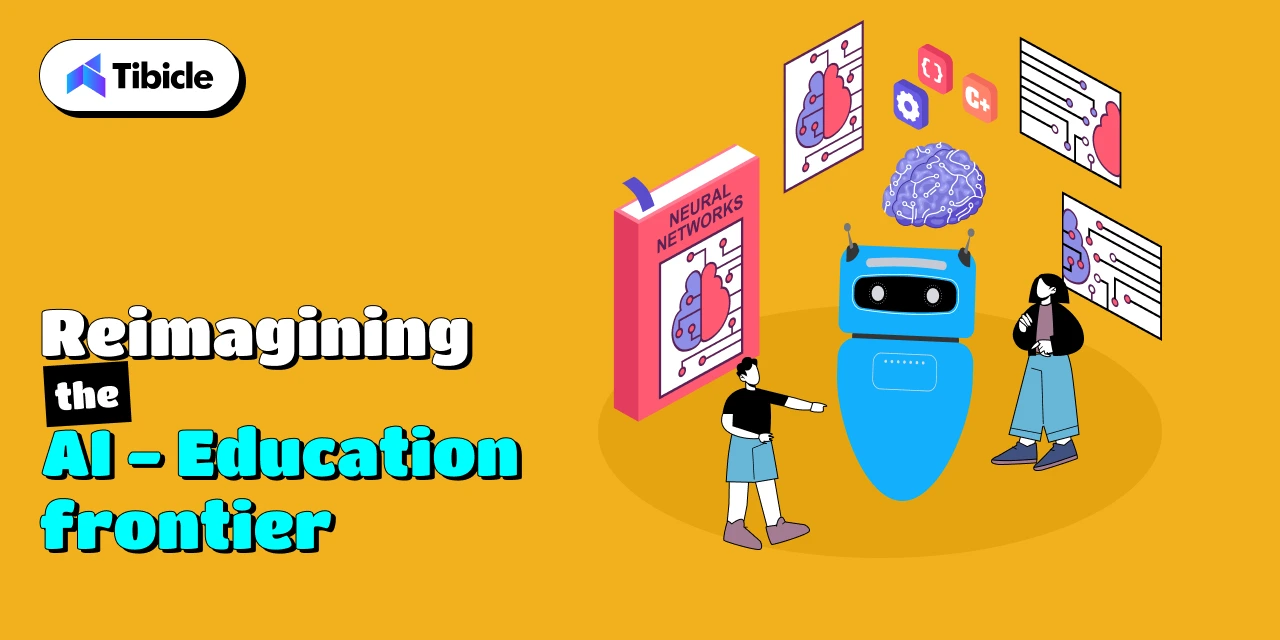
- What’s Next: Reimagining the AI-education Forntier
- Conclusion: Writing the Next Chapter of Learning
Introduction: Education at an Inflection Point 🎓
Education has always been the foundation of human progress.From the earliest oral traditions to the invention of the printing press, from chalkboards to digital classrooms, every era has redefined how knowledge is shared and preserved. Yet today, we stand at the edge of a transformation unlike any other.
Artificial Intelligence (AI) is not just another tool in the educator’s kit. It is a force reshaping the very structure of learning. Unlike past technologies that enhanced the way knowledge was delivered, AI goes further: it adapts, analyzes, and evolves with learners in real time.
The question is no longer if AI will transform education, but how fast institutions, educators, and students can embrace it. The changes we are witnessing are not incremental; they are exponential. AI is helping personalize education, democratize access, empower teachers, and prepare learners for an unpredictable future. For the first time, education is becoming as dynamic and adaptive as the students it serves.
But with such sweeping change comes both opportunity and responsibility ⚖ . If harnessed well, AI has the potential to make education more inclusive, efficient, and impactful than ever before. If ignored or misused, it risks deepening divides and creating new challenges.
This blog explores how AI is transforming the education sector, the opportunities it creates, the challenges we must navigate, and how EdTech solutions showcase the practical impact of this transformation.
The transformation Waves of AI in Learning
Learning That Learns You 👩 🎓
One of the greatest criticisms of traditional education is its one-size-fits-all approach. Students have different learning speeds, styles, and interests, yet most classrooms still follow a rigid, standardized path. AI changes this equation.
Adaptive learning systems, powered by AI, analyse a student’s progress in real time and adjust the curriculum accordingly. If a student struggles with algebra but excels in geometry, AI tools can provide more practice problems in one area while allowing advanced progress in another. This ensures that learners neither feel left behind nor held back.
The result is a student-centric model 🌱, where the pace, content, and feedback are all customized. For teachers, this means better insights into student needs. For students, it means greater engagement and confidence in their learning journey.
This shift is not theoretical, it is already happening. Platforms like DreamBox, Duolingo, and Byju s are proving that personalized, AI-driven learning can scale to millions of students globally. And this is only the beginning.
Instant Insights: Smarter Evaluation & Feedbacks 📊
Assessments are a cornerstone of education. They help students understand where they stand, give teachers visibility into learning outcomes, and guide institutions in measuring performance. But the traditional model of waiting days or weeks for test results no longer meets the needs of today’s fast-paced learning environments.
AI is revolutionizing the assessment process in three key ways:
- Instant Feedback : Students can immediately see where they went wrong, giving them the chance to correct mistakes and reinforce concepts on the spot.
- Predictive Analytics : By analyzing patterns, AI can forecast future performance and flag students who might be at risk of falling behind allowing teachers to intervene early.
- Automated Grading : From multiple-choice tests to even essays, AI can handle grading at scale, reducing the administrative burden on teachers and ensuring consistent evaluation.
This creates a cycle of continuous improvement, where students learn faster, teachers teach smarter, and institutions maintain higher educational standards.
Augmenting Educators, Not Replacing Them
A common myth is that AI will replace teachers. In reality, AI strengthens their role by removing repetitive tasks and enabling them to focus on what truly matters: inspiring and guiding students.
Here is how AI empowers educators:
- Administrative Automation : Attendance tracking, timetable scheduling, and report generation can be handled by AI freeing up valuable teacher time.
- Actionable Classroom Insights : AI highlights students who need extra help and identifies high performers who can be challenged further.
- Creative Focus : Instead of spending evenings grading stacks of papers, teachers can dedicate energy to designing innovative lessons and mentoring students.
The future classroom is not teacher-less, it is teacher-empowered, where educators and AI work together to bring out the best in every learner.
Bridging Gaps: AI for Access & Inclusion
Perhaps the most exciting promise of AI in education is its ability to make learning truly universal. For centuries, access to quality education has been shaped by geography, language, and economic status. AI is helping dismantle these barriers.
- Language Translation : Real-time AI translation tools enable students to learn in their preferred language, making education borderless.
- Assistive Technologies : Text-to-speech, speech-to-text, and AI-driven learning aids empower visually impaired, hearing-impaired, and neurodiverse learners.
- Remote Learning Access : Even students in rural or underserved areas can now access the same materials as those in urban centers, bridging the education gap.
By making education more inclusive, AI is not only leveling the playing field but also creating opportunities for millions who were once left out of the system.
Shaping Tomorrow’s Workforce Today
The world of work is changing faster than curriculum can keep up. Automation, data-driven decision-making, and AI-driven industries are redefining what it means to be job-ready. Education can no longer focus only on memorization and standardized testing; it must prepare learners for skills that will remain valuable in an uncertain future.
Here s how AI is helping align education with the workforce of tomorrow:
- AI & Digital Literacy
Students are increasingly being introduced to coding, robotics, and data science from an early age. AI-powered platforms make these subjects approachable, interactive, and engaging even for beginners. - Critical Thinking & Creativity
As machines handle repetitive, rules-based tasks, uniquely human skills like problem-solving, communication, and creativity will become core workplace differentiators. AI enables classrooms to focus less on rote learning and more on these higher-order skills. - Continuous Upskilling
The learn once, work forever model is outdated. With industries evolving every few years, lifelong learning is essential. AI-powered EdTech platforms provide professionals with flexible, on-demand courses to keep pace with shifting demands. - Global Collaboration
AI is making education more connected. Virtual classrooms bring together students from across the globe, fostering cultural intelligence and preparing them for borderless careers.
By integrating AI into education today, we re not only helping students master the present we re preparing them to lead in tomorrow’s digital-first world.
Edtech 2.0: The Catalyst of Change
While AI is the driving force, EdTech is the vehicle that brings it into classrooms, institutions, and homes. The pandemic accelerated EdTech adoption at an unprecedented rate, proving that digital-first education isn t just a backup plan it s a core necessity.
- Global Growth : According to HolonIQ, global EdTech spending is projected to surpass $404 billion by 2025, with AI-powered platforms leading this growth.
- Hybrid Learning Models : Institutions are embracing a mix of physical classrooms and AI-enhanced digital tools, creating flexible and resilient systems of education.
- Corporate Learning & Upskilling : It s not just schools and universities, businesses are also adopting EdTech for employee training, professional certifications, and continuous skill development.
This growth signals a new reality: EdTech is no longer an extra. It is central to the future of education, acting as the bridge between innovation and implementation.
Our Journey in Edtech Innovation
At Tibicle, we recognized the growing need to move beyond traditional digital classrooms. We understood that true learning happens through engagement, exploration, and interaction not just the delivery of information.
What the Platform Offers:
This interactive educational gaming platform, built using a dynamic Flutter Flame based engine, transforms complex science concepts into engaging, hands-on learning experiences. The modules include:
- Chemistry in Motion: An exciting runner game, similar to Temple Run, where students collect protons, neutrons, and electrons on the go to build target elements, making atomic structure an unforgettable experience.
- Interactive Biology Lab: A hands-on module where students learn cellular biology by dragging and dropping components to construct detailed plant and animal cells from scratch.
- Virtual Physics Workbench: A sandbox environment where users can build and experiment with electric circuits, gaining a practical, intuitive understanding of how different electrical components function together.
The Change We Witnessed :
- Institutions report a significant increase in student engagement and retention of complex scientific concepts.
- Teachers gain a powerful visual tool to explain abstract topics in a tangible, memorable way.
- Students feel more motivated and confident as they learn by doing, turning theoretical knowledge into practical skill.
For us, it is not just a product, it is proof that game-based learning can make education smarter, more accessible, and truly future-ready. It demonstrates our expertise and commitment to helping institutions build a more engaging educational experience for the next generation.
What’s Next: Reimagining the AI-education Forntier
AI in education is still in its early stages. The next decade will bring innovations we can only imagine today:
- Hyper-Personalization : Fully adaptive curriculum that adjust not just to a student’s pace, but to their interests, goals, and even moods.
- Immersive Classrooms : AI combined with AR/VR will allow students to explore history, science, and technology through real-life simulations.
- Predictive Education Models : Institutions will anticipate learning needs before students even express them, ensuring proactive support.
- Truly Global Classrooms : AI will connect students worldwide, breaking cultural and geographic barriers like never before.
The road ahead is exciting and it’s moving fast.
Conclusion: Writing the Next Chapter of Learning
Education has always evolved with society’s needs. Today, with AI and EdTech, we are entering a chapter that is smarter, more inclusive, and more future-ready than ever before.
The opportunities are immense: personalized learning, universal accessibility, empowered teachers, and a workforce prepared for tomorrow s challenges. But they also come with responsibilities: bridging the digital divide, ensuring ethical AI use, and embracing innovation without losing the human touch.
At Tibicle, our journey with app development has shown us what is possible when technology and education come together with purpose. It is not about replacing what exists, it s about enhancing it, making it more adaptive, and building an ecosystem where both institutions and learners thrive.
The real question is no longer whether AI will transform education it already has. The question is: How quickly can we embrace this transformation and make it work for everyone?
👉 What are your thoughts: Will AI be the great equalizer in education, or will it widen the gap? I’d love to hear your perspective.
Schedule A Developer Interview And Get 15 Days Risk-Free Trial
Schedule a Call



Written by

Dhairya Dadhania
Business Development Executive
I'm Dhairya Dadhania, Business Development Executive at Tibicle LLP. I help businesses move beyond their current limitations by defining a clear and ambitious digital vision by focusing on identifying core opportunities and aligning them with purposeful, innovative digital solutions.
Related posts
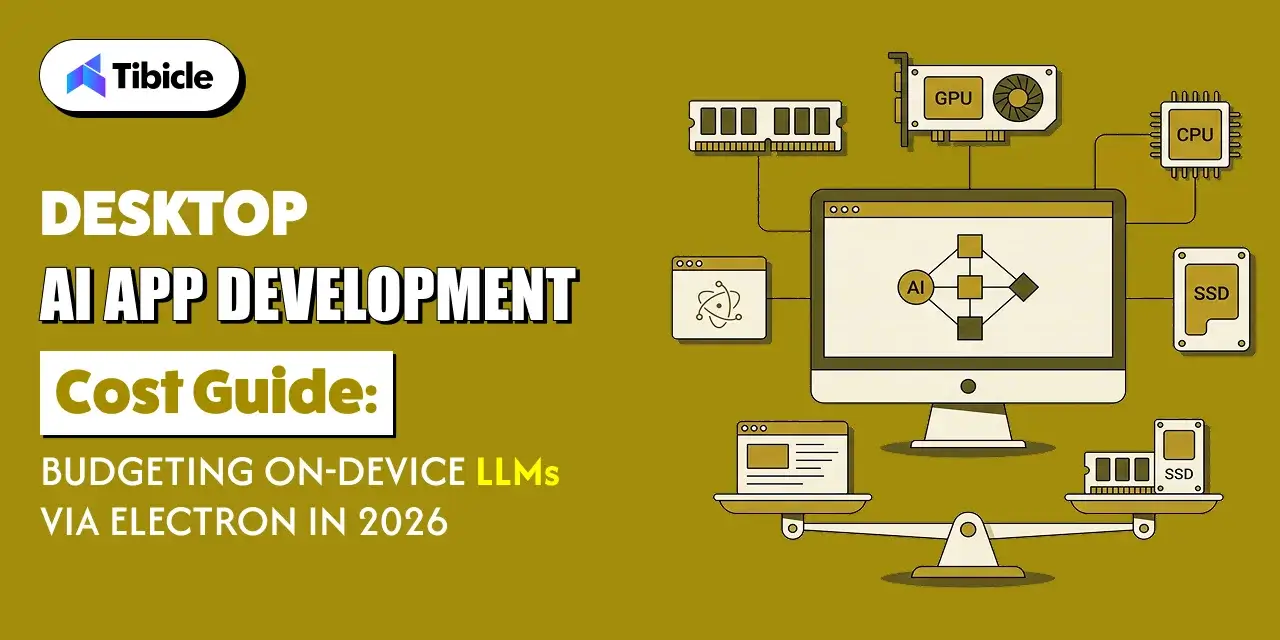
Desktop AI App Development Cost Guide: Budgeting On-Device LLMs via Electron in 2026
What This Guide Covers Who this is for: CTOs, product managers, and founders at SaaS and software companies planning a desktop app with local AI features, or adding on-device inference to an existing Electron product for desktop ai app development cost. Search intent: Understand desktop AI app development cost, including on-device LLM integration cost, hardware […]
08 Oct 2026 | Dhairya Dadhania
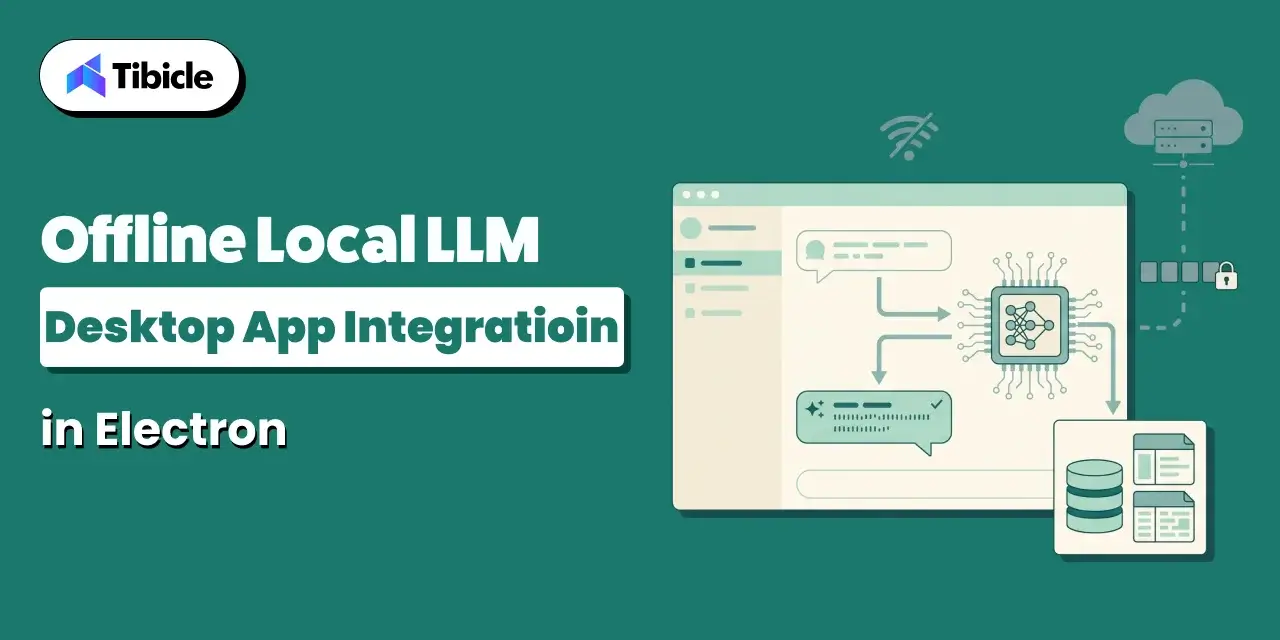
Offline Local LLM Desktop App Integration in Electron
What This Guide Covers Who this is for This guide is intended for engineering leads, staff engineers, and technical founders building or maintaining Electron-based desktop applications that must function without a constant connection, particularly teams undertaking offline local LLM desktop app integration to add on-device inference. It is also relevant to product managers scoping offline […]
07 Oct 2026 | Aditya Changlani
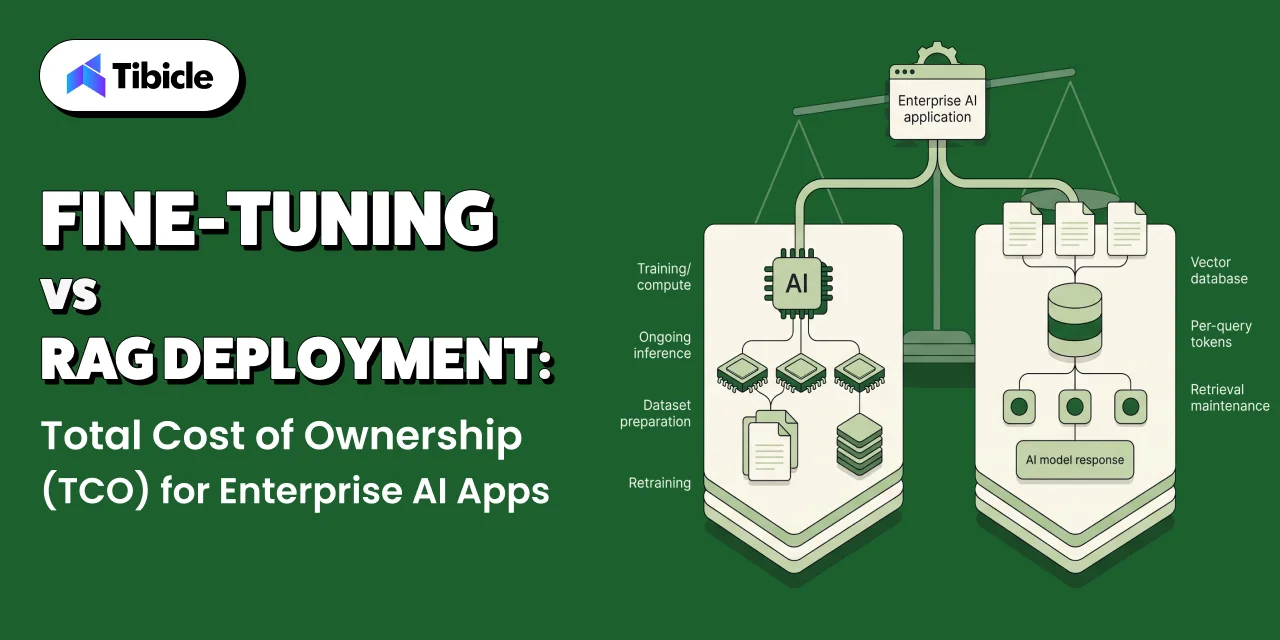
Fine-Tuning vs. RAG Deployment: Total Cost of Ownership (TCO) for Enterprise AI Apps
What This Guide Covers Who this is for Commercial investigation. The reader is comparing two viable technical approaches before a budget or architecture decision, not looking for a definition of either term. They want numbers, a framework, and a clear answer on when each approach wins on cost. Search intent Enterprise engineering leads, ML platform […]
05 Oct 2026 | Aditya Changlani
Got an Idea? Get FREE Consultation
In our world, there's no such thing as having too many clients

Email
tea@tibicle.com

Phone
+91 9724922880