
Flutter vs React Native in 2026: Which One to Choose

Apr 01, 2026

Read in 2 Minutes
Table of Contents
- Introduction
- What Changed in Flutter vs React Native in 2026 That Everyone Ignored
- Flutter vs React Native Performance in 2026: Actual Benchmark Numbers
- Flutter vs React Native for App Development: The Cost and Hiring Truth
- Ecosystem Maturity and Long-Term Maintenance in Flutter vs React Native Comparison
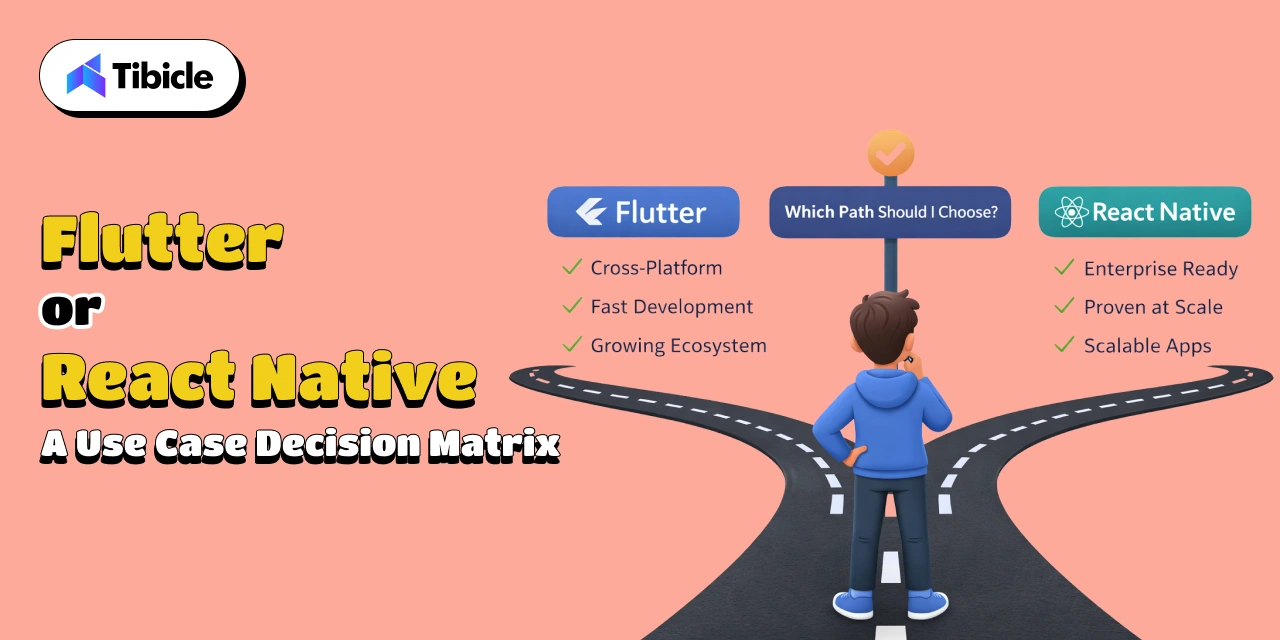
- Flutter or React Native: A Use Case Decision Matrix
- Conclusion
Introduction
The Flutter vs React Native debate in 2026 is no longer about which one is better. Instead, it’s about which one fits your use case.
According to 2026 forecasts, Flutter holds roughly 46% of the cross-platform market, while React Native sits between 35% and 38%. However, both frameworks continue to power production-ready apps across industries every day.
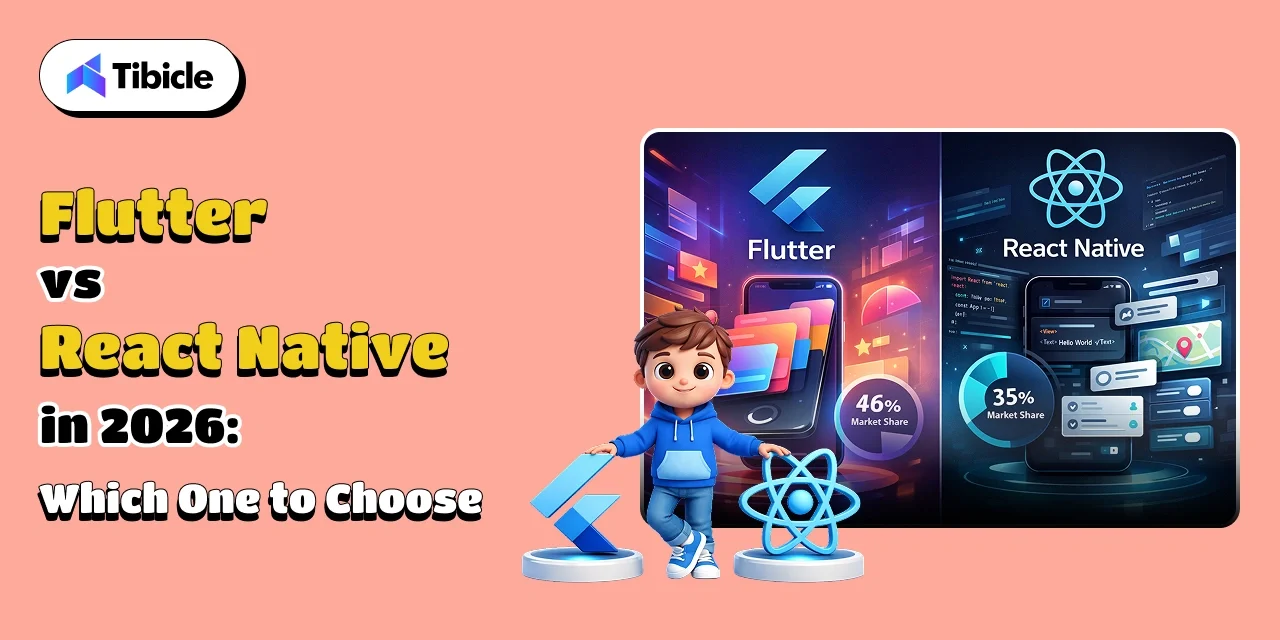
Moreover, what’s more interesting is how the performance gap has significantly narrowed. As a result, the old arguments around speed and efficiency are no longer as decisive as they once were.
A few key indicators:
- Flutter has 170,000+ GitHub stars, while React Native has around 121,000
- Stack Overflow’s 2025 survey shows Flutter usage at 42% vs React Native at 38%
This guide breaks down the real differences across performance, cost, ecosystem, and use cases so you can choose without second-guessing.
What Changed in Flutter vs React Native in 2026 That Everyone Ignored
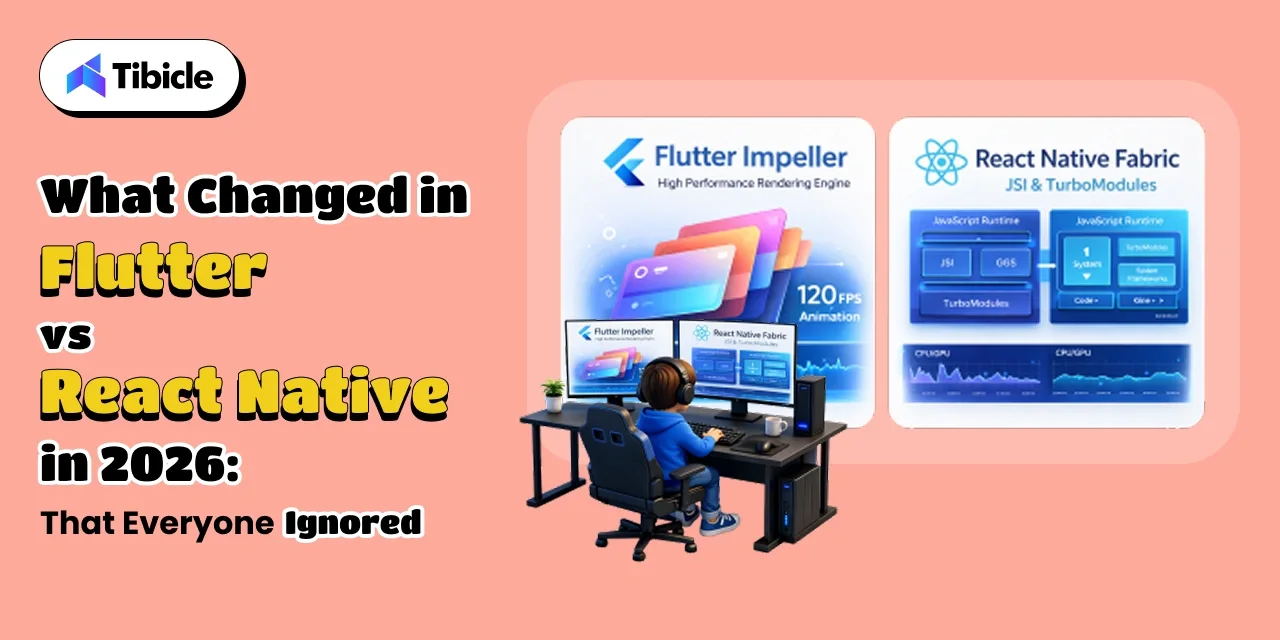
Instead of surface-level feature comparisons, the real shift in cross platform app development comes from architecture upgrades.
Flutter 3.38, Impeller, and WebAssembly Go Stable
Flutter has evolved rapidly with Flutter 3.38. Additionally, it introduces major upgrades such as the Impeller rendering engine and WebAssembly support.
- Full adoption of the Flutter Impeller rendering engine
- Stable 120fps rendering on iOS and Android
- Precompiled shaders eliminate first-render lag (jank)
- WebAssembly (Wasm) support is now production-ready
- Compliance with Google Play requirements via NDK r28
As a result, Flutter now controls every pixel on screen, making it extremely powerful for design-heavy and animation-rich apps. Therefore, Flutter app development becomes more predictable across devices.
This makes Flutter app development more predictable across devices compared to traditional native rendering differences.
React Native’s Bridgeless New Architecture Is Now Production-Ready
React Native has undergone one of its biggest transformations:
- Introduction of the Fabric Renderer
- TurboModules for faster module loading
- Replacement of the old bridge with JSI (JavaScript Interface)
- Fully bridgeless architecture
This eliminates the traditional bottleneck between JavaScript and native layers, significantly improving performance.
As a result, React Native app development now offers:
- Lower latency
- Faster UI updates
- Better scalability for complex apps
Flutter vs React Native Performance in 2026: Actual Benchmark Numbers
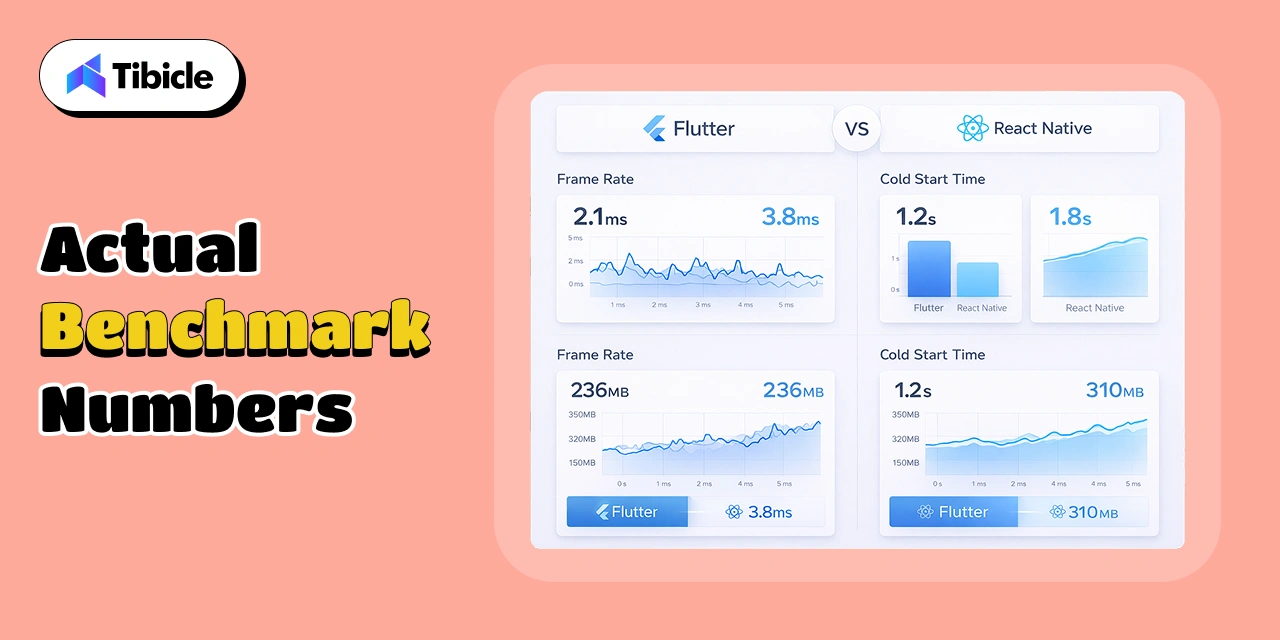
When it comes to Flutter vs React Native performance, generic claims don’t matter anymore, real benchmarks do.
Frame Rate and Rendering Speed Head-to-Head
- Flutter: 2.1ms per frame
- React Native: 3.8ms per frame
Flutter still leads due to its direct rendering approach via Impeller, while React Native depends on native components, which vary across platforms.
Cold Start Time and Memory Behaviour
- Flutter cold start: 1.2 seconds
- React Native cold start: 1.8 seconds
Both frameworks have improved memory handling significantly, especially on mid-range Android devices after recent updates.
👉 Reality check:
For most apps like e-commerce, booking, or content platforms, this difference is barely noticeable to users.
Flutter vs React Native for App Development: The Cost and Hiring Truth
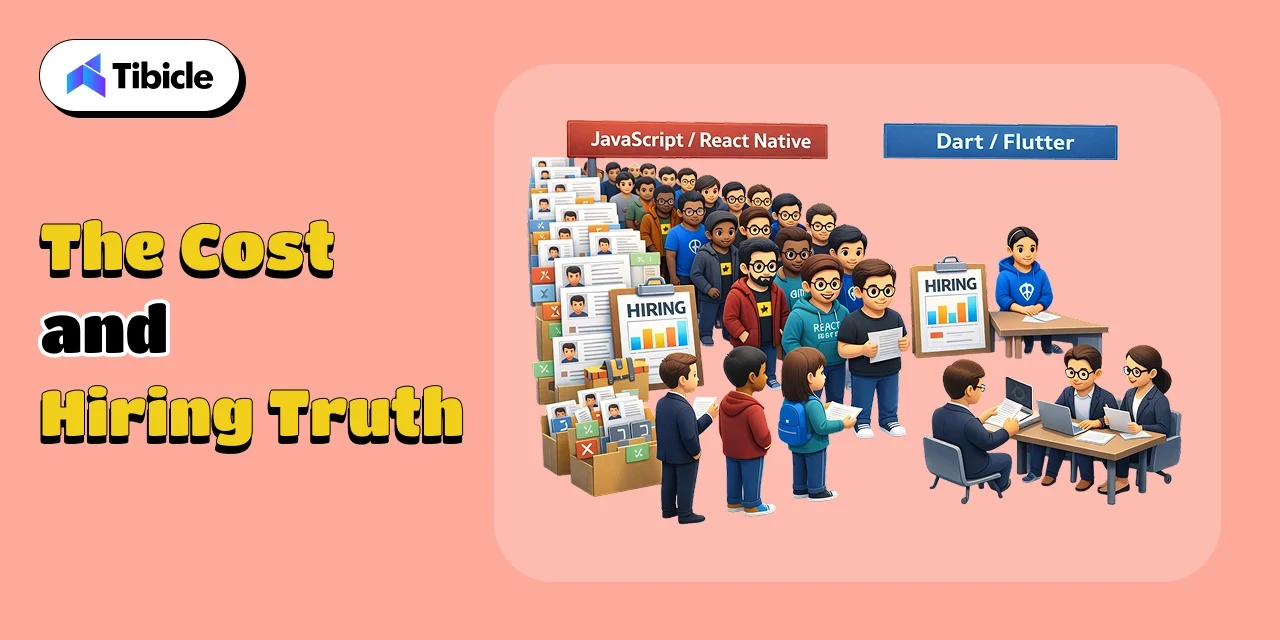
Beyond performance, the biggest factor in mobile app framework comparison is cost and developer availability.
Developer Availability by Market
- JavaScript developers outnumber Dart developers by 4x
- React Native job postings are 2x higher in North America
This directly impacts:
- Hiring speed
- Salary costs
- Team scalability
React Native clearly wins in developer availability.
Time to Market Across Project Types
- Flutter MVP: 12–16 weeks
- Native development: 20–28 weeks
Flutter enables faster builds due to:
- Single codebase
- Rich pre-built widgets
- Less dependency on platform-specific UI
However, teams must factor in Dart onboarding time when choosing Flutter.
Ecosystem Maturity and Long-Term Maintenance in Flutter vs React Native Comparison
Choosing the best framework for mobile app development isn’t just about launching, it’s about scaling.
Plugin Ecosystem Health in 2026
- Flutter: 52,000 packages on pub.dev
- React Native: Access to npm (largest ecosystem globally)
Flutter offers:
- Better consistency
- Higher-quality official plugins
React Native offers:
- Larger ecosystem
- But inconsistent plugin maintenance
What Scaling Looks Like After 18 Months
Here’s where things get real:
- Some companies have migrated from Flutter to React Native at scale
- Reasons include:
- Limited native SDK support
- Shortage of senior Dart developers
React Native becomes stronger in:
- Long-term maintenance
- Enterprise-level scaling
Flutter or React Native: A Use Case Decision Matrix
This is where the real decision happens.
Cases Where Flutter Wins
Choose Flutter if you need:
- Pixel-perfect UI consistency across platforms
- Heavy animations or custom design systems
- Multi-platform apps (mobile, web, desktop)
- Strong performance for data-heavy apps
Flutter’s Isolates make it excellent for:
- Image processing
- Large data parsing
- Background computations
Cases Where React Native Wins
Choose React Native if you need:
- Deep native integrations (fintech, healthcare)
- Faster hiring and onboarding
- Long-term scalability
- Strong community and enterprise support
It’s ideal for:
- E-commerce platforms
- Banking apps
- Large-scale production systems
Conclusion
The Flutter vs React Native comparison in 2026 comes down to two clear choices:
- Flutter → Best for design control, UI consistency, and multi-platform reach
- React Native → Best for developer availability, native integrations, and scalability
Most importantly:
👉 Performance is no longer the deciding factor.
Instead, your decision should depend on:
- Your team’s expertise (Dart vs JavaScript)
- Project complexity
- Long-term maintenance strategy
FAQs
Is Flutter faster than React Native in 2026?
Yes, Flutter still leads in raw rendering performance. Benchmarks show 2.1ms per frame vs 3.8ms, but both are fast enough for most apps.
Which framework has more job opportunities in 2026?
React Native leads with roughly 2x more job postings, especially in the US and Canada. The JavaScript ecosystem remains significantly larger.
Can Flutter apps target web and desktop in 2026?
Yes. Flutter supports mobile, web, and desktop from a single codebase. WebAssembly support is now stable, making web apps production-ready.
Is React Native New Architecture stable for production?
Yes. The bridgeless architecture with Fabric and TurboModules is production-ready and eliminates previous performance bottlenecks.
Which framework is better for fintech or healthcare apps?
React Native is generally preferred due to:
- Strong native SDK support
- Better compliance capabilities
- Larger developer pool
How many packages does Flutter have compared to React Native?
Flutter has around 52,000 packages on pub.dev. React Native uses npm, which is larger but less consistent for mobile-specific plugins.
Schedule A Developer Interview And Get 15 Days Risk-Free Trial
Schedule a Call

Relevant Blog


3 Best Restaurant Management App for 2026

Prejin Nadar


Mobile AI App Development Company Guide

Diya Koradiya
Written by
Prejin Nadar
Business Development Executive
I’m Prejin Nadar, a Business Development Professional at Tibicle LLP, where I help businesses move from ideas to execution with smart digital solutions. I focus on uncovering real opportunities, simplifying decisions, and building long-term client partnerships that drive measurable growth.
Related posts
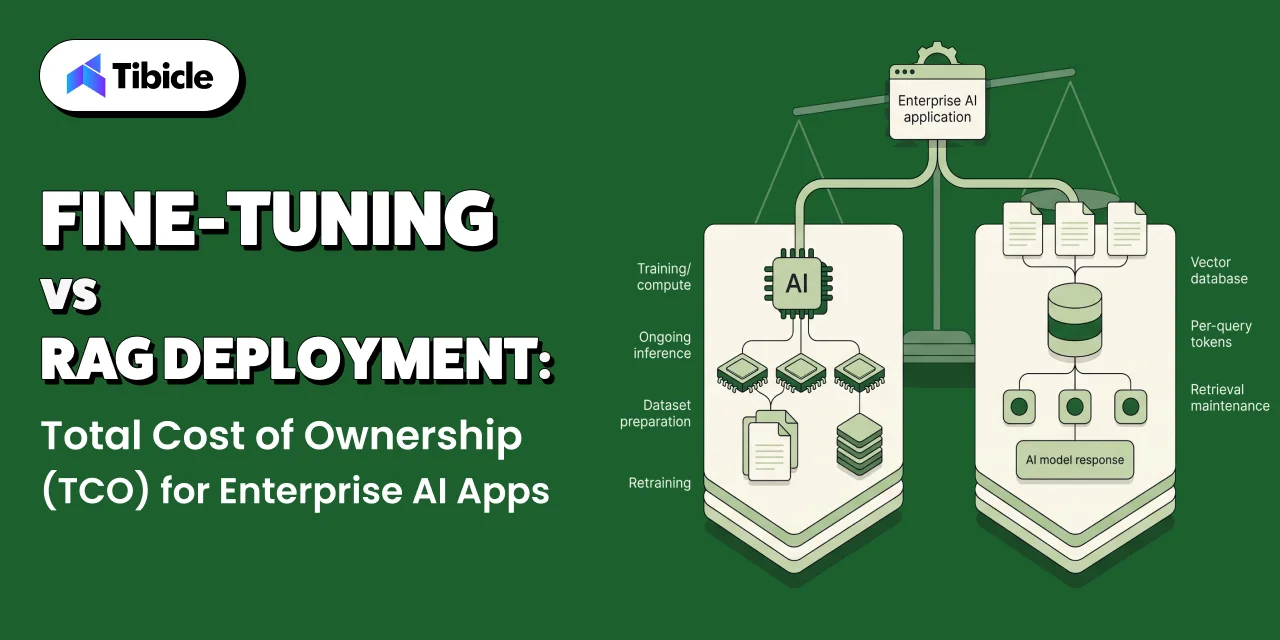
Fine-Tuning vs. RAG Deployment: Total Cost of Ownership (TCO) for Enterprise AI Apps
What This Guide Covers Who this is for Commercial investigation. The reader is comparing two viable technical approaches before a budget or architecture decision, not looking for a definition of either term. They want numbers, a framework, and a clear answer on when each approach wins on cost. Search intent Enterprise engineering leads, ML platform […]
05 Oct 2026 | Aditya Changlani
3 Best Restaurant Management App for 2026
What This Guide Covers Who this is for: This guide is for restaurant management app operators, multi-location F&B group owners, and general managers evaluating whether a restaurant management app can reduce labor costs, food waste, and manual reconciliation time. Search intent: Comparison and decision. The reader is not researching what restaurant management software is. They […]
25 Sep 2026 | Prejin Nadar
Mobile AI App Development Company Guide
What This Guide Covers Who this is for: Mobile AI App Development company for B2B SaaS targeting founders, CTOs, product leaders, and technology decision-makers. It is particularly relevant for teams deciding between an offshore vs nearshore AI engineering team, assessing whether an external partner has the technical capability to take an AI feature from proof […]
24 Sep 2026 | Diya Koradiya
Got an Idea? Get FREE Consultation
In our world, there's no such thing as having too many clients

Email
tea@tibicle.com

Phone
+91 9724922880