
10 Hiring Developers Mistakes That Cost You Great Candidates

Apr 20, 2026

Read in 6 Minutes
Table of Contents
Introduction
Key Takeaway: The hiring developer process is broken on both sides. 74% of developers say finding a job is difficult despite rising demand, and 77% of organizations struggle to fill full-time roles . A single bad tech hire costs at least 30% of first-year earnings, often exceeding $240,000 for senior roles. Companies that prioritize speed and candidate communication see 66% of hires accept offers based on the recruitment experience alone.
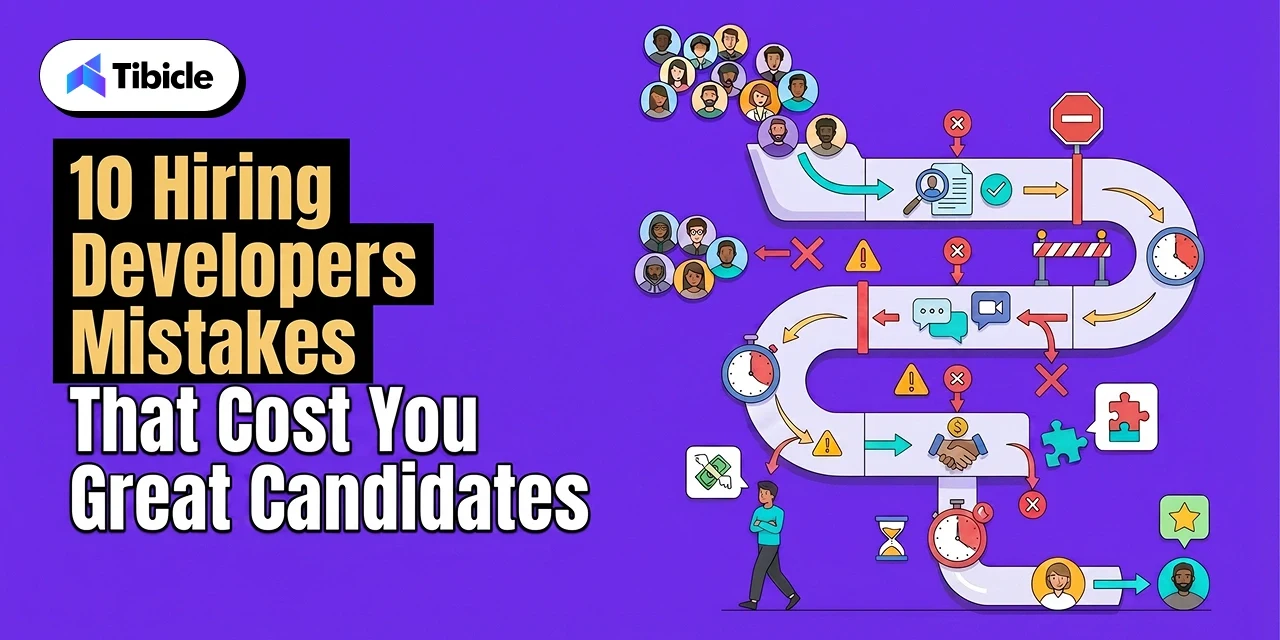
Hiring developer talent through a traditional process now averages over four months from job post to first line of production code. That is eight missed sprints, eight rounds of existing engineers covering gaps, and eight opportunities for a competitor to ship first. About 60% of candidates abandon applications because processes are too long or complex. Another 52% of job seekers decline offers because of poor candidate experience during the recruitment process.
The problem is not a talent shortage. The problem is a process problem. This guide breaks down the 10 hiring developer mistakes that drain your pipeline and explains how to fix each one for a competitive 2026 market.
Why Is Hiring Developer Talent Taking Over 4 Months?
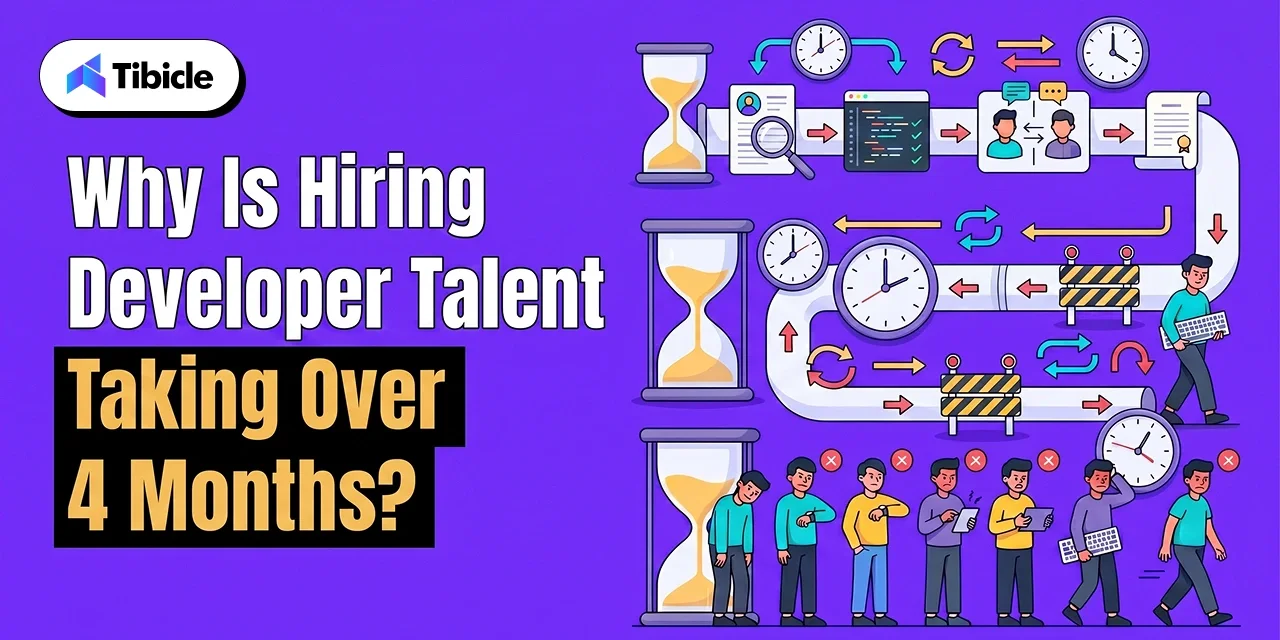
Traditional hiring developer pipelines now average over four months from job posting to first day. This creates roadmap delays, team overload, and a shrinking pool of available candidates. Companies that restructure their hiring developer workflow around structured interviews and clear timelines consistently close roles in 10 to 14 days.
1. The Timeline of Traditional Software Engineer Hiring
The 12 to 19 week hiring developer cycle breaks into predictable, compounding delays. Resume screening takes 2 to 3 weeks because most teams lack structured scoring criteria. Recruiters re-review the same profiles without clear rubrics, stacking unnecessary time onto the front end of every search.
Multi-stage interview loops add 4 to 6 weeks. Interviewers frequently overlap on the same skill areas instead of dividing evaluation responsibilities across rounds. A typical software engineer hiring loop covers algorithmic ability three separate times while skipping system design or collaboration evaluation entirely.
For senior roles, the hiring developer timeline gets worse. Interview rounds for senior tech candidates can stretch to 71 days, driven by multi-panel reviews and system design evaluations where scheduling alone costs weeks. One declined offer at this stage forces a near-complete restart. That restart begins from zero in a market where top candidates stay available for roughly 10 days before accepting elsewhere.
2. Hidden Costs of Slow Recruitment Velocity
A bad hiring decision costs 30% of annual earnings, according to the U.S. Department of Labor. For a senior developer earning $160,000 per year, that is $48,000 at minimum. When you factor in recruitment fees, onboarding waste, lost productivity, and restarting the entire search, total losses for senior positions can exceed $240,000.
The cost of a vacant seat compounds daily. Every sprint without a developer means features that do not ship and revenue that does not arrive. Your existing engineers absorb the extra load, increasing their burnout risk and compounding your developer retention problem. When 40% of developers already plan to leave their current role within a year, overloading your remaining team accelerates the cycle of loss.
Companies that restructure their hiring developer velocity using pre-vetted talent acquisition networks have reduced the four-month average to 10 to 14 days. Understanding these costs is the starting point. Identifying the specific hiring developer mistakes that inflate them is where the real progress happens.
10 Hiring Developer Mistakes That Cost You, Great Candidates
Successful software engineer hiring requires removing the friction points that quietly push qualified talent out of your pipeline. Each of these ten hiring developer mistakes inflates cost, extends timelines, and hands your best candidates to competitors who move faster.
Common Hiring Developer Mistakes to Avoid
- Ghosting and slow feedback loops: A recruiter who goes silent for five days after a technical interview process round sends a clear message: this company does not value your time. The fix is a 48-hour feedback SLA at every stage. Assign a single point of contact per candidate who sends updates, even when the update is “still in review.” Speed of response is a zero-cost differentiator that separates strong hiring developer pipelines from broken ones.
- Lengthy application forms: Every field beyond the essentials is a decision point where a qualified developer chooses that your hiring developer process is not worth the effort. Trim applications to three components: resume upload, portfolio or GitHub link, and one short-answer question. Anything beyond that belongs in the interview, not the application. Shorter forms directly improve candidate experience and reduce the 60% drop-off rate documented by SHRM.
- Irrelevant technical tests: Algorithm puzzles that test LeetCode grinding instead of real debugging or feature building are filtering out your best candidates. 66% of developers want to be evaluated on real-world skills, not theoretical tests. The developers strongest at shipping production code are often the worst at timed abstract puzzles. Replace these with take-home projects scoped to 60 to 90 minutes, or pair programming sessions that mirror actual sprint work for better software engineer hiring outcomes.
- Hiding salary ranges: Publishing pay bands is not a risk. Salary transparency in every listing removes the single largest source of late-stage drop-off and wasted interview hours. CareerPlug found that 47% of candidates prefer to see salary information before applying. The candidates who opt out because of a published range were never going to accept your offer. Withholding pay wastes time for both sides and represents a core tech recruitment error.
- Excessive interview rounds: Cap your hiring developer process at three rounds: one screening call, one technical deep-dive, and one culture or leadership fit conversation. Multi-panel marathons stretch the software engineer hiring timeline to 71+ days for senior roles. If you cannot determine fit in three rounds, the problem is your evaluation criteria, not the candidate.
- AI over-reliance in screening: Recruitment automation filters reject qualified developers before a human reviews their profile. Keyword-matching ATS systems penalize non-traditional career paths, career-changers, and candidates who describe the same skills with different terminology. A strong hiring developer pipeline and effective software engineer hiring require human judgment at the screening stage. Use AI to rank and surface, not to auto-reject.
- Ignoring non-traditional platforms: Developers build reputations through GitHub repositories, open-source contributions, Stack Overflow answers, and hackathon results. If you are hiring developer sourcing only to scan LinkedIn and job boards, you are missing where the strongest engineers actually demonstrate their skills. Add GitHub profile review and open-source contribution checks to your sourcing workflow as standard practice.
- Lack of innovation signals: Unsatisfying work is one of the top reasons developers switch companies, with 40% planning to leave their current role within a year. Your hiring developer job postings need to highlight the specific technical problems candidates will solve, the system design challenges they will face, and the impact their work will have. Listing a tech stack without describing the problems it serves tells a developer nothing about whether the work will challenge them.
- Misaligned job descriptions: 77% of organizations reported difficulty recruiting for full-time positions in 2024, with skills mismatches and candidate expectations being top contributors. This is a tech recruitment error problem that starts before a single application arrives. Write descriptions based on the first 90 days of actual work, not aspirational wishlists. If you list 15 required skills for a mid-level role, you are describing a staff engineer and pricing yourself out of realistic candidates.
- Rigid work location policies: A restrictive remote work policy drives developers away. SHRM data shows that organizations with flexible work arrangements report less trouble recruiting than those without (22% versus 29%). Developers are not just switching companies for flexibility. They are leaving the industry entirely when employers refuse to offer it. Offering location flexibility is one of the lowest-cost, highest-impact changes any company can make to their hiring developer strategy. If the role can be performed remotely for even three days a week, say so in the listing.
Quick-Reference: 10 Hiring Developer Mistakes and Fixes
| # | The Recruitment Error | The Cost to Your Pipeline | The Actionable Fix |
| 1 | Ghosting & Slow Feedback | 52% of candidates decline offers due to poor recruitment experience (CareerPlug, 2024). | Enforce a 48-hour feedback SLA and assign a single point of contact per candidate. |
| 2 | Lengthy Applications | 60% of applicants abandon complex forms. Every extra field is an exit ramp (SHRM 2024). | Limit applications to three items: resume upload, GitHub/portfolio link, and one short-answer question. |
| 3 | Irrelevant Tech Tests | 66% of developers want real-world evaluations, not theoretical puzzles (HackerRank, 2025). | Replace algorithm puzzles with 60-90 minute practical take-home projects or pair programming sessions. |
| 4 | Hiding Salary Ranges | 47% of candidates prefer salary info before applying. Missing pay data causes late-stage drop-off (CareerPlug, 2025). | Publish realistic compensation bands in the job description to reduce wasted interview hours. |
| 5 | Excessive Interview Rounds | Multi-panel marathons stretch the software engineer hiring timeline to 71+ days (InterviewPal, 2025). | Cap the process at 3 rounds: a screening call, a technical deep-dive, and a leadership/culture fit discussion. |
| 6 | AI Over-Reliance in Screening | Automated keyword-matching auto-rejects capable developers with non-traditional backgrounds. | Use AI tools strictly to rank and surface candidates, reserving human judgment for screening decisions. |
| 7 | Ignoring Niche Platforms | Relying solely on LinkedIn and standard job boards misses where real building happens. | Actively source talent through GitHub repositories, Stack Overflow, and open-source contributions. |
| 8 | Vague Innovation Signals | Fails to engage the 40% of developers actively seeking more satisfying, challenging work (HackerRank, 2025). | Highlight specific system design challenges and technical problems they will solve, not just the tech stack. |
| 9 | Misaligned Job Descriptions | Aspirational wishlists (e.g., demanding 15 skills for a mid-level role) price you out of the market (SHRM 2024). | Write the job description based strictly on the required output for the first 90 days of actual work. |
| 10 | Rigid Remote Policies | Developers will abandon your pipeline (or the industry entirely) for lack of flexibility. | Explicitly state location flexibility upfront. If the job can be done remotely 3 days a week, put it in the listing. |
Fixing even three of these hiring developer mistakes will show measurable improvements in time to hire and offer acceptance within a single quarter. The next section explains which of these tech recruitment errors cause the most damage and how to prioritize fixes.
What Tech Recruitment Errors Cause 60% of Candidates to Leave?
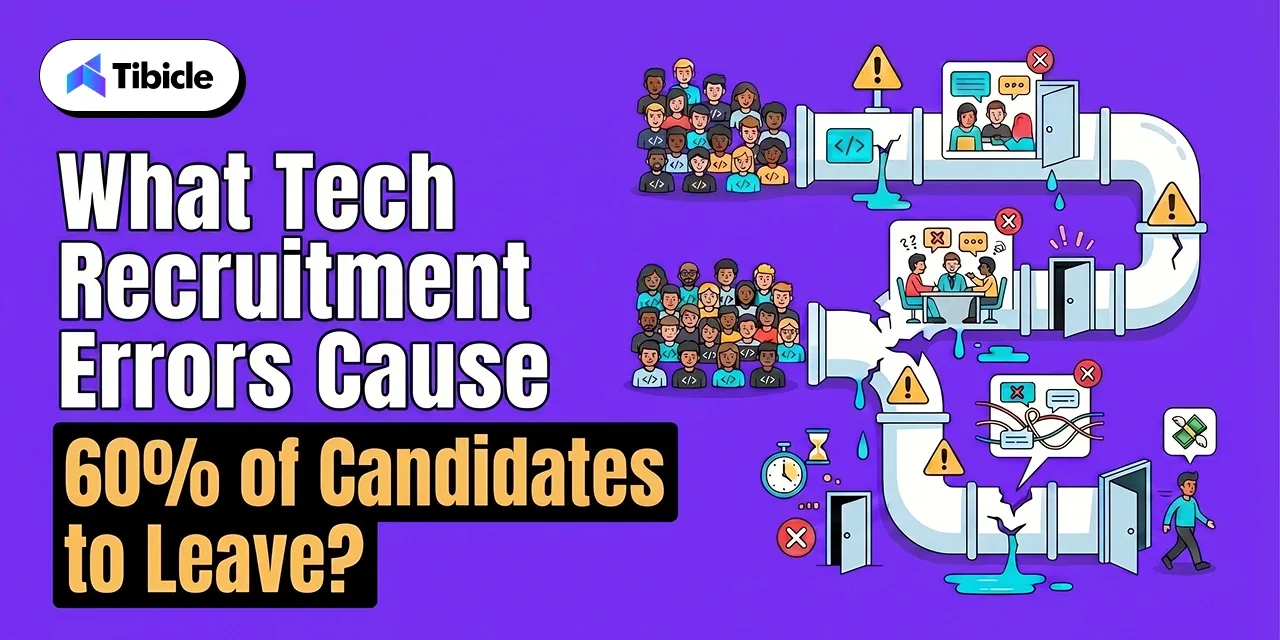
Lengthy or complex application processes cause 60% of candidates to abandon their applications before completion. Speed and responsiveness are what separate companies that close top talent from those that lose them to tech recruitment errors.
1. The Impact of Ghosting and Poor Communication
Silence from recruiters does not just lose one candidate. It damages employer branding across your entire talent acquisition pipeline. Candidates who have negative hiring developer experiences share them. 52% of U.S. job seekers report being ghosted after an interview, and those candidates tell their networks. 65% of ghosted candidates say the experience made them less likely to reapply or refer others.
The other side of this equation is equally powerful. Gallup found that two-thirds of recent hires accepted offers primarily because of an exceptional recruitment experience. This makes the candidate experience a direct revenue lever, not a feel-good metric.
Here is what works for hiring developer communication: assign one recruiter as the single point of contact per candidate. That person sends status updates at every stage, even when the update is “still under review.” Candidates who feel informed stay in the pipeline. Candidates who feel ignored withdraw and tell five colleagues about it.
2. Friction in the Application Stage
The 60% drop-off rate is a process design problem with a process design solution. Hiring developer application forms with fewer than 12 fields consistently outperform longer ones in completion rates. Every field you add is a decision point where a qualified developer decides your hiring developer process is not worth the effort. Keep the application short and move the detailed questions to the technical interview process stage, where the candidate has already shown interest.
Withholding compensation data creates friction that filters out the majority of applicants before any meaningful conversation happens. 47% of job seekers want salary details before applying. Pair short forms with published salary bands, and you address two of the largest sources of tech recruitment errors in one move.
The candidate experience throughout this stage shapes whether a developer sees your hiring developer pipeline as organized and respectful, or bureaucratic and slow. That first impression sticks. It determines whether they accept your offer or go with the company that made them feel valued from the first click.
How Tibicle Strengthens Your Hiring Developer Pipeline
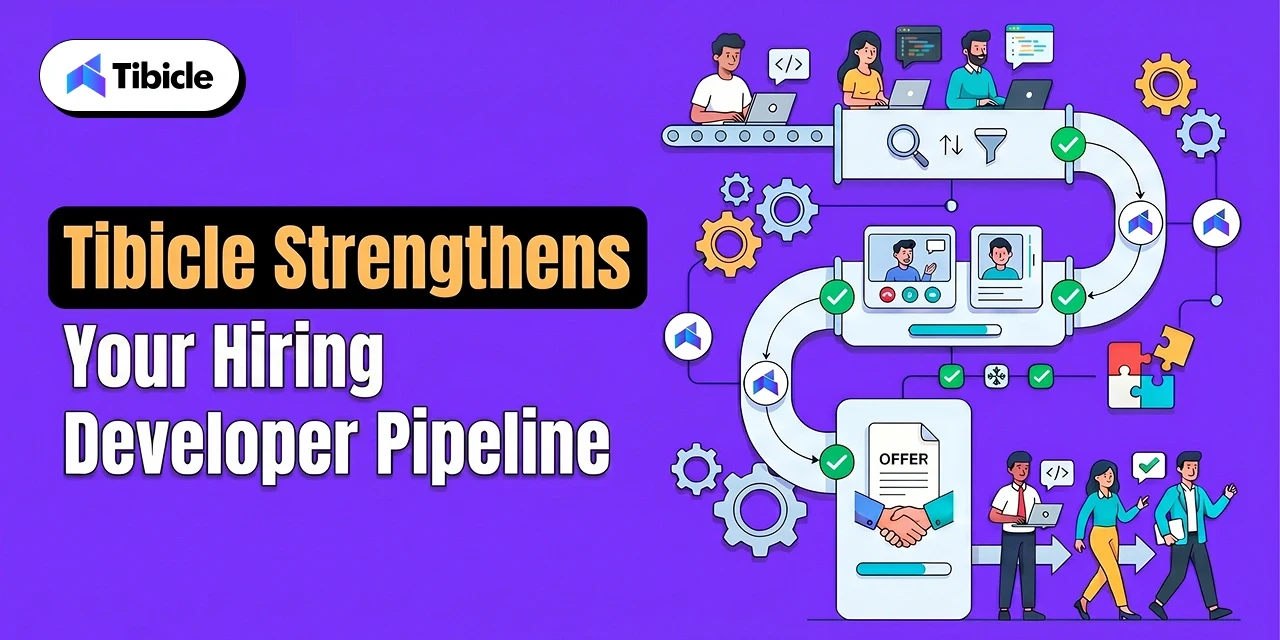
Tibicle is an end-to-end product engineering agency that removes the hiring developer bottleneck between open roles and shipping code. With 50+ qualified professionals and 62+ delivered global projects, Tibicle lets you skip the four-month wait and plug senior engineers directly into your sprints.
- Direct senior engineer collaboration: No proxy account managers or junior relays. You work directly with the engineer writing the code in an accountable agile environment.
- Cross-platform web and app engineering: React Native, Flutter, and Node.js deployments that reduce development time and optimize budgets across mobile and web ecosystems.
- 90% customer retention rate: A delivery track record that proves team fit and consistency across 62+ global projects.
Stop losing candidates to a broken hiring developer process.
Book a 15-minute discovery call with Tibicle to see how a dedicated engineering team can unblock your roadmap this quarter.
Conclusion
Hiring developer talent in 2026 demands a shift from bureaucratic screening to candidate-first experiences. Eliminate friction like slow feedback loops, irrelevant coding assessments, and hidden salary ranges. That is how you reduce the four-month average and avoid the $240,000 cost of a bad hire.
Focus on transparency, speed, and respect for the candidate’s time. The companies that treat software engineer hiring and their hiring developer workflows as a product experience will win the best talent. Avoid the tech recruitment errors outlined above, and the results will follow.
Contact Tibicle to streamline your technical talent acquisition today.
FAQs
1. How much does a bad tech hire cost in 2026?
A bad hiring decision costs an average of 30% of the first-year earnings, per the U.S. Department of Labor. For senior software engineers or specialized roles, total losses from a flawed hiring developer process reach $240,000 when you include recruitment fees, lost productivity, and the full cost of restarting the search (SHRM 2024).
2. Why are developers abandoning job applications?
About 60% of developers abandon applications because of lengthy or complex forms (SHRM 2024). Another 47% prefer to see salary information before applying (CareerPlug, 2025). Missing compensation information is a major driver for high drop-off rates in the initial hiring developer screening stages.
3. How long does it take to hire a software engineer?
Traditional software engineer hiring takes over four months on average from job posting to start date (Ideaware, 2026). Entry-level roles may close in 40 days, but senior hiring developer loops often stretch to 71 days with multi-panel evaluations and system design reviews (InterviewPal, 2025).
4. Are technical assessments effective for senior developers?
Many assessments are failing their purpose. 62% of developers feel forced to overprepare for tests using skills they rarely apply on the job (HackerRank, 2025). Real-world project evaluations and pair programming sessions are more reliable for hiring developer decisions than timed algorithm puzzles. 66% of developers prefer evaluations based on real-world skills.
5. How can I improve my offer acceptance rate?
Two-thirds of recent hires accept offers based on the quality of the recruitment experience itself (Gallup, 2025). Reduce communication delays and make the technical interview process respectful and relevant. These two changes directly lower the 52% offer decline rate caused by poor candidate experience and improve software engineer hiring outcomes across the board.
6. What are the biggest tech recruitment errors companies make?
The top tech recruitment errors include ghosting candidates, hiding salary ranges, running excessive interview rounds, and relying on irrelevant coding assessments. These hiring developer friction points collectively cause over 60% of qualified candidates to exit the hiring developer pipeline before an offer is made.
Schedule A Developer Interview And Get 15 Days Risk-Free Trial
Schedule a Call

Relevant Blog
Building Private local AI Desktop App Development

Prejin Nadar


3 Best Restaurant Management App for 2026
Prejin Nadar

Mobile AI App Development Company Guide

Diya Koradiya
Written by

Recent Blogs
Building Private local AI Desktop App Development
What This Guide Covers Who this is for: US tech firms, SaaS companies, startups, CTOs, engineering managers, and product teams looking for experienced Electron.js developers for ongoing private local AI desktop app development and custom desktop application development. Search intent: Hiring and decision. This guide covers where to find Electron.js developers, how to evaluate their […]
3 Best Restaurant Management App for 2026
What This Guide Covers Who this is for: This guide is for restaurant management app operators, multi-location F&B group owners, and general managers evaluating whether a restaurant management app can reduce labor costs, food waste, and manual reconciliation time. Search intent: Comparison and decision. The reader is not researching what restaurant management software is. They […]
Mobile AI App Development Company Guide
What This Guide Covers Who this is for: Mobile AI App Development company for B2B SaaS targeting founders, CTOs, product leaders, and technology decision-makers. It is particularly relevant for teams deciding between an offshore vs nearshore AI engineering team, assessing whether an external partner has the technical capability to take an AI feature from proof […]
Got an Idea? Get FREE Consultation
In our world, there's no such thing as having too many clients

