Introduction
Cloud adoption is essentially universal. The Flexera 2026 State of the Cloud Report, based on a survey of 753 global cloud decision-makers, found that 94% of organizations are using public cloud in some capacity. The question that actually matters in 2026 is not whether to use the cloud. It is whether your organization can govern it.
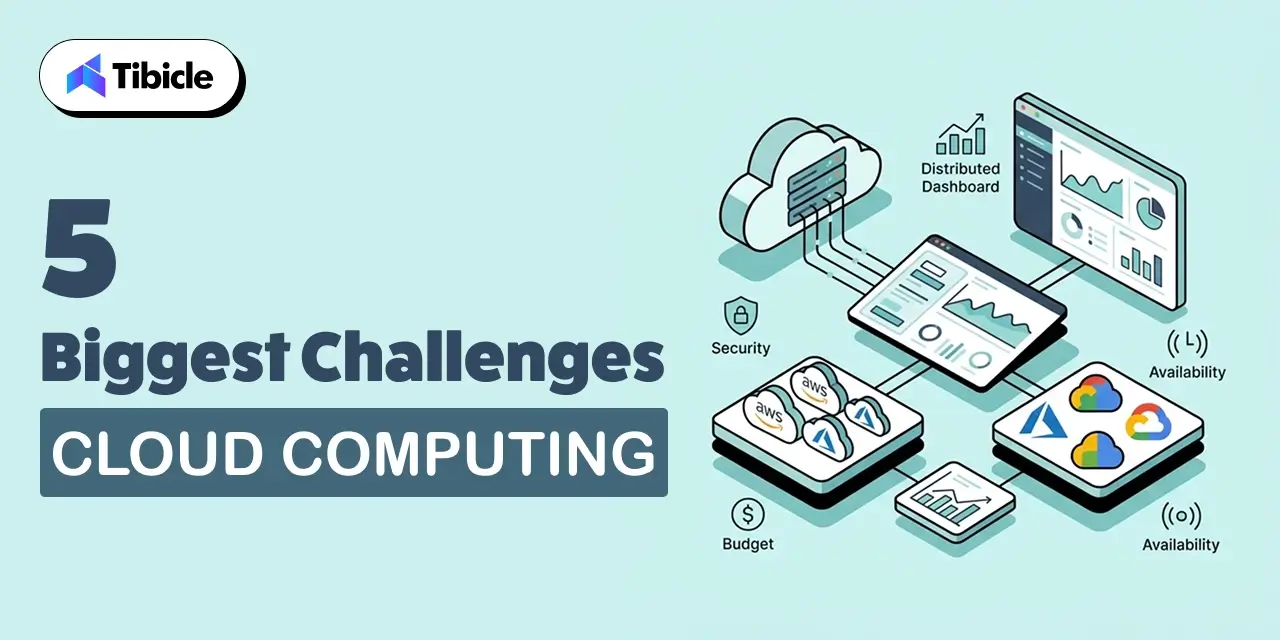
Cloud governance data tells a clearer story. 85% of respondents say managing cloud spend is their biggest challenge. 29% of estimated cloud spend is wasted, marking the first increase in five years. 73% of organizations are running hybrid environments, often by accident rather than by design. And GenAI workloads, now used by 58% of organizations through public cloud services, are introducing cost unpredictability that existing FinOps practices were not built to handle.
Today, We’ll talk about the five most significant challenges of cloud computing in 2026, what is driving each one, and the specific practices that are helping organizations fix them.
Challenge 1: Cloud Cost Management
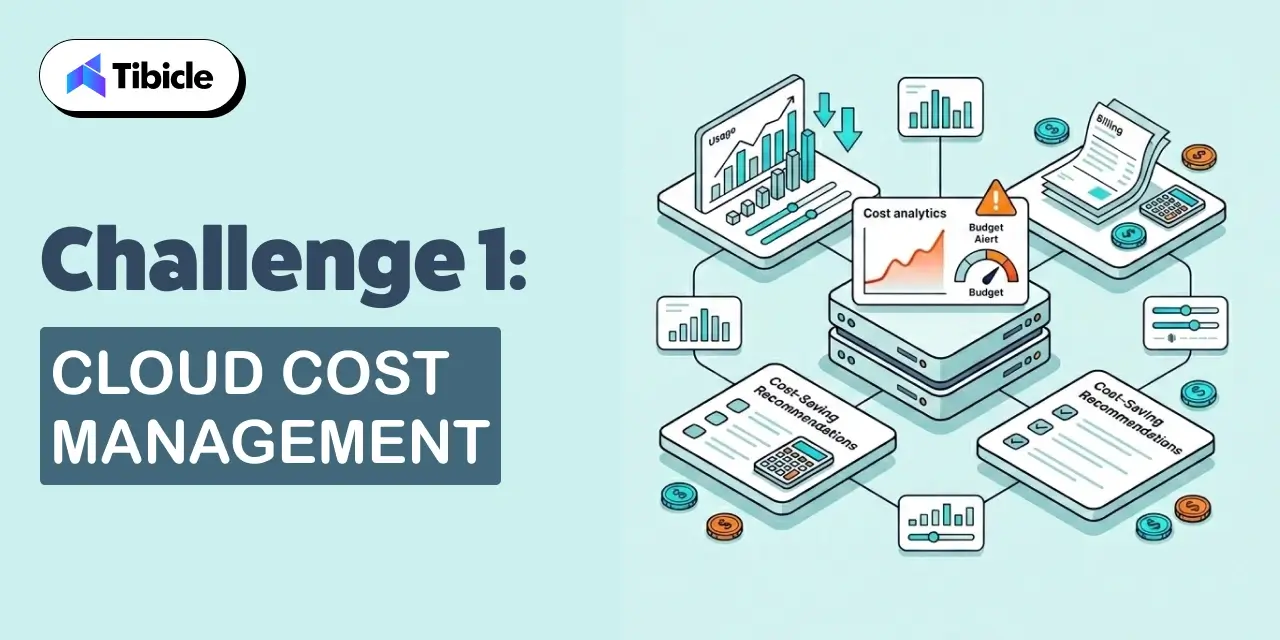
The challenges of cloud computing have been topped by cost management for three consecutive years in Flexera’s report. In 2026, 68% of organizations rank optimizing cloud costs as their top priority. More striking: 76% of large enterprises now spend more than $5 million per month on cloud services, and 17% exceeded their cloud budget in the past year.
The core problem is complexity compounding faster than governance practices can keep up. Cloud providers continuously add services. GenAI services cost more than traditional cloud options. Their usage patterns are also harder to predict. A team spinning up an AI workload for a prototype can generate unexpected charges that blow a quarterly budget in days.
Why Cloud Bills Keep Growing
Three patterns drive most cloud cost overruns in 2026. First, resource sprawl: teams provision infrastructure for peak loads and leave it running at baseline consumption. Cloud resources idle at full cost. Second, GenAI unpredictability: AI workloads do not consume compute linearly. A model inference call can cost 10x more than a standard API call, and usage spikes are difficult to anticipate. Third, fragmented ownership: in 73% of hybrid organizations, cost data sits across multiple clouds and on-premises systems with no unified view.
How to Fix It: FinOps Framework and Rightsizing
Organizations that have successfully reduced cloud cost challenges implement FinOps as an operational discipline, not a quarterly reporting exercise. The Flexera 2026 data shows 63% of organizations now have dedicated FinOps teams of various companies, up four points year over year. CCOE (Cloud Center of Excellence) adoption reached 71%.
The specific practices that move the needle: establish unit economics before scaling (cost per transaction, cost per user, cost per deployment), implement tagging governance so every resource has an owner, right-size instances quarterly using utilization data rather than original provisioning assumptions, and set automated anomaly detection on AI workload spend so unusual patterns trigger alerts within hours rather than at month-end billing review.
Challenge 2: Cloud Security and Misconfiguration Risks
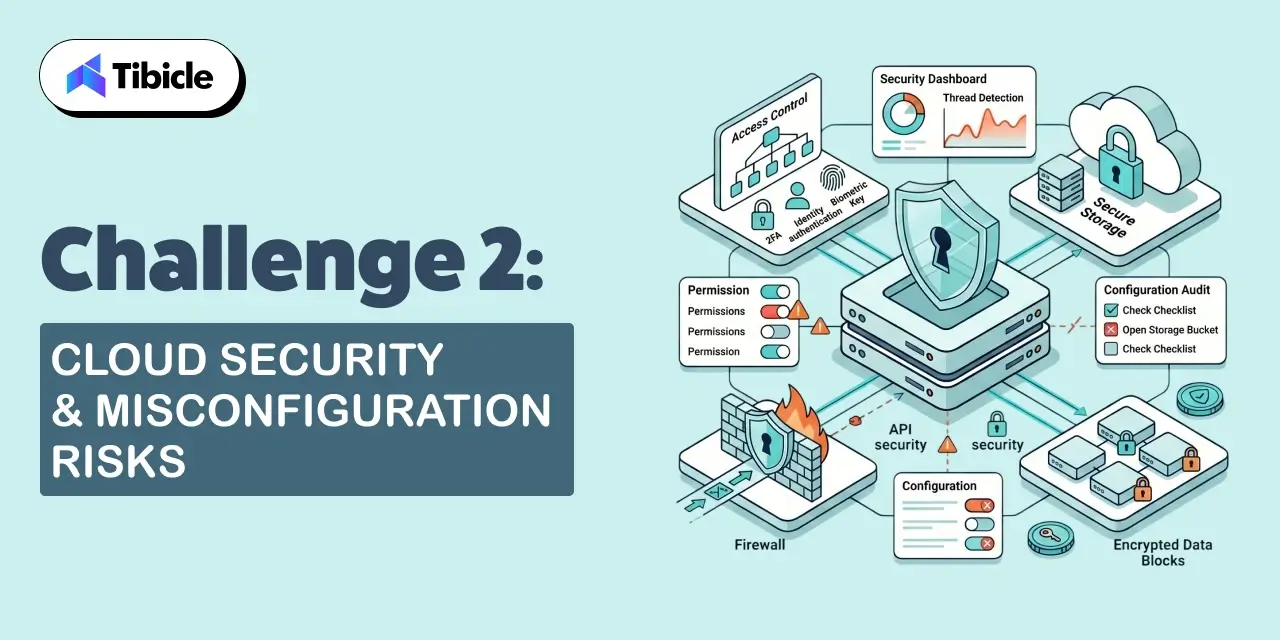
Security has historically been the top challenges of cloud computing, and in 2026 it remains the second-ranked challenge overall. For cloud-based AI initiatives specifically, security and compliance are the top concern for 53% of organizations, per Flexera 2026.
The dominant security challenge of cloud computing is not external attack. It is misconfiguration: resources accidentally exposed to the internet, over-permissive identity and access management policies, and data stored without encryption because the default configuration did not enforce it. Most cloud breaches in recent years trace to configuration errors, not zero-day exploits.
Why Misconfigurations Lead to Breaches
Cloud infrastructure moves fast. Developer teams provision resources to meet delivery timelines, and security review happens after the fact, if at all. A single misconfigured S3 bucket or an IAM role with wildcard permissions can expose sensitive data. The shared responsibility model means cloud providers secure the infrastructure; the organization is responsible for how it configures and uses it.
How to Fix It: Zero Trust Architecture and Policy as Code
Zero Trust architecture eliminates the assumption that anything inside the network perimeter is trustworthy. Every access request, regardless of source, is authenticated, authorized, and encrypted. NIST’s Zero Trust Architecture framework (SP 800-207) provides the foundational model.
Policy as Code takes security rules out of documentation and into automated enforcement. Tools like Open Policy Agent and HashiCorp Sentinel evaluate every infrastructure change against security policy before it deploys. A misconfiguration that would have passed manual review gets caught in the pipeline.
For AI-specific security challenges of cloud computing, 47% of large enterprises are establishing dedicated AI governance teams or leaders, per Flexera 2026. Treating AI workloads with distinct security profiles, including data lineage tracking and access controls on model inputs and outputs, is becoming standard practice.
Challenge 3: Cloud Compliance and Data Sovereignty
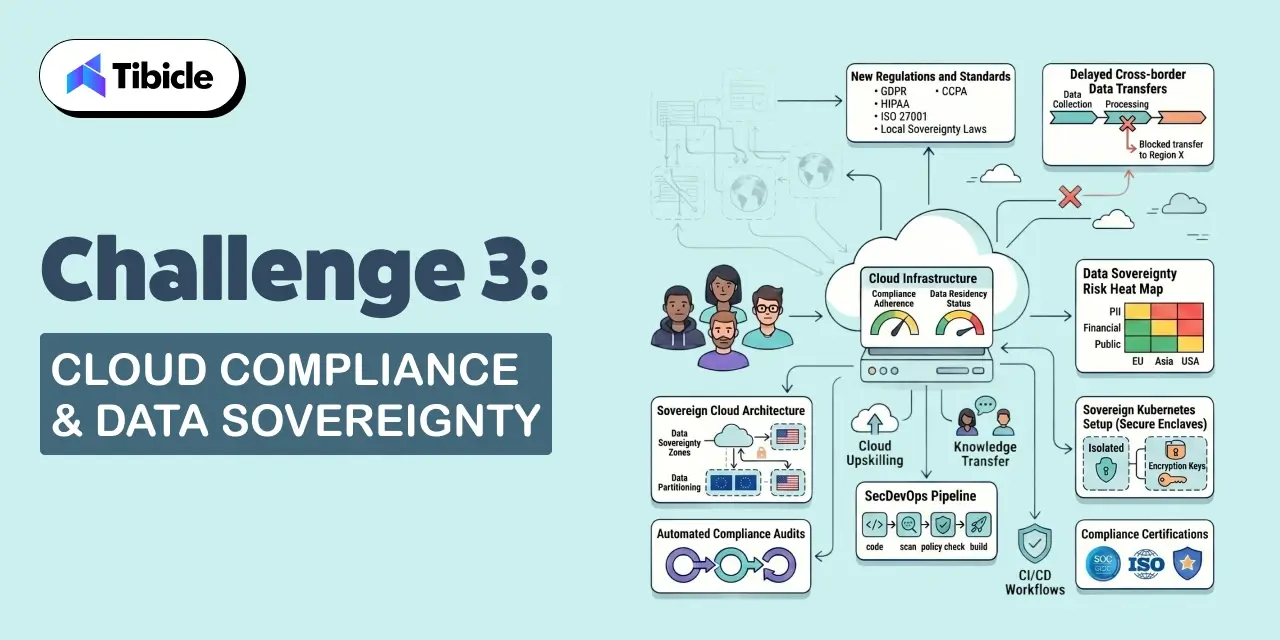
Compliance has become a more complex challenges of cloud computing as data sovereignty regulations have proliferated. GDPR in Europe, state-level privacy laws in the US, and sector-specific regulations like HIPAA and PCI DSS all impose requirements on where data can be stored, how it must be protected, and who can access it.
For multi-cloud environments, where 73% of organizations now operate, compliance verification is a manual, expensive, and error-prone process. Data that starts in a compliant region can drift to a non-compliant one through replication policies that nobody audited.
How to Fix It: Compliance as Code and Region-Aware Deployments
Compliance as Code applies the same policy-as-code approach to regulatory requirements. Data classification policies, retention requirements, and access restrictions are encoded as infrastructure constraints that run automatically against every deployment. Organizations that have implemented this report significant reduction in compliance audit preparation time because evidence is generated automatically rather than collected manually.
Region-aware deployment architecture ensures that data subject to specific sovereignty requirements never leaves its designated geography. This requires deliberate infrastructure design: separate data planes for different regulatory jurisdictions, and automated controls that prevent data movement across compliance boundaries. European organizations in the Flexera 2026 sample led globally in cloud sustainability initiative adoption (47% with defined programs), signaling that governance maturity is broadly stronger in regulated markets.
Challenge 4: Cloud Skills Gap and Talent Shortage
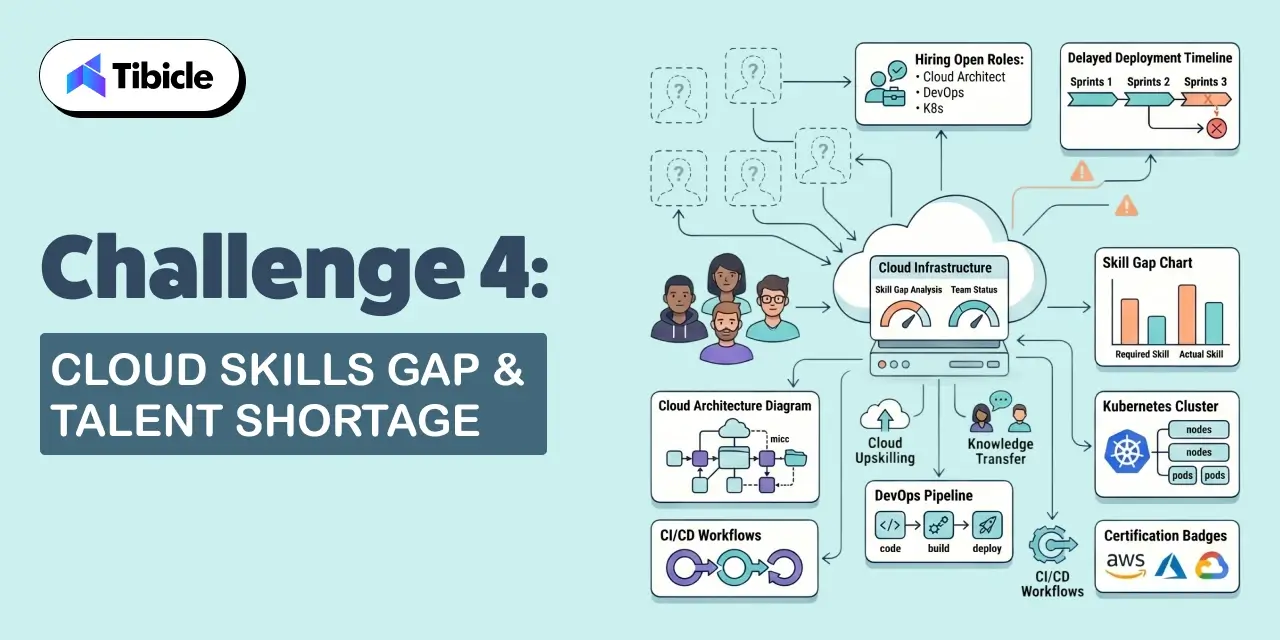
The challenges of cloud computing include a skills gap that has not closed despite years of attention. Cloud environments have grown more complex faster than the workforce has developed expertise to manage them.
In 2026, GenAI services, Kubernetes orchestration, FinOps practices, and multi-cloud governance are all skills that organizations need but cannot easily hire. The gap is most acute in security: 53% of organizations cite security and compliance as the top challenge for cloud AI initiatives, and the talent shortage in cloud security is a significant contributor.
How to Fix It: Upskilling Programs and Managed Cloud Services
Organizations addressing the cloud skills gap in 2026 are taking two parallel approaches. Internally, they are investing in structured upskilling through certifications (AWS Certified Solutions Architect, Google Cloud Professional, Microsoft Azure Fundamentals are the most widely pursued), paired with internal working groups that translate certification knowledge into applied practice on real workloads.
Externally, 62% of enterprise organizations now rely on managed service providers (MSPs) for at least some public cloud management, up from 56% in 2024, per Flexera 2026. MSPs handle operational complexity while internal teams develop expertise. The organizations that struggle are those that offshore all cloud management to MSPs without building internal capability, creating a permanent dependency rather than a bridge to self-sufficiency.
Challenge 5: Vendor Lock-In and Multi-Cloud Complexity
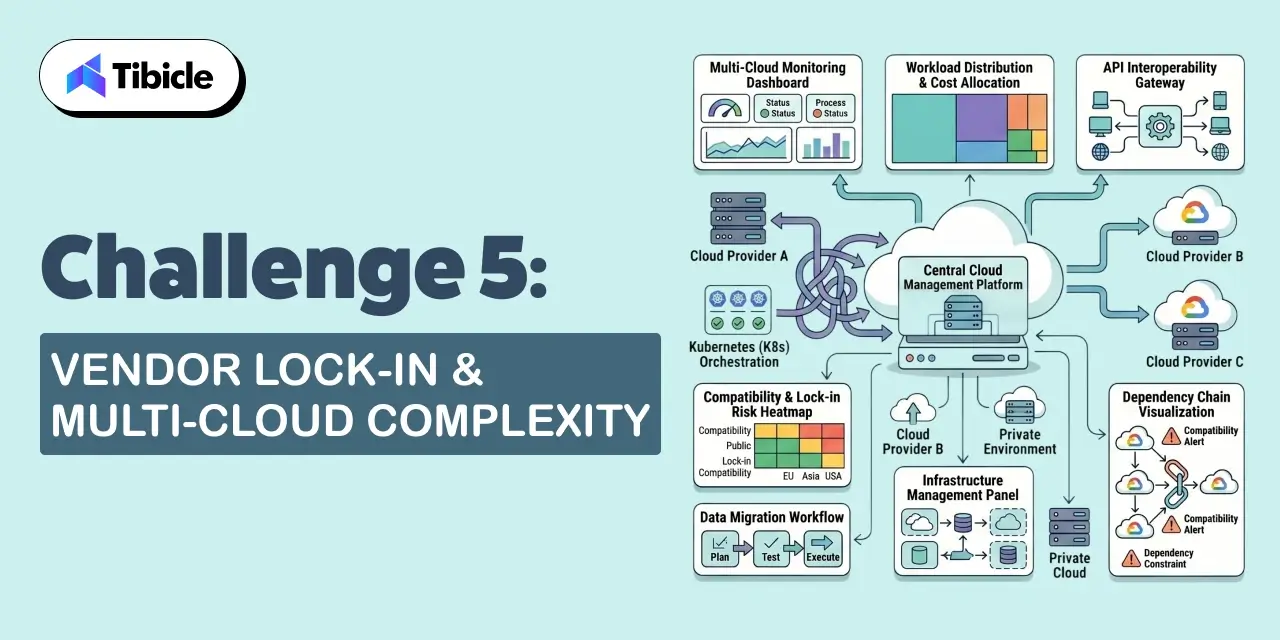
The challenges of cloud computing include a strategic risk that most organizations only recognize after the fact: vendor lock-in. When applications are built using proprietary services from a single cloud provider, moving them becomes prohibitively expensive. The lock-in is not contractual; it is architectural.
Multi-cloud adoption has grown as organizations try to avoid lock-in, but 73% of hybrid environments in 2026 exist by accident rather than deliberate strategy, per Flexera. Mergers, acquisitions, and siloed developer decisions have spread workloads across AWS, Azure, and Google Cloud without a unified management model. The result is compounding operational complexity rather than genuine cloud provider optionality.
How to Fix It: Portability Strategy and Open Standards
Cloud portability requires investment in abstraction layers: containerization with Docker and orchestration with Kubernetes makes applications less dependent on cloud-provider-specific infrastructure. Infrastructure as Code tools like Terraform work across cloud providers and reduce the replatforming cost of switching or distributing workloads.
The more practical fix for most organizations is deliberate multi-cloud governance rather than full portability. Define which workloads belong on which cloud based on performance, cost, and compliance requirements. Centralize cost and usage visibility across all clouds using a platform that normalizes data from multiple providers. Most importantly, make multi-cloud decisions intentionally rather than inheriting them from individual team choices.
Why Tibicle Is the Right Partner for Cloud Challenges in 2026
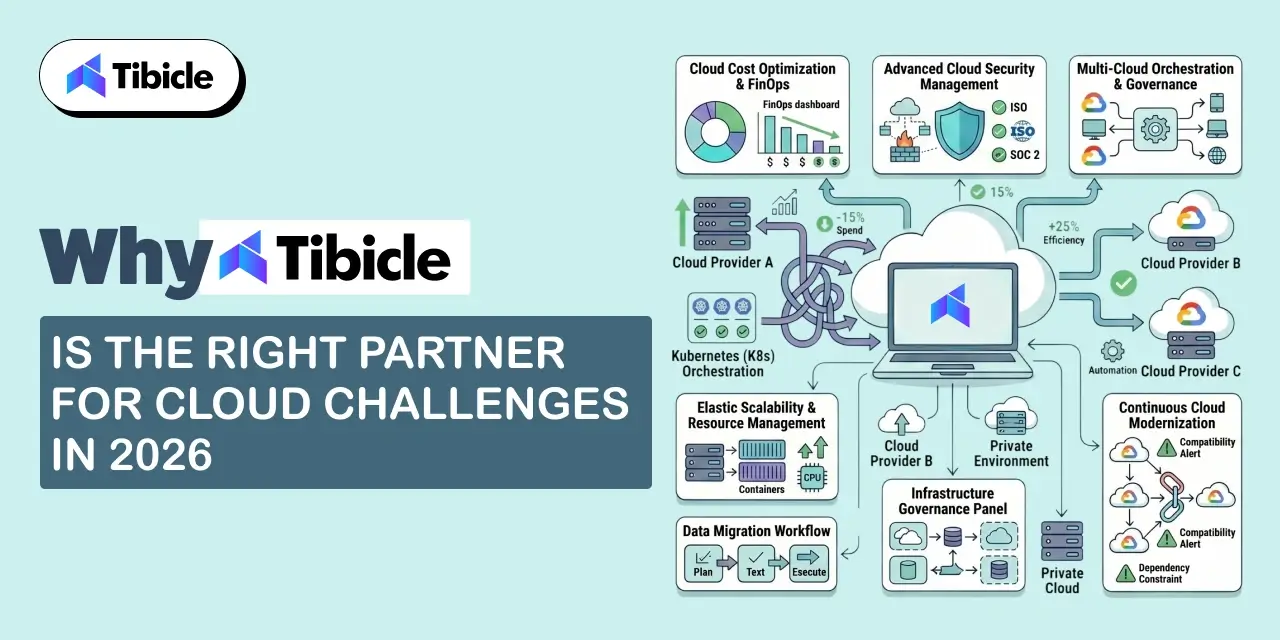
The five challenges covered in this guide cost sprawl, misconfiguration risk, compliance complexity, skills gaps, and vendor lock-in each require hands-on engineering to fix. Tibicle’s cloud and DevOps practice addresses all five through a combination of dedicated engineering resources, AI/ML integration, and security-first architecture.
Tibicle has delivered cloud-hosted systems for clients across healthcare, logistics, edtech, and enterprise SaaS industries where compliance and security are not optional. Their development practice includes automated testing, agile delivery, and milestone-based accountability, which maps directly to the FinOps and governance discipline that Flexera’s 2026 data identifies as the main separator between organizations controlling their cloud spend and those watching 29% of it disappear.
On the skills gap specifically: 62% of enterprises now rely on managed service providers for at least some cloud operations because the internal talent market cannot keep pace with multi-cloud complexity. Tibicle’s dedicated DevOps and cloud engineers work as an extension of your internal team, handling operational complexity while your team builds capability over time. Their hourly rates ($25–$49/hour) make this model financially accessible for organizations that cannot justify a full-time cloud architect hire.
Tibicle’s AI integration capabilities also cover the GenAI workload governance problem that most FinOps practices are not yet equipped to handle: anomaly detection, cost attribution for AI services, and architecture patterns that prevent AI prototype spend from becoming production budget surprises.
Conclusion
The five challenges of cloud computing in 2026 cost management, misconfiguration, compliance, skills gaps, and vendor lock-in each have specific fixes. None of them are solved by the cloud provider. They require engineering decisions, governance practices, and consistent operational discipline applied to your specific environment.
If your organization is hitting any of these challenges and needs a technical partner to address them, Tibicle’s cloud and DevOps team is available for dedicated engagements, team augmentation, and fixed-scope implementations. Start with a technical assessment and a clear picture of where your cloud operations stand today.
Frequently Asked Questions
What is the biggest challenge in cloud computing today?
Cloud cost management is the top challenges of cloud computing in 2026, cited by 85% of organizations in Flexera’s annual State of the Cloud Report. 29% of estimated cloud spend is wasted, and the adoption of GenAI services has introduced new cost unpredictability that existing FinOps practices are still adapting to handle.
How can businesses reduce cloud computing costs?
The most effective approaches: establish FinOps as an ongoing practice rather than a quarterly review, implement resource tagging so every cost has a clear owner, right-size instances based on actual utilization data rather than peak provisioning, set automated anomaly detection on AI workloads, and consolidate discount instruments like reserved instances through automated commitment management tools.
What is vendor lock-in in cloud computing and how do you avoid it?
Vendor lock-in occurs when an application’s architecture depends on proprietary services from a single cloud provider, making migration prohibitively expensive. Avoiding it requires using open standards and containerized architectures, deploying with Terraform or similar cross-cloud IaC tools, and making deliberate decisions about which services create dependency versus which create value.
Why is cloud security still a problem even after migration?
Migration moves workloads to the cloud, but it does not automatically apply security best practices. The shared responsibility model means the cloud provider secures the infrastructure; the organization is responsible for configuration, access management, and data protection. Misconfiguration, not exploitation, is the primary cause of most cloud security incidents.
What is cloud sprawl and why does it matter?
Cloud sprawl is the uncontrolled proliferation of cloud resources, services, and accounts across an organization. It occurs when teams provision infrastructure independently without central visibility or governance. Sprawl drives cost waste, creates security blind spots, and makes compliance verification manually intensive.
What certifications help close the cloud skills gap?
The most widely pursued certifications for closing the cloud skills gap in 2026: AWS Certified Solutions Architect (Associate and Professional), Google Cloud Professional Cloud Architect, Microsoft Azure Administrator, and the FinOps Certified Practitioner from the FinOps Foundation. Security-focused roles benefit from the AWS Certified Security Specialty and the CCSP (Certified Cloud Security Professional).