Introduction
Product engineering services help businesses transform ideas into scalable digital products. Research shows 68% of quality assurance teams now use AI-driven solutions for risk-based testing. The global digital transformation market expects growth from $1,070.43 billion in 2024 to over $4,617.78 billion by 2030.
Many businesses use product engineering solutions to stay competitive. Product engineering describes the strategic process of taking an idea from discovery through development and to your users.
This software product engineering guide looks at the stages and trends defining your industry today. These methods improve your research and development and technical feasibility. You build better tools when you use product engineering.
What Does Product Engineering Mean for Your Business?

Product engineering helps your business grow by making tools people actually use. You stop wasting money on features that fail. This process turns your ideas into real profits.
1. Driving Value Through Market Alignment
You waste resources when you build features your users never touch. Product engineering services solve this by identifying target personas before you start. This alignment reduces the risk of creating a product that fails to gain traction.
When you focus on user experience design, you create a journey that feels natural for your customers. This focus on the user improves your digital transformation results and increases your bottom line.
2. Scaling With Technical Feasibility
Smart leaders check technical feasibility early in the process. You need to know if your system architecture can handle future growth without a total rebuild. This step prevents expensive pivots when you move from a minimum viable product to a full-scale solution.
By evaluating constraints now, you ensure your product lifecycle management remains smooth. You build a foundation that supports millions of users while keeping your quality assurance standards high.
Success starts with knowing why you are building a feature before you decide how to code it.
Product Engineering vs Software Engineering
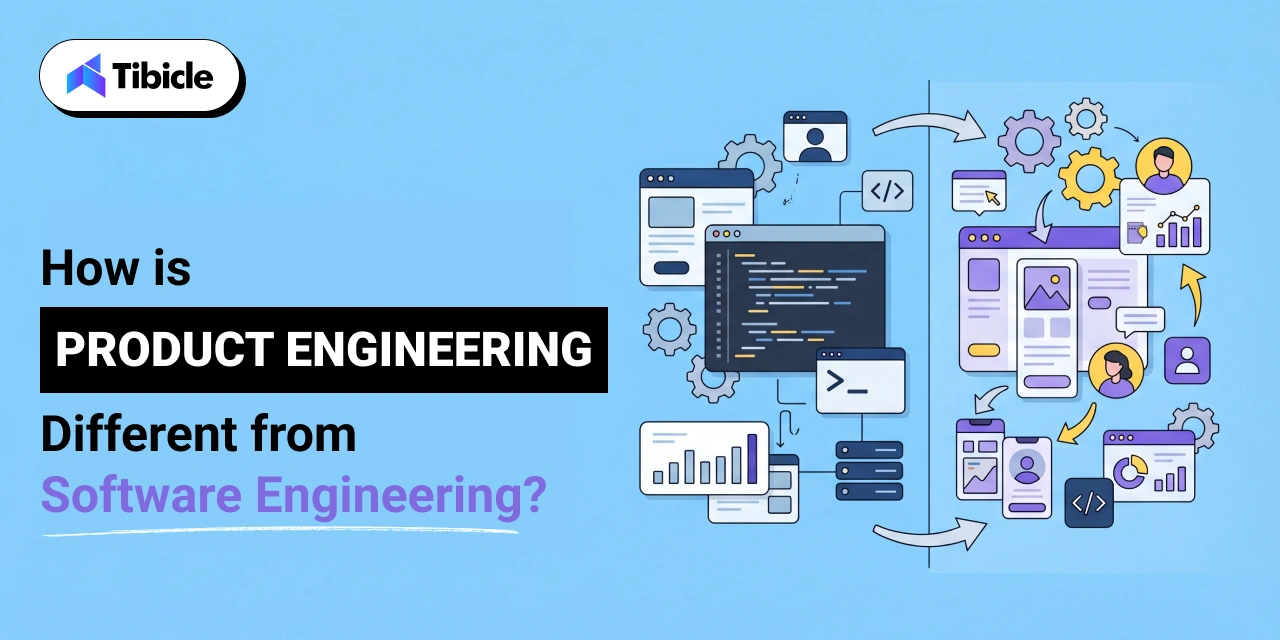
These two terms often confuse people. While they sound similar, one builds the code and the other builds the business success. Here is how they differ for you.
Product engineering looks at the whole picture. Software engineering mostly cares about code quality. You need this approach to ensure your product survives in the market. Software product engineering teams focus on why a feature exists instead of just how to write it.
- Software engineers focus on internal system performance.
- Product engineering focuses on market alignment.
- Software engineers work on the technical build.
- Product engineers manage the entire lifecycle.
A) Product Engineering: Output vs Outcome Focus
Success in software usually means the code merges correctly. Success in product engineering means you see real ROI. You need to validate your user experience design with actual customers to win. High scalability is the goal of a great build.
B) Scope of Product Engineering Responsibilities
Different roles require different skills. Your software team handles algorithm problems and database needs. Your team looks at system architecture and handles product lifecycle management.
- Software tasks: Optimizing code and fixing bugs.
- Product tasks: Mapping user journeys and checking technical feasibility.
Now that you know the difference, let’s look at the steps to build your own product.
What are the Product Engineering Lifecycle Stages?
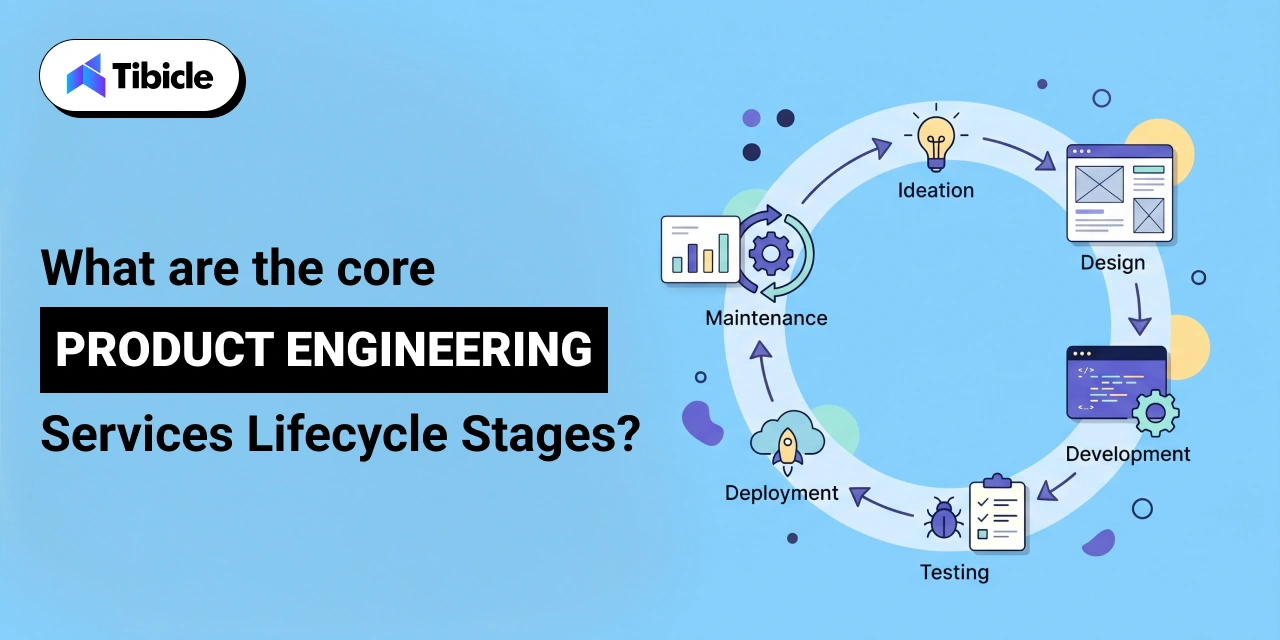
These six stages move your idea from a simple sketch to a market leader. This structured path keeps your team on track and reduces wasted effort.
The product engineering lifecycle includes roadmapping, planning, experience engineering, development, testing, and deployment. This journey ensures you validate every version against real user data. Companies using these stages report 40% faster decisions through better data pipelines. Your software product engineering team uses this flow to stay efficient.
1. Discovery and Roadmapping
Consultative discovery defines your purpose before you write any code. You identify who your users are and what they need. This stage builds a solid roadmap for your product engineering services. You check the technical feasibility of your ideas to avoid future roadblocks. It acts as the brain of your research and development efforts.
2. Experience Engineering and Prototyping
You use prototyping to see how people interact with your tool. These interactive models help you visualize the user experience design. You can test if your product is intuitive before you spend money on full development. This phase helps you define the minimum viable product features and ensures high scalability. You make sure the system architecture supports your goals.
3. Testing and Predictive Quality Assurance
Modern trends shift testing from reactive to predictive. You find defects before they reach your users. Quality assurance now relies on data to catch bugs early. This helps your product lifecycle management stay on schedule. Your product engineering team uses these tools to keep the digital transformation process smooth.
- Roadmapping sets the vision
- Prototyping tests the flow
- Predictive testing keeps quality high
A strong process helps you launch with confidence and grow your user base.
Product Engineering Lifecycle at a Glance
| Stage |
Core Activity |
Business Benefit |
| Discovery |
We check technical feasibility and plan your research and development. |
You stop wasting money on ideas that cannot scale. |
| Design |
Our team uses prototyping to perfect the user experience design. |
You build a product that your customers actually enjoy using. |
| Development |
We apply software product engineering to build a solid system architecture. |
You get a stable tool that handles millions of users. |
| Testing |
We run quality assurance checks to find and fix bugs before launch. |
You protect your brand and ensure a smooth user journey. |
| Launch |
We deploy your minimum viable product to start your digital transformation. |
You enter the market fast and begin earning ROI. |
| Evolution |
We manage scalability and long-term product lifecycle management. |
Your product stays relevant as your business grows. |
How AI is Transforming Product Engineering
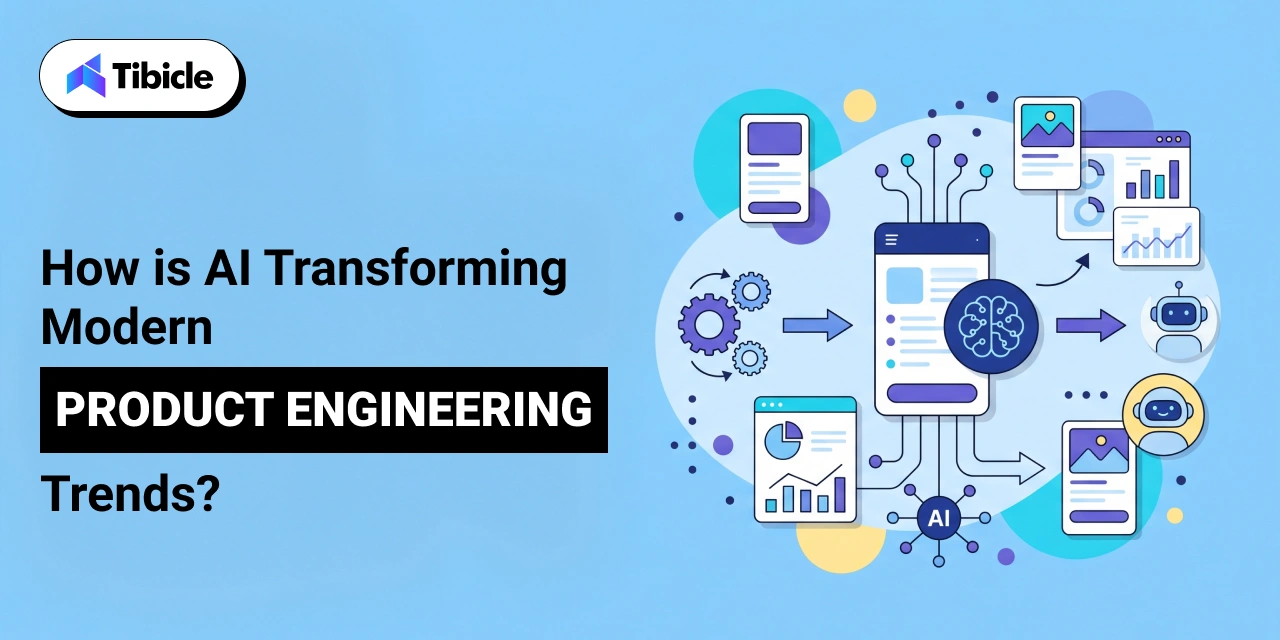
Product engineering changes when you add AI. It moves past simple automation to predict what your users want. This shift saves time and boosts your overall profits.
AI acts as a core driver for your product strategy. It helps software product engineering teams analyze large datasets. You can predict demand and iterate faster using machine learning models.
Experts note that 75% of product leaders still struggle to align AI with their strategy. Using AI in product engineering services helps you stay ahead of others. Product engineering success now depends on how you use these smart tools.
- AI automates repetitive coding tasks.
- Machine learning improves your quality assurance speed.
- Digital twins help you stress test your system architecture.
A) Hyper Personalization and Sentiment Analysis
AI tools allow you to monitor user behavior in real time. You use these insights to redefine your user experience design. Sentiment analysis helps you understand how people feel about your features.
This creates a digital transformation that feels personal to every customer. You know what they want instead of guessing. Your product engineering team uses this data to build better features.
B) Predictive Maintenance and Analytics
Generative AI helps you make smarter decisions. It performs maintenance before problems happen. This keeps your product lifecycle management on track without interruptions.
You can find technical debt earlier in your research and development phase. This ensures your minimum viable product stays stable as it grows. High scalability becomes easier when AI predicts your server needs.
Using these smart tools makes your development process faster and more reliable.
How Tibicle Helps You Master End-to-End Product Engineering
Tibicle turns your ideas into real tools through expert product engineering. Our team of 50 professionals finished 62 global projects with a 90% customer retention rate. We focus on user experience design and system architecture to drive growth.
Our product engineering approach speeds up your time to market. You work directly with senior experts.
- Cross Platform Engineering: We use React Native and Flutter for fast builds.
- Custom AI: We automate workflows by 60% using smart agents.
- Desktop Software: Our team builds secure apps for Windows and macOS.
- Direct Collaboration: You talk to senior engineers without middle managers.
- IoT Systems: We connect devices for healthcare and fitness tech.
Our product engineering services turn complex challenges into simple wins. Talk to Tibicle today to improve your product engineering and build tools your users love.
Conclusion
Product engineering is the full strategy of building a tool from concept to launch. Teams often face slow research and development or poor technical feasibility. Ignoring your system architecture leads to massive technical debt. You risk losing your market share and wasting your budget on a broken tool. This failure ruins your brand and stops your growth.
Tibicle provides the product engineering services to prevent these disasters. We handle your software product engineering so you scale with confidence. Successful product engineering ensures your digital transformation leads to real profit.
Reach out to Tibicle today to see how our product engineering services help you build tools your users actually need.
FAQs
What is the main goal of product engineering?
The main goal of product engineering involves creating a minimum viable product that solves user problems while meeting business targets. It uses user experience design and research and development to ensure scalability. You build a strong system architecture that delivers results.
How does AI improve product engineering services?
Modern AI boosts product engineering services by automating tasks and providing predictive data. It helps your software product engineering team catch bugs early through better quality assurance. You use these tools to drive digital transformation and create a personalized experience for every customer.
What are the common stages of a product lifecycle?
A typical product lifecycle management path includes roadmapping, prototyping, and full development. You start by checking technical feasibility to avoid expensive mistakes later. This product engineering process ensures your software product engineering efforts result in a stable and successful market launch.
Is product engineering only for software companies?
No, product engineering serves industries like healthcare and manufacturing besides tech. Every sector needs digital transformation to stay relevant. Using product engineering services helps you manage research and development while ensuring your system architecture supports modern demands like IoT and security.
What is the difference between an MVP and a final product?
A minimum viable product includes just enough features to satisfy early users. The final version uses those insights to improve user experience design and scalability. Effective product engineering guides this growth from a simple model to a mature and high performing solution.