What This Guide Covers
Who this is for: This guide is for SaaS founders, CTOs, engineering leads, and security/compliance teams building Electron-based desktop applications that need a secure Electron app architecture. It is particularly useful for teams preparing for SOC 2 Type II audits or GDPR compliance reviews, especially those shipping apps that handle sensitive user data. It also helps teams whose applications are being evaluated by enterprise customers, investors, or procurement teams.
Search intent: Technical implementation and audit preparation. This guide is written for teams who already know they need a secure Electron app architecture in place and are looking for the specific Electron configuration changes, architecture controls, and release pipeline practices required to get there. Rather than explaining what SOC 2 or GDPR are in general terms, it focuses on the concrete settings (context isolation, sandboxing, CSP, code signing), evidence auditors ask for, and the gaps that most commonly cause audits to fail.
What you will walk away with: A practical breakdown of what makes a secure Electron app architecture audit-ready, including why Electron apps face extra security scrutiny compared to native apps, the core architecture controls auditors check first (context isolation, disabled Node integration, sandboxing, CSP), how these map to SOC 2 Trust Service Criteria and GDPR principles, requirements specific to desktop apps handling EU user data (encryption, data residency, minimization), what a compliant code-signing and auto-update pipeline looks like, the most common findings that fail audits, and how to approach hardening and documentation before a review begins.
Introduction
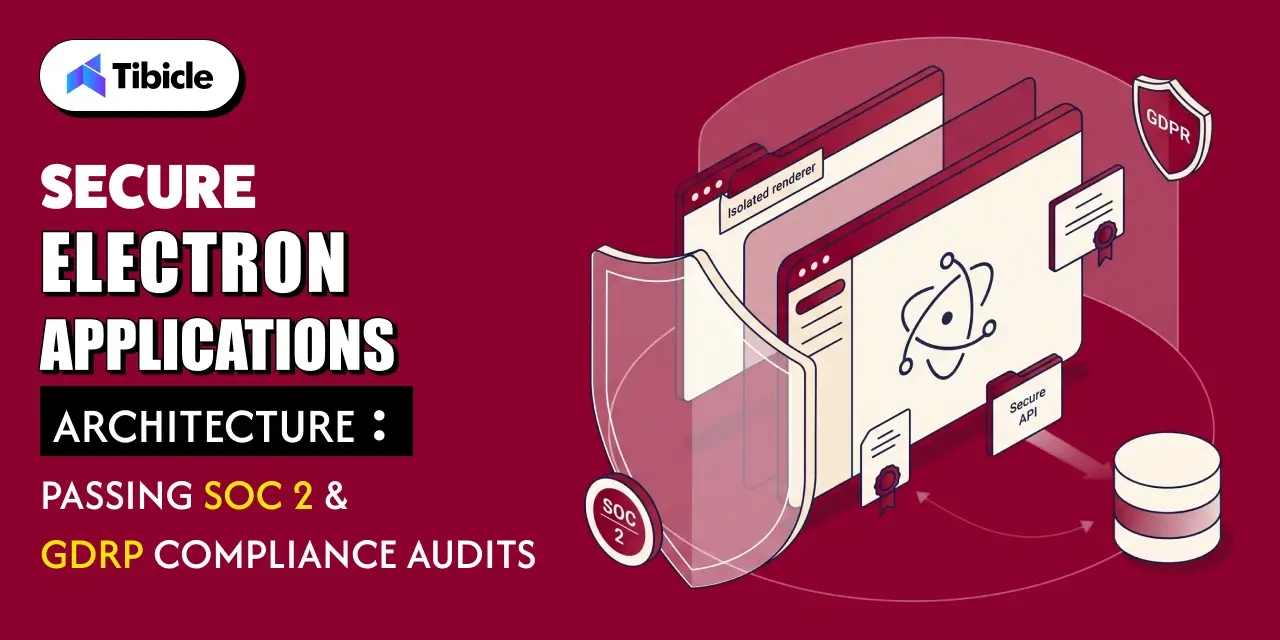
Two out of three IT and security leaders now say customers, investors, or suppliers are increasingly asking for proof of security and compliance before they sign a contract (Vanta, State of Trust Report). For SaaS teams shipping an Electron desktop client, that proof rests almost entirely on architecture decisions that many teams never revisit after launch. Electron bundles Chromium and Node.js into one runtime, giving a renderer window far more power than a native app window gets by default. That power is exactly what SOC 2 auditors and GDPR assessors flag first. As a result, a secure Electron app architecture has become a prerequisite for passing either review rather than a nice-to-have.
This guide covers the architecture controls that make a secure Electron app architecture defensible in a SOC 2 Type II audit and compliant under GDPR, the auditor checklist mapped to specific Electron settings, and the release pipeline requirements most teams miss on their first review.
Why Electron Apps Face Extra Scrutiny in Security Reviews
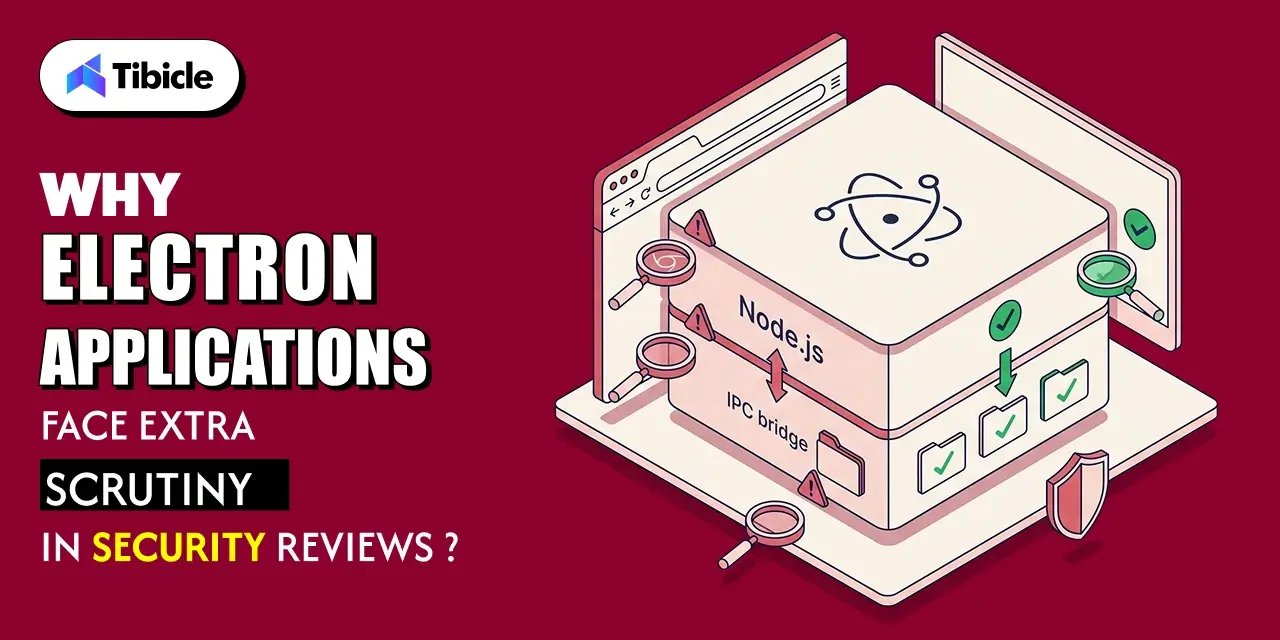
Desktop clients have become a standard part of SaaS product roadmaps, from IDEs to communication tools to internal admin panels. Auditors reviewing these apps do not treat them the same way they treat a native Swift or C++ binary, because Electron’s architecture inherits the security assumptions of a web browser while also carrying the full permissions of a desktop process. Without a secure Electron app architecture in place from the start, that combination gives an attacker a much shorter path from a browser-level bug to full machine access.
The Attack Surface of a Chromium and Node.js Runtime
An Electron renderer that has Node integration left on can read and write files, spawn processes, and reach the local network directly from a web page context. If that renderer also loads remote content, an attacker who compromises the remote source inherits local machine access, not just browser sandbox access.
- Full Node.js access inside a renderer if integration is left on
- Remote content loaded inside the same process as local file access
- Third-party native modules and dependencies with their own vulnerabilities
- A larger codebase surface than a single-purpose native binary
What SOC 2 and GDPR Auditors Actually Check For
Auditors do not accept a written security policy as proof. They ask for evidence tied to specific releases, specific commits, and specific controls that were active in production during the audit window, which is where Electron app security compliance becomes something you demonstrate in code, not just in a document.
- Evidence of access controls and authentication on every release
- A documented process for patching known vulnerabilities
- Proof that personal data is encrypted, minimized, and deletable on request
- Change logs tying every release to a reviewed and signed build
Core Architecture Controls for a Secure Electron App Architecture
Default Electron settings are not audit-ready. A fresh electron-forge or electron-builder scaffold still needs explicit hardening before it can pass a security review, because several defaults prioritize developer convenience over isolation. Getting to a secure Electron app architecture usually means revisiting every webPreferences object in the codebase, not just the ones touching remote content.
Context Isolation: The Foundation of a Secure Electron App Architecture
Context isolation runs preload scripts in a separate JavaScript context from the page the renderer loads, which stops a compromised web page from reaching into Electron or Node internals directly. Every BrowserWindow should set contextIsolation: true, and any renderer that loads remote or third-party content should have nodeIntegration: false. This single pair of settings closes the most common path from a cross-site scripting bug to full remote code execution in Electron apps, and it is the first thing a security reviewer checks in the webPreferences object.
Sandboxing: A Second Layer for Secure Electron App Architecture
A sandboxed renderer runs with the same OS-level restrictions Chromium applies to a browser tab, which limits what a compromised renderer can touch even if context isolation is bypassed. Setting sandbox: true on BrowserWindow instances adds a second containment layer beneath context isolation, so a single misconfiguration does not expose the full file system or process control to an attacker. Auditors treat sandboxing and context isolation as separate controls, not interchangeable ones, so both need to be present and both need to be documented as part of the app’s overall security architecture.
Content Security Policy and Preventing Remote Code Injection
A strict Content Security Policy header blocks inline scripts and restricts which origins a renderer can load resources from, which removes one of the easiest injection paths into an Electron window. Combined with IPC payload validation on the main process, a CSP closes the gap between what a renderer is allowed to request and what the main process is willing to execute on its behalf.
- contextIsolation set to true in every BrowserWindow
- nodeIntegration disabled in any renderer that loads remote or untrusted content
- A contextBridge exposing only the specific functions a renderer needs
- IPC channel names and payloads validated on the main process side
- A strict CSP header blocking inline scripts and unapproved origins
Meeting SOC 2 Trust Service Criteria in Electron Applications
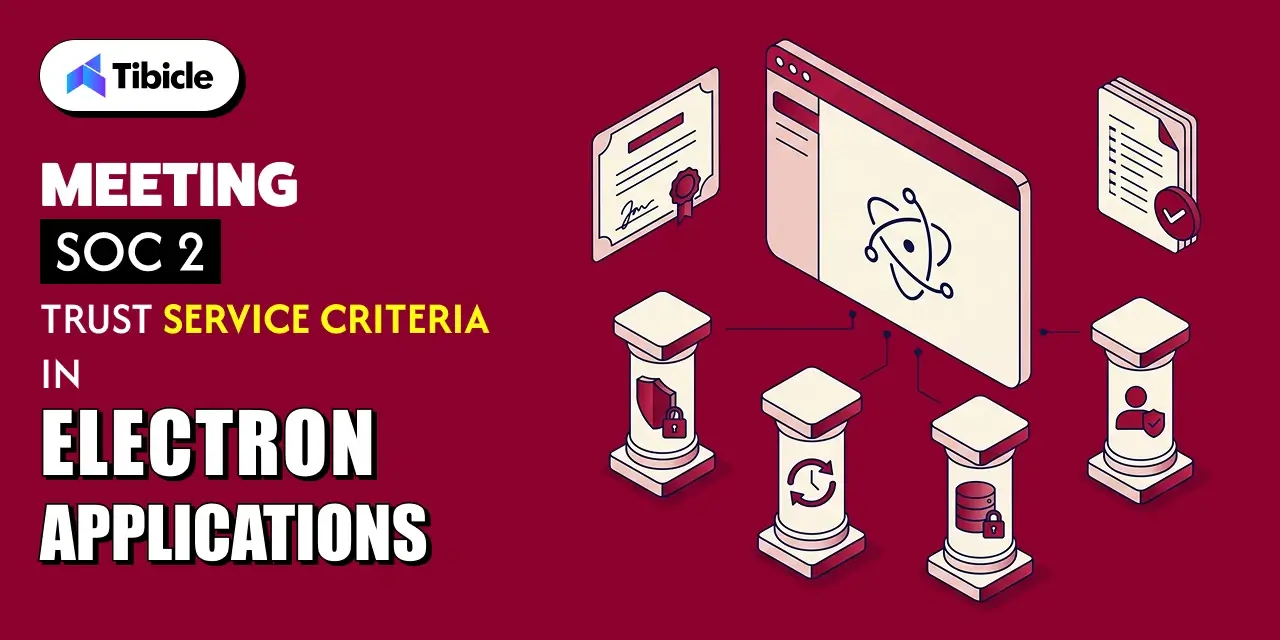
SOC 2 Trust Service Criteria map directly onto architecture decisions, not just onto policy documents. An auditor reading a security policy still expects to see the corresponding setting in the codebase — this is where a secure Electron app architecture and formal Electron app security compliance start to overlap.
Access Control and Authentication
Every release needs a record of who could access what, enforced through role-based IPC channels rather than renderer-side checks alone, since renderer-side logic can be bypassed by anyone with developer tools access.
Logging, Monitoring, and Audit Trails
Audit logs need to record which user or process triggered an event, not only that the event happened. A log that shows a file was deleted without identifying who deleted it fails most SOC 2 logging controls on the first read-through.
Change Management and Code Signing for Releases
Every production release needs a signed build tied to a reviewed pull request, so an auditor can trace a shipped binary back to the code that was approved for release.
Trust Service Criteria mapped to Electron controls:
| Trust Service Criteria |
What the Auditor Checks |
Electron Control |
| Security |
Unauthorized access prevention |
Context isolation, code signing, dependency scanning |
| Availability |
Uptime and recovery commitments |
Staged rollouts, rollback-capable auto-updater |
| Confidentiality |
Restricted access to sensitive data |
Role-based IPC access, encrypted local storage |
| Privacy |
Handling of personal data |
Data minimization, opt-in telemetry, deletion on request |
Manual SOC 2 Type II preparation typically takes between two and nine months before the audit itself begins, on top of one to three months for the audit fieldwork (Secureframe, SOC 2 Audit Cost guide). Teams that start architecture hardening early in the product cycle, rather than treating a secure Electron app architecture as a pre-audit scramble, cut meaningfully into that timeline.
GDPR Requirements for Desktop Applications Handling EU User Data
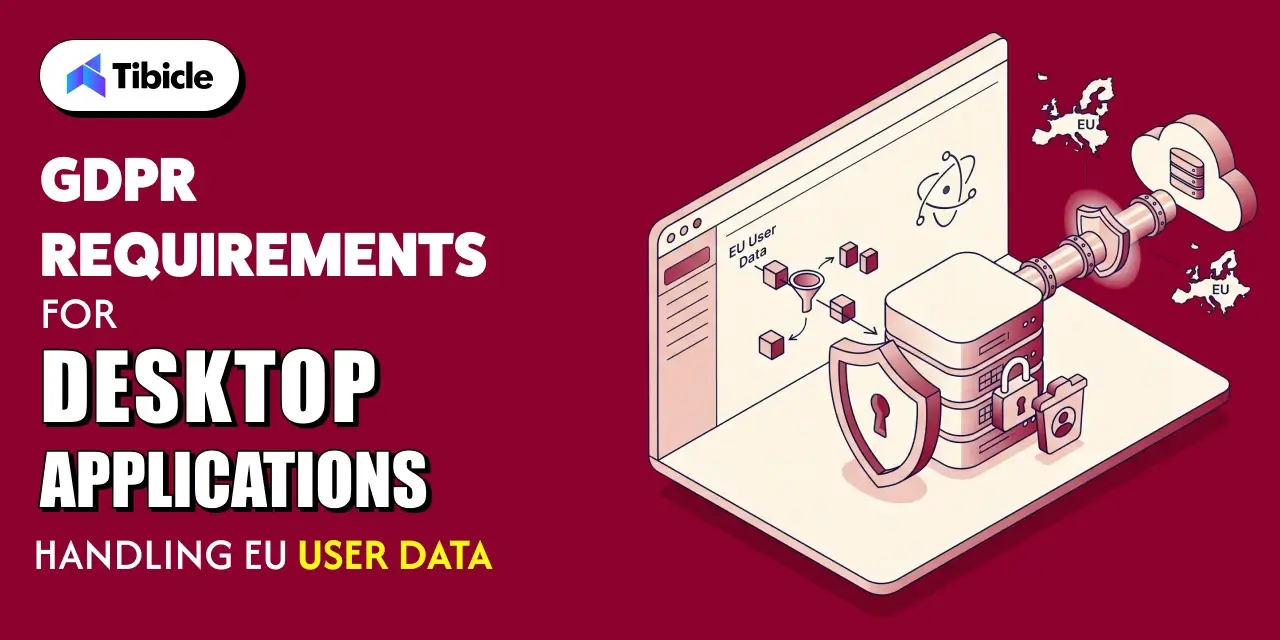
A desktop client that stores or syncs data locally carries GDPR obligations a browser-based SaaS product does not, because local storage puts personal data on a device the company does not fully control. This is one of the areas where a secure Electron app architecture directly determines whether an app can be GDPR-compliant at all, since retrofitting encryption after launch is far more disruptive than designing for it upfront.
Data Minimization in a Secure Electron App Architecture
An Electron app should store only the data it needs to function offline or to sync efficiently. Caching full user records locally “for convenience” is one of the most common findings in a GDPR desktop app review, since it expands the data a lost or stolen device can expose.
Encryption at Rest and in Transit
Local data at rest needs strong encryption, and any data leaving the device needs a current transport protocol. Storing tokens or personal data in plaintext in an app’s local storage or config files is a finding that shows up repeatedly in Electron security reviews, regardless of how the network layer is secured.
Data Residency and Cross-Border Transfer Considerations for EU Teams
If an Electron app syncs data to a backend outside the EU, the transfer mechanism needs a valid legal basis under GDPR, and the app’s architecture should make it possible to route EU user data to EU-based infrastructure without a code fork.
GDPR principles mapped to Electron implementation:
| GDPR Principle |
Requirement |
Electron Implementation |
| Data Minimization |
Collect only data the app needs to function |
Local-first storage, opt-in telemetry |
| Storage Limitation |
Remove data once its purpose ends |
Configurable local retention windows |
| Integrity and Confidentiality |
Protect data from loss or unauthorized access |
AES-256 encryption at rest, TLS 1.3 in transit |
| Accountability |
Show compliance through records |
Audit logs, data processing records, DPIA support |
European data protection authorities have recorded around €6.11 billion in cumulative GDPR fines, with roughly €1.2 billion issued in 2025 alone (CMS, GDPR Enforcement Tracker Report). A meaningful share trace back to inadequate technical measures — the category local storage, encryption, and a secure Electron app architecture are designed to address.
Building an Auditable Update Pipeline for Secure Electron Apps
Auditors ask for the release pipeline separately from the app code itself, because a secure codebase shipped through an insecure update mechanism still leaves users exposed. A secure Electron app architecture that stops at the renderer and main process, without extending to the update pipeline, leaves a gap auditors will find.
Code Signing Certificates and Verified Releases
Every build distributed to users should be signed with a valid code signing certificate, on both Windows and macOS, so the operating system and the user can verify the binary has not been tampered with between build and install.
Auto-Update Security With a Signed Update Server
The auto-updater needs to verify signatures on every downloaded update before applying it, and the update server itself needs the same access controls as production infrastructure. An update pipeline that trusts any file matching a filename pattern is a direct path to supply chain compromise.
Vulnerability Monitoring and Patch Response Time
A documented patch response time, backed by dependency scanning in CI/CD, gives auditors the evidence they need that known vulnerabilities do not sit unpatched for months after disclosure. This kind of ongoing monitoring is a core part of Electron app security compliance, not a one-time setup step.
Common Gaps That Break a Secure Electron App Architecture
These are the findings that recur most often across public Electron vulnerability disclosures and security reviews, and nearly all of them trace back to a piece of the architecture that was never brought up to the standard of a secure Electron app architecture.
Node Integration Gaps That Undermine secure electron app architecture
Apps that started on an older Electron version often carry forward nodeIntegration: true on windows that were never revisited after a framework upgrade. This is consistently one of the first things a penetration tester checks, since it turns a routine cross-site scripting bug into full remote code execution.
Missing Audit Logs: A Gap in Secure Electron App Architecture
Logs that record an action but not the identity behind it do not satisfy SOC 2 or GDPR accountability requirements. Retrofitting proper user attribution into logs after an audit has already started is far more expensive than building it in from the first release.
Dependency Risks in Electron App Security Compliance
Native modules pulled into an Electron app without a review step carry their own vulnerability surface, and a dependency scanner that only checks JavaScript packages will miss issues in compiled native code.
- nodeIntegration left enabled from an older Electron version upgrade
- No dependency scanning step in the CI/CD pipeline
- Native modules pulled in without a documented review
- Audit logs that record events but not who triggered them
Public vulnerability databases list multiple confirmed remote code execution CVEs tied to Node integration and context isolation gaps in Electron, spanning versions through 2026 (CVE Details, Electron Vulnerability List). The pattern is the same: a renderer that shouldn’t have had Node access, had it anyway.
How Tibicle Builds Compliance-Ready Electron Applications
Security Architecture Review and Threat Modeling
Tibicle starts each Electron engagement with a review of the existing webPreferences configuration, IPC surface, and data flow between renderer and main process, mapped against the SOC 2 and GDPR requirements relevant to the client’s user base — the same groundwork any secure Electron app architecture engagement needs before hardening begins.
Hardening and Testing for a secure electron App Architecture
Hardening covers context isolation, sandboxing, CSP, and encrypted storage, followed by penetration testing on the IPC boundary and update pipeline.
Documentation Support for a Secure Electron App Architecture Audit
Tibicle produces the architecture documentation, data flow diagrams, and control mappings auditors need for a SOC 2 or GDPR review, taking that load off your internal team.
Key Takeaways: Building a Secure Electron App Architecture
- A secure Electron app architecture requires context isolation and a sandboxed renderer beyond Electron’s default settings
- SOC 2 and GDPR both require evidence, not just a written policy
- Code signing and a monitored update pipeline are checked separately from the app itself
- Most audit findings trace back to leftover Node integration or missing logs
- Electron app security compliance is an ongoing pipeline discipline, not a one-time hardening pass
Ready to get your Electron app audit-ready? Book a security architecture review with Tibicle.
Frequently Asked Questions
What makes a secure electron app architecture pass SOC 2 compliance?
A secure Electron app architecture should have context isolation enabled and Node integration disabled for renderers that handle remote content. The renderer should also use sandboxing, signed releases, and audit logs. These logs should identify which user triggered each action. SOC 2 auditors check that these controls are active in production, not just described in a policy document.
Does GDPR apply to a desktop application built with Electron?
Yes. GDPR applies to any application, whether desktop or browser-based, that processes personal data belonging to EU residents. Electron apps that cache user data locally have additional obligations. These include encryption at rest, data minimization, and allowing users to request deletion of their local and synced data.
How long does a SOC 2 Type II audit take for a SaaS company?
A first SOC 2 Type II audit typically requires two to nine months of preparation before the audit window opens. The observation period usually lasts three to twelve months, followed by one to three months of audit fieldwork. The timeline depends on the audit scope and whether the team uses compliance automation tools.
What is context isolation and why does it matter for Electron security?
Context isolation runs a renderer’s preload script in a separate JavaScript context from the web page. This separation prevents compromised or malicious pages from accessing Electron or Node.js internals directly. Alongside disabling Node integration, context isolation helps close common paths to remote code execution in Electron apps.
Can an Electron app pass an enterprise security review without a full rewrite in a native language?
Yes. Enterprise security reviews and SOC 2 audits assess whether an Electron app has a secure architecture. A properly hardened Electron app can meet the same security requirements as a native app. This includes context isolation, sandboxing, encrypted storage, and a signed update pipeline.
Does Tibicle support SOC 2 or GDPR documentation for Electron projects?
Yes. Tibicle provides architecture reviews, security hardening, and penetration testing for Electron-based products. We also provide documentation for SOC 2 and GDPR audits.