
How to Hire Dedicated Electron.js Developers in 2026

Sep 09, 2026

Read in 5 Minutes
Table of Contents
- What This Guide Covers
- Introduction
- Why US Tech Firms Are Hire Dedicated Electron.js Developers
- Dedicated Developer vs Freelancer vs In-House Hire
- The Skills to Vet Before You Hire Dedicated Electron.js Developers
- Where to Hire Dedicated Electron.js Developers
- The Interview and Technical Screening Process
- Cost to Hire Dedicated Electron.js Developers
- How Sources and Vets Dedicated Electron.js Developers
- Key Takeaways When You Hire Dedicated Electron.js Developers
- FAQs
What This Guide Covers
Who this is for: US tech firms, SaaS companies, startups, CTOs, engineering managers, and product teams looking to hire dedicated Electron.js developers for ongoing desktop application development.
Search intent: Hiring and decision. This guide covers where to find Electron.js developers, how to evaluate their technical skills, and how dedicated developers compare with freelancers and in-house hires.
What you will walk away with: A practical hiring framework covering Electron architecture, native modules, cross-platform packaging, security, sourcing channels, technical screening, regional rates, onboarding, and long-term team management.

Introduction
The demand for software development talent remains strong in the US. According to the U.S. Bureau of Labor Statistics, software developers, quality assurance analysts, and testers are projected to see 15% employment growth from 2024 to 2034, with about 129,200 openings each year.
For companies building desktop applications, hiring a general JavaScript developer is not always enough. Electron projects require knowledge of desktop processes, IPC, native modules, packaging, code signing, and operating-system differences.
That makes hiring specialized Electron talent different from filling a standard frontend or full-stack position.
Why US Tech Firms Are Hire Dedicated Electron.js Developers
Desktop applications require skills that go beyond traditional web development. Developers need to understand how JavaScript applications interact with operating-system capabilities, local resources, packaging systems, and desktop security.
For companies building or maintaining Electron applications, finding developers with direct desktop experience can reduce the learning curve and help teams move faster.
The Difference Between a General JavaScript Hire and an Electron Specialist
A JavaScript developer may have strong experience with React, Node.js, APIs, and web applications without having shipped a desktop application.
An Electron specialist should understand the main-and-renderer-process split, IPC, context isolation, preload scripts, native modules, packaging, code signing, and auto-updates.
They should also understand how Windows, macOS, and Linux differ in permissions, packaging, system integrations, and deployment.
Why Hire Dedicated Electron.js Developers for Long-Term Projects
Long-term Electron applications accumulate technical knowledge over time. A developer who stays with the product becomes familiar with its architecture, dependencies, integrations, release process, and technical decisions.
A dedicated model can provide:
- A developer working exclusively on your product rather than being split across client contracts
- Institutional knowledge that builds over months instead of resetting with every freelancer
- Predictable monthly capacity instead of per-task freelance billing
- Direct integration into your existing team’s sprint cycle
This makes the model particularly useful when Electron development is an ongoing product requirement.
Dedicated Developer vs Freelancer vs In-House Hire
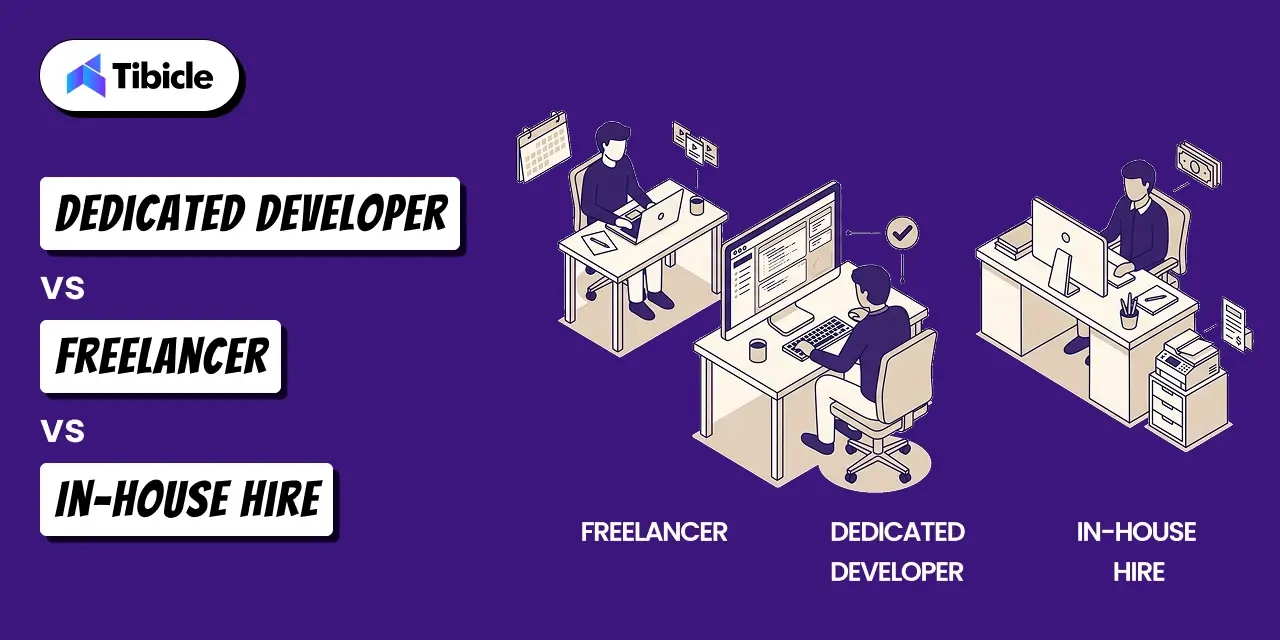
The right hiring model depends on the project’s duration, required control, available budget, and how quickly the company needs development capacity.
When to Hire Dedicated Electron.js Developers
A dedicated developer model works well when a company needs consistent development capacity without immediately expanding its permanent headcount.
It can support ongoing feature development, desktop modernization, integrations, security updates, bug fixing, and long-term maintenance while fitting into the company’s existing development process.
When Freelance Still Makes Sense
Freelancers can be useful for short, clearly defined assignments.
A company may bring in a freelancer for a specific packaging issue, bug fix, native module integration, or short-term development task.
The limitation is continuity. If the project continues for months, technical knowledge can become fragmented when different freelancers handle different parts of the application.
When to Hire In-House Instead
An in-house hire can make sense when Electron becomes a permanent part of the company’s core technology stack.
This provides greater control over architecture, hiring, internal processes, and long-term team development.
The trade-off is a longer recruitment process along with salaries, benefits, equipment, recruitment costs, and employee management.
| Hiring Model | Best For | Typical Ramp-Up Time |
| Dedicated developer (staff augmentation) | Ongoing product work needing consistent capacity | 1 to 3 weeks |
| Freelancer or contractor | Short, well-scoped tasks or one-off fixes | Days to 1 week |
| In-house hire | Long-term core team roles owning architecture decisions | 4 to 12+ weeks |
The Skills to Vet Before You Hire Dedicated Electron.js Developers

Electron development requires more than general JavaScript knowledge.
The strongest candidates should understand how desktop applications work internally and demonstrate experience taking an application from development through packaging and production deployment.
Core Skills to Check When You Hire Dedicated Electron.js Developers
Look for experience with Electron’s main and renderer processes, preload scripts, IPC, context isolation, sandboxing, and application lifecycle.
A developer should be able to explain why specific operations belong in the main process and how communication between processes should be controlled.
They should also understand how Electron interacts with Node.js and the operating system.
Native Module and Cross-Platform Packaging Experience
Desktop applications sometimes require native functionality that cannot be handled entirely through JavaScript.
A strong developer should have experience integrating native modules and packaging applications for Windows, macOS, and Linux.
Ask how they handled platform-specific dependencies, installers, permissions, and operating-system differences.
Security and Update Pipeline Familiarity
Security knowledge is important when an application runs directly on a user’s machine.
The developer should understand code signing, secure IPC, context isolation, application permissions, auto-updates, and dependency maintenance.
Before hiring, check whether the candidate can demonstrate:
- Comfort with context isolation, IPC, and the main and renderer process split
- At least one application packaged for Windows, macOS, and Linux
- Experience with code signing, auto-update, and native module integration
- A portfolio containing a real desktop application, not only web or mobile projects
JavaScript also provides a large talent pool. The 2025 Stack Overflow Developer Survey reports JavaScript usage among 68.8% of professional developers, making it one of the most widely used technologies among developers. This broad adoption can make it easier for US tech firms to find developers with transferable JavaScript skills for Electron projects.
Where to Hire Dedicated Electron.js Developers
Finding candidates is only the first step. The bigger challenge is identifying developers who have actually shipped production Electron applications rather than candidates whose experience is limited to JavaScript and React.
Specialized Dedicated Team Providers vs General Freelance Marketplaces
General freelance marketplaces provide a large candidate pool, but the hiring company usually needs to handle the technical screening itself.
Specialized dedicated team providers can reduce that initial filtering by presenting developers who have already gone through technical and communication checks.
For companies with an active product roadmap, this can reduce the time spent reviewing unrelated profiles and conducting basic screening rounds.
Referrals and Open-Source Contribution History
Referrals can provide useful signals because another professional is recommending the developer based on previous experience.
Open-source activity can also reveal how a developer approaches real code. Look for meaningful contributions, issue discussions, package maintenance, and projects involving Electron or related desktop technologies.
How Pre-Vetted Talent Helps You Hire Dedicated Electron.js Developers
A pre-vetted talent pool removes some of the early sourcing and screening work.
SHRM’s 2025 recruiting benchmarking research found that the average time-to-fill was approximately six weeks. SHRM Hiring Strategy and Benchmarking
For specialized Electron roles, reducing the number of initial screening and interview stages can help companies move from an open requirement to a productive developer faster.
The Interview and Technical Screening Process

A generic JavaScript coding test does not show whether a developer can build and maintain a production Electron application.
The screening process should focus on the exact problems the developer will encounter after joining the project.
Portfolio Review Before You Hire Dedicated Electron.js Developers
Start with the candidate’s actual desktop applications.
Ask what they built, which operating systems they supported, how the main and renderer processes were structured, and how the application was packaged and released.
A portfolio review can also reveal whether the developer worked on meaningful product functionality or only completed isolated tasks.
Trial Sprint Before You Hire Dedicated Electron.js Developers
A short practical task can reveal more than a theoretical interview.
For example, candidates can be asked to create a small Electron application with a preload layer, controlled IPC communication, local data handling, and a basic packaging workflow.
For longer engagements, a paid trial sprint can provide an even clearer view of how the developer works with the actual product and team.
Live Technical Interview Questions That Actually Filter for Experience
The interview should focus on decisions rather than definitions.
Ask candidates to:
- Explain a specific IPC security decision they made and why
- Walk through a native module integration they shipped
- Review a pull request from a previous Electron project
- Explain the trade-offs of enabling remote content in a renderer
This approach also reflects current developer hiring preferences. The HackerRank 2025 Developer Skills Report found that 66% of developers prefer practical coding challenges, while 78% say assessments do not align with real-world tasks.
Cost to Hire Dedicated Electron.js Developers
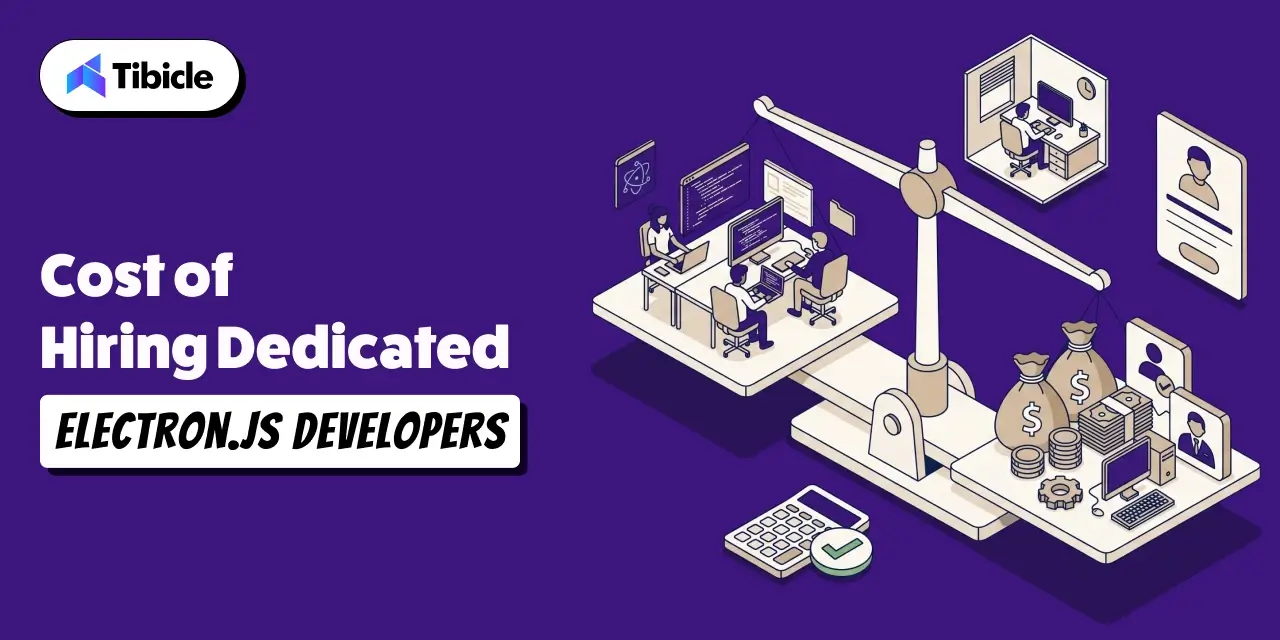
Hourly rates vary based on experience, location, technical depth, and engagement model.
The lowest hourly rate is not always the lowest overall cost. Onboarding time, supervision, retention, and the ability to solve Electron-specific problems can significantly affect the final project cost.
Rates by Experience When You Hire Dedicated Electron.js Developers
Junior developers may be suitable for clearly defined implementation tasks under senior guidance.
Mid-level developers can generally handle feature development and maintenance independently, while senior Electron developers can contribute to architecture, security, native integrations, release pipelines, and complex debugging.
For enterprise applications, production desktop experience can therefore be more valuable than choosing the lowest hourly rate.
Regional Rates to Hire Dedicated Electron.js Developers
Regional pricing varies depending on experience and engagement structure. A practical benchmark for dedicated Electron.js development can be represented as follows:
| Region | Typical Hourly Rate Range | Common Fit |
| South Asia (including India) | $20 to $50 | Long-term dedicated hires, cost-sensitive builds |
| Eastern Europe | $40 to $75 | Senior Electron architecture experience |
| Latin America | $30 to $65 | US time zone overlap for daily collaboration |
| United States | $75 to $160+ | In-house or onshore contractor roles |
Accelerance’s 2026 global software development guide highlights significant regional differences in outsourcing rates and emphasizes that hourly rates alone do not represent the complete cost of software delivery, according to the Accelerance 2026 Global Software Development Rates & Trends Guide.
What Affects the Cost to Hire Dedicated Electron.js Developers
The final cost depends on more than a developer’s location.
Onboarding time, communication overlap, technical leadership, retention, security requirements, project management, and application complexity can all affect total cost.
A developer who can independently solve native packaging or update-pipeline issues may cost more per hour but require less supervision and reduce project delays.
How Tibicle Sources and Vets Dedicated Electron.js Developers
For companies that need Electron expertise without building a complete recruitment process internally, Tibicle can provide a structured approach to sourcing and onboarding developers.
The focus is on matching technical experience with the actual requirements of the product rather than simply filling a JavaScript position.
Candidate Sourcing and Pre-Screening
We begin by understanding the required Electron experience, supporting technologies, operating systems, project scope, and expected engagement.
Candidates are then screened for relevant development experience, communication, availability, and previous desktop application work.
This helps remove candidates whose experience is limited to general web development.
Technical Vetting and Trial Sprint
Technical evaluation focuses on Electron architecture, IPC, native modules, packaging, security, and update workflows.
Where appropriate, a trial sprint can provide a practical view of how a developer works with the product, communicates with the team, and handles real implementation requirements.
Onboarding and Ongoing Team Management
Once the developer is selected, onboarding can include access setup, project documentation, sprint processes, communication channels, and development workflows.
As the engagement continues, the developer can remain aligned with the product roadmap while Tibicle supports the ongoing engagement and team coordination.
Key Takeaways When You Hire Dedicated Electron.js Developers
- A dedicated developer model fits ongoing Electron work: It provides consistent capacity and product knowledge without requiring an immediate permanent hire.
- Vet Electron experience, not just JavaScript: A real desktop portfolio should be part of the technical screening process.
- Practical assessments are more useful: HackerRank reports that 66% of developers prefer practical coding challenges over theoretical tests. HackerRank 2025 Developer Skills Report
- Pre-vetted talent can reduce hiring friction: SHRM’s 2025 research puts average time-to-fill at approximately six weeks. SHRM Hiring Strategy and Benchmarking
- Regional rate should not decide the hire: Ramp-up time, technical independence, retention, communication, and long-term product knowledge also affect total cost.
FAQs
What does “dedicated” mean when hiring an Electron.js developer?
A dedicated developer works consistently on one company’s product rather than splitting their time across multiple client projects. This provides predictable development capacity while allowing the developer to build deeper knowledge of the application’s architecture, workflows, dependencies, and release process.
How long does it take to hire a vetted Electron.js developer?
The timeline depends on the required experience, availability, and screening process. SHRM’s 2025 recruiting research puts average time-to-fill at approximately six weeks. A pre-vetted talent model can shorten the sourcing and initial screening stages because candidates are evaluated before being presented to the client.
What should a technical screening for an Electron.js developer include?
It should cover Electron architecture, main and renderer processes, IPC, context isolation, preload scripts, native modules, cross-platform packaging, code signing, and auto-updates. A practical task or trial sprint can also show how the developer approaches real Electron development rather than relying only on theoretical answers.
How much does it cost to hire a dedicated Electron.js developer?
Rates vary by experience and region. The benchmark ranges in this guide are approximately $20–$50 per hour in South Asia, $40–$75 in Eastern Europe, $30–$65 in Latin America, and $75–$160+ in the United States. The final cost also depends on technical complexity, engagement duration, and required seniority.
Is a dedicated developer better than a freelancer for a long-term Electron project?
For ongoing product development, a dedicated developer can provide greater continuity and predictable capacity. Freelancers can still be useful for short, clearly defined tasks or one-off fixes. The better option depends on project duration, complexity, and the need for ongoing product knowledge.
Does Tibicle provide pre-vetted dedicated Electron.js developers?
Yes. Tibicle can help companies source and vet Electron.js developers based on technical requirements, project scope, operating systems, and existing technology stacks. The process can include candidate screening, technical evaluation, trial work, onboarding, and ongoing engagement support.
Schedule A Developer Interview And Get 15 Days Risk-Free Trial
Schedule a Call

Relevant Blog


Written by

Recent Blogs
How to Hire Dedicated Electron.js Developers in 2026
What This Guide Covers Who this is for: US tech firms, SaaS companies, startups, CTOs, engineering managers, and product teams looking to hire dedicated Electron.js developers for ongoing desktop application development. Search intent: Hiring and decision. This guide covers where to find Electron.js developers, how to evaluate their technical skills, and how dedicated developers compare […]
Cross-Platform Desktop Application Development: Electron
What This Guide Covers Who this is for: SaaS companies, enterprise product teams, CTOs, engineering leaders, and product managers evaluating cross platform desktop application development for Windows, macOS, and Linux. Search intent: Implementation and decision. This guide explains why Electron remains a practical cross-platform desktop Application Development for enterprise SaaS, where it fits against native […]
The Product Manager’s Guide to Electron Enterprise App Distribution (MSI, DMG, and Apple Notarization)
What This Guide Covers Who this is for: Product Managers, engineering leads, and founders shipping for desktop Electron enterprise app distribution customers, and who need to plan Windows and macOS packaging, code signing, and Apple notarization into a release timeline instead of leaving it to engineering the week before launch. Search intent: Informational and planning. […]
Got an Idea? Get FREE Consultation
In our world, there's no such thing as having too many clients

