
0%
Hope Case Study
Hope Case Study

Case Study

Hope Case Study

An IoT-connected physiotherapy app that captures a patient's exercise activity through an Arduino device and streams it into a shared platform, so physiotherapists can track patient progress remotely without in-clinic supervision.

Industry
Healthcare / Physiotherapy & Rehabilitation
Solution Type
IoT-Connected Remote Rehabilitation Platform
Duration
2 months
Services
Mobile App, IoT & Firmware

Project Summary

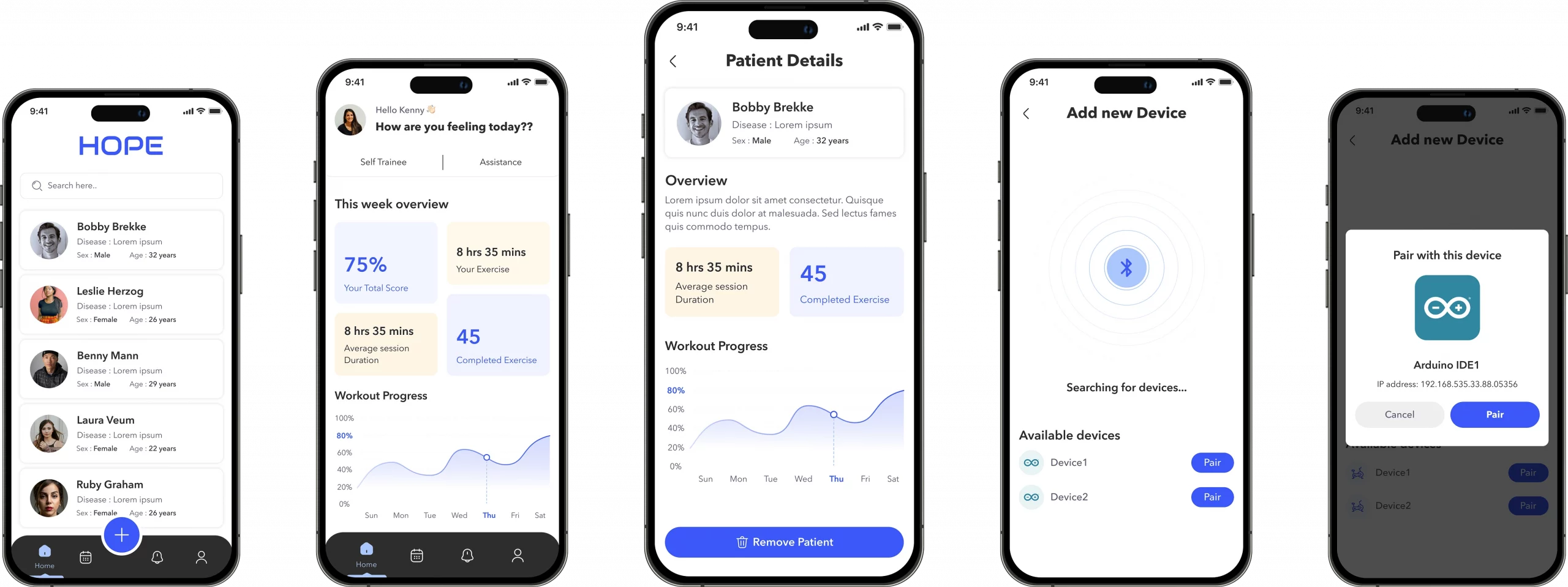
Hope came to Tibicle with a requirement that was new even to us: connect a patient's real exercise activity to their physiotherapist's app through an IoT device, so progress could be verified rather than self-reported. Before Hope, a physiotherapist prescribing home exercises had no visibility into whether those exercises were actually done, how often, or for how long. Everything depended on the patient remembering and reporting honestly at the next appointment. Tibicle designed and developed the MVP end to end — a single Flutter application serving both patient and physiotherapist roles, an Arduino-based IoT device, and the firmware and connection layer that ties exercise sessions on the device to progress reports in the app.
Project Summary

The Challenges

Turning Self-Reported Home Exercise Into Verified, Trackable Data

Remote rehabilitation kept failing on the same gap: the physiotherapist writes the plan, the patient goes home, and the data trail ends there.

No Verified Record of Home Exercise

One Interface, Two Very Different Users

One Interface, Two Very Different Users
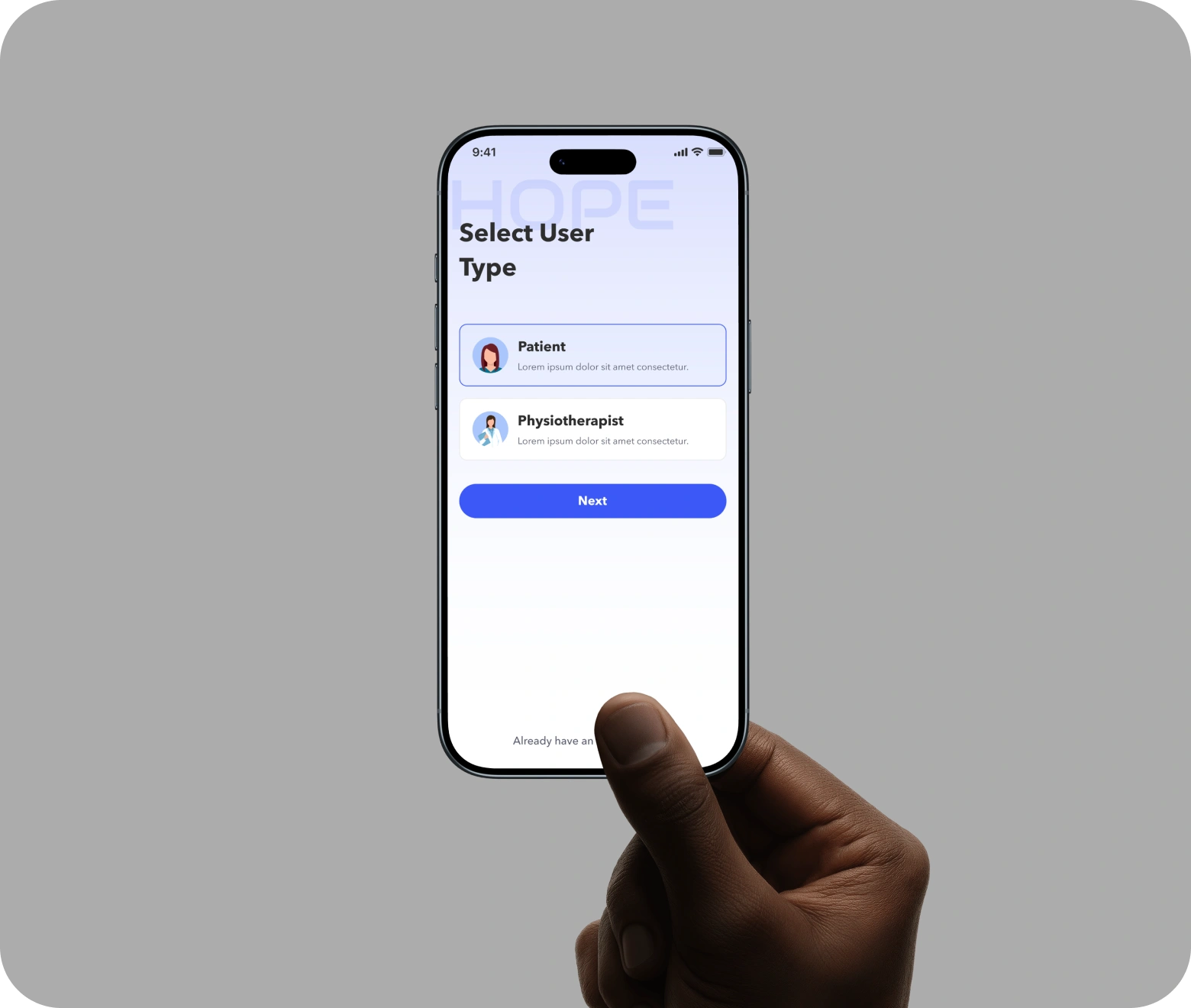
The client wanted a single platform serving both patients and physiotherapists, meaning two entirely different sets of needs, screens, and permissions had to live inside one app without confusing either audience.

Hardware-to-App Communication From Scratch

Connecting an Arduino device to a mobile application meant building the pairing, session signalling, and event logging layer ourselves — with no existing pattern in the project to build on.

Firmware Development Outside the Team's Existing Stack

Arduino IDE and firmware coding were new territory for the mobile team, requiring a ramp-up on embedded development in parallel with app delivery.

Exercise Sessions Breaking on Navigation

An exercise session had to survive the patient moving around the app, so timing and state couldn't be tied to a single screen staying open.

No Structured View of Patient Progress

Physiotherapists needed to see patterns over time across a full caseload, not isolated session logs, which meant raw device events had to be aggregated into readable daily, weekly, and monthly reporting.
Our Solution

Tibicle built Hope as a connected rehabilitation MVP, linking a physical exercise device to a dual-role mobile app so activity recorded at home shows up directly in the physiotherapist's caseload view.
Single App, Dual-Role Experience

Single App, Dual-Role Experience

Rather than shipping two separate products, Hope routes users into the right experience from a single sign-up. The user chooses patient or physiotherapist at registration, and the entire interface adapts from there.
  • Role selection at sign-up, patient or physiotherapist
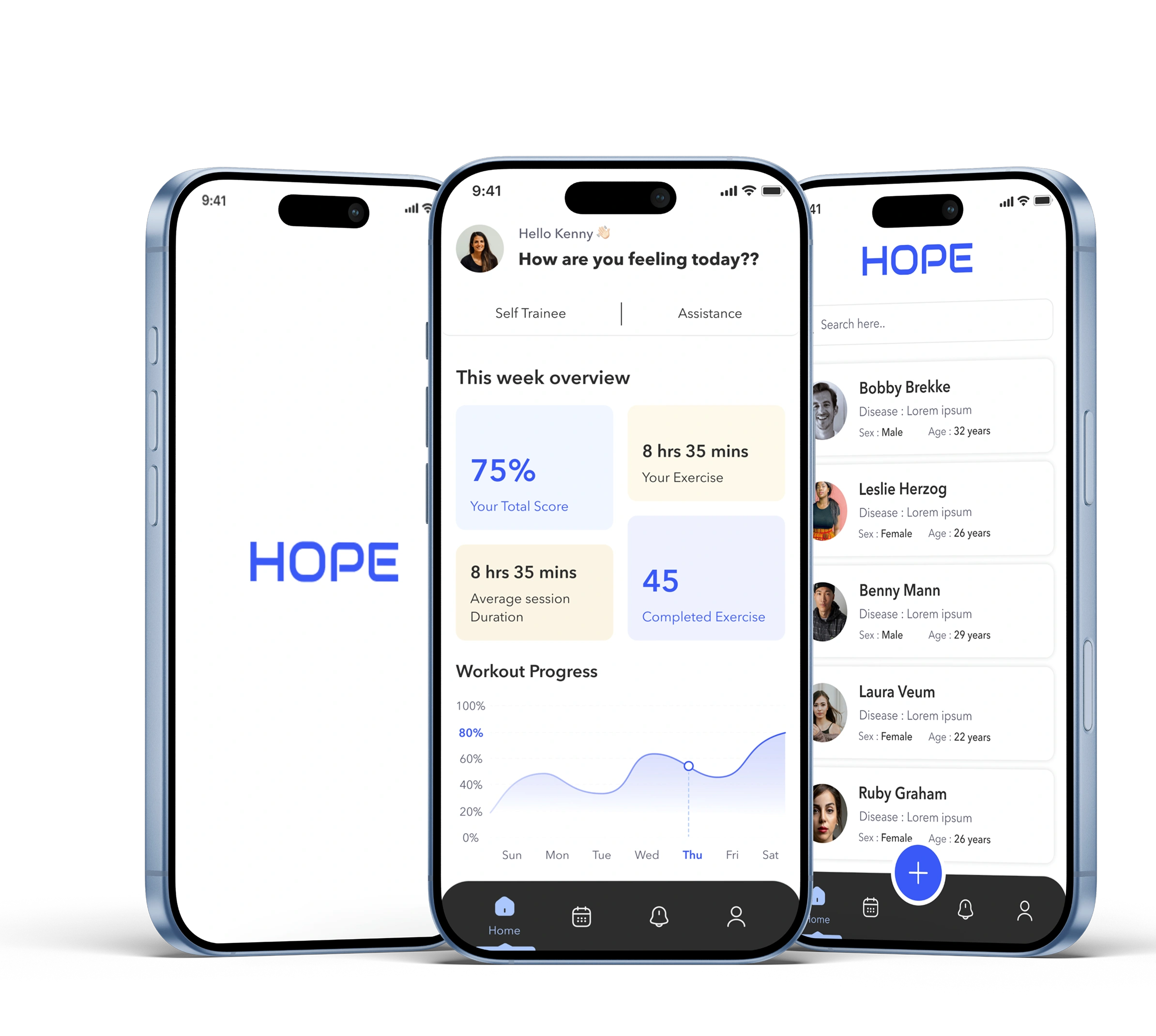
  • Patient home screen focused on tracking exercise progress
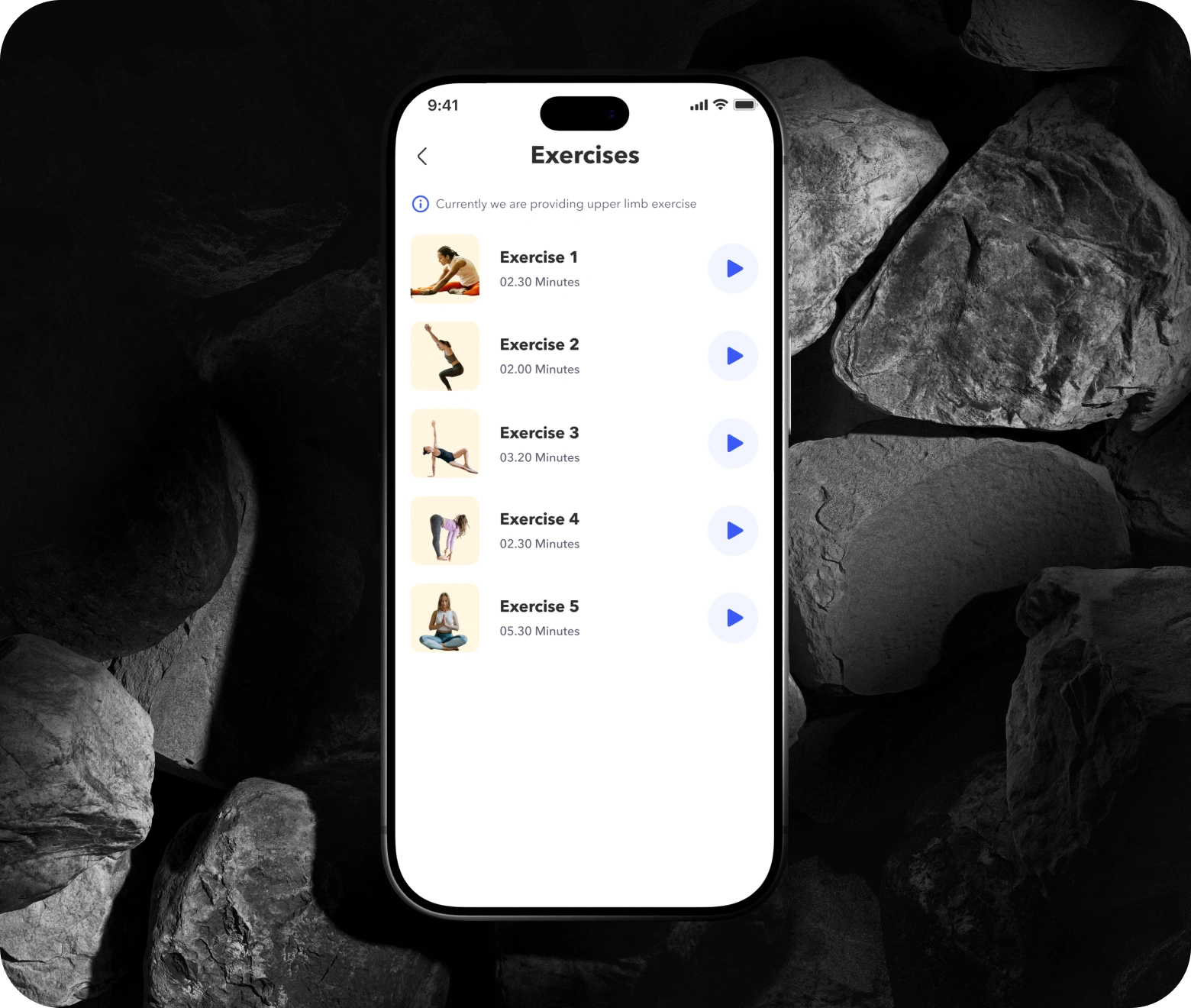
  • Exercise listing screen showing all exercises assigned to that patient
  • Separate physiotherapist experience served from the same codebase
  • One wireframe system designed to hold both journeys without duplication
Arduino IoT Exercise Tracking

Arduino IoT Exercise Tracking

The core of the product. The Arduino device pairs with the app, and exercise sessions are signalled on the hardware itself so completion is recorded as a real event rather than a tap in an app.
  • Arduino device pairs and connects directly with the mobile application
  • Starting an exercise activates the indicator light on the device
  • Session events are logged and verified through the Arduino IDE serial output
  • Completing the exercise switches the light off and writes a completion event
  • Custom firmware written specifically for the exercise session flow
Background Session Timer and Completion Feedback

Background Session Timer and Completion Feedback

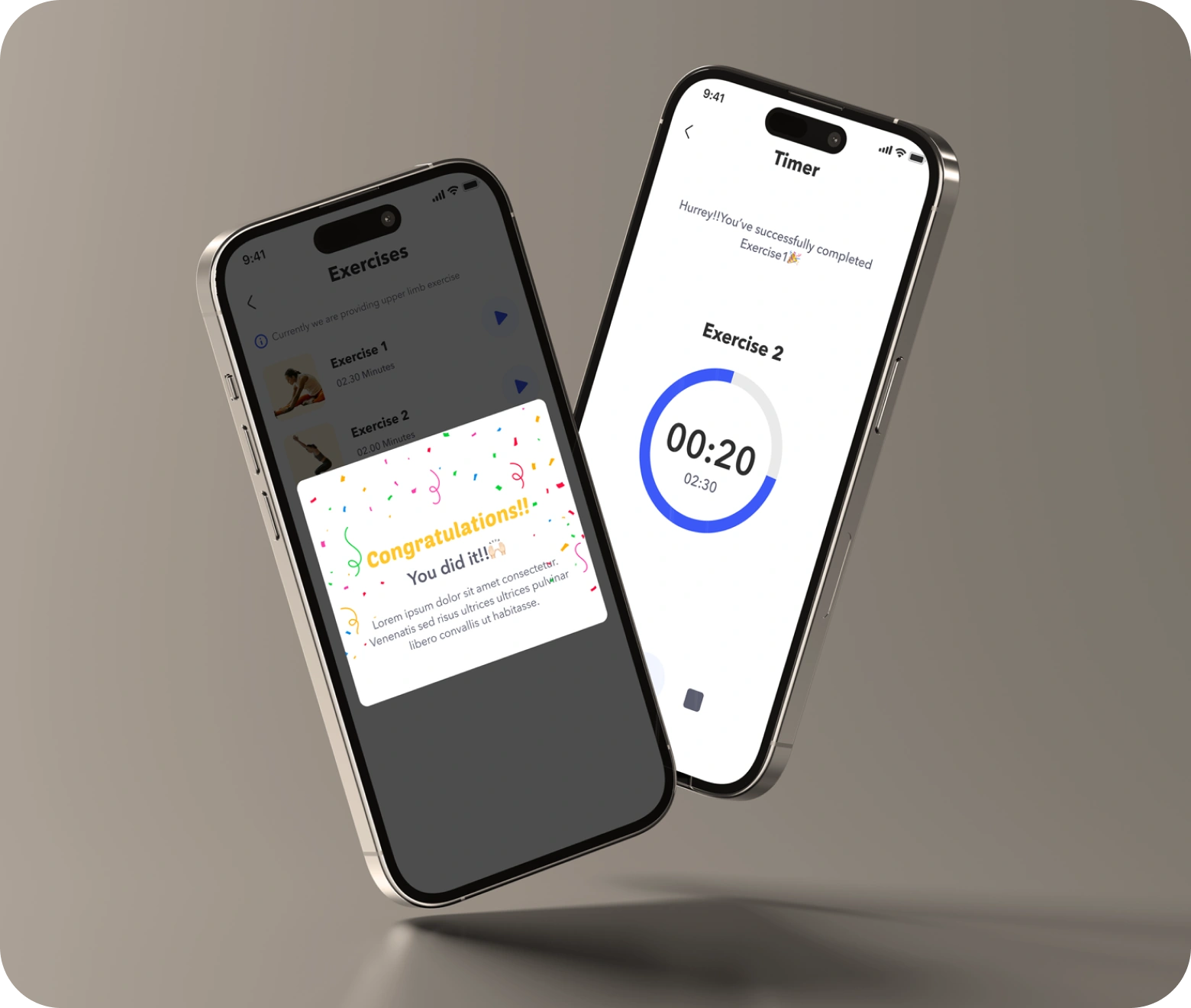
Patients don't sit and stare at one screen while exercising, so the session had to follow them. The timer runs in the background and stays visible anywhere in the app, and finishing a session is acknowledged immediately.
  • Exercise timer continues running in the background throughout the session
  • Timer remains accessible from any screen in the app
  • Congratulations dialog on exercise completion
  • Completion flow links through to the contact page
 Physiotherapist Caseload and Progress Reporting

Physiotherapist Caseload and Progress Reporting

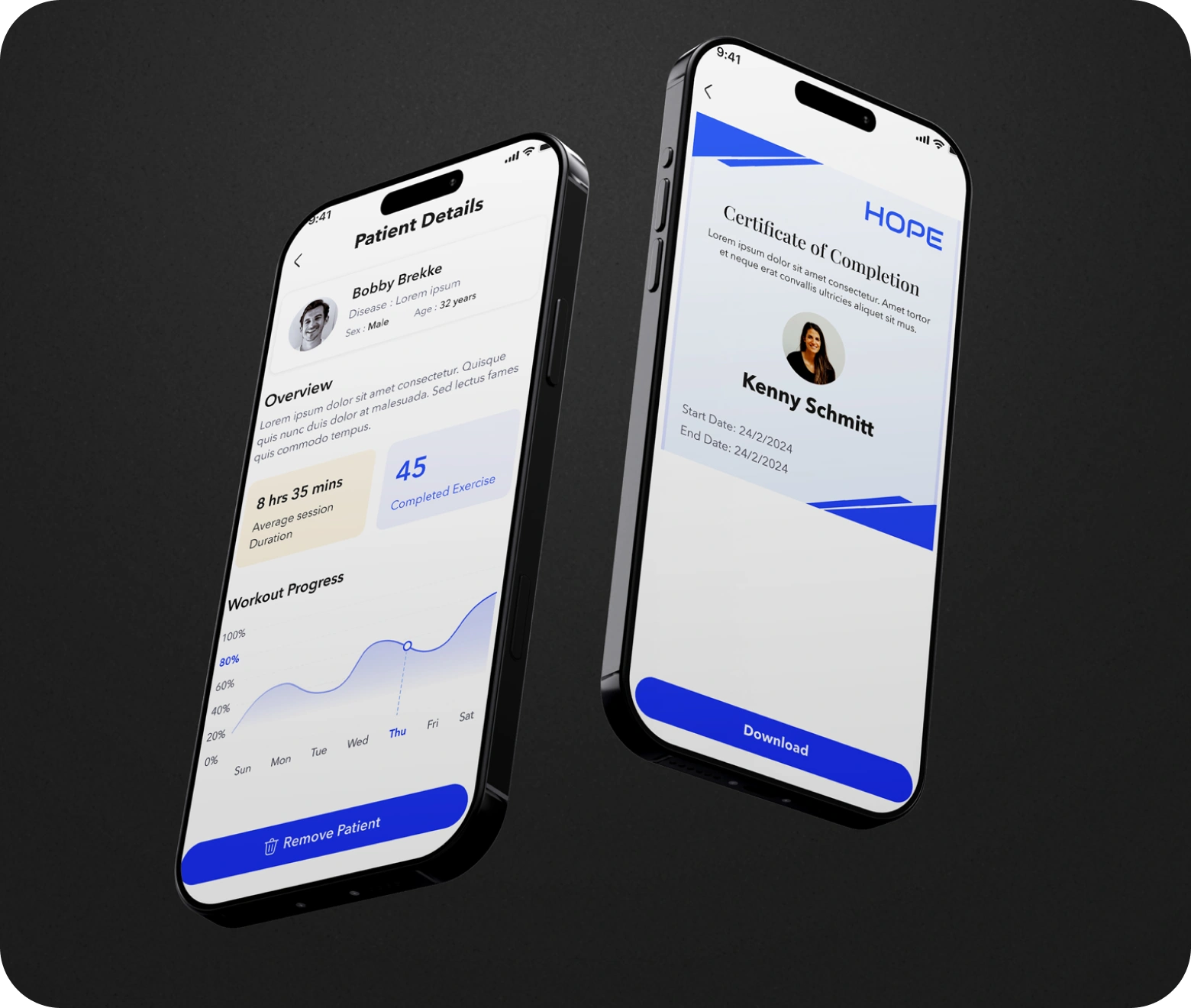
Physiotherapists manage many patients at once, so the therapist side was built around the caseload rather than the individual session.
  • Home screen listing all patients under that physiotherapist
  • One-tap access to a detailed progress report per patient
  • Daily, weekly, and monthly progress views
  • Add new patients and send notifications requesting their details
  • Remove patients from the active caseload

How We Deliver

Building Hope meant proving an idea in hardware and software at the same time — an exercise had to be startable on a device, logged in firmware, and reflected in a therapist's report, all before the MVP could be called working.
How We Deliver
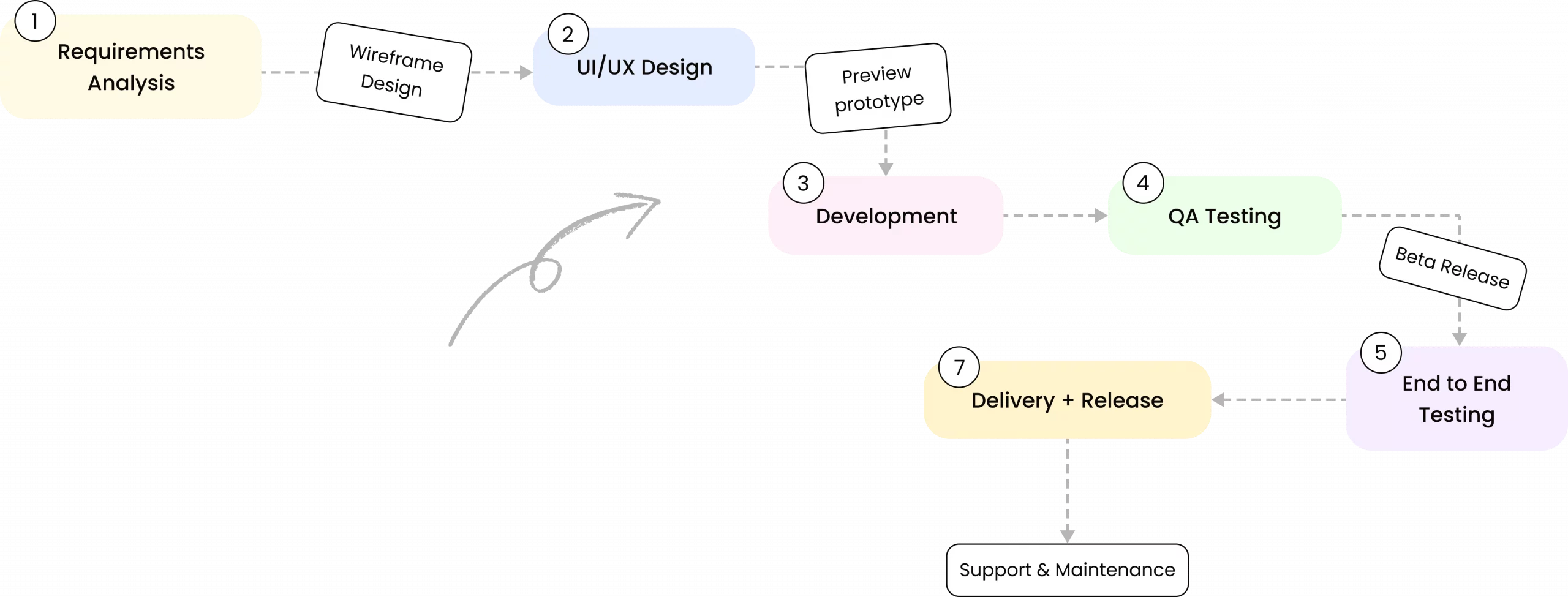
Our development process for Hope moved through Requirements Analysis, Architecture & Wireframe Design, Firmware & IoT Integration, Mobile App Build, and End-to-End Testing before Delivery and Release, with the Arduino firmware and the Flutter application developed and tested in parallel so the device connection layer could be validated continuously rather than at the end. Post-launch, our Support & Maintenance services continue to support the platform as the device and user base scale.

Outcomes Delivered

Outcomes Description: Hope moved remote physiotherapy from self-reported check-ins to device-verified exercise data, giving therapists a live view of patient adherence between appointments.

100%

Device-Verified Sessions

Every exercise session is logged by the Arduino hardware itself, removing self-reporting from the adherence record entirely.

2-in-1

Roles From One Codebase

Patient and physiotherapist experiences delivered from a single Flutter application, halving the build and maintenance surface.

3

Progress Report Views

Daily, weekly, and monthly reporting generated automatically from raw device events, with no manual logging by either party.

Manual Check-Ins Required

Physiotherapists review caseload progress on demand instead of waiting for the next in-clinic appointment.

Tech Stack

Hope is built with Flutter for a single cross-platform mobile application serving both patient and physiotherapist roles, with custom Arduino firmware written in the Arduino IDE handling device-side exercise session tracking and event logging. The full interface was designed and prototyped in Figma before development.

Got an Idea?
Get FREE Consultation

In our world, there's no such thing as having too many clients

icon
Phone
+91 9724922880