
Restaurant Employee Handbook: Complete Guide + Free Template

Aug 07, 2026

Read in 8 Minutes
Table of Contents
- What This Guide Covers
- Introduction
- What Is a Restaurant Employee Handbook – And Why Most Owners Get It Wrong
- What to Include in a Restaurant Employee Handbook
- Legal Requirements Your Restaurant Employee Handbook Must Address
- Restaurant Employee Handbook: Common Mistakes That Cost Owners Money
- Restaurant Employee Handbook vs. No Handbook: What the Data Actually Shows
- The Real ROI of a Restaurant Employee Handbook
- Pricing Breakdown – What It Costs to Create a Restaurant Employee Handbook
- Choosing HR Software to Manage Your Restaurant Employee Handbook
- Free Restaurant Employee Handbook Template – How to Use It
- Conclusion
- FAQs
What This Guide Covers
Who this is for
Restaurant owners, café operators, hospitality groups, franchise owners, HR managers, and general managers looking to improve onboarding, reduce turnover, strengthen compliance, and create a professional restaurant employee handbook.
Search intent
Comparison and decision. This guide helps restaurant operators understand what to include in a restaurant employee handbook, meet legal requirements, avoid common mistakes, and choose the best approach for creating or updating one.
What you will walk away with
A practical guide to creating a compliant restaurant employee handbook, including essential policy sections, legal requirements, onboarding best practices, ROI insights, a vendor checklist, and a free customizable template.
Introduction
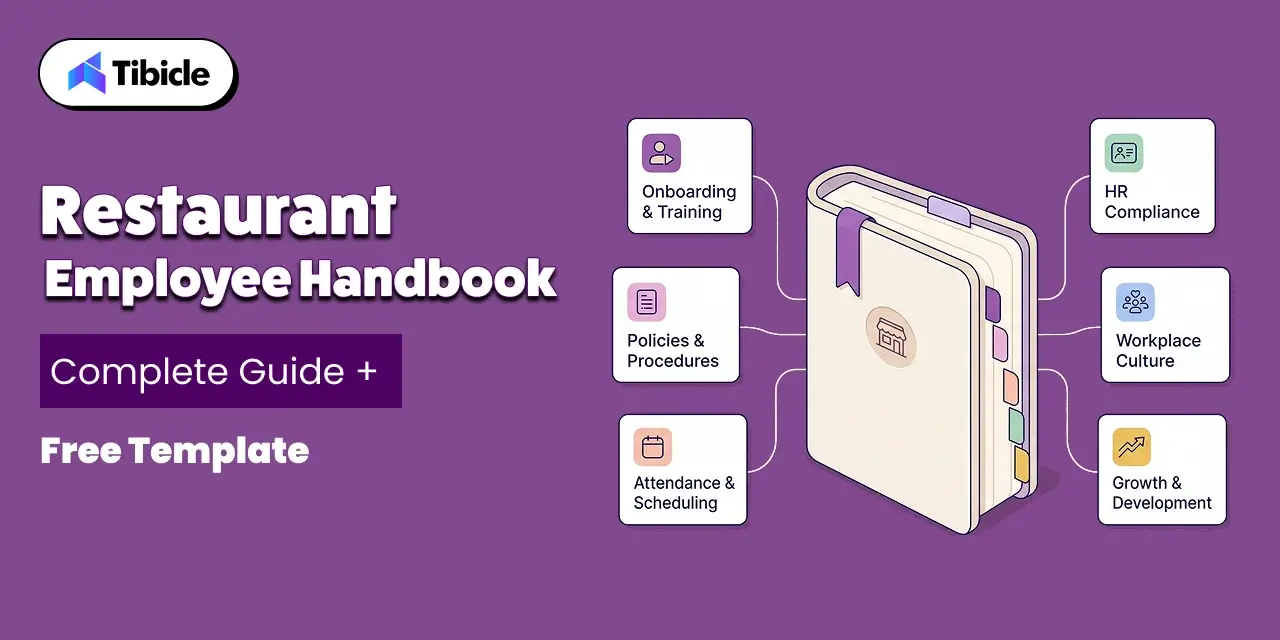
Restaurant turnover remains one of the industry’s biggest operational challenges. Replacing a single hourly employee can cost anywhere from $2,300 to $5,864, while annual employee turnover across the restaurant industry continues to exceed 75%. Despite these costs, many operators still view the restaurant employee handbook as little more than a hiring formality or legal requirement.
High-performing restaurants take a different approach. Rather than treating the handbook as paperwork, they use it as operational infrastructure that establishes clear expectations, answers common policy questions, accelerates restaurant onboarding, improves consistency across locations, and helps reduce employment disputes before they occur.
A well-written handbook protects both employees and employers by establishing documented standards that support day-to-day operations and reduce legal and compliance risks.
What Is a Restaurant Employee Handbook – And Why Most Owners Get It Wrong
A restaurant employee handbook is far more than a collection of workplace rules. At its core, it is a written operating agreement between restaurant management and employees that establishes expectations, explains workplace policies, and creates a consistent framework for how the business operates.
Many restaurant owners confuse a handbook with a training manual, but the two serve very different purposes. A handbook defines policies, employee rights, workplace expectations, and compliance requirements, while a training manual explains how specific tasks should be performed, such as preparing menu items, operating equipment, or following service procedures.
This distinction is important because policies protect the business, while procedures improve performance.
Despite the growing complexity of labor laws, industry surveys suggest that nearly one-third of restaurants still operate without a formal handbook. That exposes businesses to unnecessary legal risk, inconsistent policy enforcement, and confusion during employee onboarding.
A strong staff handbook for restaurants should accomplish two goals simultaneously. Operationally, it creates consistency, reduces repetitive management questions, and improves onboarding efficiency. Legally, it documents workplace expectations, supports restaurant HR compliance, and provides a defensible record if employment disputes arise.
Understanding this difference is the first step toward building a handbook that strengthens both daily operations and long-term business protection.
What to Include in a Restaurant Employee Handbook
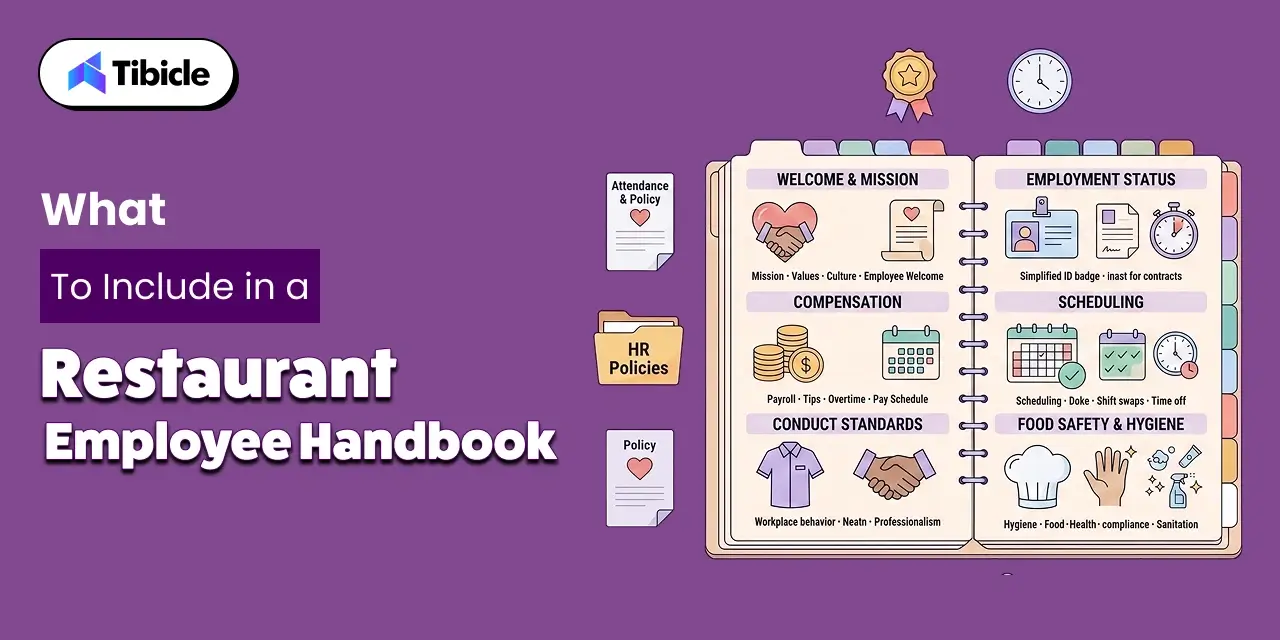
A well-structured restaurant employee handbook should do more than communicate company policies. It should establish clear expectations, protect the business from legal risk, support consistent decision-making, and create a better onboarding experience for every new employee. Each section serves a specific operational and compliance purpose, helping managers reduce confusion while giving employees a reliable reference throughout their employment.
Rather than using a generic template, restaurants should customize their handbook to reflect their policies, workplace culture, and applicable labor laws. Below are the essential employee handbook sections every restaurant should include.
Welcome Letter and Restaurant Mission Statement
The opening section sets the tone for the entire handbook and often forms a new employee’s first impression of the business. A thoughtful welcome message introduces your restaurant’s mission, values, and commitment to creating a positive workplace culture.
This section should also explain what employees can expect from the organization and what the restaurant expects in return. Including an at-will employment disclaimer here helps clarify that the handbook is not an employment contract while reducing potential contract-related disputes.
A strong introduction creates engagement from day one and supports higher retention during the critical first month of employment.
Employment Policies and Classification
This section should define full-time, part-time, seasonal, temporary, and tipped employee classifications while explaining eligibility for benefits, overtime, and probationary periods. Restaurants should also outline attendance expectations, work authorization requirements, and equal employment opportunities.
Policies should align with FLSA compliance requirements and any applicable state labor laws to ensure employees understand both their rights and responsibilities.
Compensation, Tip Pooling, and Pay Schedule
Compensation policies are among the most frequently referenced sections of any handbook. Employees should know when they will be paid, how overtime is calculated, and how to report payroll issues.
Restaurants employing tipped workers should clearly explain their tip pooling policy, including eligibility, distribution methods, and any state-specific regulations governing pooled tips. Businesses should also document overtime rules for tipped and non-tipped employees, explain the 80/20 rule where applicable, and outline procedures for reporting payroll discrepancies.
Well-documented compensation policies strengthen restaurant HR compliance and reduce misunderstandings about wages and tips.
Scheduling, Attendance, and Shift Swap Policies
Consistent scheduling policies help reduce operational disruptions while creating fairness across the workforce.
This section should explain scheduling timelines, attendance expectations, call-out procedures, punctuality requirements, and the process for requesting time off or swapping shifts. Restaurants operating in jurisdictions with predictive scheduling or fair workweek legislation should ensure these requirements are reflected in their shift scheduling policy.
Clearly documented scheduling expectations reduce last-minute staffing issues and improve accountability across the team.
Code of Conduct and Workplace Behavior
Every restaurant should establish clear standards for professional conduct.
This section should define expectations regarding appearance, uniforms, grooming, communication, mobile phone use, customer interactions, confidentiality, and respectful workplace behavior. The restaurant code of conduct should also include anti-discrimination, anti-harassment, and workplace violence policies, with legal language reviewed by qualified employment counsel where appropriate.
Social media expectations should also be included to help protect the restaurant’s reputation and brand image.
Food Safety and Health Code Compliance
Maintaining food safety standards protects customers, employees, and the business itself.
Your handbook should include a documented food safety policy covering handwashing procedures, glove usage, allergen awareness, illness reporting, temperature control, cleaning responsibilities, and sanitation practices. Restaurants should also reference applicable local health department regulations and any mandatory food safety training requirements.
Documenting these procedures demonstrates operational consistency while reducing compliance risks during health inspections.
Disciplinary Procedures and Termination Policy
Employees should understand how performance issues and workplace misconduct will be handled.
A documented progressive discipline process helps ensure consistency and fairness across the organization. Typical disciplinary steps include verbal coaching, written warnings, final warnings or suspension, and termination when necessary.
The handbook should also explain resignation procedures, final paycheck timelines, return of company property, and exit documentation requirements. Clearly documented disciplinary policies help managers make consistent decisions while providing valuable documentation should employment disputes arise.
Legal Requirements Your Restaurant Employee Handbook Must Address
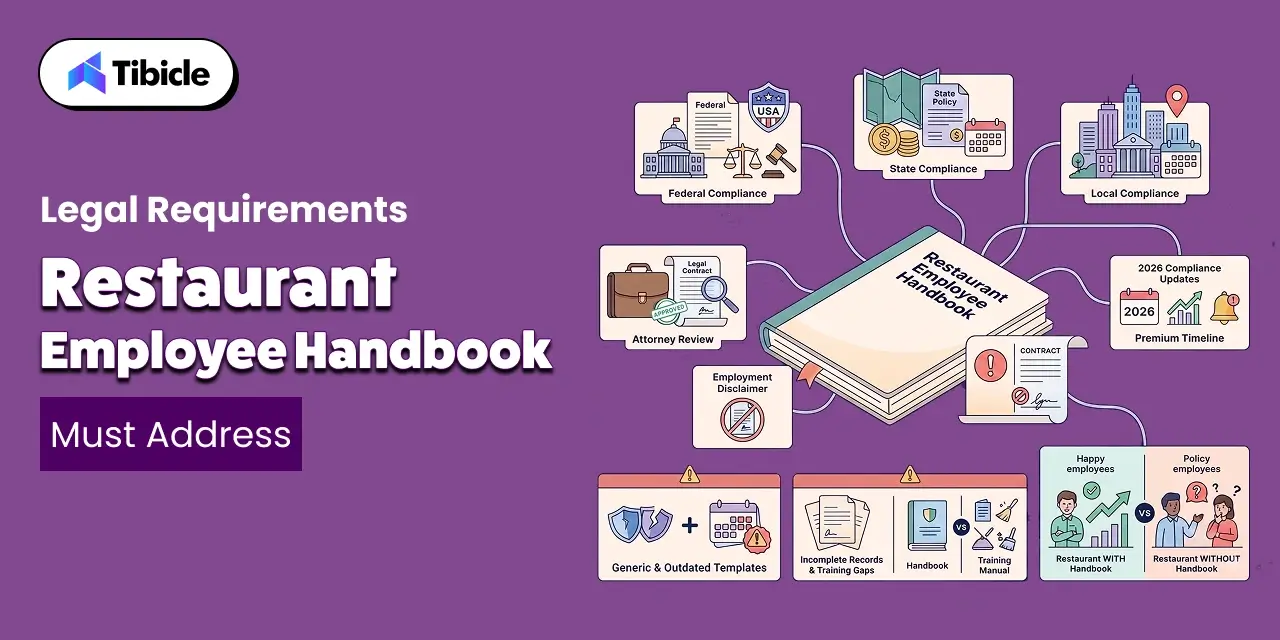
A professionally written restaurant employee handbook is more than an internal policy document; it is an important compliance tool that helps restaurants meet employment law requirements while reducing legal and operational risks. Labor laws continue to evolve at the federal, state, and local levels, making it essential for restaurant owners to review and update their handbook regularly.
Rather than copying policies from generic templates, businesses should ensure their handbook reflects the laws that apply to their specific locations. A compliant handbook not only protects the employer but also provides employees with clear expectations about workplace rights, responsibilities, and company policies.
Federal vs. State vs. Local – Understanding the Three-Layer Compliance Stack
Employment compliance operates across three different levels, and every restaurant employee handbook should address each of them.
Federal requirements establish the minimum legal standards for employers. These include the Fair Labor Standards Act (FLSA) covering wages and overtime, Title VII addressing workplace discrimination, the Americans with Disabilities Act (ADA), the Age Discrimination in Employment Act (ADEA), and the Family and Medical Leave Act (FMLA) for businesses with 50 or more employees.
State laws often introduce additional requirements such as higher minimum wages, meal and rest break regulations, paid sick leave, overtime rules, and employee leave policies. For example, states like California, New York, and Colorado have labor laws that extend beyond federal requirements.
Local regulations may impose even more specific obligations. Cities including New York City, Chicago, and Seattle have Fair Workweek or predictive scheduling laws that affect employee scheduling practices. Other jurisdictions have adopted legislation such as the CROWN Act, requiring employers to update workplace discrimination policies.
2026 Compliance Updates to Review
- California minimum wage increases to $16.90 per hour.
- California expands restaurant pest prevention training requirements.
- Minnesota introduces updated paid leave notification requirements for seasonal workers.
- Review state and local labor law updates annually before distributing a new handbook version.
Understanding these three compliance layers helps restaurants create policies that remain legally defensible while supporting consistent operations across every location.
Sections That Need Attorney Review Before You Publish
Although many handbook sections can be prepared internally, certain policies should always be reviewed by an employment attorney before publication.
This includes anti-harassment and Equal Employment Opportunity (EEO) policies, at-will employment disclaimer language, tip credit and tipped minimum wage provisions, discrimination policies, and other legally sensitive employment terms.
Poorly drafted legal language can expose a business to greater liability than omitting the section altogether. An attorney review helps ensure your handbook complies with current federal, state, and local employment laws while reducing legal risk.
The Handbook Is Not an Employment Contract – How to Say That Clearly
One of the most important legal protections in any restaurant employee handbook is a clear statement that the handbook is not an employment contract.
This disclaimer should appear near the beginning of the handbook and again on the employee acknowledgment page. It should explain that policies may be updated over time and that employment remains subject to applicable employment laws and company policies.
Without this language, employees may argue that handbook policies created contractual obligations, increasing the risk of wrongful termination or breach-of-contract claims. A properly written disclaimer helps protect both the employer and the employee by clearly defining the purpose of the handbook.
Restaurant Employee Handbook: Common Mistakes That Cost Owners Money
Many restaurants create a handbook once and never revisit it. Unfortunately, outdated policies, missing documentation, and generic templates can expose businesses to unnecessary legal and operational risks. A handbook should evolve alongside labor laws, business growth, and operational changes.
Below are some of the most common mistakes restaurant owners make, and why they can become expensive over time.
Writing a Generic Handbook That Ignores Your State’s Labor Law
One of the biggest mistakes is using a one-size-fits-all handbook without adapting it to state and local employment laws.
The U.S. Department of Labor recovered more than $274 million in back wages from the food service industry during 2024, with many violations involving overtime calculations, wage policies, and tipped employees. Multi-location businesses should maintain one master handbook supported by location-specific policy addenda rather than relying on a single document for every state.
Never Updating the Handbook After You Publish It
Labor laws change regularly.
Minimum wage updates, leave policies, scheduling regulations, and workplace compliance requirements can all affect handbook content. Every handbook should include a version number and effective date, making it clear which edition employees are expected to follow.
Reviewing the handbook annually, or whenever significant legal changes occur, helps maintain compliance while ensuring employees always receive current information.
Skipping the Employee Acknowledgment Signature Page
A handbook has limited value if employees cannot confirm they have received and understood it.
Every employee should sign an acknowledgment form confirming they have reviewed the handbook. Digital acknowledgments through HR platforms are equally effective and provide a permanent compliance record.
Without documented acknowledgment, employers may struggle to demonstrate that workplace policies were properly communicated.
Treating the Handbook as a Training Manual
A restaurant employee handbook establishes policies, expectations, and legal responsibilities.
A training manual explains how employees perform their jobs.
Combining the two creates unnecessary legal ambiguity and makes policy enforcement more difficult. Keeping these documents separate allows the handbook to remain a clear policy document while operational procedures can evolve independently through training materials.
Restaurant Employee Handbook vs. No Handbook: What the Data Actually Shows
Many restaurant owners see a restaurant employee handbook as an administrative document rather than a business asset. In reality, a well-structured handbook improves onboarding, creates consistency, reduces compliance risks, and saves management time. Restaurants that rely solely on verbal communication often experience more policy disputes, inconsistent employee experiences, and higher turnover.
The comparison below highlights the operational impact of documenting workplace expectations versus relying on informal communication.
| Factor | Restaurant With Handbook | Restaurant Without Handbook |
| Average onboarding time | 3–5 days | 7–10 days |
| Policy dispute frequency | Low (documented expectations) | High (verbal agreements) |
| Labor law violation risk | Lower (documented compliance) | Higher (no written record) |
| Wrongful termination exposure | Reduced (documented disciplinary procedures) | Elevated |
| New hire 30-day retention | Higher | Industry average (~60%) |
| Manager time spent answering repeat policy questions | 1–2 hours/week | 4–6 hours/week |
Restaurants already spend significant resources recruiting and training new employees. With replacement costs ranging from $2,300 to $5,864 per hourly employee, preventing even a small number of early departures can generate measurable savings. A clear restaurant employee handbook reduces confusion during restaurant onboarding, creates consistency across managers, and ensures critical employee handbook sections are communicated from the first day of employment. For growing restaurants and multi-location operators, documented policies become an operational advantage rather than simply an HR requirement.
Need help creating a restaurant employee handbook from scratch, or reviewing the one you already have? Download our free template or connect with Tibicle’s team for a professional handbook review tailored to your restaurant’s operations.
The Real ROI of a Restaurant Employee Handbook
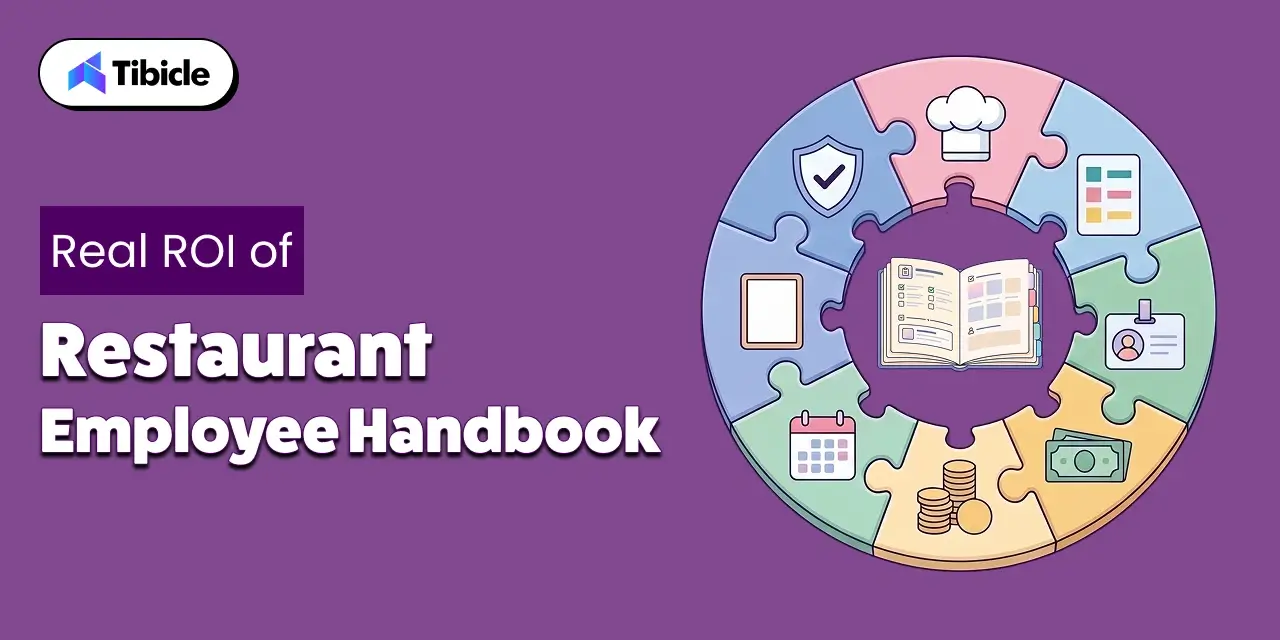
Many restaurant owners view a restaurant employee handbook as a compliance document, but its real value extends far beyond meeting legal requirements. A well-designed handbook reduces turnover, strengthens restaurant HR compliance, standardizes onboarding, and creates operational consistency across every location.
When policies are clearly documented, managers spend less time answering repetitive questions, employees understand expectations from day one, and businesses reduce the likelihood of costly employment disputes.
Calculating What a High-Turnover Rate Actually Costs Your Restaurant
Restaurant turnover continues to exceed 75% annually, with fast-food businesses often reporting rates above 130%. According to hospitality research, replacing a single hourly employee can cost as much as $5,864 once recruitment, onboarding, training, and lost productivity are considered.
For a restaurant employing 20 team members, high turnover can translate into well over $150,000 annually in replacement costs.
Investments that improve onboarding and employee retention, such as a structured restaurant employee handbook, can produce significant returns by reducing avoidable turnover and helping new hires become productive more quickly.
How Documented Policies Reduce Wage and Hour Liability
Employment disputes frequently arise because policies are undocumented or inconsistently applied.
The U.S. Department of Labor recovered more than $274 million in back wages from food service employers during 2024, with many cases involving overtime calculations, tipped employee pay, and wage documentation.
A compliant handbook supported by signed employee acknowledgments creates a documented record that policies were communicated, strengthening the employer’s position during audits or workplace disputes while improving overall restaurant HR compliance.
Consistency at Scale – The Multi-Location Multiplier
As restaurants expand, maintaining consistent employee experiences becomes increasingly difficult without standardized documentation.
A single master handbook supported by location-specific policy addenda allows restaurant groups to maintain consistent workplace expectations while adapting to state and local labor laws. This approach simplifies onboarding, reinforces brand standards, and helps new locations become operational more quickly.
For multi-unit operators, a well-maintained restaurant employee handbook becomes an essential operational tool that supports scalable growth while reducing management complexity.
Pricing Breakdown – What It Costs to Create a Restaurant Employee Handbook
Creating a restaurant employee handbook is an investment in compliance, employee retention, and operational consistency. The right approach depends on your restaurant’s size, number of locations, and the complexity of your labor law requirements. While many operators start with free templates, growing restaurants often benefit from professional HR platforms or legal review to reduce compliance risks.
Rather than focusing only on the upfront cost, evaluate each option based on the time required, legal protection provided, and long-term maintenance. A handbook that is inexpensive to create but outdated or legally inaccurate can become far more costly than investing in the right solution from the beginning.
Typical Cost Comparison
| Method | Typical Cost | Time to Complete | Compliance Risk |
| DIY using a free restaurant employee handbook template | $0–$50 | 8–20 hours | High (no legal review) |
| HR consultant | $150–$300/hour ($1,200–$3,000 total) | 1–3 weeks | Low (with attorney review) |
| HR software (Homebase, Rippling, etc.) | $50–$200/month per location | A few days | Medium (state-specific templates) |
| Restaurant-specific HR platform | $200–$500/month | A few days–1 week | Low (auto-updated policies) |
| Employment attorney | $1,500–$5,000 | 2–6 weeks | Lowest (best for complex operations) |
Although free templates provide a useful starting point, they rarely account for state-specific labor laws, tipped employee regulations, or business-specific policies. For single-location restaurants, combining a quality restaurant employee handbook template with legal review is often the most cost-effective option. Multi-location operators typically benefit from HR platforms or professionally managed solutions that automatically update policies as employment laws change.
When comparing options, remember that a single wage-and-hour violation or employment dispute can cost significantly more than the investment required to build a compliant handbook.
Choosing HR Software to Manage Your Restaurant Employee Handbook
If you’re evaluating HR software to build or manage your restaurant employee handbook, look beyond templates and pricing. The right platform should simplify onboarding, maintain compliance, and keep policies updated as labor laws evolve. A platform that cannot support restaurant-specific requirements may create additional administrative work rather than reducing it.
The 8-Point Checklist for Evaluating a Restaurant HR Platform
Before selecting an HR platform, use the following checklist:
- Does it automatically update handbook language when federal, state, or local employment laws change?
- Does it support digital acknowledgments and electronic signatures for every employee?
- Can it accurately manage tipped employee payroll and FLSA compliance requirements?
- Does it allow one master handbook with location-specific addenda for multi-location restaurants?
- Can it integrate with scheduling software so handbook policies match operational workflows?
- Is handbook delivery built into the restaurant onboarding process?
- Does it include food safety policy modules and documentation for HACCP or other required training?
- Are handbook templates reviewed by employment attorneys or supported by legal compliance experts?
Choosing software with these capabilities reduces administrative effort while ensuring your handbook remains accurate as regulations evolve.
Questions to Ask Before Signing a Contract
Before committing to any HR platform or handbook solution, ask these questions:
- How often are state-specific handbook templates updated?
- Is the handbook builder included in the base subscription or offered as a paid add-on?
- Can the completed handbook be exported as a PDF for offline employee access?
- Who owns the handbook and employee records if the subscription is cancelled?
Asking these questions before implementation helps avoid unexpected costs, simplifies future updates, and ensures your restaurant employee handbook remains a long-term business asset rather than another administrative burden.
Free Restaurant Employee Handbook Template – How to Use It
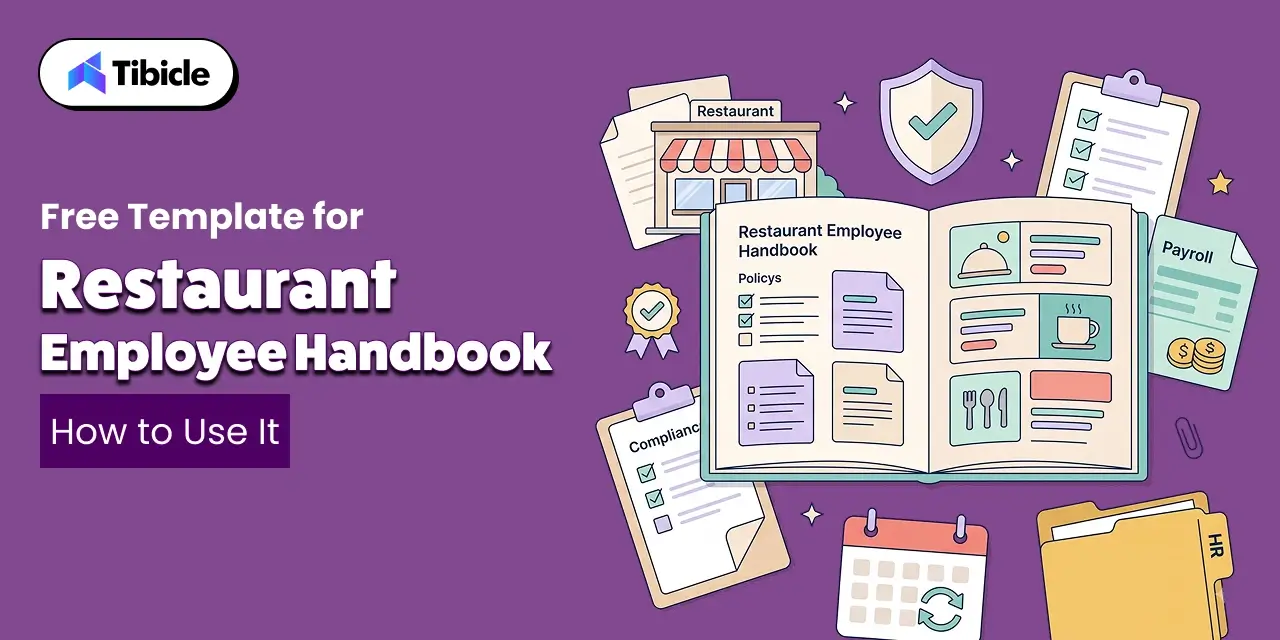
A professionally structured restaurant employee handbook template gives restaurant owners a strong starting point for documenting workplace policies, improving onboarding, and maintaining compliance. Instead of creating policies from scratch, operators can customize a template to reflect their restaurant’s culture, operational procedures, and applicable labor laws.
The free template included with this guide is designed for independent restaurants, cafés, food trucks, cloud kitchens, and growing multi-location businesses. It provides the essential framework while allowing flexibility to adapt policies based on local employment regulations.
What the Free Template Includes
The template contains the core policy sections every modern restaurant employee handbook should include, such as:
- Welcome letter and restaurant mission statement
- Employment policies and employee classifications
- Compensation, payroll, and tip policies
- Attendance, scheduling, and leave policies
- Workplace conduct and anti-harassment policies
- Food safety and health compliance guidelines
- Progressive disciplinary procedures
- Employee acknowledgment and signature page
- Version control and policy revision history
Each section includes placeholders that can be customized for state-specific labor laws, company policies, and operational procedures.
Who It’s Built For
This template is ideal for:
- Independent restaurants
- Cafés and bakeries
- Cloud kitchens
- QSR brands
- Small restaurant groups without dedicated HR teams
- New restaurants creating their first restaurant employee handbook
It serves as a practical foundation rather than a final legal document.
What the Template Does Not Replace
Although the template covers operational best practices, it should not replace professional legal review.
Before distributing the handbook to employees, have an employment attorney review sections related to:
- Anti-harassment and Equal Employment Opportunity (EEO)
- At-will employment disclaimer
- Tip credit and tipped wage policies
- State-specific labor law requirements
This additional review helps reduce legal risk and ensures compliance with applicable employment laws.
How to Customize It in Under Two Hours
Most restaurant owners can personalize the template quickly by completing a few key sections:
- Add your restaurant’s mission, values, and welcome message.
- Update compensation, payroll, and benefits information.
- Customize scheduling, attendance, and leave policies.
- Define disciplinary procedures and workplace expectations.
- Insert state-specific employment policies where required.
- Review the completed handbook with legal counsel before distribution.
Once finalized, issue the handbook to every new employee during restaurant onboarding, collect signed acknowledgments, and review the document annually to keep policies current.
Download the Free Restaurant Employee Handbook Template and customize it to match your restaurant’s operations before sharing it with your team.
Conclusion
A restaurant employee handbook is far more than an administrative document. It is a practical tool that supports employee retention, improves onboarding, strengthens compliance, and creates consistency across every level of your business.
With employee replacement costs ranging from $2,300 to $5,864, even preventing a few early departures each year can generate substantial savings. Combined with clear workplace expectations and documented policies, a well-maintained handbook reduces legal exposure while allowing managers to spend less time resolving repetitive policy questions.
Start with a structured restaurant employee handbook template, customize it for your operation, have high-risk legal sections reviewed by an employment attorney, and update the handbook annually as labor laws evolve.
Ready to build a compliant restaurant employee handbook for your business? Download the free template or connect with Tibicle LLP for expert guidance on creating policies tailored to your restaurant’s operations.
FAQs
Is a restaurant employee handbook legally required?
No federal law requires restaurants to maintain a restaurant employee handbook, but employment laws such as the FLSA, Title VII, and many state regulations require employers to communicate workplace policies. A handbook is the most effective way to document those policies and demonstrate compliance. Restaurants with 50 or more employees should also address FMLA requirements where applicable.
How often should I update my restaurant employee handbook?
Review your handbook at least once every year or whenever employment laws change. Minimum wage updates, paid leave regulations, scheduling laws, and workplace policies change regularly. Include a version number and effective date so employees always know they are referencing the latest edition.
Can I use one employee handbook for multiple restaurant locations?
Yes, but it should include location-specific addenda. A master handbook provides consistency across the organization, while local supplements address state and city labor laws, wage requirements, leave policies, and scheduling regulations that vary by location.
Does the handbook need an attorney’s review?
Yes. Although many operational policies can be written internally, sections covering anti-harassment, Equal Employment Opportunity (EEO), at-will employment, tipped wages, and other legal matters should always be reviewed by an employment attorney before distribution.
What is the difference between a restaurant employee handbook and a training manual?
A restaurant employee handbook explains workplace policies, employee rights, company expectations, and compliance requirements. A training manual focuses on operational procedures such as food preparation, customer service, equipment usage, and daily workflows. Keeping these documents separate reduces confusion and strengthens policy enforcement.
How long does it take to create a restaurant employee handbook?
The timeline depends on the approach you choose. Using a restaurant employee handbook template typically takes 8–20 hours to customize. HR software can reduce the process to a few days, while consultant- or attorney-led projects may take one to six weeks, depending on business size and legal complexity.
Schedule A Developer Interview And Get 15 Days Risk-Free Trial
Schedule a Call

Relevant Blog

Custom AI Chatbot Development Services

Diya Koradiya


GraphRAG Implementation Services

Arjun Shinojiya
Enterprise AI Automation Development Agency
Arjun Shinojiya
Written by

Recent Blogs
Custom AI Chatbot Development Services
What This Guide Covers Who this is for: CIOs, CTOs, AI leaders, operations executives, customer support teams, and enterprise technology decision-makers evaluating custom AI chatbot development services for internal knowledge access, customer support, helpdesk automation, or other business-critical use cases. It is particularly relevant for organisations with proprietary knowledge bases, sensitive data, complex access controls, […]
GraphRAG Implementation Services
Who this is for: Engineering leads and product owners at enterprise SaaS companies evaluating GraphRAG implementation services for a knowledge base or retrieval system that vector search alone is not answering well. Search intent: Commercial evaluation with a technical backbone. The reader has moved past “what is GraphRAG” and wants to know when a knowledge […]
Enterprise AI Automation Development Agency
Who this is for: Operations leads, CTOs, and process owners evaluating an enterprise AI automation development agency for a full business process rather than a single bolted-on bot. Search intent: Commercial evaluation with a technical backbone. The reader has moved past “what is workflow automation” and wants to know why point-solution RPA plateaus, what end-to-end […]
Got an Idea? Get FREE Consultation
In our world, there's no such thing as having too many clients

