
How to Choose the Best POS System for Your Restaurant in 2026

Aug 03, 2026

Read in 5 Minutes
Table of Contents
- What This Guide Covers
- Introduction
- There Is No Universal Best, Only Best Fit for the best POS system for restaurants
- The Criteria That Actually Decide the Best Fit
- What Best Looks Like by Restaurant Type
- The Real Cost to Model Before You Sign for best POS system for restaurants
- Red Flags to Watch For in a Demo or Contract for the best POS system for restaurants
- A Simple Evaluation Scorecard for best POS system for restaurants
- When Off-the-Shelf Is Not the Answer for the best POS system for restaurants
- Conclusion
- Frequently Asked Questions
What This Guide Covers
Who this is for: Restaurant owners and operators, from single independent locations to multi-location groups, researching how to choose the best POS system for restaurants use and looking for a decision framework rather than a vendor ranking.
Search intent: Commercial investigation with a strong evaluative angle. The reader has moved past “what is a POS system” and wants a repeatable framework: which criteria to weight, how those criteria shift by restaurant type, and what to check in a demo before committing.
What you will walk away with: A five-criteria evaluation framework (total cost of ownership, speed under pressure, restaurant-specific features, reliability, scalability), guidance on how priorities shift for quick-service, full-service, small independent, and multi-location operations, the true three-year cost model to build before signing, contract red flags, a six-question demo scorecard, and when to consider a custom build instead of an off-the-shelf platform.
Introduction
Every restaurant owner searching for the best POS system for restaurants operations runs into the same problem: every vendor’s site claims the best POS system for restaurant use is theirs, and every review site ranks a different one first. Technology adoption is not optional anymore; 76% of operators say technology gives them a competitive edge, but that edge only shows up when the system fits how the restaurant actually runs.
This guide skips the vendor rankings. Instead, it lays out the criteria that separate a good fit from a bad one, how those priorities shift by restaurant type, the real cost to model before signing, and a scorecard you can bring into any demo. The best POS system for restaurant use is rarely the one with the longest feature list. Instead, it’s the one your staff can run under pressure. It should also keep costs under control over three years, not just the first one.
There Is No Universal Best, Only Best Fit for the best POS system for restaurants
Here is the uncomfortable truth behind every “best POS system” list: there is no universal winner, and the best POS system for restaurant rankings that claim otherwise are selling a headline, not a fit. There is only the best POS system for restaurant operations that fit your concept, your service model, your volume, and your margin goals. A restaurant POS system built for quick-service throughput will frustrate a 150-seat dining room with complex coursing, and the reverse is just as true.
That is why the most useful version of “best” is a personal one: the best POS system for restaurant operations like yours, evaluated against criteria that matter to your specific service model, not a generic star rating averaged across every restaurant POS system on the market.
The Criteria That Actually Decide the Best Fit
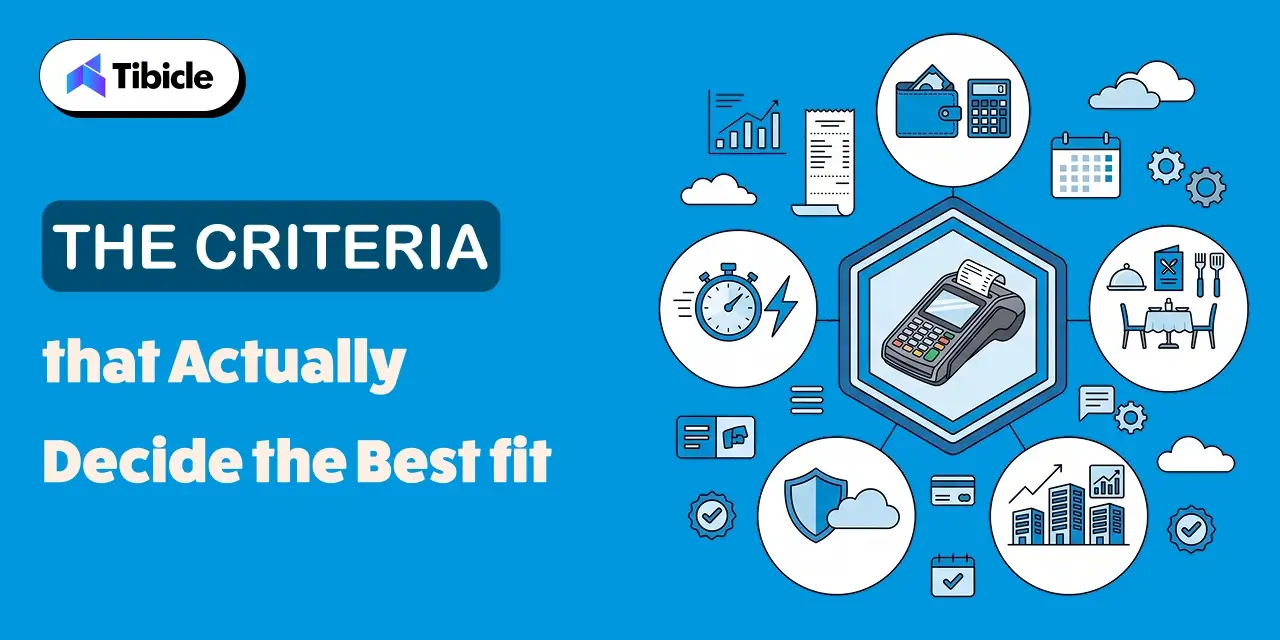
Strip away the marketing language and five criteria decide the best POS system for restaurant use in practice, in this order of weight for most operators.
Total Cost of Ownership, Not the Sticker Price
Evaluate hardware, software subscription, payment processing rates, installation, training, and support fees together. What matters is the total cost of ownership over three to five years, not the number on the pricing page. This applies whether you are pricing an enterprise platform or a POS system for small restaurant use. The best POS system for restaurant budgets is rarely the one with the lowest monthly fee, since a restaurant POS system with a low fee and a high processing rate can cost more overall than a pricier one with a better rate.
Speed and Ease of Use Under Pressure
A demo on a quiet afternoon tells you nothing about a Friday night rush. Prioritize how fast a server can punch in a complicated order with modifiers on the restaurant POS system, whether it lags at peak volume, and whether checks can be split without a ten-step process. The best POS system for restaurant floor staff is the one nobody has to think about.
Restaurant-Specific Features
General retail POS systems and restaurant POS systems solve different problems. Table management, course timing, modifiers, kitchen display routing, and tip management are restaurant-specific requirements a generic restaurant POS system will not handle well. Menus change constantly, daily specials, 86’d dishes, happy hour pricing, and the best POS system for restaurant menus makes those updates painless rather than a support ticket.
Reliability and Support
A terminal going down at 6:45 on a Saturday evening is not a hypothetical. Confirm what support looks like at that exact moment for your restaurant POS system: phone, live chat, and how fast someone actually answers. Ask about offline mode too, since the best POS system for restaurant reliability should not stop the instant the internet does.
Scalability
If a second location is anywhere on the roadmap, confirm the restaurant POS system supports multi-location reporting, centralized menu management, and consistent role governance before you need it. The best POS system for restaurant groups scales without repricing from scratch at every new site, which is the clearest tell of the best POS system for restaurant expansion plans.
What Best Looks Like by Restaurant Type
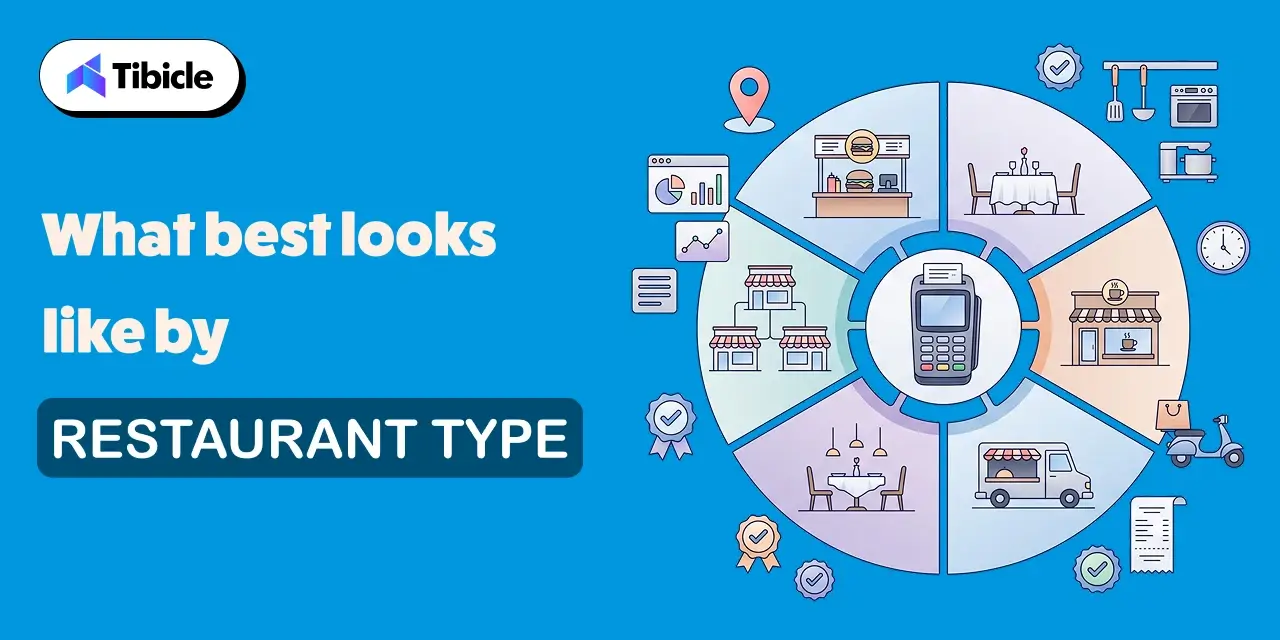
The criteria above get weighted differently depending on what you run. Here is how the priority order shifts, and it is the fastest way to narrow down the best POS system for restaurant operations at your specific scale, whether that is a single counter-service window or a five-location group.
Quick-Service and Fast Casual
Prioritize speed, queue flow, and kitchen routing. Fancy modules matter less than throughput and reliability during a lunch rush, so the best POS system for restaurant counters and the best POS system for restaurant drive-thrus are almost always the simplest ones that never lag.
Full-Service and Fine Dining
Prioritize table management, check flexibility (splitting, transferring, combining), and course timing. Service continuity during peak periods matters more than a long feature list, since the best POS system for restaurant dining rooms is judged on a packed Saturday, not a demo.
Small and Independent Restaurants
A POS system for small restaurant operations should prioritize ease of use, fast implementation, and predictable cost over advanced feature depth you may not use for years. Many small operators overpay for enterprise modules that sit unused; a lean POS system for small restaurant needs is usually the best POS system for restaurant owners just starting out. If you are actively comparing a POS system for small restaurant setups, weight cost predictability above everything else on this list.
Multi-Location Groups
Prioritize standardization, consistent reporting across sites, role governance, and restaurant POS system support that scales with you as you add locations, not per-terminal pricing that punishes growth.
The Real Cost to Model Before You Sign for best POS system for restaurants
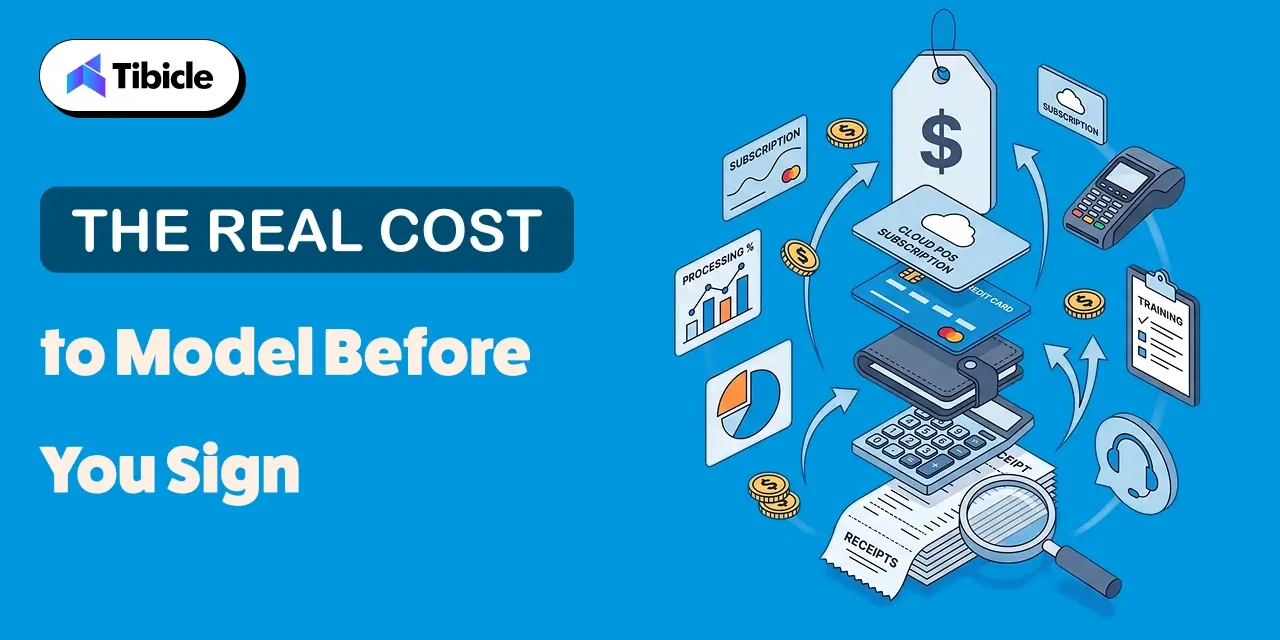
A POS quote is never your real cost, and skipping this step is the single biggest reason operators regret their choice of the best POS system for restaurant use. Finding the best POS system for restaurant budgets means modeling your true three-year number: software, hardware, processing, add-on modules, and training, before you compare vendors. Processing rate differences compound more than most owners expect. On $50,000 a month in card volume, a 0.3% rate difference is $150 a month and $1,800 a year, according to a 2026 restaurant POS decision framework. Over a three-year contract, that single line item can outweigh the difference in monthly software fees entirely.
Write down the features you actually use daily, separate from the ones that sounded good in the demo. This matters even more for a POS system for small restaurant budget, where every unused module is a bigger share of the bill. Most restaurants use a fraction of what a mid-tier restaurant POS system offers, and paying for unused modules is a common, avoidable waste on the path to the best POS system for restaurant budgets. A loyalty feature alone can lift average ticket size by up to 46%, which is the kind of module worth paying for versus one that never gets turned on.
Red Flags to Watch For in a Demo or Contract for the best POS system for restaurants
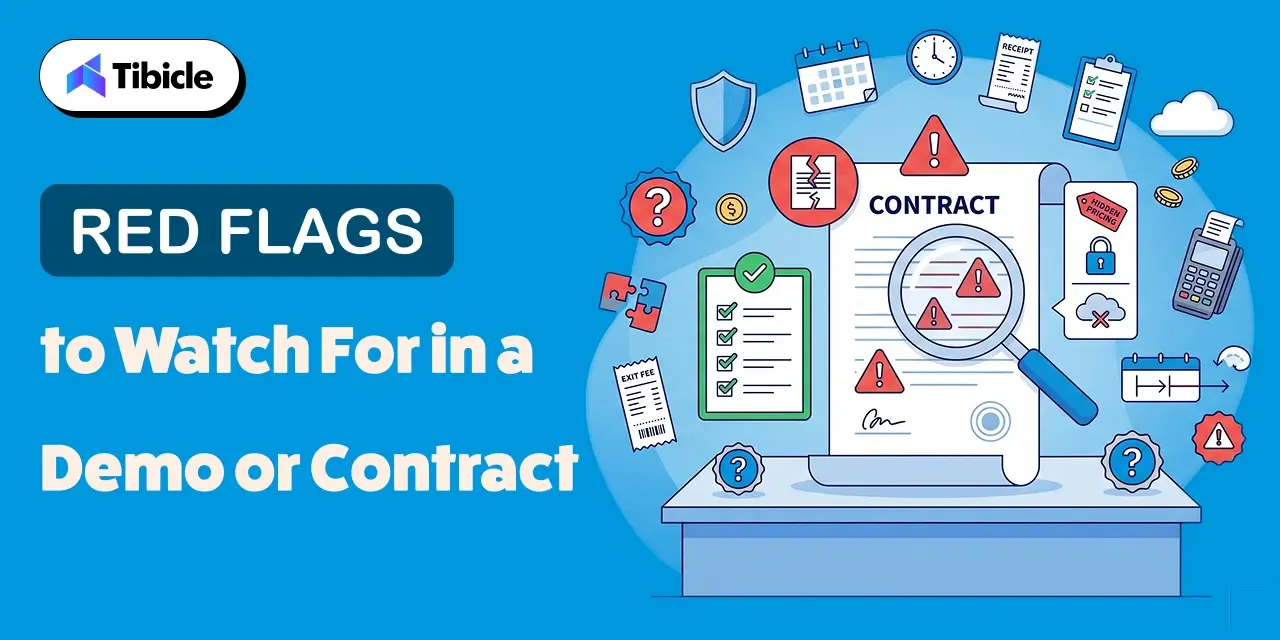
These signals mean a vendor is not going to be the best POS system for restaurant use, no matter how polished the pitch:
- Vague answers on total monthly cost: if a vendor will not give a straight number for your modeled three-year cost including processing, treat that as a signal.
- Features that require extra modules after base pricing: ask specifically which capabilities cost extra once you are past the entry tier.
- Long contract terms with early termination fees: multi-year commitments with $300 to $1,000+ exit fees are common; know the number before you sign.
- Processing lock-in: some platforms tie you permanently to their own payment processor at a fixed rate, regardless of your volume.
- No answer on offline mode: if the vendor cannot explain what happens when the internet drops mid-service, it is not the best POS system for restaurant use and you should assume the worst and test it yourself.
A Simple Evaluation Scorecard for best POS system for restaurants
Bring these six questions into every demo and every contract review, since this scorecard is how you actually find the best POS system for restaurant use instead of guessing:
- What is my modeled three-year total cost, including processing and add-ons?
- Which features require an extra module or a higher tier after the base price?
- How does the system perform under a simulated rush: complex orders, split checks, peak volume?
- What happens during an internet outage, and has that been tested, not just claimed?
- What is the contract length, and what is the early termination fee?
- Does the restaurant POS system scale cleanly to a second location without repricing from scratch?
Score each vendor against these six, not against a marketing headline. The best POS system for restaurant use scores well on this list, not on the flashiest demo, and running every finalist through the same six questions is what makes the comparison fair.
When Off-the-Shelf Is Not the Answer for the best POS system for restaurants
For the large majority of restaurants, the best POS system for restaurant use is a strong off-the-shelf restaurant POS system, evaluated against the criteria above. It falls short for a smaller group: multi-brand kitchens running several concepts through one line, operators with proprietary procurement or loyalty logic no packaged platform models, or businesses whose existing systems will not integrate with any mainstream restaurant POS system. Forcing a template to fit those cases often costs more in workarounds than building around the actual workflow would.
Tibicle LLP builds custom POS software and connected restaurant systems for operators in that category, beyond the standard POS system for small restaurant or mid-size use case. Its restaurant tech and custom POS services start with a scoped MVP and are shaped around how a specific kitchen and service model actually run, which is worth costing out once a standard restaurant POS system stops fitting.
Conclusion
Finding the best POS system for restaurant operations is not about a ranked list; it is about a disciplined evaluation. Weigh total cost of ownership over the sticker price, test speed and usability under real pressure, confirm restaurant-specific features fit your service model, and model the three-year cost before you sign anything. The best POS system for restaurant use is the answer to a specific set of criteria, not a headline ranking.
Use the scorecard above in every demo, watch for the red flags, and weight the criteria according to your restaurant type, quick-service, full-service, small independent, or multi-location. The best POS system for restaurant operations is the one that holds up under your actual Friday night, not the restaurant POS system that looked best in a quiet showroom.
Evaluating options, or wondering if your operation needs something custom? Talk to the Tibicle team, or see their guide to restaurant POS systems explained.
Frequently Asked Questions
What is the best POS system for a restaurant?
There is no single best POS system for restaurant use overall, whether you run a full-service dining room or need a POS system for small restaurant operations. The best POS system for restaurant use depends on your service model, volume, and margins. Evaluate any restaurant POS system against total cost of ownership, speed under pressure, restaurant-specific features, reliability, and scalability.
What is the best POS system for a small restaurant?
A POS system for small restaurant operations should prioritize ease of use, fast setup, and predictable pricing over advanced features you will not use yet. When comparing a POS system for small restaurant needs, overpaying for enterprise modules is a common mistake for small, independent operators looking for the best POS system for restaurant use on a tight budget.
How much does a restaurant POS system really cost?
More than the advertised monthly fee. Model software, hardware, payment processing, add-on modules, and training together. A 0.3% processing-rate difference on $50,000 a month in volume adds up to $1,800 a year, which often outweighs differences in the base subscription.
What questions should I ask in a POS demo?
Ask for the modeled three-year total cost, which features require extra modules, how the system performs under a simulated rush, what happens during an internet outage, the contract length and exit fees, and whether it scales to a second location without repricing. This applies whether you are evaluating an enterprise platform or a POS system for small restaurant use.
When should a restaurant consider a custom POS instead?
When workflows are non-standard, multi-brand kitchens, proprietary procurement or loyalty logic, or systems that will not integrate, so that no off-the-shelf restaurant POS system fits without expensive workarounds.
Schedule A Developer Interview And Get 15 Days Risk-Free Trial
Schedule a Call

Relevant Blog

AI Integration Company for B2B SaaS Guide

Diya Koradiya

Custom AI Chatbot Development Services
Diya Koradiya
GraphRAG Implementation Services

Arjun Shinojiya
Written by
Recent Blogs
AI Integration Company for B2B SaaS Guide
What This Guide Covers This guide examines how to choose an AI integration company for B2B SaaS when comparing offshore and nearshore engineering teams. It covers the factors that go beyond hourly rates, including talent access, time zone overlap, communication speed, and collaboration requirements for iterative AI projects. You will learn how to compare offshore […]
Custom AI Chatbot Development Services
What This Guide Covers Who this is for: CIOs, CTOs, AI leaders, operations executives, customer support teams, and enterprise technology decision-makers evaluating custom AI chatbot development services for internal knowledge access, customer support, helpdesk automation, or other business-critical use cases. It is particularly relevant for organisations with proprietary knowledge bases, sensitive data, complex access controls, […]
GraphRAG Implementation Services
Who this is for: Engineering leads and product owners at enterprise SaaS companies evaluating GraphRAG implementation services for a knowledge base or retrieval system that vector search alone is not answering well. Search intent: Commercial evaluation with a technical backbone. The reader has moved past “what is GraphRAG” and wants to know when a knowledge […]
Got an Idea? Get FREE Consultation
In our world, there's no such thing as having too many clients

