
Custom POS Software Development: Process, Cost, and When It Makes Sense

Jul 23, 2026

Read in 4 Minutes
Table of Contents
- Introduction
- What Custom POS Software Development Means
- The Development Process, Step by Step
- What It Costs in 2026
- How Long It Takes
- When a Custom Build Makes Sense
- When Off-the-Shelf Is the Better Call
- How to Choose a Development Partner for Custom POS Software Development
- Conclusion
- Frequently Asked Questions
Introduction
Most businesses run on off-the-shelf point-of-sale software, and most should. But some eventually hit a wall. Their platform cannot model a workflow or support a critical integration. Licensing costs may also climb with every terminal. That wall is what drives interest in custom POS software development. The pressure is real; a Salesforce survey found 34% of retailers say legacy POS is actively blocking their unified-commerce plans, and is increasingly how they respond.
This guide explains what custom POS software development involves. It covers the development process, 2026 costs, and expected timelines. You will also learn when a custom build makes sense and when off-the-shelf software is the smarter choice.
What Custom POS Software Development Means
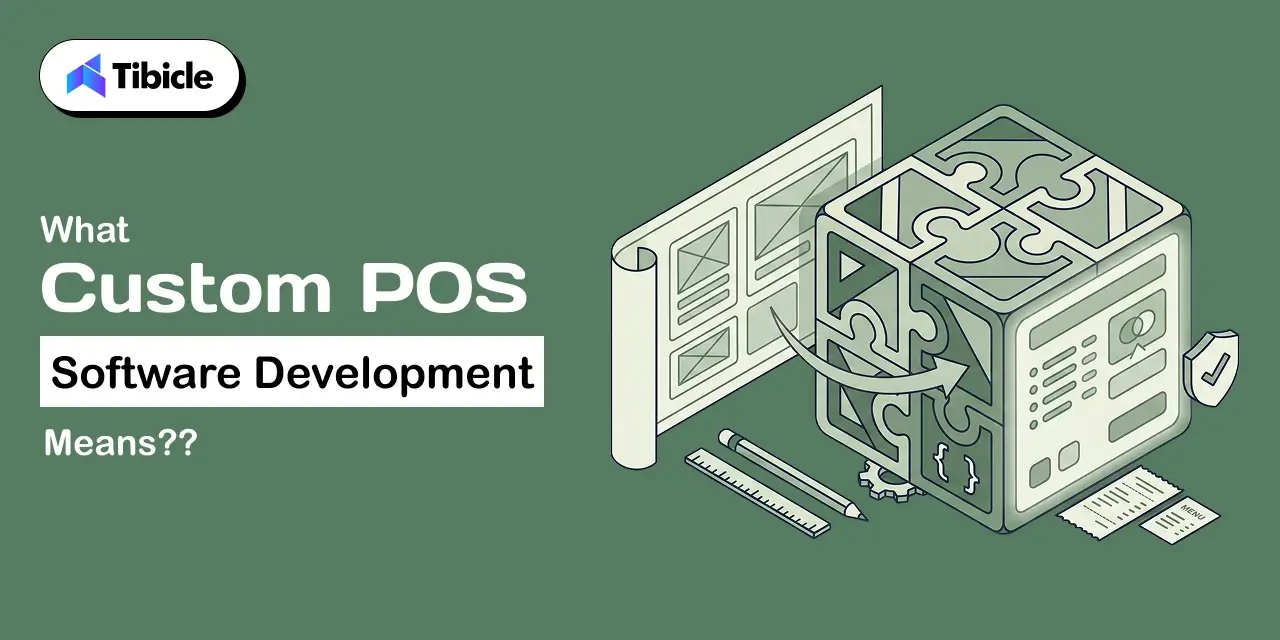
Custom POS software development is the process of building point-of-sale software around a specific business’s workflows, integrations, and growth plans, rather than forcing operations into a generic template. It produces a custom POS system the business owns, not rents, and the POS software development cost reflects that ownership.
The difference from off-the-shelf comes down to three things: code ownership, flexibility, and scalability. Packaged platforms like Square or Toast restrict access to the underlying code, which caps how deeply a business can customize. A custom POS system gives full control over the logic, the data, and the roadmap. That control is the entire point of a custom POS system, and also the reason custom software development costs more upfront.
The Development Process, Step by Step
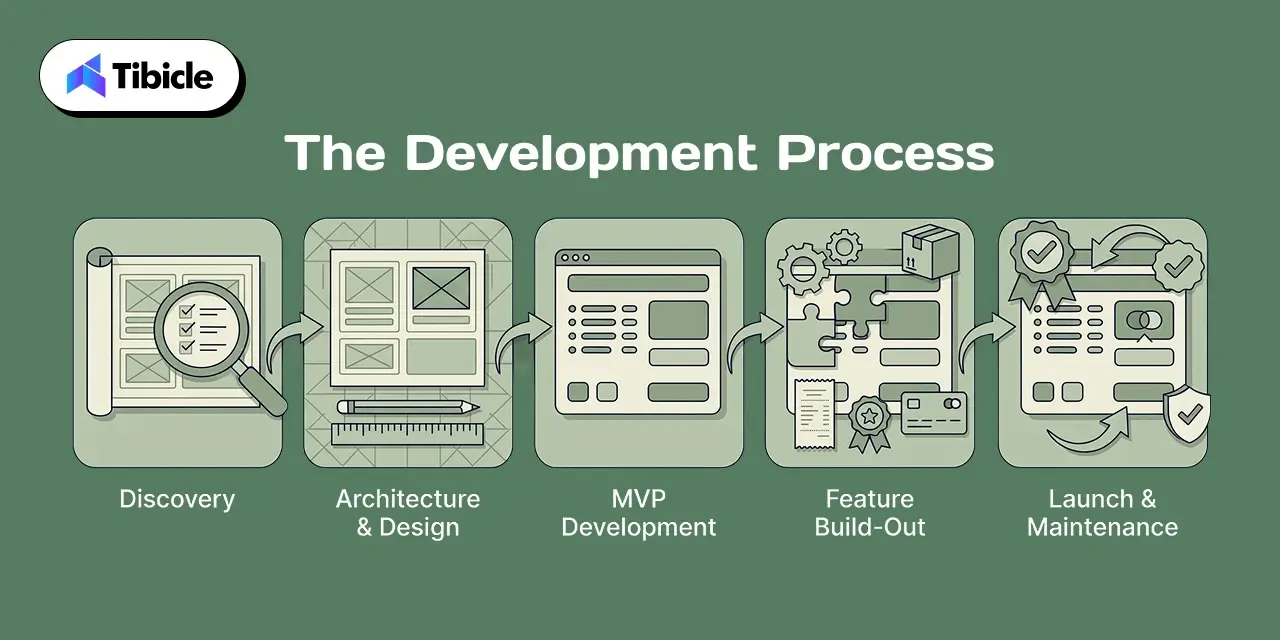
A clean custom POS software development project runs in a predictable order: discovery, architecture, MVP, build-out, and launch. Skipping or compressing the early steps is where most custom software development budgets blow up.
1. Discovery and Requirements
Every custom software development project starts with mapping workflows, user roles, payment methods, inventory rules, and reporting needs. This phase takes 2 to 6 weeks for most projects, longer for enterprise builds with legacy-system audits. Teams that compress discovery pay for it later in costly rework, so this is the least sensible place to cut corners.
2. Architecture and Design
Next comes the technical foundation: the stack, the database, the integration points, and the UI. A well-designed interface reduces staff training time and speeds service during a rush, so this is not just an engineering exercise. Architecture decisions made here include offline support, PCI DSS 4.0 compliance through tokenization, and high availability for peak traffic. These are some of the highest-risk technical challenges in a custom POS system. They also shape long-term POS software development costs.
3. MVP Development
The disciplined path is to build a minimum viable product first: core transaction processing and basic inventory, nothing more. This controls initial cost, validates the concept, and lets real users test the custom POS system before money goes into advanced features. Skipping the MVP is one of the most common and expensive mistakes in custom software development.
4. Feature Build-Out and Integration
Once the core custom POS system is proven, the build expands: CRM, loyalty, multi-location support, real-time inventory sync, and third-party connections to payment gateways and delivery platforms. Each integration adds to the POS software development cost, so they are prioritized by revenue impact, not by feature-list length.
5. Testing, Launch and Maintenance
The system is tested across devices and load conditions, then launched, often as a soft rollout before full deployment. Maintenance is not optional in custom software development: cloud-integrated systems can exceed $150 a month in hosting alone before developer hours, and most teams budget an ongoing amount every year to keep the custom POS system current.
What It Costs in 2026
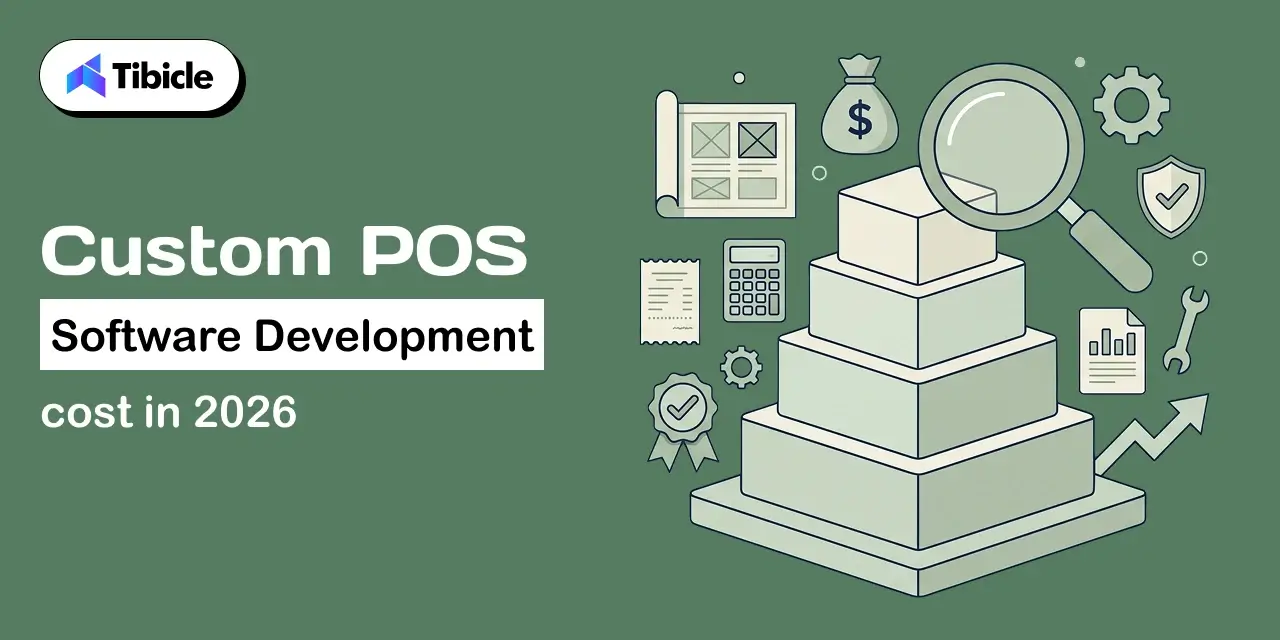
POS software development cost varies more than almost any other category, because it scales directly with feature complexity. The cost ranges below reflect publicly available 2026 figures. Use them to frame a budget, not replace a scoped quote. Treat POS software development cost as a range tied to scope, not a single number.
| Build Tier | Typical Cost | What You Get |
| Basic MVP | ~$15,000 to $40,000 | Core transactions, basic inventory, single platform |
| Mid-tier system | ~$40,000 to $120,000 | CRM, loyalty, multi-location, deeper integrations |
| Enterprise/restaurant | $100,000 to $450,000+ | Offline sync, omnichannel, advanced analytics, KDS |
| Ongoing maintenance | ~$12,000 to $90,000 / year | Hosting, updates, compliance, support |
One caution on the low end: agency estimates of $8,000 to $25,000 usually reflect junior developer rates, while senior US developers run $90 to $150 an hour, per a 2026 custom POS guide. A restaurant-specific build with table layouts, kitchen display, and delivery integration typically starts at $25,000 and can exceed $100,000. The POS software development cost that matters is total cost of ownership over three to five years, not the build price alone, and that is where custom software development is judged.
How Long It Takes
Custom POS software development timelines track complexity closely, and they move in step with the POS software development cost:
- Basic MVP: 2 to 3 months, covering core transaction processing and basic inventory.
- Mid-tier system: 4 to 6 months, adding CRM, loyalty, and multi-location support.
- Enterprise deployment: 9 to 12 months, with offline sync, advanced analytics, and omnichannel fulfillment.
Discovery alone can run up to 8 weeks on enterprise builds with multiple stakeholder groups. The biggest timeline risk is scope creep. A tightly defined MVP and clear integration points help control the schedule. They also help manage POS software development costs.
When a Custom Build Makes Sense
Custom POS software development earns its cost in specific situations. If several of these describe your operation, a custom POS system is worth scoping, and the POS software development cost becomes easier to justify:
- Non-standard workflows: multi-brand dark kitchens, cloud-kitchen aggregation, or proprietary procurement logic no packaged platform models, but a custom POS system can.
- Integration walls: existing systems, ERP, custom loyalty, legacy databases, that off-the-shelf POS will not connect to cleanly.
- Licensing that scales against you: per-terminal fees that turn every new location into a rising cost, where owning a custom POS system eventually beats renting.
- Code and data ownership: a need to control the roadmap, own the customer data, and avoid vendor lock-in, which only a custom POS system provides.
- Scale and peak load: high transaction volume that demands offline queuing and high-availability architecture a template cannot guarantee but a custom POS system can.
The tipping point is cost-competitiveness. Custom development can make financial sense when packaged software becomes too expensive to customize. The same applies when maintaining workarounds becomes costly. At that point, a custom POS system may no longer be the expensive option.
When Off-the-Shelf Is the Better Call
Custom POS software development is the wrong choice for most standard operations, and honesty about that saves money. Off-the-shelf wins when you run one to a few standard locations, your workflows fit what vendors already support, and you need to launch in weeks rather than months. A custom POS system is overkill here; packaged platforms deploy same-day and spread cost across a predictable subscription.
For businesses whose complexity does not yet justify a ground-up build, consolidating onto a unified platform delivers much of the data unification without months of development. The right question is not whether custom is better in the abstract; it is whether your specific complexity clears the threshold where custom POS software development pays back.
How to Choose a Development Partner for Custom POS Software Development
If a custom build clears that threshold, the partner decides whether custom software development succeeds. Five questions worth asking:
- Do they have POS or payments experience specifically, not just general app development, since custom software development is its own discipline?
- Can they show a scoped MVP path for the custom POS system rather than pushing a full build from day one?
- How do they handle PCI DSS compliance, tokenization, and payment security?
- What does their maintenance and support model look like after launch?
- Are the developer rates senior-level, or is the low quote hiding junior work that inflates the real POS software development cost later through rework?
Tibicle LLP handles custom POS software development, connected kitchen systems, and AI-driven applications for operators whose complexity has outgrown packaged platforms. Its custom POS and restaurant tech services run from a scoped MVP to a full custom POS system shaped around how a specific operation works, with ongoing support after launch.
Conclusion
Custom POS software development is a serious investment that pays back only when the complexity justifies it. The process is predictable: discovery, architecture, MVP, build-out, launch, and the POS software development cost scales with features, from around $15,000 for an MVP to $450,000 or more for an enterprise system. The decision is not about whether custom is better; it is about whether your workflows, integrations, and scale clear the threshold where owning beats renting.
If you run standard operations, an off-the-shelf platform is almost always the right call. If you have hit a wall that packaged software cannot solve, a custom system is worth costing out against the alternative, and custom POS software development becomes a strategic investment rather than a luxury.
Weighing custom POS software development for your operation? Talk to the Tibicle team, or see their guide to the best restaurant accounting software in 2026.
Frequently Asked Questions
What is custom POS software development?
It is the process of building point-of-sale software around a specific business’s workflows, integrations, and growth plans instead of using a generic template. The result is a custom POS system the business owns and controls, unlike a rented off-the-shelf platform.
How much does custom POS software development cost in 2026?
A basic MVP runs about $15,000 to $40,000, a mid-tier system $40,000 to $120,000, and an enterprise build $100,000 to $450,000 or more. POS software development cost scales with feature complexity, plus $12,000 to $90,000 a year for maintenance. Comparing POS software development cost across tiers means comparing total cost of ownership, not just the build price.
How long does it take to build a custom POS system?
A custom POS system takes 2 to 3 months for a basic MVP, 4 to 6 months for a mid-tier system, and 9 to 12 months for an enterprise deployment. Discovery alone can take up to 8 weeks on complex builds.
When should a business build a custom POS instead of buying?
When workflows are non-standard, integrations will not connect to off-the-shelf software, per-terminal licensing scales against you, or you need to own the code and data. Below that complexity, a packaged platform is usually the better call.
Is custom POS software development worth it for a small business?
Usually not. Most small and standard operations are better served by an off-the-shelf platform that deploys fast and spreads cost across a subscription. A custom POS system pays back only when specific complexity justifies the higher POS software development cost of development.
Schedule A Developer Interview And Get 15 Days Risk-Free Trial
Schedule a Call

Relevant Blog
Enterprise LLM Integration Services

Prejin Nadar

Building Private local AI Desktop App Development
Prejin Nadar
Written by

Recent Blogs
Enterprise LLM Integration Services
What This Guide Covers Who this is for Enterprise LLM integration services help engineering leaders, platform teams, and technology executives turn existing model access into working production workflows. This guide is for organisations connecting OpenAI, Claude, or both to systems that support real business processes, including CRM platforms, ticketing systems, document pipelines, and internal tools. […]
When to Hire an AI Software Development Consulting Firm.
What This Guide Covers Who this is for Engineering leaders, technology executives, and AI teams often struggle to turn completed initiatives into measurable results. This guide helps organisations address stalled pilots, failed AI implementations, rising costs, poor data quality, and workflows that function technically but fail to deliver measurable business value. An AI software development […]
Building Private local AI Desktop App Development
What This Guide Covers Who this is for: US tech firms, SaaS companies, startups, CTOs, engineering managers, and product teams looking for experienced Electron.js developers for ongoing private local AI desktop app development and custom desktop application development. Search intent: Hiring and decision. This guide covers where to find Electron.js developers, how to evaluate their […]
Got an Idea? Get FREE Consultation
In our world, there's no such thing as having too many clients

