
SaaS MVP Feature Checklist

Nov 19, 2026

Read in 4 Minutes
Table of Contents
- What This Guide Covers
- Introduction
- What Should the First Release Prove?
- Which Platform Capabilities Can a SaaS MVP Not Skip?
- Which Product Features Belong in v1?
- What Security Basics Do Early Buyers Expect?
- Which Analytics Events Should a SaaS MVP Track?
- What Should You Leave Out of the First Release?
- SaaS MVP Feature Checklist for a Successful Product Launch
- How Tibicle Builds SaaS Products
- Key Takeaways from a SaaS MVP Feature Checklist for Teams Scoping Their First Product
- Frequently Asked Questions
What This Guide Covers
Who this is for: B2B SaaS founders, technical co-founders, and seed-stage product managers looking for a SaaS MVP feature checklist to build products that attract and convert their first paying customers.
Search intent: Find a practical checklist of what a SaaS MVP needs, and what it doesn’t, before committing engineering time.
What you will walk away with: A two-part list of platform capabilities and product features, guidance on tenancy, identity, billing and admin tools, a timing answer on SOC 2, an analytics event list, a defer list with a trigger for each item, and a launch checklist you can copy.
Introduction
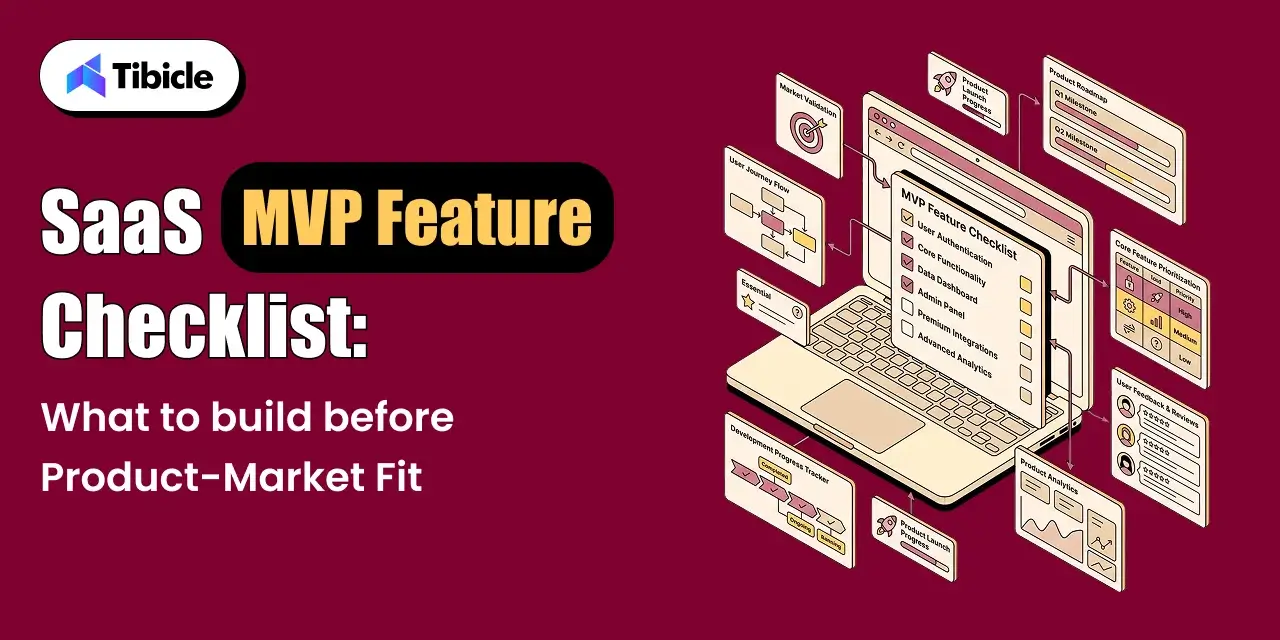
Pendo found that 80% of features in the average software product are rarely or never used. For SaaS, the risk runs the other way too. Skip tenancy, login or billing basics and your first big customer stalls in a security review or can’t be invoiced.
This SaaS MVP feature checklist splits the work into three parts: platform capabilities, product features and a defer list. The platform part covers decisions that are expensive to reverse. The product part covers what users touch. The defer list covers what to schedule later. This guide sorts minimum viable SaaS features into what to build now and what to wait on.
What Should the First Release Prove?
A first release should prove three things, and nothing more:
- One activation goal. A new user reaches the first moment of value. Example: a project-management tool counts a team that creates a project and invites a teammate.
- One retention signal. Users come back without prompting. Example: the same account is active in week two and week four.
- One revenue signal. Someone is willing to pay. Example: a trial account enters card details or accepts an invoice.
Your SaaS MVP scope follows from these three. If a feature doesn’t help prove one of them, or isn’t needed to sell and operate the product safely, it goes on the defer list.
Which Platform Capabilities Can a SaaS MVP Not Skip?
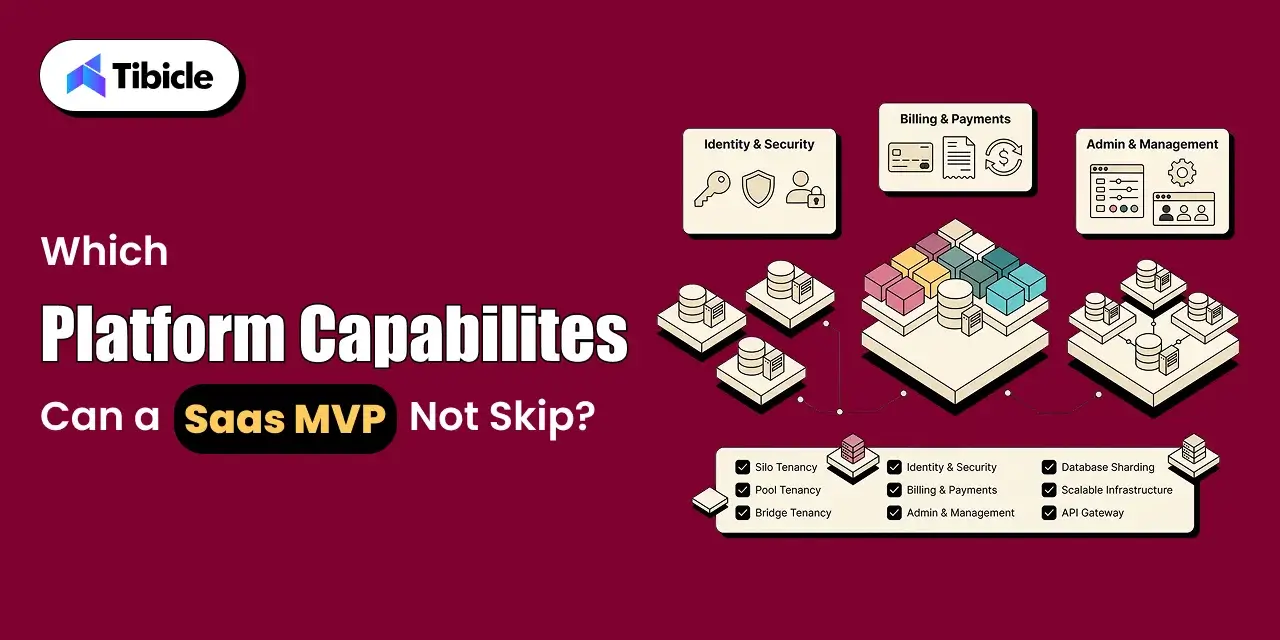
These are the decisions most ranking checklists skip, and they are the ones that cost the most to change later. Get them right early. Keep the surface area small.
Tenancy model
AWS’s SaaS Lens describes three models for tenant architecture. In a silo model, each tenant gets dedicated resources. In a pool model, tenants share resources. A bridge model mixes the two, with some components siloed and others pooled.
Pick pool for speed unless a buyer requires isolation. Whichever you choose, put a tenant ID on every record from day one. Adding it later means rewriting queries, migrating data and re-testing every access path. Strong tenant isolation is a security requirement, not a scaling feature.
Identity and access
Use email login with multi-factor authentication. For passwords, follow NIST SP 800-63B-4, which sets a 15-character minimum for passwords used as a single-factor authenticator. Check new passwords against known-breached lists rather than forcing arbitrary complexity rules.
Add role-based access control with at least two roles: admin and member. Keep the permission model simple, but build it as roles rather than hard-coded checks so it can grow.
Plan single sign-on as a fast follow. Business buyers often ask for it during security reviews, but it rarely blocks the first few deals.
Billing
Start with one plan or two, monthly billing and a hosted payment page. Hosted payment pages keep card data out of your application, which can reduce your PCI DSS scope. PCI DSS v4.0.1 is the current version of the standard. Subscription billing can stay basic at this stage: create, upgrade, cancel and invoice.
Admin and support tools
Give your team impersonation with an audit log, tenant-level settings and a basic support inbox. When a customer can’t get into their account, you need to see what they see without touching their data unrecorded. An audit log also helps later when a buyer asks who accessed what.
If you are weighing architecture choices, our SaaS development services page shows how we approach multi-tenant builds.
Which Product Features Belong in v1?
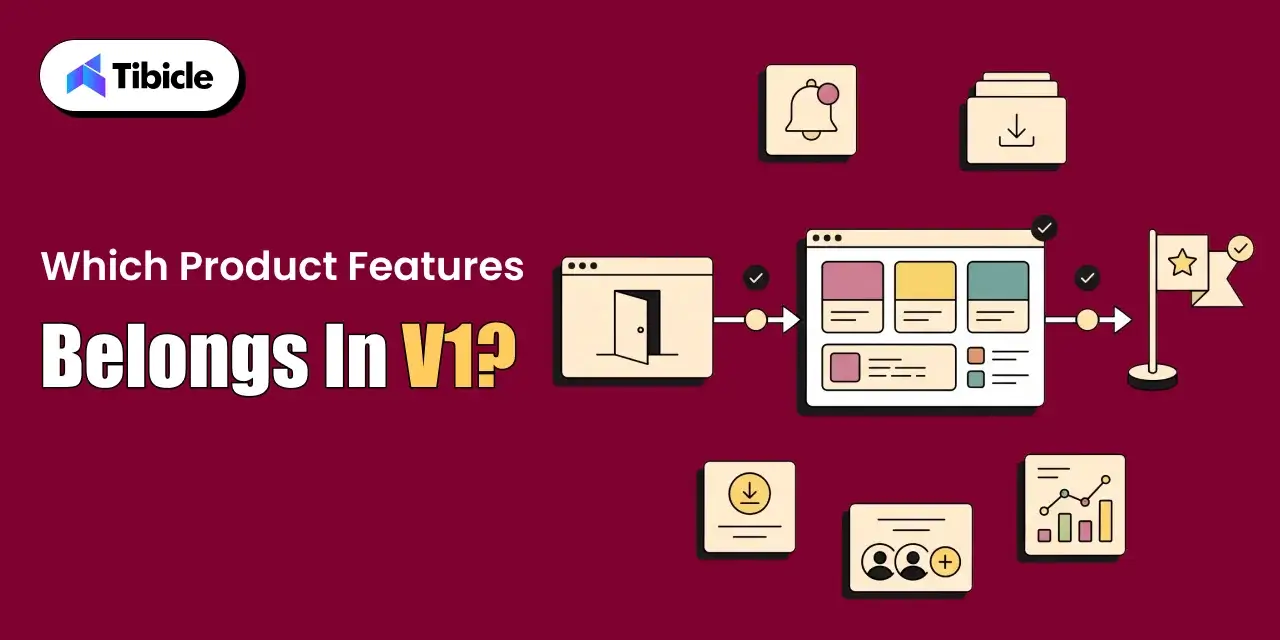
Minimum viable SaaS features on the product side are short. Each one earns its place with a reason:
- The one core workflow, done end to end. Users should be able to complete the job your product exists for without leaving it or asking for help.
- Onboarding that reaches first value fast. Go from sign-up to first value in a few steps, using sample data so the product isn’t empty. Onboarding is where most activation is won or lost.
- Notifications for the core workflow only. Send alerts for events that bring users back, such as an invite, a completed task or a failed payment.
- Data export. Buyers ask for it early, and it removes a common objection about lock-in.
A good SaaS MVP feature checklist is short on purpose. Every extra feature adds support load, testing time and design debt.
What Security Basics Do Early Buyers Expect?
Mid-market buyers often send a security questionnaire before they sign. Prepare for it before the first one arrives.
Use the OWASP Application Security Verification Standard (ASVS) to choose a verification level and test against it. It gives you a shared language for application security requirements that technical buyers recognise.
On SOC 2: SOC 2 reports cover the AICPA Trust Services Criteria: security, availability, processing integrity, confidentiality and privacy. A SOC 2 report is not a legal requirement. It is something buyers ask for. Many startups put the underlying controls in place first, such as access reviews, logging and backups, and pursue a report when deals require it.
So, do you need SOC 2 before launch? Usually no. You do need the controls a questionnaire will ask about, and an audit log, MFA and tested backups cover a lot of ground.
Which Analytics Events Should a SaaS MVP Track?
Product analytics should answer one question: are people reaching value and coming back? Track a small set of events and one dashboard for activation and retention.
| Event | What it tells you |
| Sign-up completed | Top of funnel volume |
| Onboarding step completed | Where new users drop off |
| First value reached | Your activation rate |
| Invite sent | Early signs of team adoption |
| Plan upgraded | Revenue signal |
| Churn signal (e.g. cancel click, 14 days inactive) | Early warning on retention |
Name events consistently and attach the tenant ID and user ID to each. That makes it possible to analyze by account later without rebuilding your tracking.
What Should You Leave Out of the First Release?
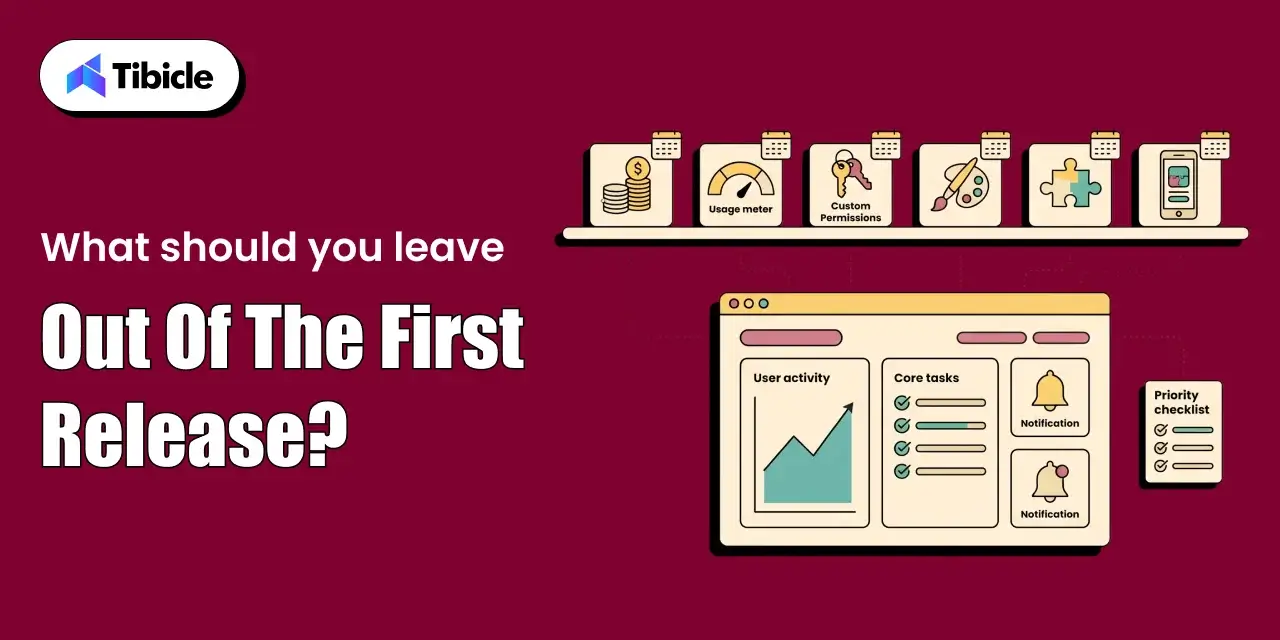
Pendo’s research found that an average of 12% of features generate 80% of daily usage volume. That’s the case for a firm SaaS MVP scope. Here are common deferrals, each with a trigger for when to build it:
- Multi-currency: build it when a paying customer outside your base market can’t buy without it.
- Usage-based pricing: build it when flat plans visibly under-charge your heaviest accounts.
- Custom roles: build it when several customers ask for permissions your two roles can’t express.
- White-labeling: build it when a signed deal depends on it.
- Marketplace integrations: build them when integration requests cluster around one or two tools.
- Native mobile apps: build them when usage data shows users need the product away from a desk and a responsive web app falls short.
Deferring is a decision with a date, not a rejection. Write the trigger down so the item doesn’t drift back into scope unprompted.
SaaS MVP Feature Checklist for a Successful Product Launch
Copy this list and tick it off before you go live:
- Backups tested with an actual restore
- Monitoring and alerts in place
- Status page live
- Terms of service and privacy policy published
- Support channel set up and staffed
- Billing tested end to end: sign-up, charge, upgrade, cancel, refund
Treat this SaaS launch checklist as a gate. If a box is empty, you aren’t ready to take a paying customer.
How Tibicle Builds SaaS Products
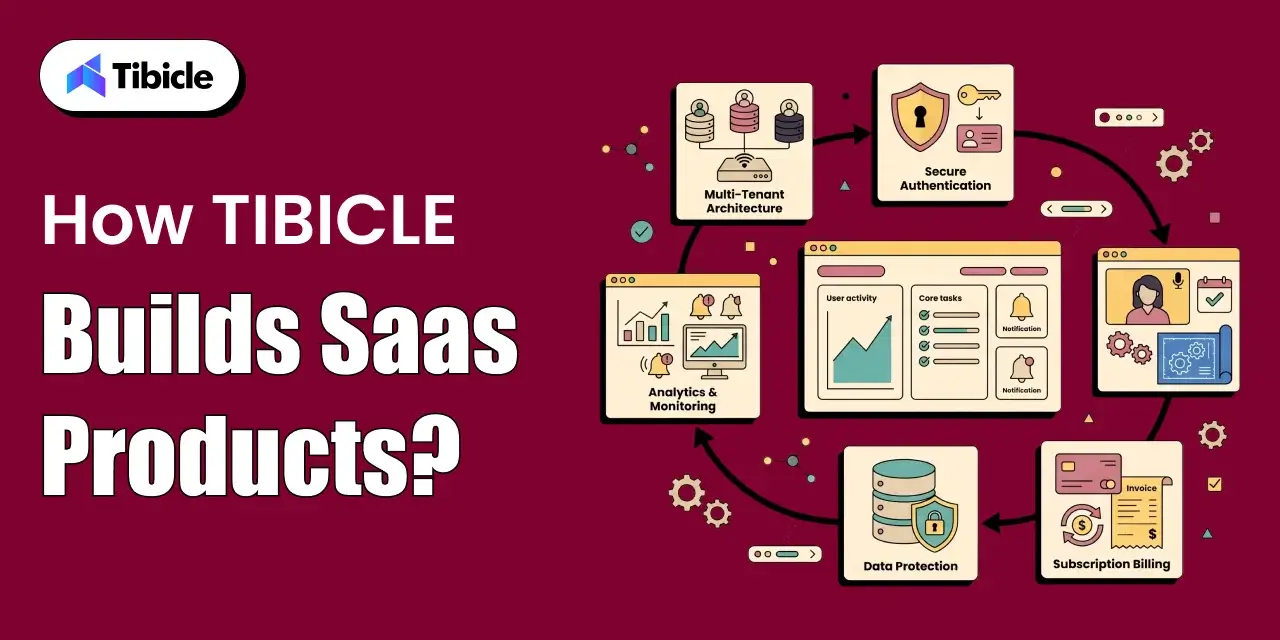
Tibicle’s SaaS and startups page lists multi-tenant architecture and subscription platforms with secure authentication and billing, plus data protection. It also covers subscription and billing integration, as well as SaaS analytics and monitoring.
If you want a second opinion on tenancy, identity or billing scope before you build, book a SaaS architecture review call. We’ll go through your plan and flag which decisions are costly to reverse.
You may also want to read our guide to the best SaaS development agency to hire in 2026, or see what AI means for SaaS and whether it’s worth the cost.
Key Takeaways from a SaaS MVP Feature Checklist for Teams Scoping Their First Product
- Prove three things in the first release: one activation goal, one retention signal and one revenue signal.
- Settle the platform decisions that are expensive to reverse first: tenancy model, identity standards and payment scope.
- Put a tenant ID on every record from day one, even if infrastructure is shared.
- Keep product features thin: one core workflow, fast onboarding, core notifications and data export.
- SOC 2 is not a legal requirement. Build the underlying controls first and pursue a report when deals ask for it.
- Track a small set of analytics events from the start so you can measure activation and retention.
- Write a trigger beside every deferred feature so it comes back into scope for a reason, not by drift.
Planning a SaaS MVP and want the architecture checked first? Book a SaaS architecture review with Tibicle.
Frequently Asked Questions
Is multi-tenancy an essential feature in a SaaS MVP feature checklist?
Yes, in the data model. Put a tenant ID on every record even if infrastructure is shared. Retrofitting tenancy later means rewriting queries and migrating data, so the small upfront cost avoids a large rebuild once real customers are on the system.
What is on a SaaS launch checklist?
A SaaS launch checklist covers tested backups, monitoring and alerts, a status page, terms and privacy policy, a support channel, and billing tested end to end. Each item protects the first paying customers from avoidable failures during their first weeks on the product.
Should a SaaS MVP feature checklist include single sign-on (SSO)?
Not at launch in most cases. Plan it as a fast follow when business buyers ask for it during security reviews. Build email login with MFA and role-based access first, and keep the identity layer clean so SSO can be added without a rewrite.
Which billing setup should you include in your SaaS MVP feature checklist?
One or two plans on a hosted payment page. Hosted pages keep card data out of your app and can reduce PCI DSS scope. Start with monthly billing, then add annual plans, usage-based pricing or multiple currencies only when customers ask.
What are the minimum viable SaaS features in a SaaS MVP feature checklist?
Login with MFA, a tenant-aware data model, the core workflow, billing, admin tools and analytics. Together these let you sell, operate and learn from the product. Everything else, from custom roles to native apps, goes on the defer list until evidence supports it.
What should a SaaS MVP feature checklist include besides features?
A good SaaS MVP feature checklist also lists the decisions behind the features: tenancy model, identity standards, payment scope and security basics. It adds a defer list with triggers and a launch checklist, so scope stays controlled and the product is safe to put in front of paying customers.
Schedule A Developer Interview And Get 15 Days Risk-Free Trial
Schedule a Call




Written by

Prejin Nadar
Business Development Executive
I’m Prejin Nadar, a Business Development Professional at Tibicle LLP, where I help businesses move from ideas to execution with smart digital solutions. I focus on uncovering real opportunities, simplifying decisions, and building long-term client partnerships that drive measurable growth.


Related posts
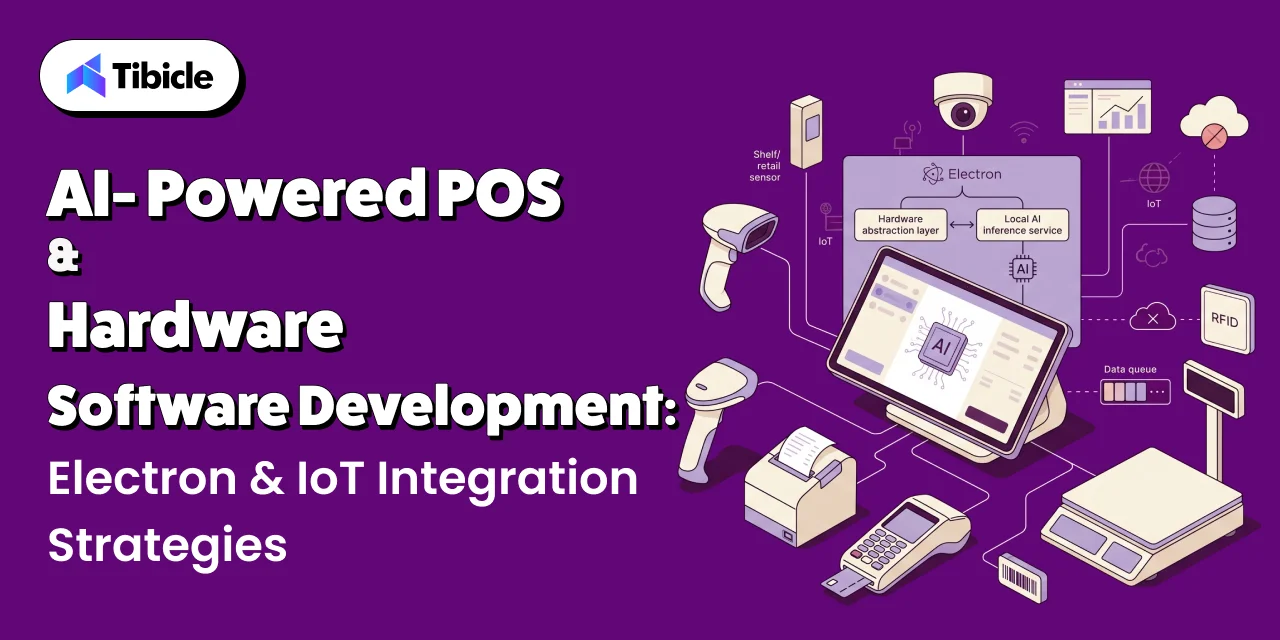
Custom AI POS Software Development with Electron & IoT
What This Guide Covers Who this is for: CTOs, retail technology leaders, and product owners at retail chains, grocery and convenience operators, and POS vendors evaluating custom AI POS software development for an AI-enabled checkout or a terminal refresh. Search intent: Understand how custom AI POS software development works, including Electron architecture, IoT integration […]
06 Oct 2026 | Aditya Changlani
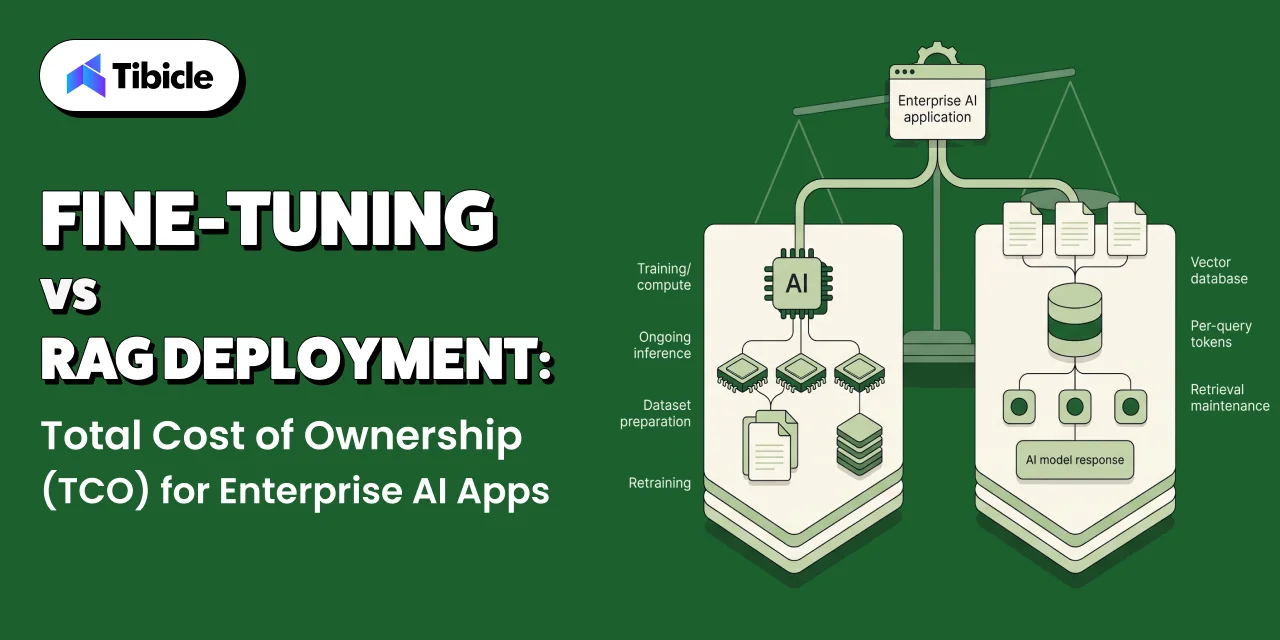
Fine-Tuning vs. RAG Deployment: Total Cost of Ownership (TCO) for Enterprise AI Apps
What This Guide Covers Who this is for Commercial investigation. The reader is comparing two viable technical approaches before a budget or architecture decision, not looking for a definition of either term. They want numbers, a framework, and a clear answer on when each approach wins on cost. Search intent Enterprise engineering leads, ML platform […]
05 Oct 2026 | Aditya Changlani
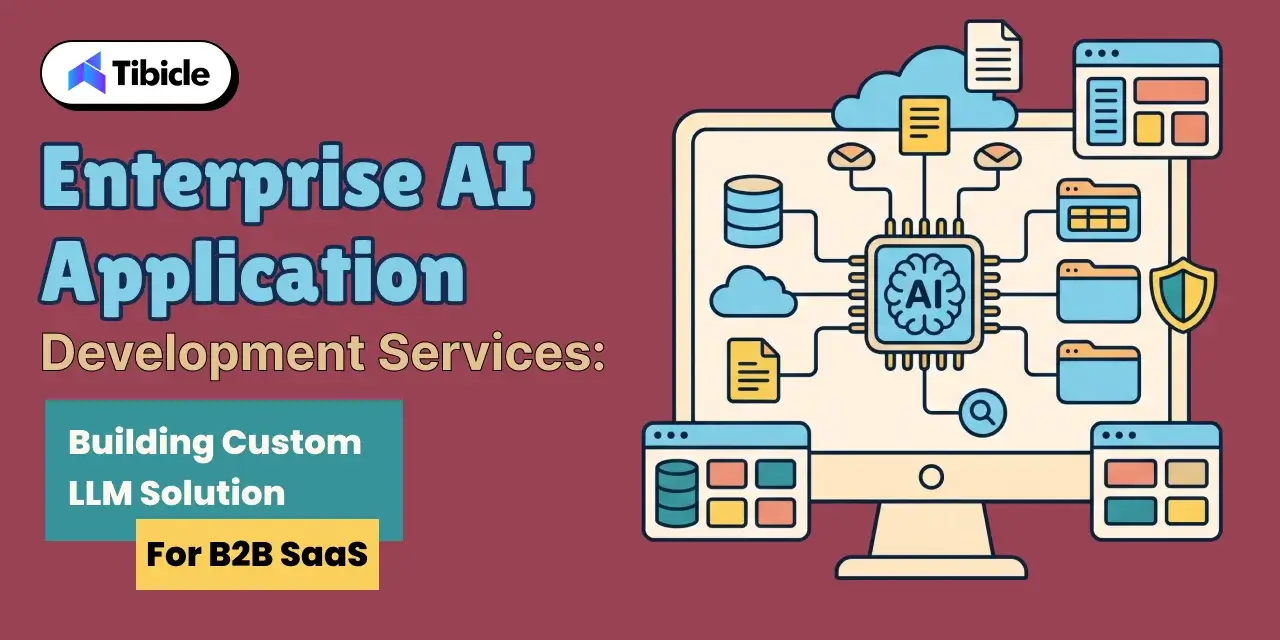
Enterprise AI Application Development Services: Building Custom LLM Solutions for B2B SaaS
What this Guide Covers Who this is for Product managers, CIOs, and engineering leaders at B2B SaaS companies evaluating custom AI features. Teams comparing build vs buy vs hybrid approaches for LLM integration. Companies that shipped AI pilots and need guidance on reaching production. Organizations ready to invest in enterprise ai application development services but […]
30 Sep 2026 | Dhairya Dadhania
Got an Idea? Get a FREE consultation
We always have room for one more great project

Email
tea@tibicle.com

Phone
+91 9724922880